

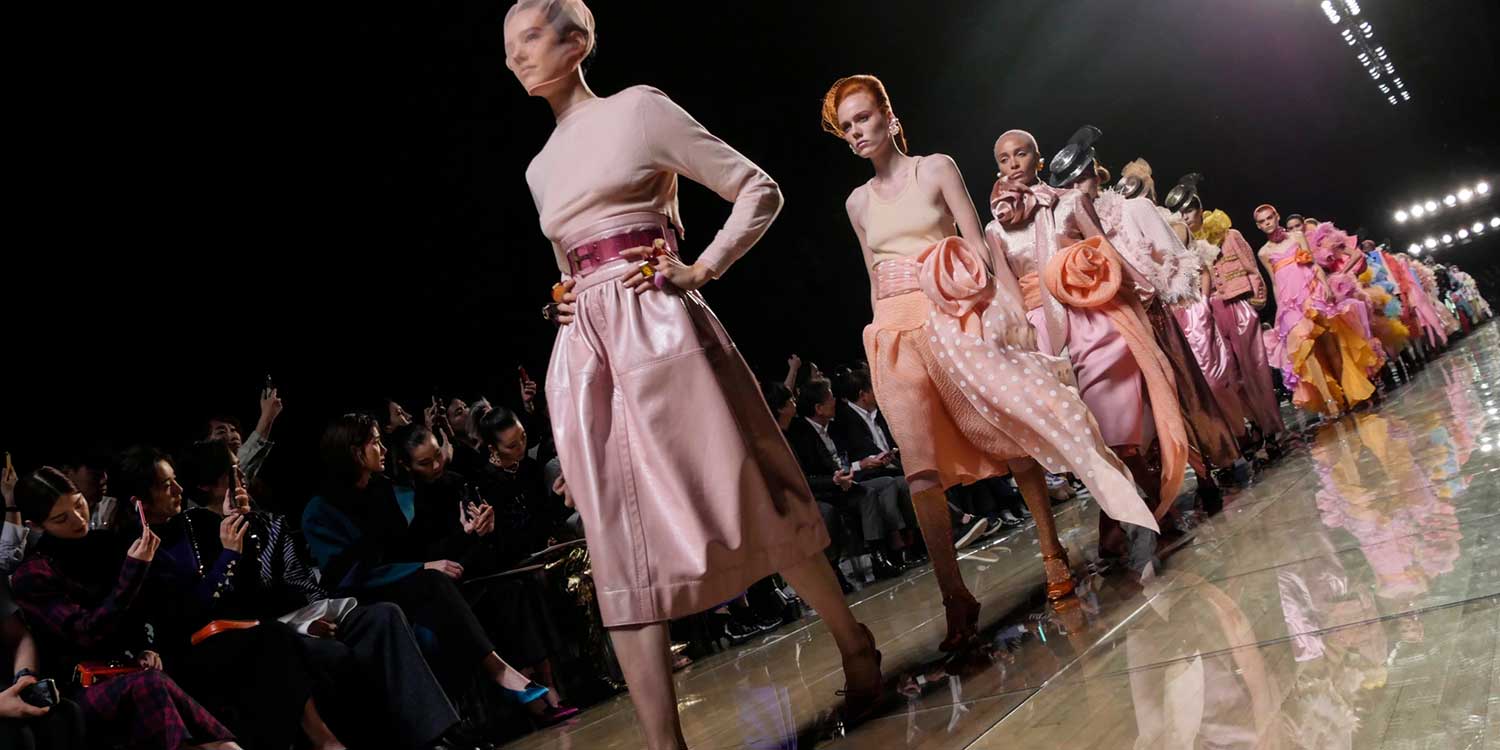
Fashion shows are no longer peripheral spectacles of aesthetic display; they have evolved into structured platforms for cultural transmission, economic participation, and global dialogue. As globalisation compresses distance, the runway has become a site where heritage is not only presented but negotiated, reinterpreted, and sustained across generations. Each garment operates as a vessel of memory, identity, and craft, carrying narratives that transcend geography while resisting erasure. What appears as performance is, in fact, infrastructure—a system through which cultures communicate, economies activate, and identities persist. This editorial reframes fashion not as an industry of trends, but as a living architecture of human expression, where every stitch encodes history and every stride extends cultural continuity into the future.
Fashion weeks are frequently dismissed as ornamental spectacles, reduced in public imagination to celebrity visibility, commercial theatrics, and fleeting trends that dissolve as quickly as they emerge. Yet this reading overlooks the deeper structural transformation underway within the global fashion ecosystem, where the runway has evolved into a site of cultural negotiation, economic exchange, and narrative preservation. As globalisation continues to compress geographic distance and accelerate cultural interaction, fashion shows are no longer confined to showcasing garments; they have become platforms through which societies articulate identity, transmit heritage, and engage in a form of dialogue that is both visual and visceral. What unfolds on the runway is not simply style, but a layered conversation between past and present, tradition and reinvention, locality and global visibility.
The contemporary runway operates as a medium through which cultural knowledge is both preserved and reinterpreted, often in response to historical erasure or marginalisation. When designers incorporate indigenous textiles, ancestral techniques, or region-specific craftsmanship into modern silhouettes, they are not merely aestheticising tradition but actively restoring narratives that have been suppressed or overlooked. The integration of Maasai beadwork alongside Venetian lace, or the juxtaposition of West African weaving techniques with Japanese tailoring precision, creates a visual language that transcends geography while maintaining cultural specificity. These moments are not accidental; they are deliberate acts of cultural continuity, where design becomes a method of storytelling that resists homogenisation in an increasingly globalised marketplace.
This transformation is particularly visible in emerging fashion hubs, where community-driven shows in cities such as Lagos, Jaipur, and Medellín provide platforms for both preservation and innovation. In these environments, the runway becomes a shared space where elders and younger designers engage in a dynamic exchange, ensuring that heritage is neither static nor diluted. Younger designers reinterpret folklore motifs, ceremonial garments, and traditional patterns into contemporary forms that resonate with modern audiences, creating a continuity that is both respectful and adaptive. This process repositions heritage as a living system rather than a historical artefact, allowing culture to evolve without severing its foundational roots.
Beyond cultural expression, fashion shows have increasingly assumed roles as economic engines that extend opportunity to communities often excluded from global markets. Designers who collaborate with artisans from rural or underrepresented regions create pathways for economic participation that are both sustainable and culturally aligned. These partnerships do more than produce garments; they sustain ecosystems of craftsmanship, ensuring that specialised skills are preserved and valued within a global context. As a result, the runway becomes an interface between local economies and international visibility, transforming fashion from a top-down industry into a more distributed system of value creation.
The intersection of fashion and activism further reinforces the runway’s evolving function as a platform of influence. Designers are increasingly using their collections to critique fast fashion, challenge exploitative production models, and advocate for sustainability in ways that extend beyond messaging into practice. Materials, sourcing methods, and production processes are becoming integral to the narrative presented on the runway, embedding ethical considerations into the very fabric of design. This shift reflects a broader recognition that fashion operates within a system of environmental and social impact, and that its influence can be leveraged to reshape consumption patterns and industry standards.
At an international level, cultural fashion shows are also reshaping the geography of influence within the industry. Cities such as Dakar and Tbilisi are emerging as significant nodes within the global fashion network, attracting attention not merely for novelty but for the depth of cultural expression they offer. These locations challenge traditional hierarchies that have long centred fashion authority within a limited number of Western capitals, expanding the map of relevance to include diverse perspectives and practices. In doing so, they contribute to a more pluralistic understanding of fashion, where multiple narratives coexist and interact without being subsumed into a singular dominant framework.
The experiential nature of fashion shows further amplifies their role in fostering empathy and cross-cultural understanding. When audiences encounter the intricate weaving techniques of Mongolian nomads or the geometric patterns of Indigenous Canadian design, they engage with cultures in a manner that transcends abstraction. These encounters challenge preconceived notions, disrupt stereotypes, and create moments of recognition that extend beyond aesthetic appreciation into deeper forms of cultural engagement. The runway, in this sense, functions as a bridge—not only between designers and audiences, but between histories, identities, and ways of seeing the world.
In an era defined by increasing polarisation and cultural fragmentation, the capacity to foster understanding across difference is no longer optional—it is essential. Fashion shows, when understood beyond their surface, offer a rare platform where this understanding can be cultivated through shared experience and visual dialogue. They enable cultures to present themselves on their own terms, creating opportunities for recognition that are both immediate and enduring.
More importantly, they reveal that design is not merely about aesthetics, but about systems—systems of memory, identity, economy, and connection. By recognising the runway as cultural infrastructure, we begin to understand its potential not only to reflect the world as it is, but to shape the world as it could be. In this light, every stitch and stride becomes an act of continuity, ensuring that the stories embedded within fabric are not lost, but carried forward—visible, evolving, and profoundly human.
Why These Matter - WTM MEDIA is an independent editorial platform exploring the forces shaping our world—through people, culture, commerce, design, systems, and governance. Connecting the dots between today’s headlines and tomorrow’s realities.

article-support-3
Noir Spider Atelier

article-support-2
Noir Spider Atelier

article-support-1
Noir Spider Atelier

press-partnership
Noir Spider Atelier
press-reader-desk
Noir Spider Atelier

resource-access
Noir Spider Atelier
membership-example
Noir Spider Atelier

membership-tools
Noir Spider Atelier

membership-reader
Noir Spider Atelier
membership-public
Noir Spider Atelier
pathway-design
Noir Spider Atelier
pathway-institutions
Noir Spider Atelier
pathway-technology
Noir Spider Atelier