
The prospect of global war is often analysed through military capability and geopolitical alignment, yet its most immediate and enduring consequences are human. Markets may react, reprice, and eventually attempt recovery, but people absorb the collapse in real time. The growing risk of a large-scale global conflict exposes a deeper fragility within the modern economic system: prosperity is not resilient—it is contingent on peace. As supply chains fracture, energy systems are weaponised, and financial infrastructure becomes a target, the assumption that markets can withstand systemic shock begins to unravel. This editorial reframes the threat of global war not as a distant geopolitical scenario, but as a human crisis embedded within economic collapse—where survival, dignity, and stability are no longer guaranteed, and where the cost of failure is measured not in indices, but in lives.
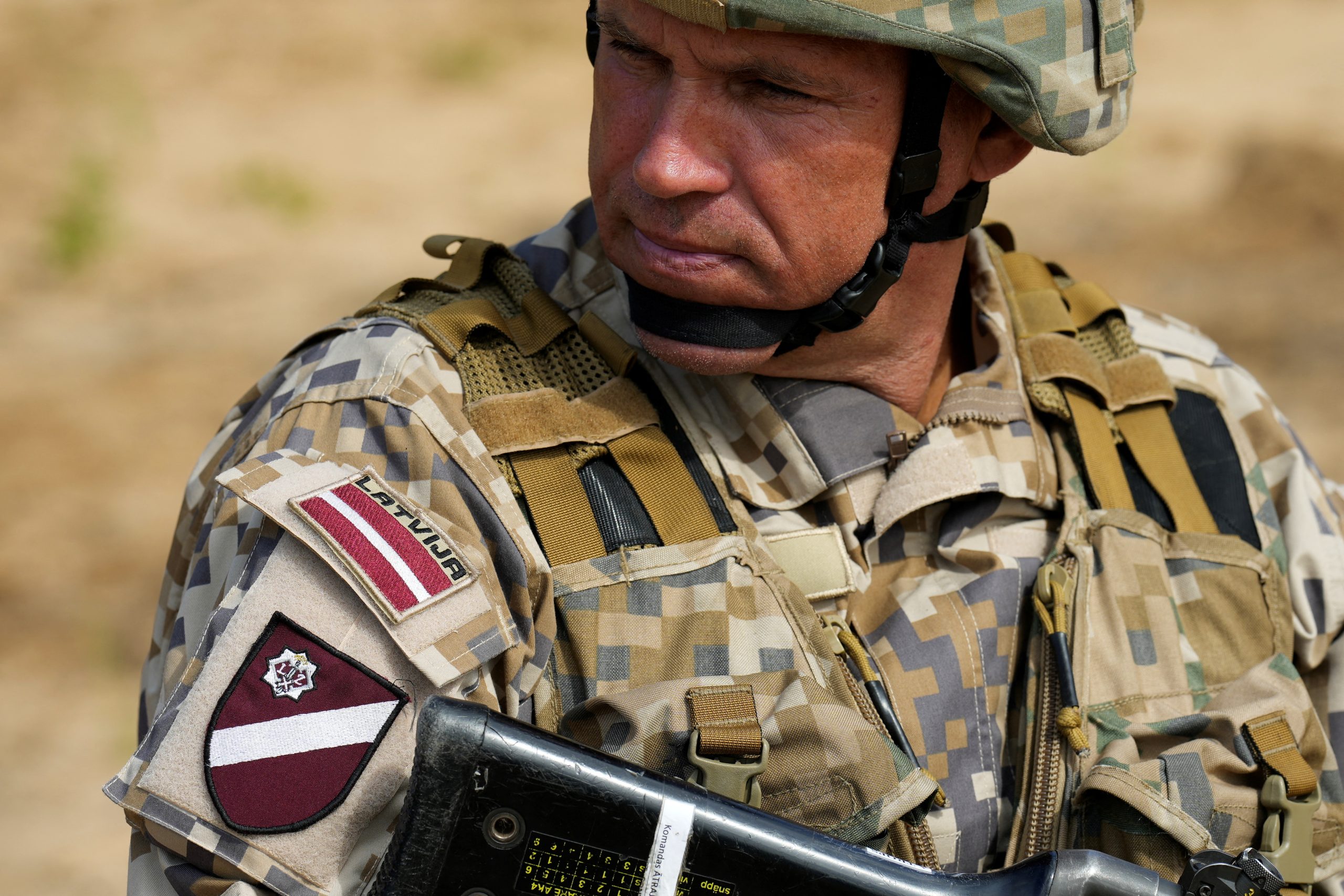
Markets have never been neutral instruments of economic measurement; they are reflexive systems that absorb, interpret, and amplify the signals of power, conflict, and uncertainty in real time. The moment geopolitical tension escalates, markets do not wait for clarity or confirmation—they begin to move, pricing in fear, speculation, and anticipation simultaneously. What appears as volatility is, in fact, a form of collective interpretation, where capital responds to perceived risk before events fully materialise. In this sense, markets do not simply react to war; they begin to collapse under the weight of its possibility, translating distant threats into immediate financial consequence.
The contemporary discourse around a potential global war reveals a shift in how such risk is understood, as it is no longer confined to military analysis but increasingly embedded within economic modelling, institutional forecasting, and investor behaviour. The notion of a large-scale global conflict is no longer treated as an abstract scenario reserved for strategic defence circles; it is actively considered within financial systems that attempt to anticipate disruption. Yet this anticipation introduces a paradox: by pricing in catastrophe, markets begin to behave as though collapse is already underway, accelerating the very instability they seek to hedge against.
Historical precedent provides context, but not reassurance, as previous global conflicts reshaped economic systems in ways that were both profound and irreversible. The First World War dismantled established monetary frameworks, while the Second World War led to the construction of new financial institutions designed to stabilise a fractured global order. However, the structural conditions of the present differ significantly, as the modern economy is characterised by unprecedented interdependence, digital integration, and real-time connectivity. These attributes, while enabling efficiency and scale, also amplify vulnerability, ensuring that disruption in one region cascades globally with speed and intensity.
Energy remains the central axis upon which economic stability turns, and in times of conflict, it becomes both a strategic asset and a point of failure. The weaponisation of energy supply is not a theoretical risk but a demonstrated reality, where control over resources translates directly into geopolitical leverage. In a scenario of expanded conflict, the disruption of key transit routes, production facilities, or distribution networks would not result in gradual market adjustment but in immediate systemic shock. Prices would not simply rise; they would become volatile beyond predictability, undermining the ability of markets to function as mechanisms of coordination.
The digitalisation of financial systems introduces an additional layer of fragility, as modern markets are not only interconnected but also dependent on technological infrastructure that is itself vulnerable to disruption. Cyber warfare has emerged as a domain in which economic damage can be inflicted without physical confrontation, targeting the systems that underpin global finance. Payment networks, trading platforms, and central banking operations are all potential points of attack, where the compromise of a single system can propagate across the entire financial ecosystem. In such a context, the collapse of markets would not unfold gradually but could occur with abrupt and disorienting speed.
Trade, which underpins global prosperity, is similarly exposed to the dynamics of conflict, as the physical and logistical systems that enable the movement of goods are inherently vulnerable. Strategic chokepoints, maritime routes, and transport corridors become focal points of disruption, where interference can halt the flow of essential resources. The interruption of trade does not merely affect economic indicators; it translates directly into shortages of food, medicine, and critical supplies, transforming economic disruption into a humanitarian crisis.
The abstraction of markets often obscures the reality that their collapse has immediate and tangible consequences for individuals and communities. Financial downturns manifest as job losses, declining incomes, and reduced access to essential services, disproportionately affecting those with the least capacity to absorb shock. In the context of large-scale conflict, these effects are magnified, as economic instability intersects with physical insecurity, creating conditions in which survival itself becomes uncertain.
Institutions designed to mitigate crisis and maintain stability face significant limitations in the context of systemic disruption, as their effectiveness depends on cooperation, trust, and shared interest among participants. In a fragmented geopolitical environment, these conditions are difficult to sustain, reducing the capacity of institutions to coordinate response or provide meaningful intervention. The erosion of institutional effectiveness further accelerates market instability, as confidence—an essential component of economic function—begins to dissipate.
The behaviour of markets during periods of heightened risk also reveals underlying ethical tensions, as the capacity to profit from volatility introduces incentives that are misaligned with collective well-being. Financial instruments that enable hedging and speculation can generate returns in the midst of crisis, creating scenarios in which instability becomes economically advantageous for certain actors. This dynamic complicates efforts to manage risk, as it embeds conflicting interests within the system itself.
Ultimately, the convergence of geopolitical tension, economic interdependence, and technological vulnerability creates a landscape in which the distinction between financial stability and collapse becomes increasingly tenuous. The risk of systemic disruption is not confined to extreme scenarios but is embedded within the structure of the modern economy, where the same characteristics that enable growth also amplify fragility. In this environment, the assumption that markets can absorb and recover from large-scale conflict is not a certainty but a hypothesis that may not withstand the conditions of its own testing.
This matters because the stability of modern life is inseparable from the stability of the systems that sustain it, and those systems are far more fragile than commonly assumed. Markets can model risk, hedge exposure, and attempt recovery, but they cannot function in the absence of underlying order, cooperation, and continuity. When these conditions are disrupted, the consequences extend beyond financial loss to encompass the fundamental structures of daily life.
The true cost of systemic failure is not captured in economic metrics but in human experience, where the collapse of markets translates into the erosion of security, opportunity, and dignity. Understanding this dynamic is essential, not as a form of alarmism, but as a recognition of the interconnected nature of modern systems and the importance of preserving the conditions that allow them to function.
The question is not whether markets will respond to conflict; they will. The question is whether the systems that support both markets and human life can endure the pressures placed upon them. In a world where risk is increasingly systemic, the distinction between economic stability and human stability becomes indistinguishable, making the preservation of one inseparable from the preservation of the other.

Why These Matter - WTM MEDIA is an independent editorial platform exploring the forces shaping our world—through people, culture, commerce, design, systems, and governance. Connecting the dots between today’s headlines and tomorrow’s realities.