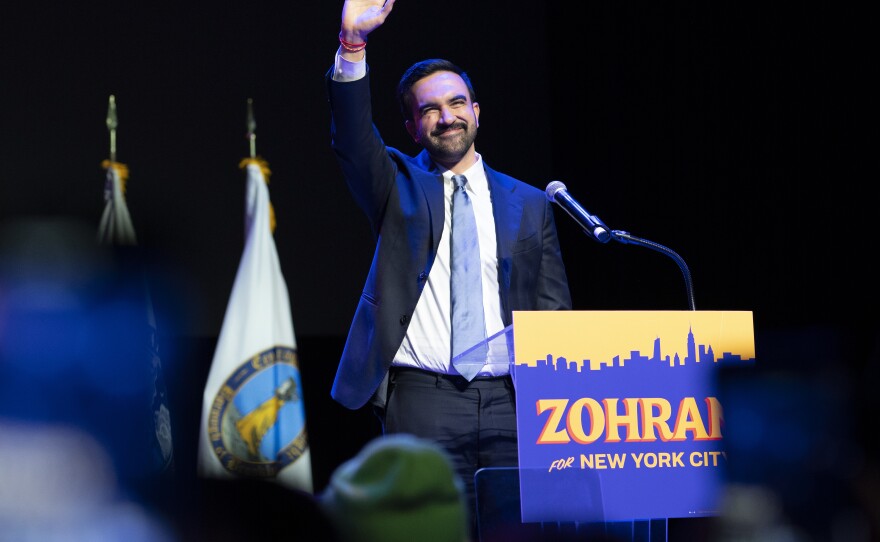
Zohra Mamdani’s election as New York City’s new mayor is being called a generational shift. But his victory is more than political—it is philosophical. In a time when charisma has replaced competence and outrage has replaced order, Mamdani represents the quiet return of leadership rooted in empathy, equity, and systemic design.
In November 2025, Zohra Mamdani—community organiser, policy scholar, rap artist, and former state legislator—became New York City’s first mayor of African and South Asian descent. His ascent from Queens activism to the highest municipal office in America’s largest city was improbable by old political logic, inevitable by new civic reality.
New York is not merely a city; it is a test of civilisation. Every issue—housing, immigration, inequality, climate resilience, AI regulation—collides within its five boroughs.
To govern New York is to prototype the future. And Mamdani, by all early accounts, governs as a designer rather than a demagogue.
His victory was not a triumph of identity, though identity played a role. It was a triumph of integration—of turning biography into blueprint.
As The Washington Post noted, Mamdani campaigned on what he called “pragmatic compassion”: policies built from lived experience but tested against economic realism.
Where predecessors chased headlines, he chased coherence.
His first executive action—the creation of the Civic Systems Office—merges data science, behavioural economics, and public empathy to redesign municipal decision-making.
It is governance as human-centred engineering.
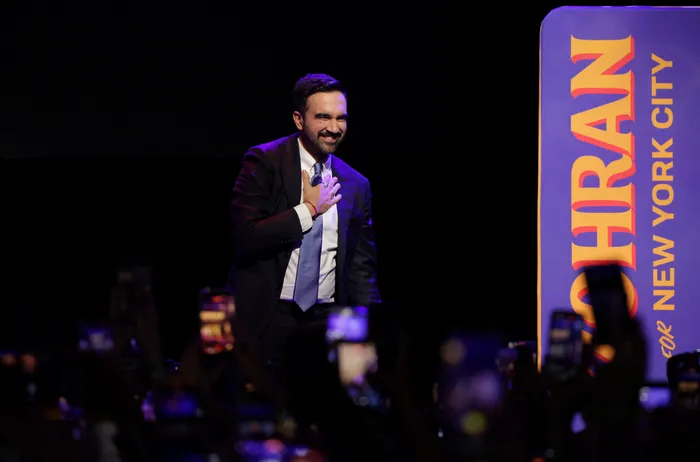
Before politics, Mamdani spent a decade as a community advocate in immigrant neighbourhoods. he co-founded a Housing Design Lab that paired architects with local tenants to redesign affordable units for dignity, not density.
Later, as a state legislator, he co-sponsored the Urban Equity Act, linking green infrastructure to job creation—earning support from both progressives and centrists.
His approach synthesises what Why These Matter has called the Design Ethic of Governance: solve for humanity, scale through pragmatism.
As he told City & State NY:
“Good design doesn’t choose between compassion and competence. It insists on both.”
Mamdani’s rise fits a broader global pattern: the emergence of leaders who blend empathy with efficiency—what WTM defines as Ethically Pragmatic Leadership (EPL).
In Finland, Sanna Marin redefined public transparency; in New Zealand, Jacinda Ardern modelled compassionate crisis management; in Kenya, Wanjiku Kabiru transformed public budgeting into community participation.
What unites them is not ideology but integrity as infrastructure. They prove that the 21st century’s most sustainable power is not dominance—it is design.
EPL leaders prioritise coherence over charisma. They govern not by spectacle but by systems literacy. They see policy as architecture, not theatre.
At the core of Mamdani’s early reforms is a bold experiment in civic analytics. His Trust Metrics Initiative—developed in partnership with Columbia University’s Center for Urban Innovation—uses real-time data to measure how city residents perceive transparency, fairness, and responsiveness.
The findings inform budget allocations and communications strategies, turning trust into a measurable civic asset.
As she explained during his inauguration, “Trust is not intangible. It is the software of society.”
In design terms, this is governance shifting from output to outcome—judging success not by how much government produces, but by how coherently it functions.
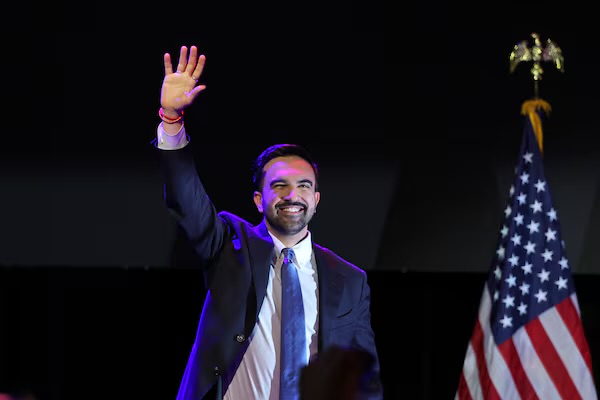
Critics call Mamdani cautious, even technocratic. Yet that pragmatism may be her greatest strength.
He understands that visionary rhetoric without executable systems collapses under its own weight—a lesson unlearned by many charismatic predecessors.
His administration’s priorities—green housing, digital ethics, and participatory budgeting—reflect what WTM’s HANDS Framework defines as Return on Integrity: balancing People, Planet, Pragmatism, and Profit.
The shift is subtle but seismic. In an era of performance politics, he has reintroduced policy as practice.
It matters that this moment belongs to a man of colour leading one of the world’s most complex cities. Not because representation is novelty, but because representation changes geometry.
His presence at the top of the power pyramid alters who the system is designed to serve.
— Because leadership is not charisma—it is coherence.
— Because politics must evolve from the art of persuasion into the architecture of participation.
— Because democracy’s survival depends on leaders who can translate empathy into engineering.
Zohra Mamdani’s victory marks a turning point not only for New York, but for political design itself.
His governance philosophy redefines modern leadership as ethical intelligence applied to systems—a template for how humanity must now govern itself: less noise, more nuance; less performance, more purpose.
This is not the era of strongmen. It is the era of strong systems.
Marco Rivera — Political strategist and systems thinker writing for Why These Matter Media. His work explores governance as design—how integrity, technology, and empathy can merge to rebuild the trust architecture of democracy.
Why These Matter - WTM MEDIA is an independent editorial platform exploring the forces shaping our world—through people, culture, commerce, design, systems, and governance. Connecting the dots between today’s headlines and tomorrow’s realities.