

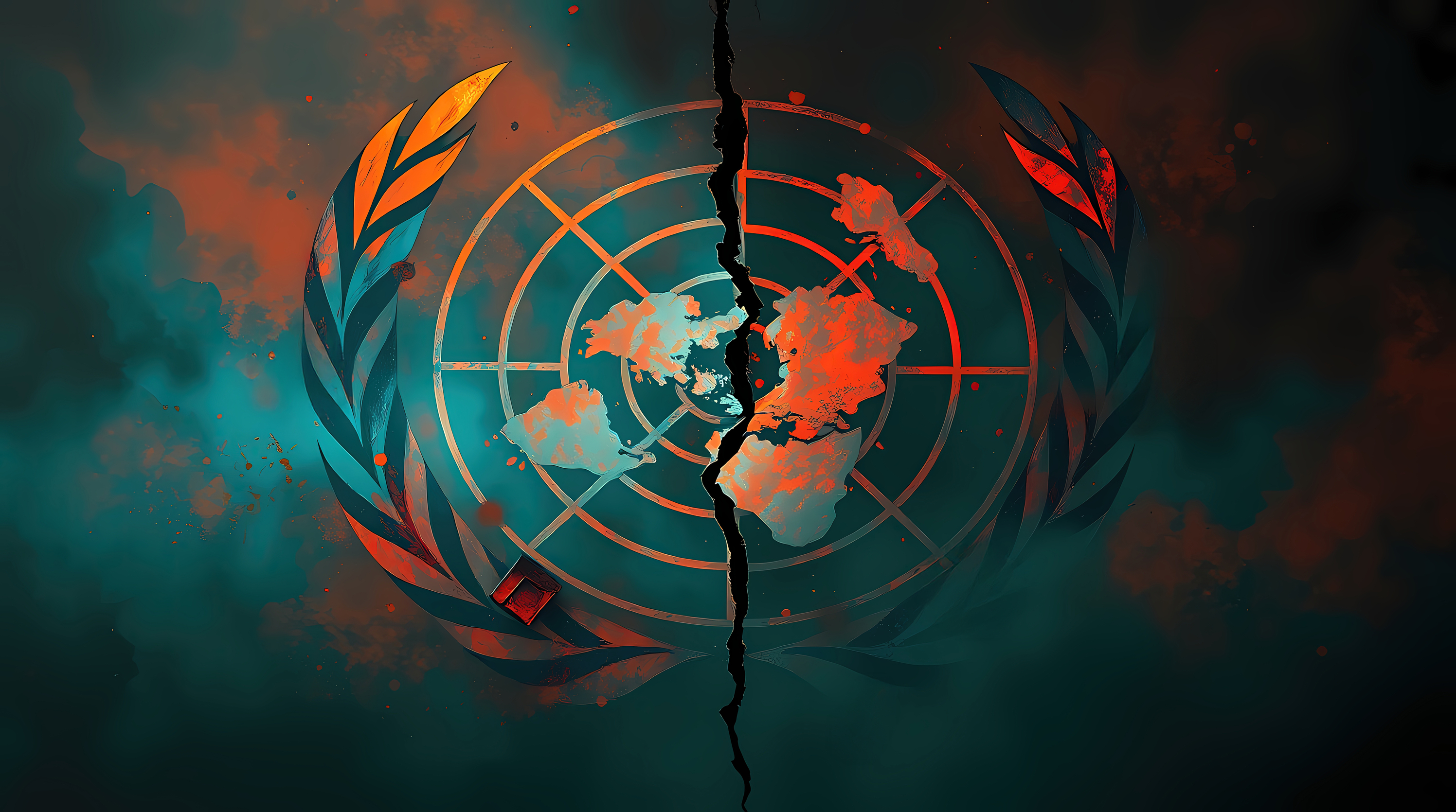
Across alliances, borders, and institutions, power is increasingly exercised without trust. This article examines how legitimacy—not military strength or economic size—has become the decisive variable in global stability, and why its erosion now threatens international order.
The global system is not short on power. Military budgets are expanding. Surveillance capabilities are advancing. Economic leverage remains concentrated. What is disappearing is legitimacy—the shared belief that power is exercised within rules that apply consistently and predictably. This is not a moral observation. It is a structural one.
States can compel behavior through force or pressure, but they cannot compel belief. Once legitimacy erodes, compliance becomes brittle, alliances weaken, and deterrence loses credibility. History shows that power without legitimacy does not vanish overnight—it destabilizes gradually, then collapses suddenly. Today’s geopolitical tension is not primarily about who has power. It is about who is believed.
After the Cold War, global institutions were built on a central assumption: that economic integration, legal norms, and multilateral cooperation would reinforce stability. Power would still exist, but it would be constrained by shared frameworks. That assumption is now broken.
Not because institutions failed outright, but because enforcement became selective. Rules were applied unevenly. Exceptions multiplied. Strategic ambiguity replaced principled consistency. Over time, credibility weakened. This erosion did not originate with a single country or conflict. It accumulated across trade regimes, military interventions, sanctions enforcement, and treaty interpretation.
Once credibility is lost, even legitimate actions are viewed with suspicion.
Legitimacy functions like infrastructure. It is invisible when intact and catastrophic when compromised. It depends on three conditions:
When these conditions fail, power becomes coercive rather than authoritative. The international system now exhibits all three failures simultaneously.
Military alliances remain formally intact, but cohesion has weakened. In organizations like North Atlantic Treaty Organization, mutual defense commitments still exist on paper, yet trust among members has thinned. Burden-sharing disputes, conflicting threat perceptions, and unilateral decision-making have introduced uncertainty into what was once considered the most stable alliance structure in modern history.
Allies now ask:
These questions matter because alliances depend more on belief than on hardware. A missile system deters only if it is trusted to be deployed. Nowhere is the legitimacy crisis clearer than in the Arctic. As ice recedes, Greenland has moved from geographic margin to strategic center. Shipping routes, rare earth deposits, and military positioning have turned the region into a geopolitical focal point.
Institutions like the Arctic Council were designed to manage cooperation in this space. Yet their influence has weakened as strategic competition intensifies. The issue is not interest—every major power has clear incentives. The issue is process. When strategic interest overrides respect for sovereignty, consultation, and indigenous governance, legitimacy erodes rapidly. Arctic stakeholders are increasingly skeptical that their futures are being negotiated with them rather than around them. Once again, power is present. Trust is absent.
Modern geopolitics is not confined to territory. It operates through narratives. States now compete not only for influence, but for credibility in information ecosystems. Control of narrative framing—who defines events, who is believed, whose version circulates—is as consequential as troop movement.
This has produced a paradox:
The result is not persuasion, but fatigue. When publics lose confidence in official narratives, space opens for extremism, conspiracy, and opportunistic actors. One of the most dangerous trends in global governance is the normalization of exception.
Exceptional measures—sanctions without due process, surveillance without oversight, interventions without clear mandates—were once justified as temporary responses to extraordinary circumstances. They are now routine.
This undermines international law not by breaking it outright, but by hollowing it from within. Laws remain, but enforcement becomes discretionary. Discretion becomes precedent. Precedent becomes norm. At that point, legality becomes performative.
Legitimacy erosion disproportionately harms smaller and mid-sized states. Large powers can absorb reputational damage. Smaller states depend on predictable rules for security and economic stability. When norms weaken, they face increased pressure to align, submit, or militarize. This accelerates fragmentation.
Rather than a rules-based order, the world drifts toward a negotiation-based order—where outcomes depend on leverage, not law. History shows this configuration is unstable. As legitimacy declines, transactional power rises.
Deals replace treaties. Short-term bargains replace long-term frameworks. Commitments become conditional, revocable, and personalized. Transactional systems are efficient in the short term but corrosive over time. They discourage investment, weaken institutions, and reward opportunism.
Most critically, they eliminate memory. Each interaction starts from zero trust.

An under-examined consequence of legitimacy loss is strategic silence. States, institutions, and even populations increasingly choose not to respond. They disengage from forums, abstain from votes, delay cooperation, or quietly hedge.
Silence is not neutrality. It is risk management. When participation no longer guarantees fairness, abstention becomes rational. This silent withdrawal weakens global problem-solving capacity precisely when coordination is most needed—on climate, migration, cybersecurity, and pandemics.
Climate change is accelerating the legitimacy crisis. As resources shift and displacement increases, states are forced into reactive governance. Emergency logic expands. Security framing replaces cooperative planning. Climate impacts do not respect borders, but responses increasingly do.
This mismatch intensifies mistrust. States that contribute least to emissions suffer earliest and most severely. When mitigation commitments are delayed or diluted, credibility collapses. No security architecture can survive prolonged legitimacy failure on this scale.
Rebuilding legitimacy does not require moral consensus. It requires procedural credibility.
That means:
Most importantly, it requires restraint. Power that refuses restraint ultimately undermines itself. Geopolitical stability is not maintained by dominance alone. It is maintained by the belief that rules matter even when inconvenient.
The current global system is not collapsing—but it is losing coherence. If legitimacy continues to erode, power will not disappear. It will become louder, harsher, and less predictable. History is clear on this point: systems fail not when power runs out, but when trust does.
Sources & Further Reading
Why These Matter - WTM MEDIA is an independent editorial platform exploring the forces shaping our world—through people, culture, commerce, design, systems, and governance. Connecting the dots between today’s headlines and tomorrow’s realities.