The decline in civility, comfort, and behaviour in modern air travel is not a cultural mystery. It is the direct outcome of economic and regulatory decisions made over decades. Airline deregulation reshaped pricing, capacity, and incentives—and in doing so, fundamentally altered how people behave in shared spaces.
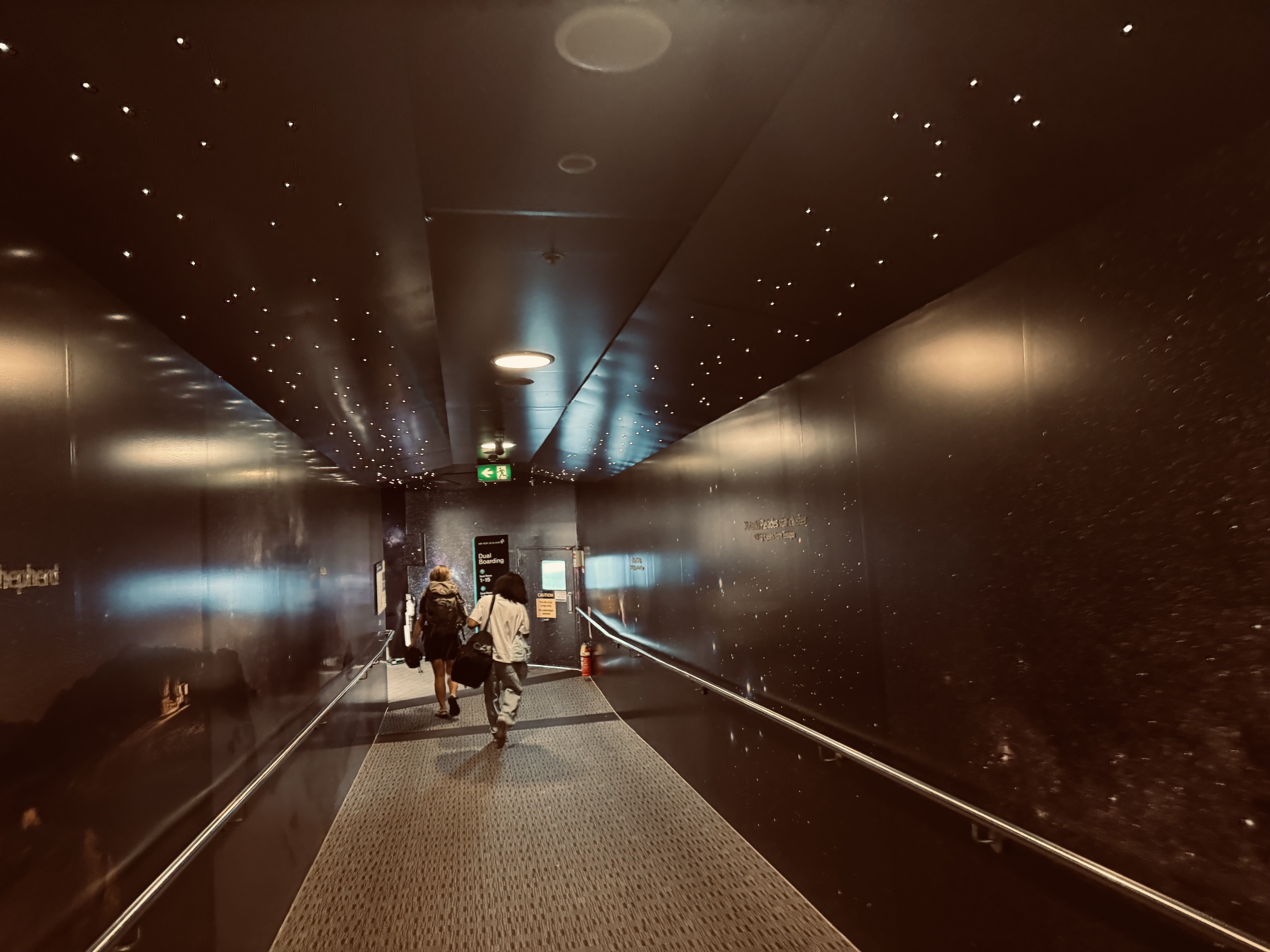
The modern flying experience is often described as a social decline. Passengers dress more casually. Tempers flare more easily. Conflict between travellers and airline staff has increased. Airports feel crowded, tense, and transactional.
This framing misses the point.
What we see in air travel today is not a collapse of manners or respect. It is the predictable result of how the airline industry was economically redesigned. Behaviour follows structure. When incentives change, conduct changes with them.
Air travel did not become less dignified because people changed. It became less dignified because the system did.
Prior to 1978, the U.S. airline industry operated under heavy federal regulation. Routes, prices, and service standards were tightly controlled by the Civil Aeronautics Board. Airlines competed on reliability and service rather than price alone.
This produced several structural characteristics:
Flying was expensive and exclusionary, but it was also stable. The system was not optimised for volume. It was optimised for predictability.
That predictability shaped behaviour. Airports were calmer. Passengers had clearer expectations. Staff had more discretion to solve problems. Stress existed, but it was contained.
The Airline Deregulation Act of 1978 aimed to lower fares and increase competition. It succeeded. Ticket prices dropped significantly in real terms, and air travel became accessible to a much larger share of the population.
But deregulation also removed structural constraints that had limited how airlines could operate. Once price competition became the dominant force, airlines adjusted accordingly.
Key changes followed:
These changes were not accidental side effects. They were rational responses to new incentives.
Most discussions focus on physical discomfort: tight seats, limited overhead space, crowded terminals. But compression operates on multiple levels.
Physical compression: Reduced personal space, narrower aisles, denser seating.
Temporal compression: Shorter boarding windows, tighter connections, less margin for error.
Psychological compression: Reduced sense of control, increased uncertainty, fewer recovery options when disruptions occur.
Human behaviour is sensitive to all three.
Research from the MIT Human Factors and Ergonomics program shows that reduced personal space increases stress hormones, decreases patience, and heightens sensitivity to perceived threats or unfairness. These effects compound in environments where people cannot easily leave.
Source: MIT Human Systems Integration Lab
Decades of sociological research confirm a consistent pattern: crowding alters behaviour.
Studies published in the American Sociological Review and Journal of Environmental Psychology demonstrate that high-density environments:
These effects are not personality-based. They occur across cultures and income levels.
When people are packed into tight spaces with limited information and few options, behaviour shifts from communal to defensive. Courtesy becomes costly. Patience becomes fragile.
Source: American Sociological Review – crowding and social behaviour
Rituals are not decorative. They are stabilising mechanisms.
In earlier eras of air travel, rituals structured behaviour:
As airlines stripped away anything that didn’t directly generate revenue, rituals disappeared. Boarding became rushed. Seating became competitive. Staff became enforcers rather than hosts.
Without shared rituals, behaviour defaults to individual survival strategies.
This is why people rush boarding gates early, guard armrests, and react strongly to seat disputes. The system no longer signals cooperation. It signals scarcity.
Modern commercial aviation now resembles urban mass transit in structure:
The difference is altitude and duration.
Flying combines the density of a subway with the duration of long-distance travel, while removing the ability to exit freely. That combination is psychologically taxing.
It is not surprising that behaviour mirrors what we see in crowded buses or trains. The environment produces the outcome.
A common misconception is that air travel lost its elegance entirely. It did not. It was separated by price.
Premium cabins, airport lounges, priority security lanes, and concierge services now recreate the buffers that once existed system-wide. Space, calm, and service are still available—just not shared.
This creates two parallel systems:
Sociologically, this mirrors broader trends in housing, healthcare, and education. When public systems degrade, those with resources buy insulation from stress.
Air travel makes this stratification visible in real time.
Airline executives and commentators often frame passenger behaviour as the problem. Reports focus on “unruly passengers” without addressing the conditions that produce conflict.
FAA data shows that passenger incidents rose sharply following increases in seating density and during periods of prolonged delays, particularly during the COVID-19 recovery period when staffing shortages were severe.
Source: Federal Aviation Administration – Unruly Passenger Statistics
This correlation is not incidental. When systems remove buffers and accountability, stress migrates downward.
People are not becoming worse. They are responding to pressure.
From an economic standpoint, the current system is internally consistent.
Airlines optimise:
Human comfort does not factor into these metrics unless it affects demand. As long as flights sell out, discomfort is tolerated.
This is not moral failure. It is incentive alignment.
But incentives can be changed.
Air travel is not unique. It is an early example of a broader pattern: systems engineered for efficiency at scale often externalise human cost.
What happens in airplanes today often happens later in other sectors:
Airports and airplanes are simply where these dynamics are impossible to ignore.
Calls for passengers to “dress better” or “behave better” misunderstand the problem.
Behaviour improves when:
Policy tools that could change outcomes include:
These are regulatory choices, not cultural ones.
People sense, often intuitively, that the system is indifferent to their experience. That perception erodes trust.
When trust disappears, behaviour becomes transactional:
This is not limited to airports. It reflects how people experience institutions more broadly.
Modern air travel did not decline by accident. It was redesigned to prioritise efficiency, scale, and price competition. Human behaviour adjusted accordingly.
Compression—physical, temporal, and psychological—rewired how people act in shared spaces. Civility did not disappear. It was squeezed out.
If better behaviour is the goal, better systems are the solution.

Why These Matter - WTM MEDIA is an independent editorial platform exploring the forces shaping our world—through people, culture, commerce, design, systems, and governance. Connecting the dots between today’s headlines and tomorrow’s realities.