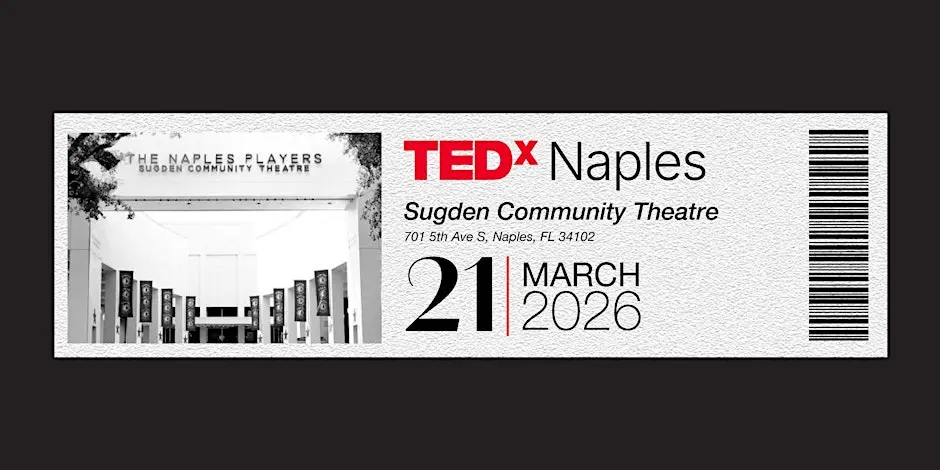
On March 21, Naples, Florida will host TEDx Naples—one of thousands of independently organised TEDx events held globally each year. On the surface, that might not sound remarkable. TEDx events are common. Many are forgettable. Some are performative. A few are genuinely consequential. This one has the potential to be the latter. At a time when public trust in institutions is low, civic dialogue is fragmented, and leadership conversations are increasingly reduced to slogans, TEDx Naples is positioning itself not as entertainment, but as a forum for adult thinking—about responsibility, justice, resilience, and what it means to lead in a world shaped by consequence rather than applause. This editorial explains why this particular TEDx event matters, what differentiates it from the broader TEDx ecosystem, and why its timing—and location—are not incidental.
TEDx, as a format, is neutral. It can elevate ideas—or flatten them. The difference lies in curation, speaker selection, and the discipline to resist spectacle.
Too many TEDx events default to:
When that happens, the stage becomes a branding exercise rather than a civic one. TEDx Naples appears to be making a different choice.
Based on speaker selection, thematic framing, and the broader Lifelong Learning programming surrounding the event, the emphasis is not on viral soundbites, but on ideas that hold weight beyond the room.
Naples is often misunderstood. To outsiders, it is framed narrowly: affluent, retired, insulated. That framing is incomplete and outdated. Naples is also a city grappling with real questions about growth, inequality, climate exposure, generational transition, and civic responsibility—questions often faced quietly, without the theatrical politics seen in larger metros.
This makes Naples a strategic location for a TEDx event focused on leadership, justice, and long-term thinking.
Important conversations do not only belong in New York, San Francisco, or London. In fact, some of the most consequential civic decisions in the United States are made in places like Naples—by local leaders, boards, foundations, and institutions whose choices ripple outward over decades.
Hosting TEDx Naples at the Sugden Theatre reinforces this seriousness. The venue signals that this is not a pop-up talk series, but a considered public forum.
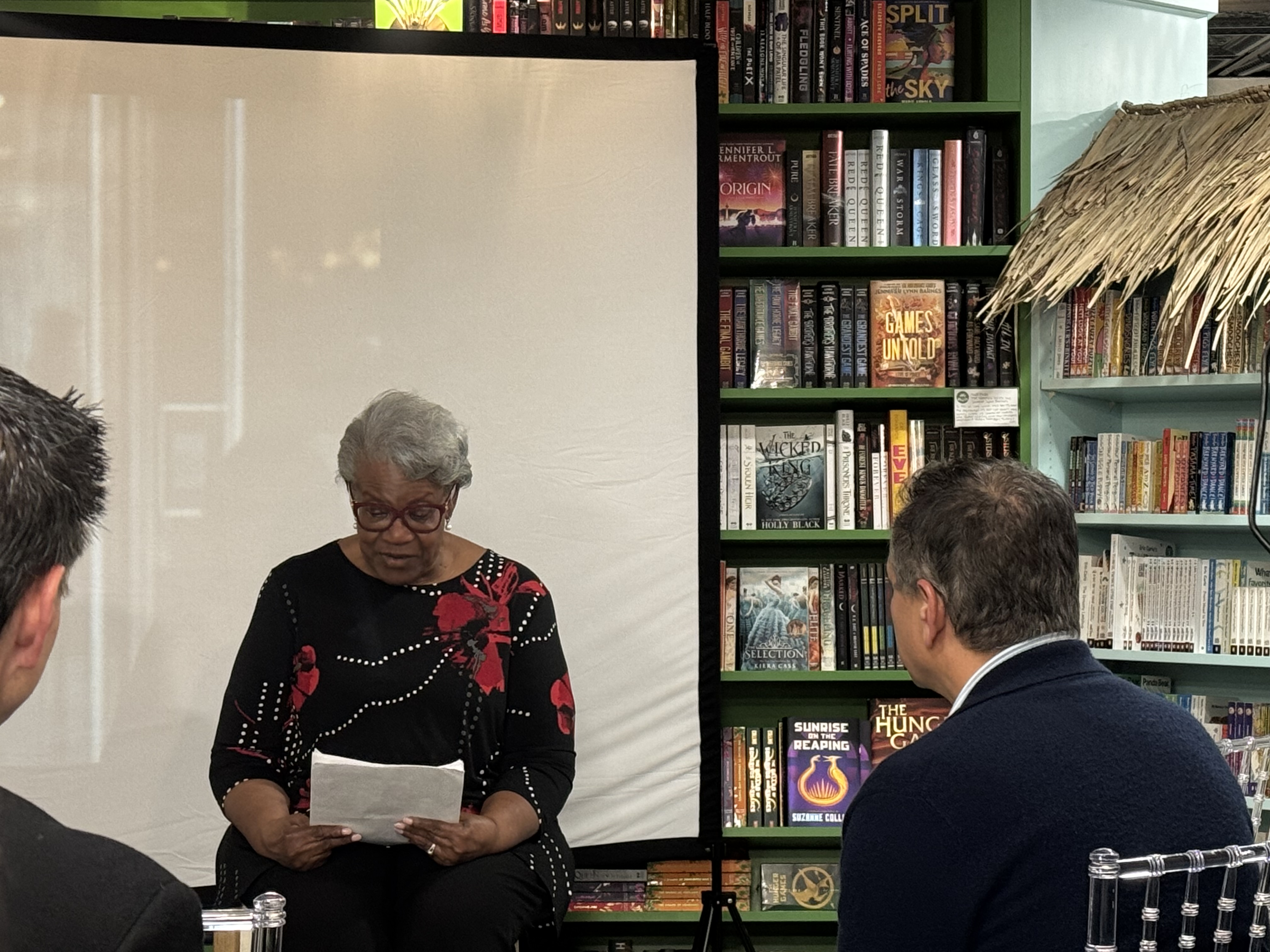
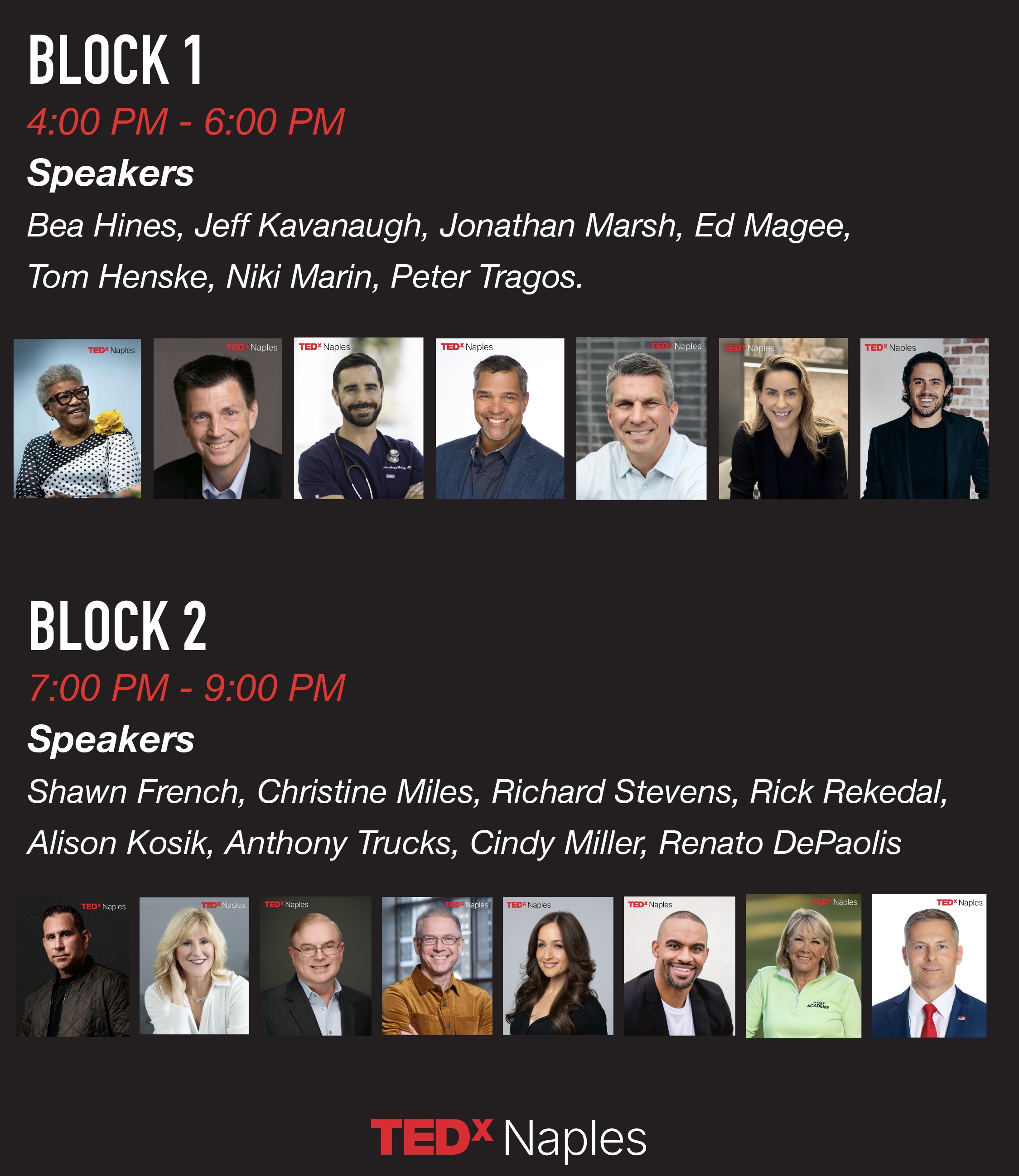
Perhaps the most historically significant presence at TEDx Naples is Bea Hines.
Hines served as the first—and for 66 years, the only—Black journalist at the Miami Herald. That fact alone deserves attention, but not nostalgia. What matters is not the milestone, but the endurance.
Sixty-six years in journalism—particularly as a Black woman in American media—means sustained exposure to institutional resistance, shifting power dynamics, and the long arc of truth-telling under pressure. It means choosing integrity repeatedly when convenience would be easier.
In today’s media environment—where speed often overrides verification, outrage crowds out nuance, and trust is eroding—Hines’ presence reframes journalism not as content production, but as moral infrastructure.
Her voice brings historical depth to a stage often dominated by futurism. That balance is critical. Without memory, innovation becomes reckless. Without truth, storytelling becomes manipulation.
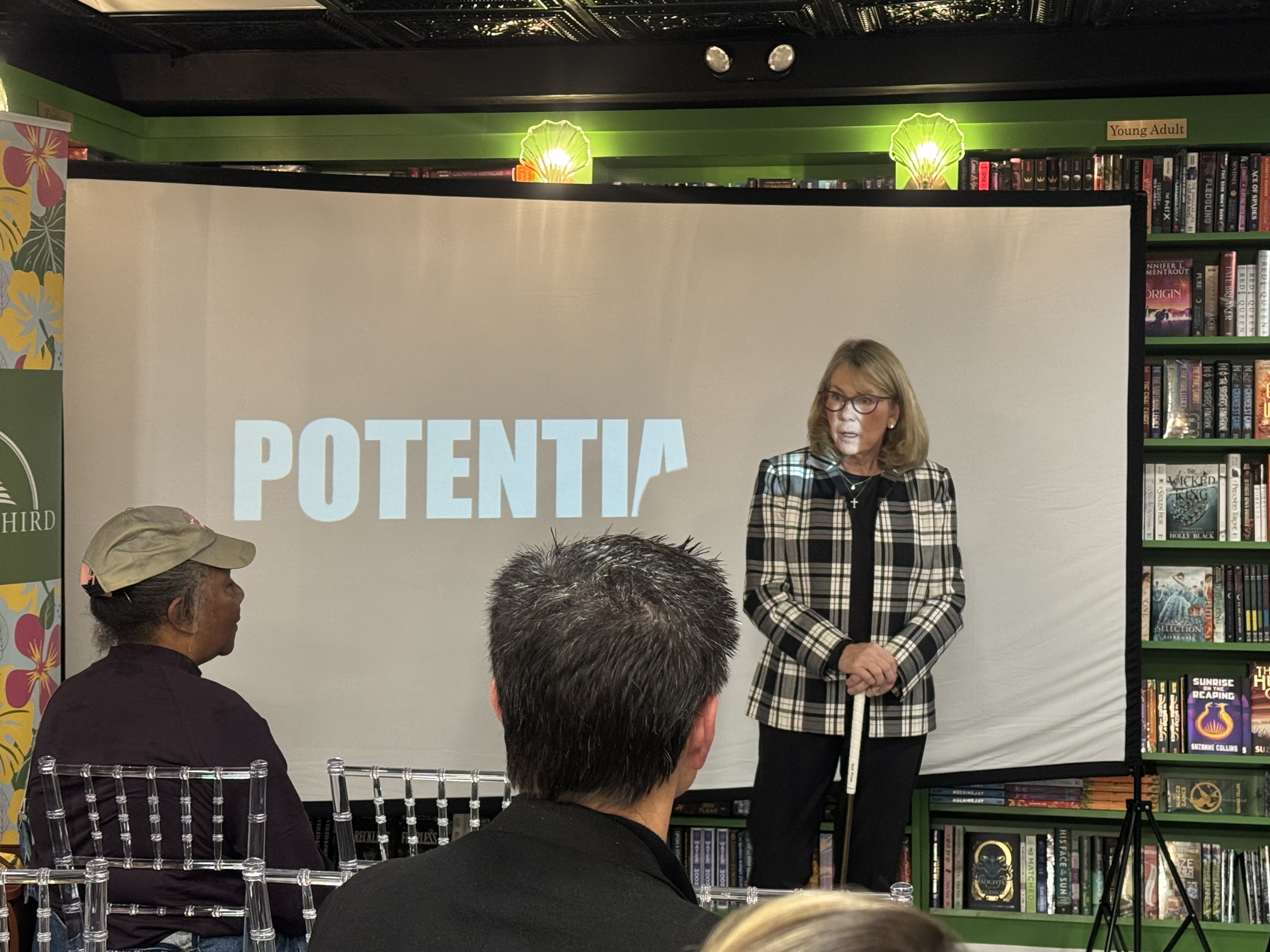
One of the clearest signals of intent comes from the inclusion of Cindy Miller.
Miller’s work focuses on leadership, justice, and the internal discipline required to confront one’s own limitations, failures, and ethical blind spots. This is not motivational speaking. It is governance—starting at the individual level.
In an era where leadership is often confused with visibility, Miller’s contribution reframes leadership as internal accountability before external authority. Her focus on “defeating your demons” is not therapeutic language; it is operational. Leaders who do not confront their own biases, fears, and incentives eventually export them into organisations, policies, and systems.
The inclusion of this perspective matters because it shifts the conversation from:
to
That is a leadership question worth staging.
TEDx Naples is part of a broader Lifelong Learning initiative. This framing is not incidental.
Lifelong learning is often reduced to professional upskilling or personal enrichment. In reality, it is a civic requirement. Democracies, markets, and institutions fail when learning stops—when leaders assume expertise is static and authority is permanent.
By positioning TEDx Naples within a lifelong learning context, the organisers are making an implicit claim: thinking is not something you age out of, and leadership is not something you complete.
This matters in a city with a large population of experienced professionals, retirees, and legacy leaders. The message is clear: wisdom is not withdrawal. Experience is not exemption from reflection.
Several factors distinguish TEDx Naples from the broader TEDx field:
The lineup prioritises substance, lived experience, and ethical complexity over celebrity or virality.
These are not add-ons. They are central threads.
Naples is home to decision-makers, funders, and institutional leaders who can act on ideas—not just applaud them.
There is no visible push toward spectacle, gimmicks, or emotional manipulation.
Together, these elements suggest an event designed not to impress, but to inform and provoke responsibility.
The timing of TEDx Naples is significant. We are in a period marked by:
In such moments, the worst response is louder messaging. The better response is clearer thinking.
TEDx Naples, if executed as intended, offers a counterpoint to performative leadership culture. It creates space for conversations about:
These are not fashionable topics. They are necessary ones.
TEDx Naples on March 21 is not important because it carries the TED brand. It is important because it appears to understand the responsibility that comes with the platform.
If successful, it will demonstrate that:
In a media landscape saturated with noise, TEDx Naples has the opportunity to model something rarer: measured, accountable, consequential dialogue. That is why this event matters.

Why These Matter - WTM MEDIA is an independent editorial platform exploring the forces shaping our world—through people, culture, commerce, design, systems, and governance. Connecting the dots between today’s headlines and tomorrow’s realities.