
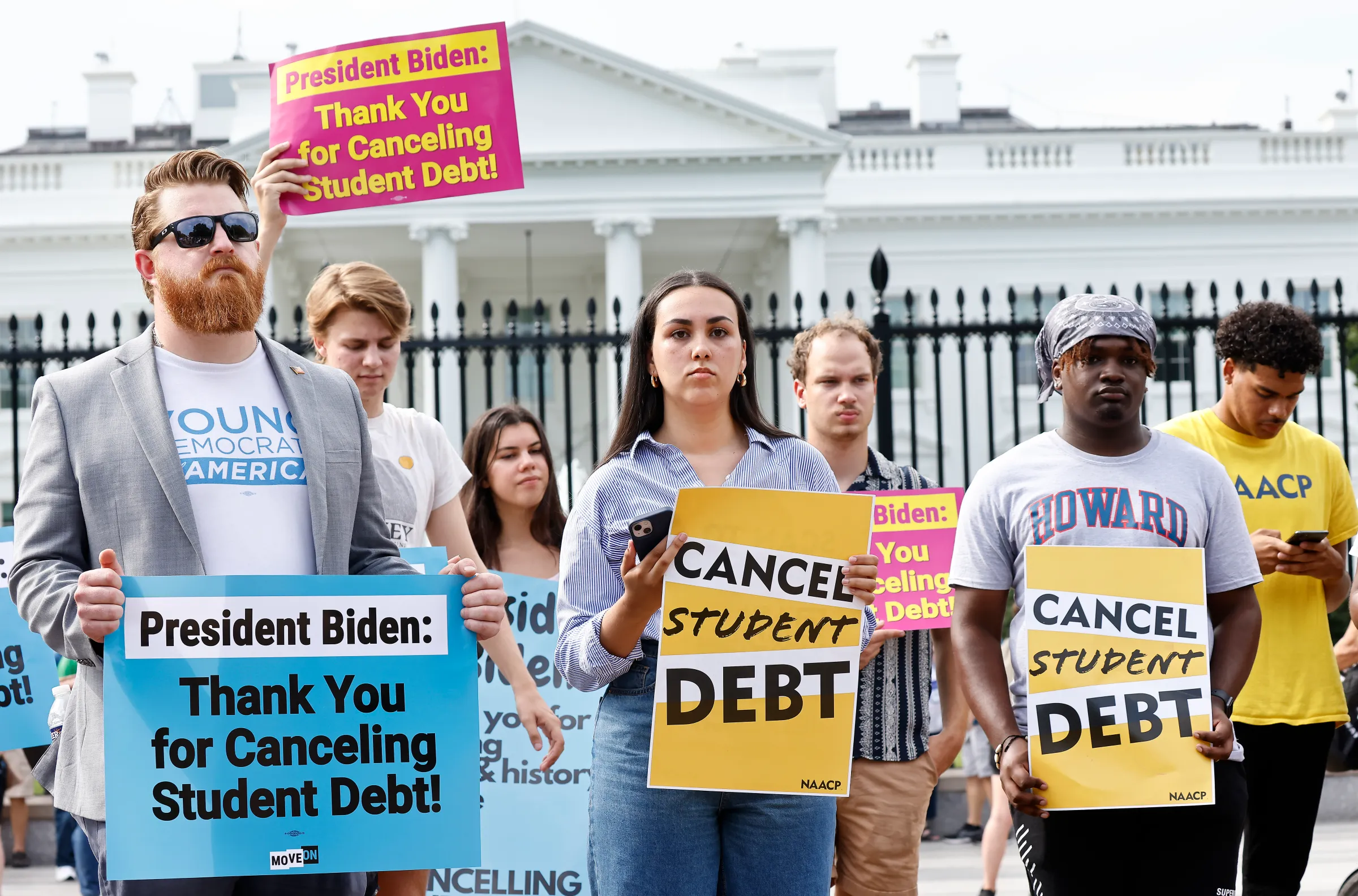
Court victories clearing the way for automatic federal student loan discharges are being framed as borrower relief stories. They are more consequential than that. This editorial examines what these rulings reveal about administrative capacity, economic stimulus mechanics, credit systems, and the long-term credibility of federal governance.
When headlines announce that “automatic discharges” of federal student loans will proceed after court wins, the public conversation quickly fragments into predictable camps: relief versus responsibility, fairness versus moral hazard, executive overreach versus judicial correction. What is largely absent from mainstream framing is the deeper systems question: can the American administrative state execute large-scale corrective action competently, transparently, and without collateral damage to the very citizens it seeks to assist?
Federal student debt now exceeds $1.6 trillion, affecting more than 40 million borrowers. That figure alone places it among the largest consumer credit categories in the United States, rivaling auto loans and trailing only mortgages in scale. Unlike private consumer debt, federal student loans are deeply intertwined with policy discretion, regulatory interpretation, and executive administration. Discharges are not merely financial transactions; they are acts of governance.
When courts uphold pathways for discharge — whether through borrower defense claims, disability determinations, school misconduct findings, or administrative correction of servicing errors — they do more than free individuals from repayment. They test the operational integrity of federal agencies. The Department of Education, loan servicers, Treasury mechanisms, and credit reporting bureaus must synchronise data, validate eligibility, process refunds, and update credit files. The difference between a well-executed discharge and a chaotic one is measured not in ideology but in system design.
Automatic discharge, in theory, reduces bureaucratic friction. It removes the burden of application from borrowers who may lack legal knowledge or administrative literacy. In practice, it transfers that burden to the accuracy of federal databases and contractor systems. If the underlying data are incomplete or inconsistent, automation magnifies error at scale. A misclassification in a single field can cascade across thousands of accounts. Relief becomes delay; correction becomes complaint.
The media rarely examines error rates. Yet that is the crucial metric. How many discharged borrowers see immediate credit-report updates? How long do refunds take to process? How many accounts are partially adjusted rather than fully corrected? Administrative legitimacy depends on precision. When borrowers receive notices that contradict their balances, trust erodes rapidly.
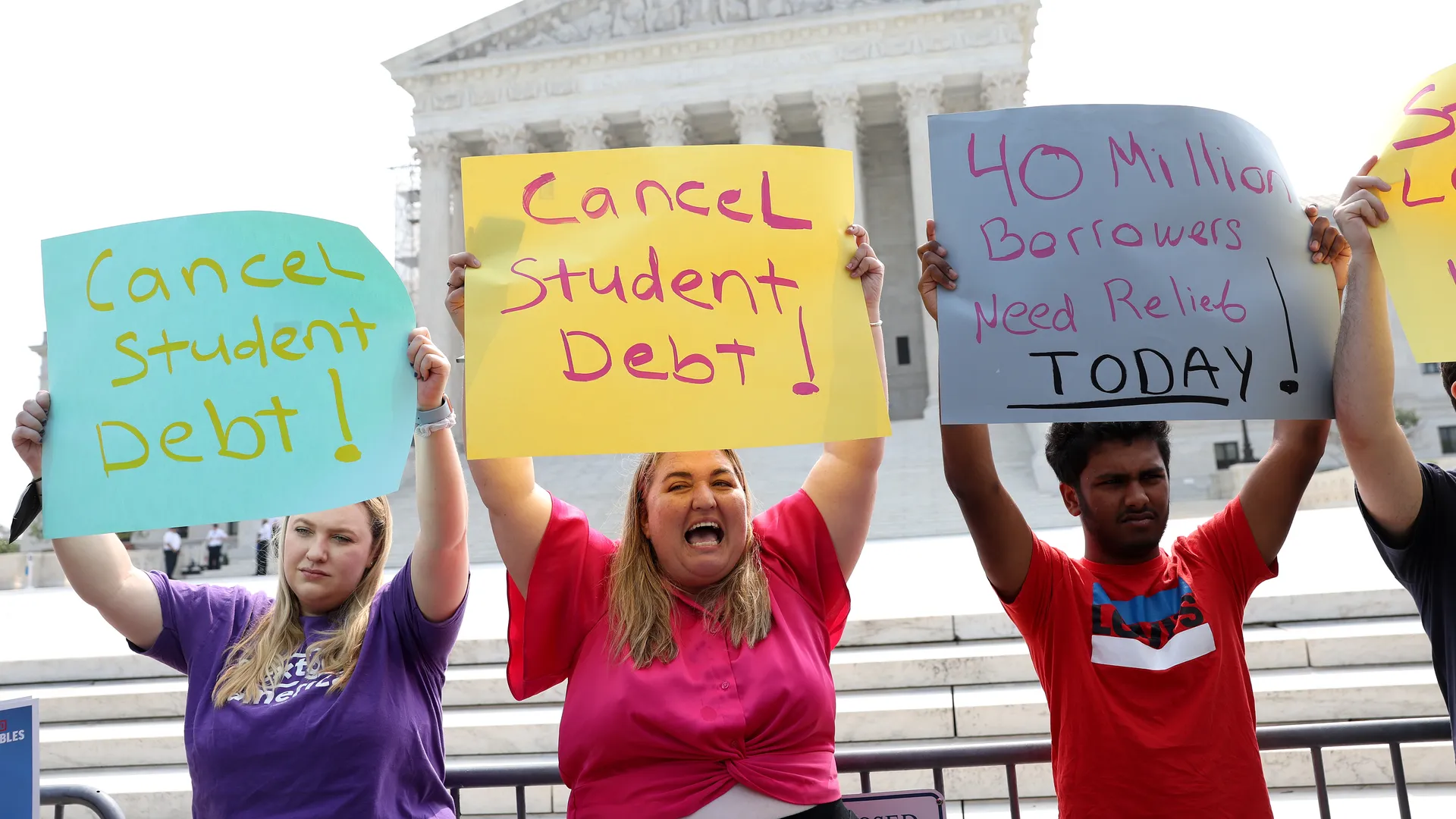
There is also a macroeconomic dimension that is frequently underexplored. Debt discharge functions as a targeted fiscal intervention. It increases disposable income for affected households, improves debt-to-income ratios, and can unlock access to mortgages or business credit. Research from the Federal Reserve has shown that student debt burdens correlate with delayed homeownership and reduced small-business formation. Removing debt does not guarantee entrepreneurship, but it reduces a structural barrier.
Critics frame discharges as inflationary or unfair to prior borrowers who repaid in full. Those arguments deserve debate. But they obscure the narrower point: when courts affirm that specific discharges are legally mandated — for example, due to institutional fraud or administrative error — the issue is not generosity but correction. Failing to execute such corrections would amount to state-endorsed overcollection.
Another overlooked factor is credit reporting integrity. Federal student loans are reported to major credit bureaus. If a discharge is processed internally but not updated externally, borrowers remain penalised in credit scoring models. This discrepancy can raise insurance premiums, increase interest rates on unrelated loans, and affect employment opportunities in sectors that use credit screening. The administrative state’s obligation does not end at account adjustment; it extends to inter-system consistency.
Servicers add complexity. Many federal loans are managed by private contractors. Transitions between servicers in recent years have created data migration challenges. When a discharge order flows through an ecosystem of public and private actors, accountability diffuses. If a borrower’s account reflects conflicting information, who resolves it? The borrower often becomes the intermediary between agencies — precisely the inefficiency automation was meant to eliminate.
Beyond execution lies precedent. Each wave of discharge establishes a procedural template. If agencies demonstrate competence, public confidence in administrative remedies increases. If they stumble, resistance to future corrective actions intensifies. The political narrative then shifts from “Is this relief justified?” to “Can the government handle its own processes?” That shift is consequential for broader policy ambitions.
The economic ripple effects extend beyond borrowers. Financial institutions price risk partly on aggregate consumer balance-sheet health. Large-scale debt reduction improves national debt-to-income averages. It may reduce delinquency rates and stabilise consumer spending. However, it also alters expectations. If borrowers anticipate future discharges under political cycles, repayment incentives could change at the margins. Policymakers must balance corrective justice with behavioural signalling.
International observers watch closely. Higher education financing models vary globally, but the United States remains a benchmark. If administrative correction mechanisms appear chaotic, it weakens confidence in American policy stability. Conversely, if the process is orderly and transparent, it strengthens the perception that rule of law governs financial remediation.
The legal architecture behind these discharges matters as well. Courts often interpret statutory language defining borrower rights. Their rulings clarify executive authority boundaries. Each decision becomes part of administrative law precedent, shaping how agencies exercise discretion. The conversation is not merely fiscal; it is constitutional.
Public discourse often simplifies student debt into a moral narrative: borrowers versus taxpayers. In reality, taxpayers and borrowers overlap significantly. Many discharged borrowers are middle-income earners whose repayments flow back into federal accounts funded by those same households. The fiscal circularity complicates simplistic oppositions.
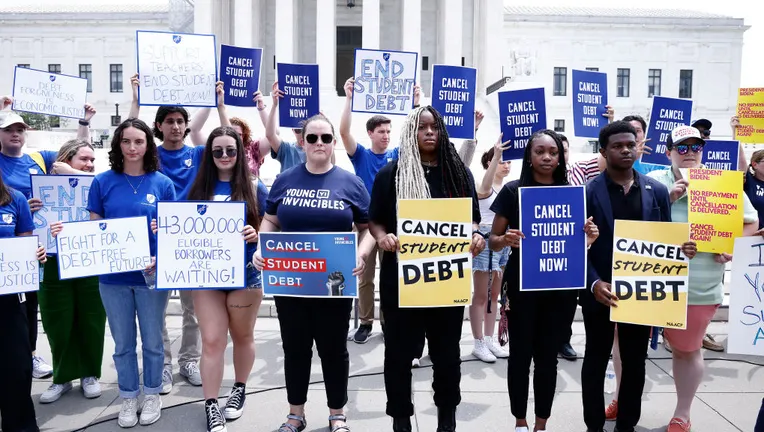
Another dimension rarely addressed is demographic equity. Student debt burdens are disproportionately carried by women and minority borrowers. Discharges, depending on eligibility criteria, may narrow or widen existing disparities. Execution quality determines whether relief reaches those legally entitled to it or is absorbed disproportionately by those with better access to administrative navigation.
There is also technological risk. Federal databases are legacy systems layered over decades. Automation initiatives require cybersecurity safeguards and data validation protocols. A large-scale discharge wave creates attractive targets for fraudsters seeking to exploit identity confusion. Transparent communication from agencies is essential to prevent phishing schemes and misinformation.
Critically, administrative competence influences political legitimacy. When citizens experience efficient correction of errors, faith in governance increases incrementally. When they encounter bureaucratic confusion, faith erodes. Student loan discharge may seem like a narrow issue; in practice, it is a stress test for public administration in an era of digital scale.
The economic argument most overlooked is psychological. Debt exerts cognitive load. Behavioural economists document how financial stress narrows decision-making bandwidth. Removing debt can improve mental health, productivity, and long-term planning capacity. These effects are difficult to quantify but materially significant.
Yet none of these benefits materialise automatically. They depend on follow-through. Agencies must publish clear timelines, grievance pathways, and performance metrics. Transparency converts relief from political gesture into institutional reform.
In the long arc of American governance, student loan discharges will likely be remembered less for their immediate dollar amounts and more for what they revealed about state capacity. Large democracies survive on procedural credibility. Courts can order correction; only administration can deliver it.
The mature question is not whether one supports or opposes discharge as a concept. It is whether the machinery of governance can execute lawful remedies efficiently, accurately, and transparently. That answer determines more than credit scores. It shapes the social contract.
Administrative power is the quiet backbone of democracy. When courts affirm rights but agencies fail to execute them competently, the gap between law and lived reality widens. Student loan discharges are not merely financial adjustments; they are proof points for whether complex societies can correct their own errors without descending into chaos. Competence is political capital. Losing it is far costlier than any discharge total.
Why These Matter - WTM MEDIA is an independent editorial platform exploring the forces shaping our world—through people, culture, commerce, design, systems, and governance. Connecting the dots between today’s headlines and tomorrow’s realities.