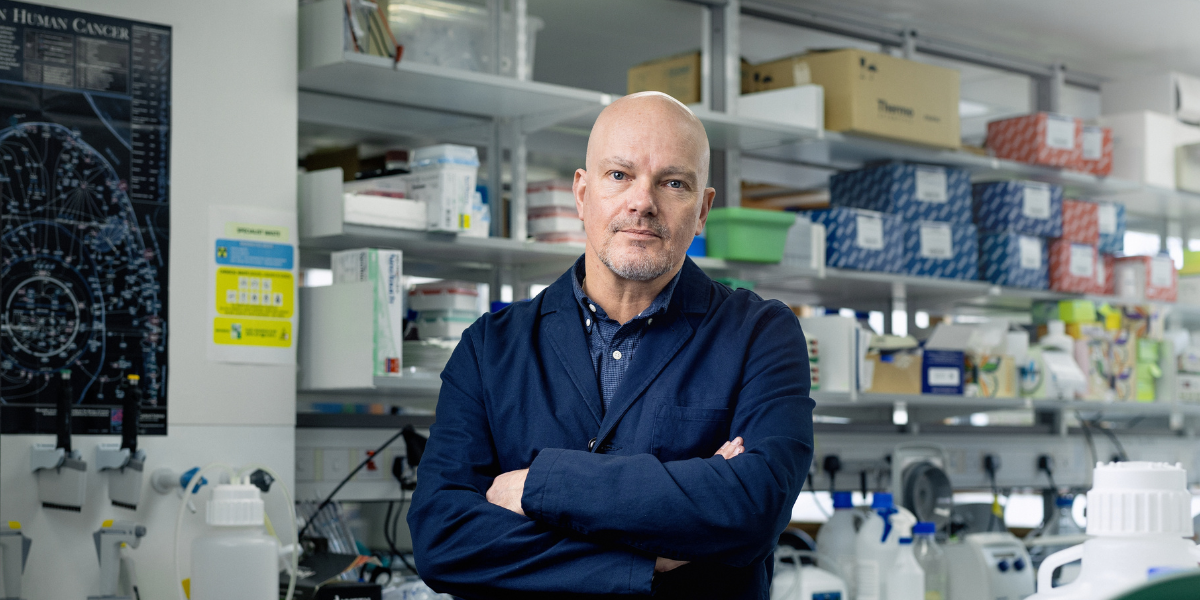
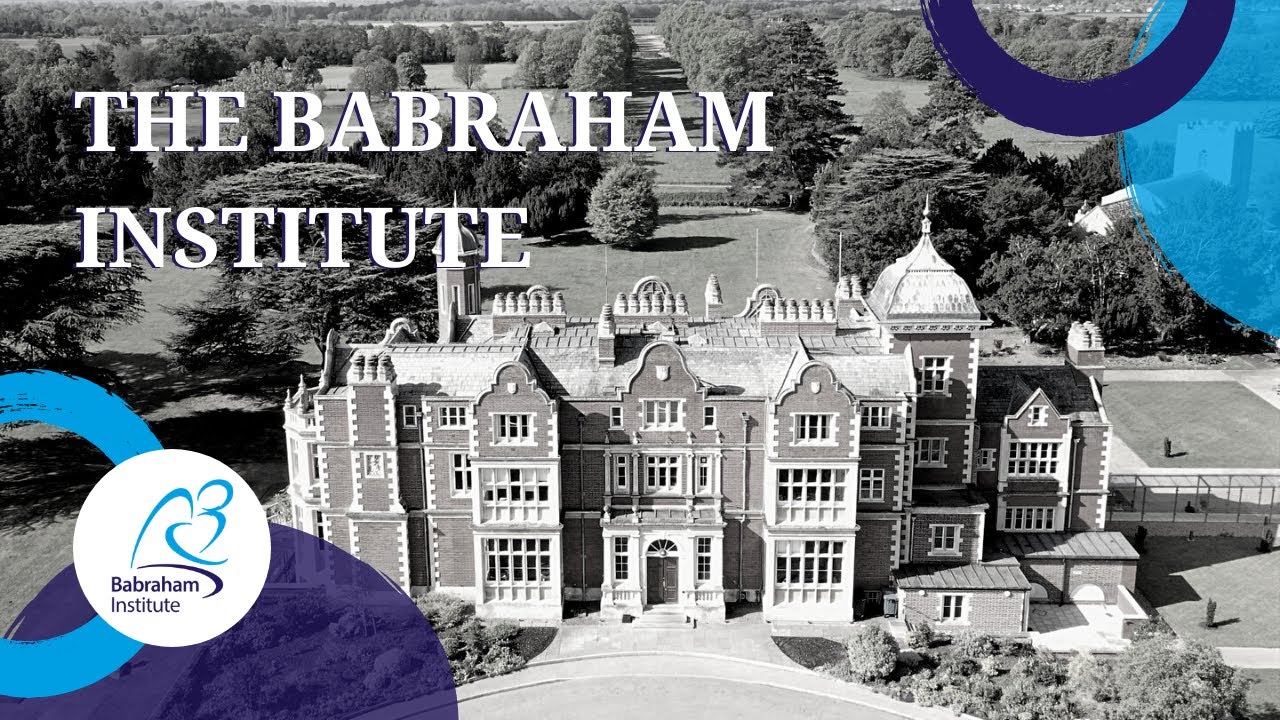
We didn’t discover a fountain of youth. We discovered something more dangerous: a toggle—a way to make time negotiable inside a cell, without erasing what the cell is. A research team at the Babraham Institute reported a method that rewinds the molecular age of human skin cells by roughly three decades—while allowing those cells to regain their specialised identity. It’s early-stage science, performed in vitro, and it does not make humans 30 years younger. But it does redraw the map of what “age” even means. Babraham Institute
We’ve spent decades treating ageing like gravity: inevitable, impartial, and brutally democratic. You can moisturise around it. You can lift against it. You can pray through it. But you cannot negotiate with it.
Then a lab in Cambridge published a quiet provocation: using a technique called maturation phase transient reprogramming, researchers exposed human skin fibroblasts to the famous Yamanaka factors for 13 days—not long enough to fully reset them into stem cells, but long enough to scrub away a meaningful portion of age-associated molecular markings. Then they removed the factors and allowed the cells to recover their specialised identity. Babraham Institute+1
And the cells—this is the part that should make every policymaker sit upright—looked, by key molecular measures, about 30 years younger than where they started. Not in a poetic sense. In an epigenetic clock and transcriptomic sense. In the language the body uses to keep time. Babraham Institute
Let’s be blunt, because science deserves clarity, not hype. The team did not reverse ageing in a person. They did show that, in a dish, older human fibroblasts can be pushed backward along certain molecular ageing markers and can regain functional behaviours associated with youth—such as increased collagen production and faster migration into a wound gap in a lab assay. Babraham Institute
They also observed gene-expression shifts in APBA2 (associated with Alzheimer’s disease) and MAF (linked to cataract development) trending toward more youthful levels. That’s not a cure; it’s a signal flare. Babraham Institute
The honest summary is this:
Age, at least in part, is editable. Not erased. Not defeated. Edited. And editing implies authorship.
The real breakthrough isn’t youth. It’s precision.
Humanity has chased longevity in two recurring forms:
This work introduces a third category:
The most consequential line in the Babraham explanation isn’t “30 years.” It’s “without losing their specialised function.” That’s the knife edge: how to rejuvenate without wiping identity. Babraham Institute
In other words, the future of medicine may not be “replace the organ.” It may be: restore the instructions that made the organ resilient in the first place. That is not beauty culture. That is infrastructure.
Whenever biology becomes programmable, capitalism shows up like a well-dressed landlord.
If the age-reset toolkit matures, it won’t arrive as a humanitarian choir singing in harmony. It will arrive as:
The science is neutral. The distribution never is. If you want the world to understand the stakes, say it plainly:
An “age intervention” economy will produce a new class system: the time-rich and the time-rationed.
Because the first public narrative will be vanity—and that’s the trap.
Yes, skin is involved. So the internet will do what it always does: turn a civilization-level breakthrough into a before-and-after photo and a checkout button.
But collagen is not the headline. The headline is that the body might be coaxed into repairing itself more effectively—wounds, tissue decline, and potentially (in the far future, if safely translated) certain degenerative trajectories.
This research is described as early-stage and exploratory even in its official release. That’s not a weakness. That’s the responsible posture. Babraham Institute
The public conversation, however, will not be responsible by default. Which means the ethical architecture must be built before the market writes the constitution.
1) What is the acceptable risk envelope?
Reprogramming and cancer risk belong in the same sentence. If you can push cells backward, you can also push them into states you do not fully control. The paper and release emphasise the mechanism is not yet fully understood. That’s a warning label. Babraham Institute
2) What counts as treatment vs enhancement?
Wound healing, fibrosis repair, neurodegenerative support: “treatment.”
Optimization for youth, productivity, beauty, employability: “enhancement.”
The line will be litigated, not philosophised.
3) Who owns the protocols?
If “time editing” becomes monopolised IP, then the future is not medicine—it’s feudalism in a lab coat.
If we apply The Power of HANDS logic here, the stakes become legible:
This is the point where your audience leans in, because it answers their private question:
Here’s the uncomfortable answer:
If this field matures, it will affect your insurance model, retirement timeline, labour market, elder care, national healthcare budgets, and the social contract between generations.
Even if you never touch a rejuvenation therapy, you will live under the politics of it.
We are approaching an era where time becomes a design material. And like any powerful material—steel, concrete, uranium—its moral value depends entirely on the architect. If you leave the blueprint to hype merchants, they will sell youth the way they sold wellness: expensive, exclusive, and dripping with shame. If you build the blueprint with dignity, you get something rare: A future where longer life isn’t a luxury good — but a civic upgrade.

Kelly Dowd, MBA, MA is a Nigerian–American designer and systems architect, author of The Power of HANDS: Designing a Sustainable Future Through Integrative Collaboration, Editor-in-Chief of Why These Matter Media. Dowd's work unites design intelligence, ethics, and spirituality to shape the next age of human-centred technology and integrative civilisation. He created the HANDS Framework (Humanity, Adaptation, Nature, Design, Sustainability) and the Four Ps (People, Planet, Pragmatism, Profit), advancing a pragmatic ethics of innovation: Return on Integrity.
Why These Matter - WTM MEDIA is an independent editorial platform exploring the forces shaping our world—through people, culture, commerce, design, systems, and governance. Connecting the dots between today’s headlines and tomorrow’s realities.