America’s government shutdown debate exposes a fragile democracy where partisan theatre overshadows governance, stability, and global credibility.
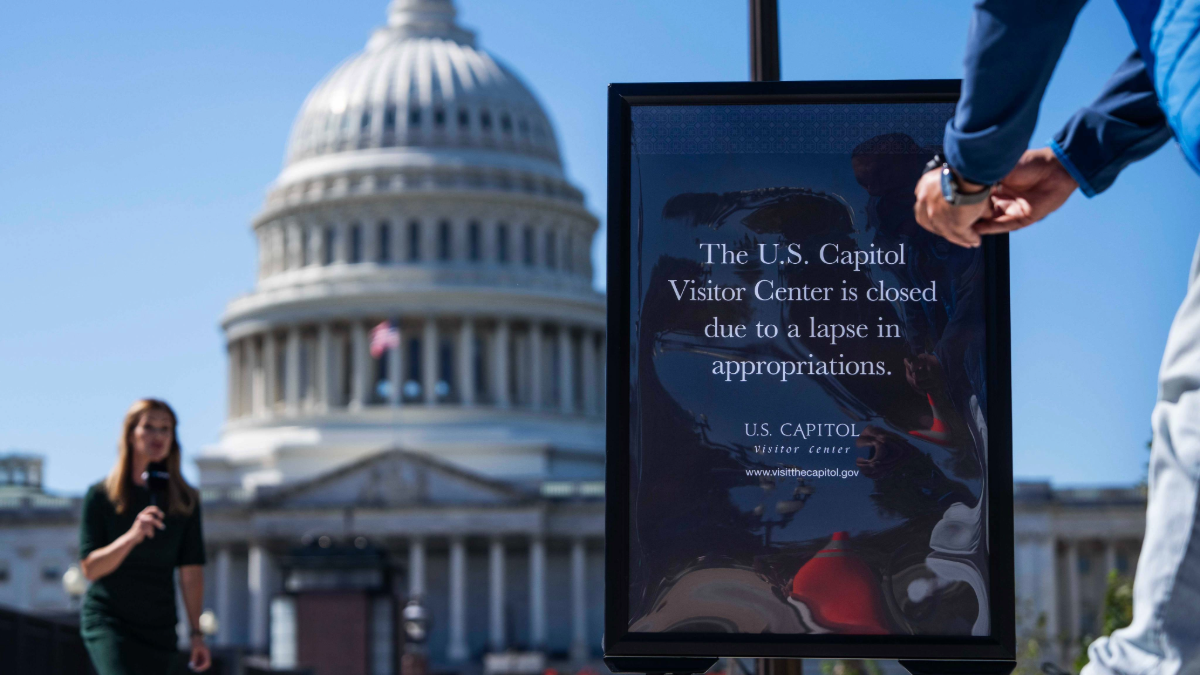
Few democracies flirt with paralysis as frequently as the United States. In 2025, once again, the spectre of a government shutdown dominates headlines. Federal workers wait in anxiety. Markets hold their breath. Allies and adversaries watch a superpower reduce itself to dysfunction by self-inflicted deadlines.
The shutdown debate is not about numbers alone. It is about identity. Can America still govern itself? Or has politics become so consumed by theatre that the basic machinery of state—paying bills, funding services, ensuring stability—has become collateral damage?
A shutdown is not simply a budgetary impasse. It is a symptom of a deeper malaise: a system where partisan brinkmanship overrides pragmatism, where governance is replaced by performance, and where the line between debate and sabotage is deliberately blurred.
A government shutdown occurs when Congress fails to agree on funding. Agencies shutter. Workers are furloughed. Services stall. What should be a procedural matter of appropriations becomes a weaponised crisis.
The roots of shutdown politics trace back to the late 20th century, but in the Trump and post-Trump era, shutdowns have become ritualised. They are no longer accidents of gridlock but deliberate acts of political theatre.
The threat of shutdown is wielded as leverage, a hostage-taking of the state itself. One party—or faction within a party—calculates that public pressure will force concessions. Yet the damage, both symbolic and real, far exceeds any gain.

Why do shutdowns persist? Because in the age of spectacle, paralysis can be more useful than compromise. Politicians frame shutdowns as proof of ideological purity. A refusal to fund government is recast as courage. The chaos becomes content.
Television panels dissect the drama. Social media erupts in hashtags. Fundraising emails flood inboxes. For the political class, shutdown debates are not failures—they are opportunities. For citizens, however, they are exhausting betrayals.
Theatre replaces substance when the storyline matters more than the outcome. In America’s shutdown politics, winning the narrative has become more important than funding the nation.
Behind the abstractions are lives. Federal workers miss paychecks. Families dependent on government programmes face uncertainty. Military personnel serve without assurance of compensation. Small businesses lose contracts.
The psychological toll is immense. To be governed by crisis is to live without stability. Trust in institutions erodes further with each cycle. Citizens begin to wonder whether the state exists to serve them or to stage-manage its own dysfunction.
For the global observer, the absurdity is striking: the world’s most powerful economy repeatedly suspends itself, not due to external threat, but by choice.

Shutdowns are not merely domestic dramas. They reverberate across the world. Credit rating agencies eye downgrades. Investors hesitate. Allies question reliability. Adversaries mock the chaos.
When the United States cannot guarantee its own workers’ salaries, how can it guarantee security commitments abroad? When it cannot fund basic services, how can it claim leadership in global development?
Each shutdown chips away at America’s credibility. The message to the world is stark: democracy’s greatest champion cannot govern itself.
At the heart of the shutdown debate is brinkmanship. Republicans and Democrats weaponise deadlines to extract concessions. Within parties, factions use shutdown threats to assert dominance.
This is not negotiation. It is extortion. The government itself becomes collateral. Citizens are pawns. The Constitution provides checks and balances; politicians have turned them into chokeholds.
The strategy works because fear of blame motivates compromise. Yet the cost is institutional decay. Governance by crisis is unsustainable, yet it has become the norm.

Shutdowns are not new. From the 1995 standoff under Newt Gingrich to the 2018–19 shutdown under Trump, the pattern has escalated. Each episode sets a precedent for the next. What was once extraordinary is now routine.
But the escalation is dangerous. Shutdowns normalise dysfunction. Citizens grow cynical. Extremists grow emboldened. The system adapts not towards stability but towards chaos.
History warns us that republics do not collapse overnight. They erode slowly, through repeated betrayals of trust. Shutdown politics is one such betrayal.
The shutdown debate is not about appropriations. It is about fragility. A system designed for compromise has become addicted to conflict. A Constitution designed for deliberation has become a stage for disruption.
American democracy, once admired for its resilience, now reveals its brittleness. Shutdowns expose how partisan warfare corrodes governance itself. They show that dysfunction is not an accident but a feature of polarisation.
To end shutdown politics, structural reforms are required. Automatic continuing resolutions would prevent government closure even when budgets stall. Campaign finance reform would reduce the incentives for brinkmanship.
But reform requires political courage. And courage is scarce in a system where theatrics pay more than governance.
Until reforms are enacted, shutdown debates will recur, each one eroding confidence further.
The U.S. government shutdown debate matters not because of one fiscal deadline, but because of what it symbolises: a democracy unable to perform its most basic function. It reveals a system where theatre overrides substance, where citizens are collateral, and where global credibility is squandered for partisan gain.
This still matters because the health of American democracy is measured not in speeches or slogans but in its ability to govern. If it cannot fund itself, how can it fund its promises to the world? If it cannot pay its workers, how can it protect its values?
Shutdown politics is not governance. It is sabotage. And unless America confronts this reality, the greatest risk is not one missed deadline, but the slow collapse of the very system the world still looks to for leadership.

Kelly Dowd, MBA, MA, is an author, systems architect, and Editor-in-Chief of WTM MEDIA. Dowd examines the intersections of people, power, politics, and design—bringing clarity to the forces that shape democracy, influence culture, and determine the future of global society. Their work blends rigorous analysis with cultural insight, inviting readers to think critically about the world and its unfolding narratives.
Why These Matter - WTM MEDIA is an independent editorial platform exploring the forces shaping our world—through people, culture, commerce, design, systems, and governance. Connecting the dots between today’s headlines and tomorrow’s realities.