
Global travel has re-emerged as the hidden engine of influence. As conferences, summits, and cultural convenings return to physical space, hotels, cities, and host nations are no longer just destinations—they are strategic infrastructure. This editorial examines how travel is reshaping power, profit, and the future of hospitality.
For nearly three years, the global conference circuit went dark. Keynote halls echoed with absence. Hotel ballrooms sat unused. Entire industries—built on proximity, trust, and chance encounters—were forced into digital purgatory. Deals stalled. Influence flattened. The informal economy of human presence was put on mute.
Now, the world is moving again.
You hear it first in hotel lobbies: the low hum of early-morning conversations, name badges swinging, espresso machines working overtime. You see it in cities once written off as “seasonal” or “secondary,” now fully booked months in advance. And you feel it in the subtle shift of posture—people leaning in again, because the stakes are back.
Travel didn’t just return. It reclaimed its role as infrastructure for power.
What most travellers never see is this: conferences are among the largest unregulated deal environments on Earth. There are no trading floors. No official transcripts. No press releases—by design. Instead, there are corridors, lifts, private breakfasts, and late-night drinks where decisions involving millions—or billions—quietly take shape. One senior European media executive put it bluntly over a drink earlier this year:
“The panels are theatre. The real business happens between sessions.”
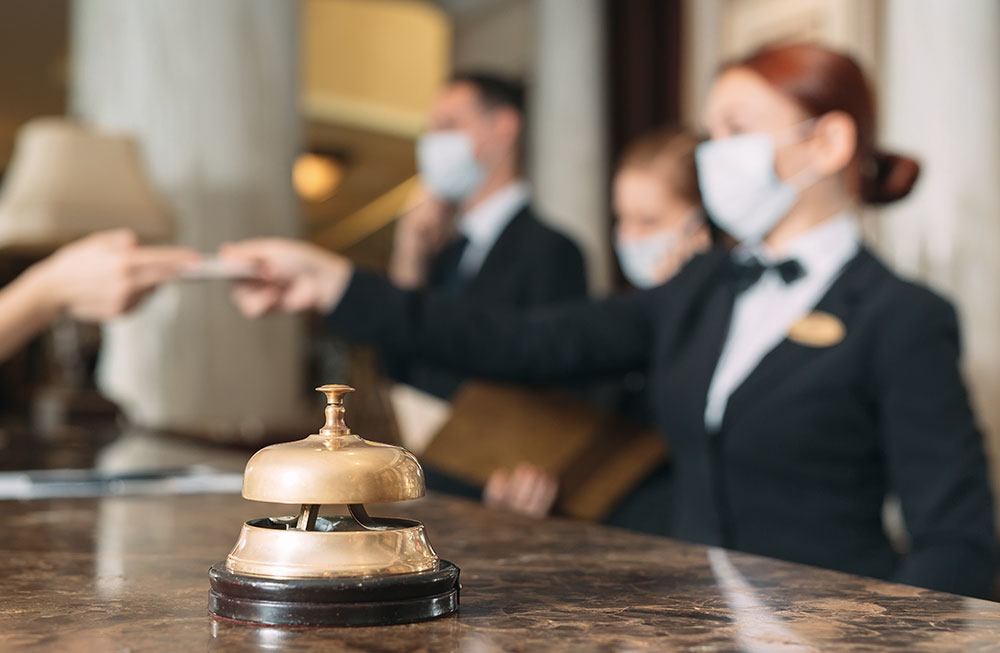
Hotels understand this better than anyone. Which is why the most valuable square footage isn’t the ballroom—it’s the bar, the terrace, the executive lounge, the room with just enough privacy to feel accidental. Hospitality is no longer about service. It’s about containment, discretion, and timing.
Before 2020, global convening power was predictable: New York, London, San Francisco. The usual capitals.
That map is now fluid.
Behind closed doors, insiders call this conference arbitrage—cities deliberately reshaping their global identity by attracting the right rooms, not just the right tourists. Travel, here, is strategy. Hotels are the hardware. People are the operating system.
Every major global event has two programmes. The printed one—and the real one.
At a recent European design gathering, multiple attendees referenced an off-record, invitation-only discussion held in a private penthouse suite. The topic, allegedly, was how to accelerate a cross-border launch by navigating disclosure rules creatively. If true, it will never be acknowledged publicly—and yet its effects may soon be visible in markets.
Elsewhere, a major AI conference reportedly changed its keynote lineup after quiet objections from a political donor. The public explanation cited “scheduling conflicts.” Insiders understood the subtext immediately. This is not scandal. This is how influence actually works.

Hybrid conferences are often marketed as democratic—anyone can join from anywhere. The reality is more complex.
Several organisers privately acknowledge that livestreams are curated in real time. Sensitive exchanges don’t make the cut. Certain questions never surface online. What remote audiences receive is the performance. What in-person attendees receive is the signal.
The result is a two-tier information economy:
In an era obsessed with accessibility, physical travel has quietly become the differentiator again.
If you want to understand where power is moving, watch how people travel—not just where they speak.
Travel today is less about attendance and more about positioning.
Because global travel has become the bloodstream of modern influence.
Because policy, capital, and culture are increasingly shaped in spaces with no minutes and no microphones.
Because the most consequential conversation of your career is unlikely to happen on stage—but in transit, between destinations, between intentions.
If you are not paying attention to where the world is meeting, why those places are being chosen, and who is being quietly invited into the room, you are not just missing trips.
You are missing how the future is being negotiated.
About the Author
Kelly Dowd, MBA, MA is a designer, author, and systems architect, and the Editor-in-Chief of Why These Matter Media. His work explores the intersection of travel, design, power, and human systems—examining how places shape decisions, and how movement itself has become a strategic force.
Why These Matter - WTM MEDIA is an independent editorial platform exploring the forces shaping our world—through people, culture, commerce, design, systems, and governance. Connecting the dots between today’s headlines and tomorrow’s realities.