Expert participation
Contribute relevant expertise and disclose material conflicts. Participation follows independent editorial selection.


WTM MEDIA PRESENTS · THE WTM CONVERSATIONS
A multidisciplinary intelligence forum where leading minds examine the questions shaping humanity, systems and capital — transforming complex conversations into evidence-led insight and actionable decisions.
Explore the inaugural questionNominate an expertProgramme illustration · Noir Spider Atelier. Fictional people and setting; no confirmed participants or events are pictured.
DIFFERENT MINDS. SHARED QUESTIONS. BETTER DECISIONS.
A city is a place to live, a network of systems and an allocation of resources. Understanding it requires attention to all three. Project 369 brings disciplines into constructive dialogue, then examines where their evidence agrees, where it conflicts and what remains unknown.
Every credible perspective deserves consideration. Evidence, expertise and intellectual integrity determine the strength of a conclusion.
THE EDITORIAL METHOD
Humanity · Systems · Capital
People · Technology · Economy · Policy · Planet · Culture
Three evidence-backed insights. Three strategic tensions. Three actionable recommendations.
The numbers describe an editorial methodology, not numerology or a scientific law. Outputs will carry evidence, limitations and a clear distinction between findings and proposals.

ROUNDTABLE 001 · IN DEVELOPMENT
Architecture × Neuroscience × Economics
We will examine how the design of everyday environments may affect attention, wellbeing and economic opportunity. Urban planning, environmental public health, and community and housing perspectives will test the assumptions behind proposed interventions.
No recording date, guest roster or publication date is confirmed. This is an editorial research question, not a claim that particular urban designs produce verified health or productivity gains.
Explore Roundtable 001
How does space support daily life?
Explore the discipline →
What can cognitive evidence establish?
Explore the discipline →
Who gains value, and who carries the cost?
Explore the discipline →
How do systems work across a city?
Explore the discipline →
Which exposures and benefits matter?
Explore the discipline →Whose lived experience changes the question?
Explore the discipline →FROM CONVERSATION TO INTELLIGENCE
Sources, counterarguments and research limitations will remain visible. Recommendations will identify an accountable owner, practical constraints and a way to test the result.
Expert selection is open for development. No guest participation is implied by these discipline profiles. Candidates will be assessed for relevant work, evidence quality, constructive disagreement, lived experience and material conflicts of interest.
Expert nominations are open. Use the private application form on The Minds page; submissions are reviewed before any public profile or invitation.
Nominate an expertPROJECT 369
Designing Urban Environments for Cognitive Wellbeing and Economic Value
CONCEPT PREVIEW · NOT A COMPLETED RESEARCH REPORTA FRAMEWORK TO MAKE DECISIONS REVIEWABLE
The proposed kit connects an executive summary, urban challenge, evidence review and economic assumptions to three insights, three tensions and three proposed interventions.
It will include implementation, measurement, costs and funding considerations, equity and accessibility, sources and research limitations. No completed report or download is offered at this stage.
Contribute relevant expertise and disclose material conflicts. Participation follows independent editorial selection.
Bring a consequential question and supporting context. Submissions will be moderated before publication.
Support research, production, distribution or convening through a written scope. Funding does not buy a seat or a conclusion.
PARTNERSHIP WITHOUT EDITORIAL OWNERSHIP
WTM retains final editorial authority. Funding does not purchase guest selection, predetermined conclusions, favourable coverage or suppression of credible criticism. Material sponsorships will be disclosed; commissioned intelligence will be distinguished from independent programming.
Founding partnerships — enquiries open. Opportunities and terms remain subject to a written agreement; no audience size or commercial return is guaranteed.
Explore existing WTM partnerships →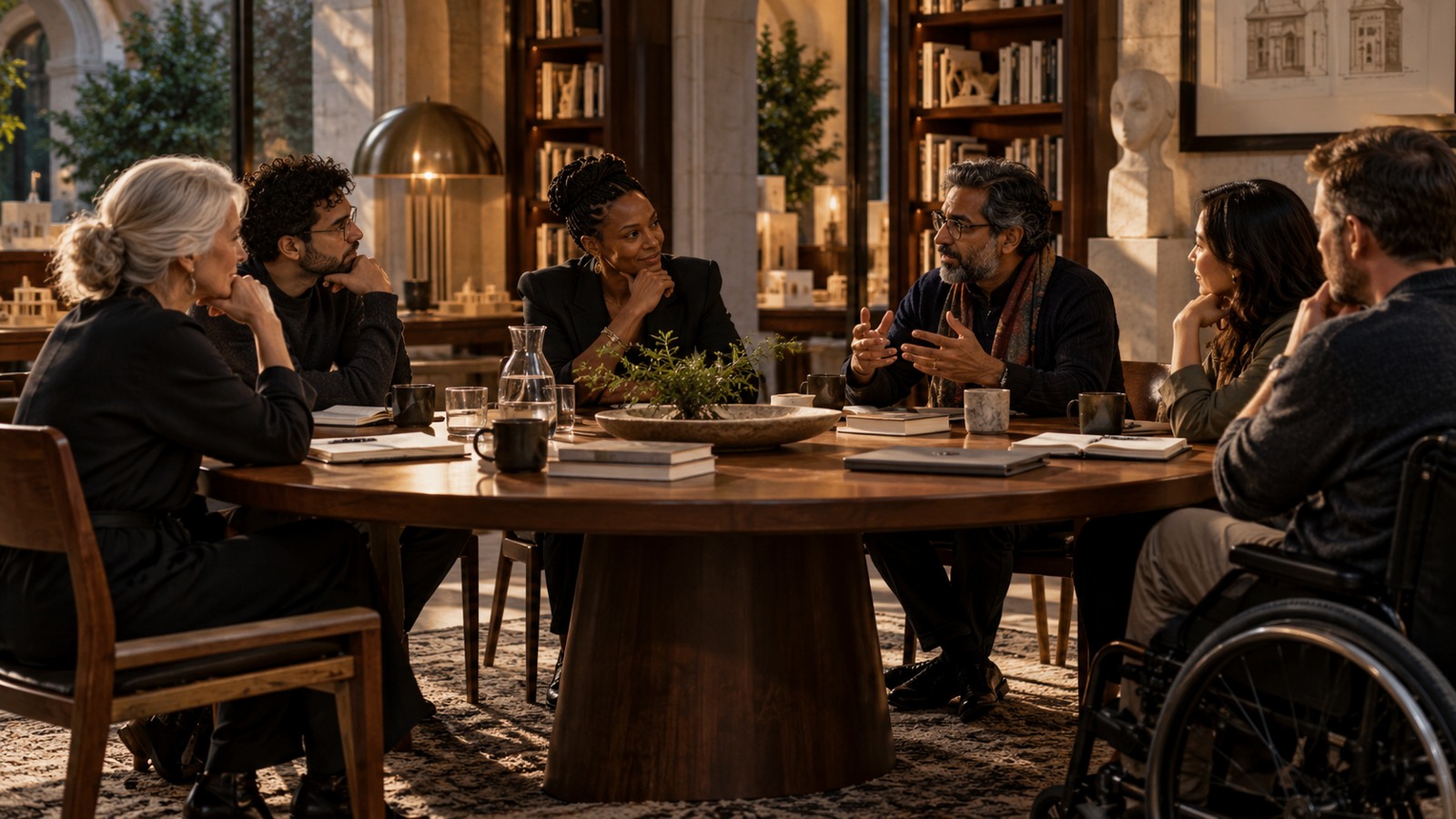
THE ASSEMBLY · IN DEVELOPMENT
Virtual discussions and carefully curated in-person gatherings are in development. No event dates, venues, speakers, tickets or registration places are confirmed.
When gatherings are confirmed, each listing will state its date and timezone, attendance format, accessibility information, capacity, registration and cancellation terms. Private attendance details will be sent through the registration workflow.
Discuss hosting a 369 AssemblyINSTITUTIONAL PARTNERSHIPS · ENQUIRIES OPEN
Partner with WTM Media to advance multidisciplinary conversations, evidence-led intelligence and meaningful engagement around the challenges shaping humanity, systems and capital.
A long-term relationship with defined acknowledgement, agreed benefits and reporting. Founding status and term require an executed agreement.
Disclosed support for a defined programme season, with agreed media recognition and delivery reporting.
Support evidence reviews and accessible outputs under a written research scope. Funding cannot alter findings or suppress credible criticism.
Support venues, accessible participation or technical delivery for confirmed gatherings.
Extend access through approved distribution, educational licensing or co-promotion, with documented intellectual property rights.
A separate research or briefing engagement with defined scope, methodology, milestones and usage rights. Distinguished from independent editorial programming.
Institutional measures may include relevant reach, qualified enquiries and delivery against agreed scope. Public-interest measures may include research accessibility, evidence comprehension, participation and educational reuse. Indicators and methods are agreed before activation; unlike measures are reported separately. No commercial return or audience size is guaranteed.
No. Partners may propose questions and nominate experts, but WTM retains final editorial authority. Financial support does not purchase guest selection, predetermined conclusions, favourable coverage or suppression of criticism.
Universities, foundations, professional associations, public-interest institutions and commercial organisations may enquire. Eligibility, scope and conflicts are assessed independently.
Yes, subject to a separate agreed scope, methodology, terms and appropriate separation from independent editorial programming.
Enquiries are reviewed privately by WTM. No fixed partnership prices or confirmed partners are presented.
Why These Matter - WTM MEDIA is an independent editorial platform exploring the forces shaping our world—through people, culture, commerce, design, systems, and governance. Connecting the dots between today’s headlines and tomorrow’s realities.
369-scene-health
Programme illustration · Noir Spider Atelier
50% 50%
369-scene-planning
Programme illustration · Noir Spider Atelier
50% 50%
369-scene-assembly
Programme illustration · Noir Spider Atelier
50% 50%
369-scene-community
Programme illustration · Noir Spider Atelier
50% 50%
369-scene-economics
Programme illustration · Noir Spider Atelier
50% 50%
369-scene-neuroscience
Programme illustration · Noir Spider Atelier
50% 50%
369-scene-architecture
Programme illustration · Noir Spider Atelier
50% 50%
369-hero
Programme illustration · Noir Spider Atelier
60% 50%