
Modern airports have become one of the clearest indicators of how contemporary systems treat people. From overcrowded terminals to passengers sleeping on floors, today’s flying experience exposes the cumulative effects of deregulation, economic inequality, infrastructure strain, and institutional indifference.
Most people don’t think of airports as political or sociological spaces. They see them as temporary inconveniences—places you pass through on the way to somewhere else. But airports are no longer neutral transit points. They are among the most revealing public environments in modern life. Airports show how a society manages stress, movement, class, and dignity under pressure. They expose what happens when efficiency is prioritised over people, when systems are optimised for profit rather than resilience, and when human comfort becomes an after thought.
What we see today—people sleeping on floors, wearing pyjamas through security, enduring long delays with minimal information—is not a failure of manners or personal responsibility. It is a predictable outcome of how the air travel system has been designed over the last four decades.
In the mid-20th century, air travel was a marker of social position. Flying was expensive, limited, and structured. Airports were quieter. Aircraft carried fewer passengers. Staff-to-passenger ratios were higher. Delays were less common, and when they occurred, airlines were expected to take responsibility.
Passengers dressed formally not because they were told to, but because the environment reinforced a sense of occasion and expectation. Flying signalled entry into a different social space—one governed by rules, service norms, and mutual restraint.
This wasn’t nostalgia-worthy perfection. It was exclusivity. But that exclusivity came with built-in guardrails: space, time buffers, and service standards that kept stress level slower for everyone involved.
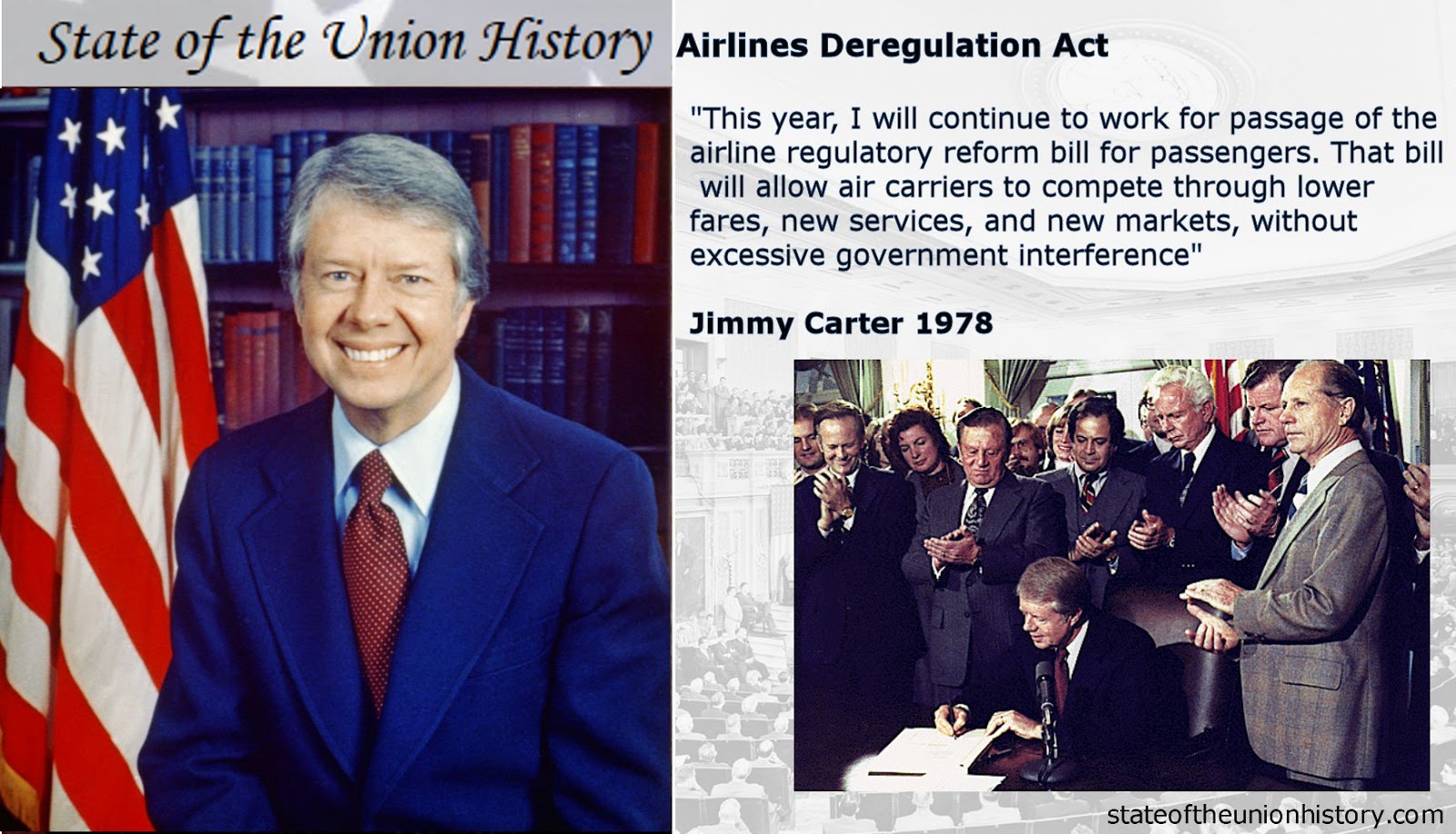
The turning point came in 1978 with airline deregulation in the United States by President Jimmy Carter. The goal was to make flying more affordable and competitive. Prices did fall. More people gained access to air travel. But deregulation also removed structural constraints that protected passenger experience.
Airlines began competing on cost rather than quality. Seats became narrower. Legroom shrank. Aircraft were packed more densely. Turnaround times shortened. Maintenance and staffing margins tightened. Airports expanded throughput without expanding humane capacity.
This wasn’t accidental. The system was redesigned to move more people through faster, at lower cost, with less responsibility placed on carriers when things went wrong.The result is a travel environment that operates permanently near its breaking point.
Data from the U.S. Bureau of Transportation Statistics shows that long flight delays—defined as delays exceeding two hours—are now roughly four times more common than they were in1990. At the same time, the number of passengers passing through major hubs has increased dramatically, often without proportional investment in terminal space, staffing, or contingency infrastructure.
This creates compounding stress:
When people are trapped in confined spaces without clear information or control, behaviour changes. This isn’t a character flaw. It’s a known psychological response to environmental pressure. Sociologists describe this phenomenon as infrastructural stress spillover: when systems externalise discomfort, individuals absorb it physically and emotionally.
When environments stop signalling care, people stop signalling formality. Casual dress at airports is often criticised as a decline in standards. But clothing is adaptive. When you expect delays, discomfort, and uncertainty, you dress for survival, not presentation.Soft clothing, layers, slippers, and neck pillows are practical responses to hostile conditions.
The same applies to behaviour.Frustration, impatience, and conflict rise in crowded environments with unclear rules and inconsistent enforcement. FAA data shows an increase in passenger incidents correlating with seating density and delay frequency. This is not because people suddenly became worse. It is because the system removed buffers that previously absorbed stress.

One of the clearest signals of systemic failure is the normalisation of sleeping in terminals. Airports now design designated “rest zones,” quiet rooms, and even nap pods—not as premium services, but as necessary infrastructure. This shift tells us something important: airports are no longer designed to reliably move people through on time. They are designed to warehouse people when the system breaks down.
Passengers sleep on floors because hotels are unaffordable or unavailable during mass cancellations. Families camp overnight because rebooking systems collapse during weather events.International travellers wait hours or days for connections with limited support. This is not resilience. It is adaptation to chronic instability.
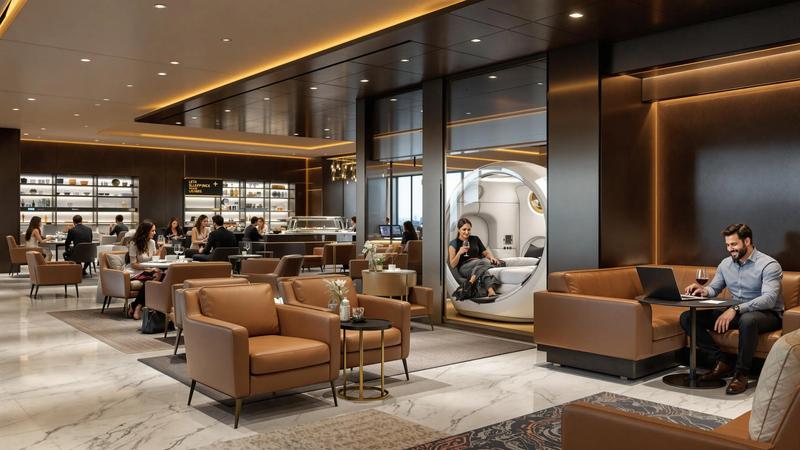
While the general experience deteriorates, a parallel system has emerged for those who can pay to escape it.
Priority boarding, lounge access, premium security lanes, business class cabins, and concierge services offer insulation from systemic stress. These are not perks; they are pressure-release valves for those with financial leverage.
The result is a stratified travel ecosystem:
This mirrors broader societal trends.When public systems degrade, those with resources buy their way out. When comfort becomes optional, it becomes a marker of status.
Airports now function less like shared civic spaces and more like layered access zones.
Air travel exposes economic inequality not through abstract statistics, but through visible contrast.
You see it in
The airport compresses society into one space and reveals who bears the cost when systems are stretched. This is why airports feel tense. They are honest environments. They show how policy decisions made decades ago play out in daily life.
Airports matter because they are predictive. How a society moves people tells you how it values time, dignity, and collective responsibility.
When movement becomes extractive—maximising throughput while minimising care—other systems tend to follow. Healthcare, housing, education, and public transit often show similar patterns: efficiency gains paired with human cost. The airport is simply where these dynamics are impossible to ignore.
Repeated exposure to stressful travel environments has cumulative effects. Research in environmental psychology shows that chronic uncertainty and crowding increase anxiety, reduce empathy, and heighten irritability.
This has ripple effects:
When people stop expecting systems to work for them, they disengage emotionally. That disengagement shows up as apathy, aggression, or withdrawal.
One of the most significant shifts since deregulation is the transfer of risk from institutions to individuals.
When flights are delayed or cancelled, passengers absorb the cost:
Airlines face limited penalties.Airports rarely compensate. Regulators often defer to industry constraints.
This imbalance shapes behaviour. When institutions are not accountable, individuals adapt defensively.

It’s tempting to assume that new technology should make travel easier. In some ways, it has—online booking, digital boarding passes, automated check-in. But technology has also been used to increase throughput without increasing capacity. Self-service systems shift labour onto passengers. Automated rebooking systems reduce human contact. Digital notifications replace proactive assistance. Efficiency has improved. Care has not.
Fixing air travel isn’t about telling people to dress better or behave differently. It’s about redesigning systems to reduce stress at the source.
Key interventions include:
These are policy choices, not technical impossibilities.
Airports are one of the few spaces where almost everyone encounters the same system, regardless of background.That makes them powerful indicators of institutional health. When airports function well, they signal coordination, foresight, and shared responsibility. When they don’t, they signal fragmentation and extraction. Ignoring what airports reveal means ignoring how systems treat people under pressure.
The modern airport is not a moral failure or a cultural decline. It is a truthful system.
It tells us:
If we want better behaviour, we need better systems. And if we want better systems, we need to stop pretending that discomfort is a personal problem rather than a design outcome.

Why These Matter - WTM MEDIA is an independent editorial platform exploring the forces shaping our world—through people, culture, commerce, design, systems, and governance. Connecting the dots between today’s headlines and tomorrow’s realities.