The collapse of Antarctica’s Thwaites Glacier is no longer a distant climate abstraction. It is a systems-level risk with direct implications for coastal cities across the Pacific and Atlantic—reshaping where humans can safely live, insure property, and build futures. This editorial traces the science, the timelines, and the urban consequences—grounded in empirical research and geopolitical reality.
Scientists call it the Thwaites Glacier. The public knows it as the “Doomsday Glacier.”
What matters is not the name but the physics.
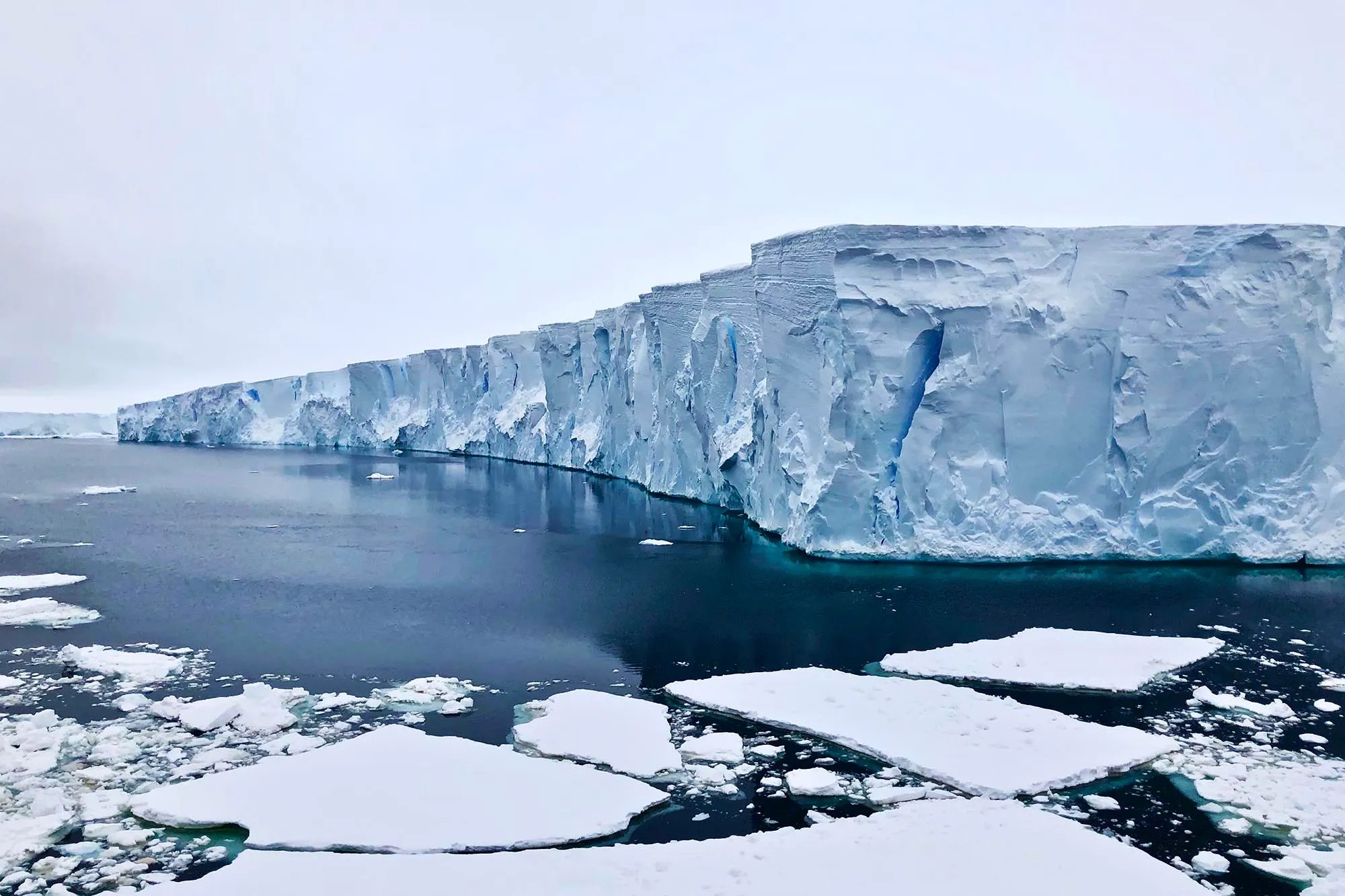
Thwaites, a Florida-sized glacier in West Antarctica, acts as a structural keystone for the entire West Antarctic Ice Sheet (WAIS). Its destabilization does not merely raise sea levels incrementally; it risks triggering a cascading collapse—a domino effect capable of accelerating global sea-level rise far beyond current projections.
According to the British Antarctic Survey (BAS) and NASA, Thwaites alone holds enough ice to raise global sea levels by ~65 cm (over 2 feet). If the surrounding WAIS follows, the rise could exceed 3 meters (10 feet) over time.
→ Source: British Antarctic Survey
→ Source: NASA Earth Observatory
This is not speculative modelling. It is observed reality.
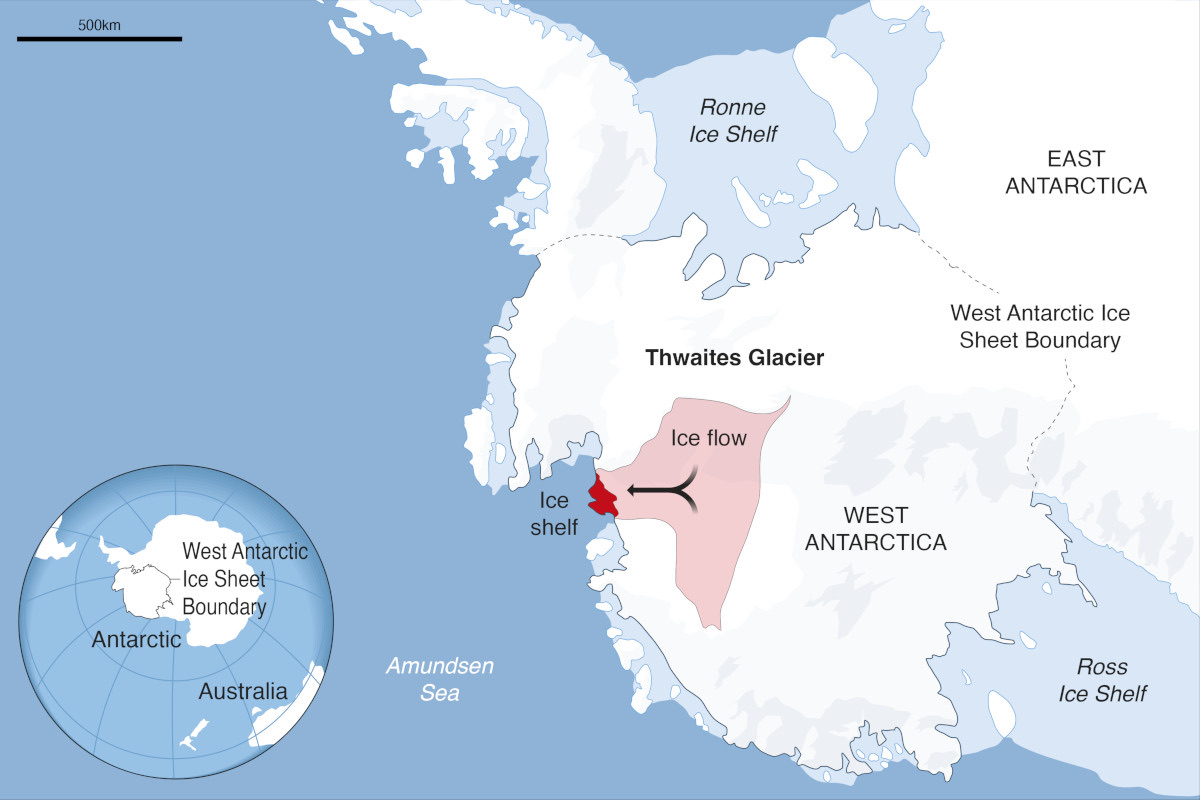
The danger lies beneath.
Large portions of West Antarctica are grounded below sea level, resting in deep basins. Warm ocean water from the Amundsen Sea is now intruding beneath the glacier, melting it from below—a process known as marine ice sheet instability.
Recent satellite and field data show:
As glaciologist Mathieu Morlighem (Dartmouth College) explains, once the glacier retreats past key seabed ridges, its collapse becomes self-reinforcing.
→ Source: Nature Climate Change
→ Source: Science Magazine
In systems language, the glacier has crossed from managed decline into runaway dynamics.
From Antarctica to Your Front Door
Sea-level rise is not evenly distributed. Ocean circulation, gravity effects, and land subsidence mean some cities will absorb disproportionate impact.
→ Source: NOAA Sea Level Rise Viewer
→ Source: U.S. Geological Survey (USGS)
→ Source: IPCC AR6 Report
→ Source: World Bank Climate Risk Profiles
This is not just about flooding. It is about insurance withdrawal, mortgage instability, supply-chain disruption, and population displacement.
Long before cities drown, markets react.
Major insurers have already begun:
Florida, California, and parts of Australia are already case studies in climate-driven insurance retreat.
→ Source: Swiss Re Institute
→ Source: Financial Times Climate Coverage
When insurance fails, so does real estate liquidity. When liquidity fails, cities hollow out—not with drama, but with spreadsheets.
Climate change does not make Earth uninhabitable—it redistributes habitability.
Empirical models suggest greater long-term resilience in:
Examples often cited include:
→ Source: University of Notre Dame Global Adaptation Initiative
→ Source: IPCC Working Group II
This does not mean safety. It means relative survivability.
Because climate change is no longer about polar bears or distant ice.
It is about:
Antarctica’s melting glaciers are not a future problem. They are a present signal—one that policymakers, urban planners, investors, and citizens ignore at their peril. The most dangerous myth of climate change is that it arrives suddenly. In reality, it arrives quietly through compounding systems failure.
The question is no longer, “Can we stop it?” The honest question is, “How intelligently will we adapt—and who will be left behind?” That answer will define the next century of human settlement. And it will be written, in part, in ice.

Why These Matter - WTM MEDIA is an independent editorial platform exploring the forces shaping our world—through people, culture, commerce, design, systems, and governance. Connecting the dots between today’s headlines and tomorrow’s realities.