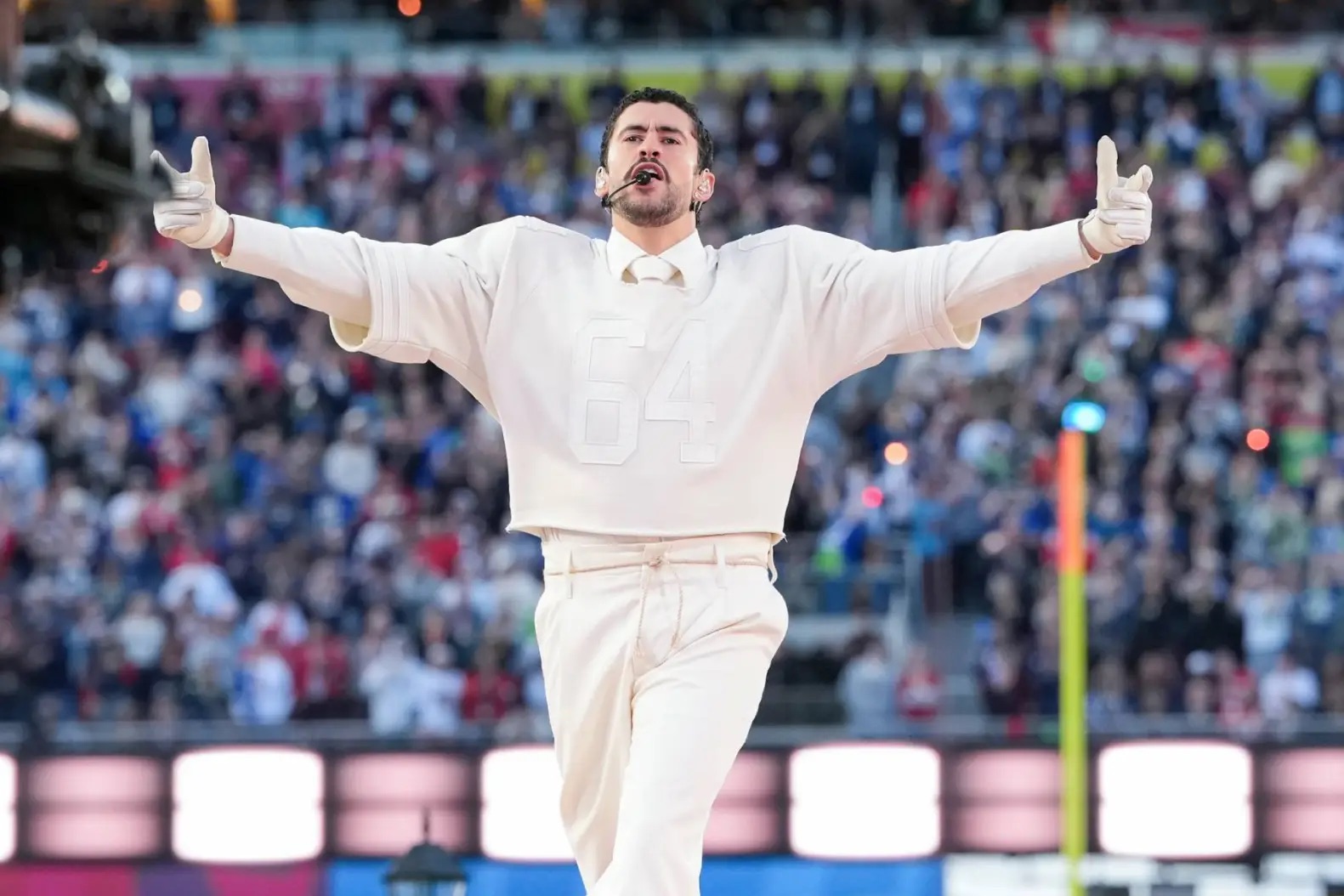
On February 8, 2026, Bad Bunny — Benito Antonio Martínez Ocasio — stood at Levi’s Stadium in Santa Clara, California and delivered what will likely be remembered as one of the most consequential Super Bowl halftime performances of the 21st century. More than a show, it was a statement of identity, belonging, and cultural force — a moment where music intersected with global discourse and collective self-recognition
To understand the significance of the 2026 halftime show, it helps to trace the arc of Bad Bunny’s life and career — from his beginnings as a young music fan in Puerto Rico to becoming one of the world’s most streamed artists.
Bad Bunny was born on March 10, 1994, in San Juan, Puerto Rico. From an early age, music was woven into his homelife; his mother played salsa and romantic Latin ballads, and he sang in a local church choir as a child.
As a teenager, he began writing his own songs around age 14. Before fame, he worked as a supermarket bagger while studying audiovisual communication at the University of Puerto Rico at Arecibo — uploading music he created in his spare time to digital platforms such as SoundCloud.
His breakthrough moment came in 2016 when the track “Diles” caught the attention of Puerto Rican producer DJ Luian, who signed him to the label Hear This Music. From there, Bad Bunny’s early singles like “Soy Peor” began charting, his collaborations with Latin stars expanded his reach, and he quickly became a central figure in reggaeton and Latin trap.
Unlike many artists who chase mainstream success by singing in English, Bad Bunny succeeded while staying true to Spanish, helping usher in a new era where Spanish-language music tops global charts and streaming platforms without linguistic compromise.
Over the past decade he has become one of the most influential cultural figures in music. By 2025, his songs had been streamed billions of times, and his album “Debí Tirar Más Fotos” made history as the first Spanish-language record to win Grammy Album of the Year — a landmark achievement for language and representation in global music.
Bad Bunny’s Halftime Show in 2026 was historic on multiple fronts. He became the first solo artist to headline the Super Bowl halftime performance while singing primarily in Spanish, a watershed for representation on what has become one of the most viewed entertainment events in the world.
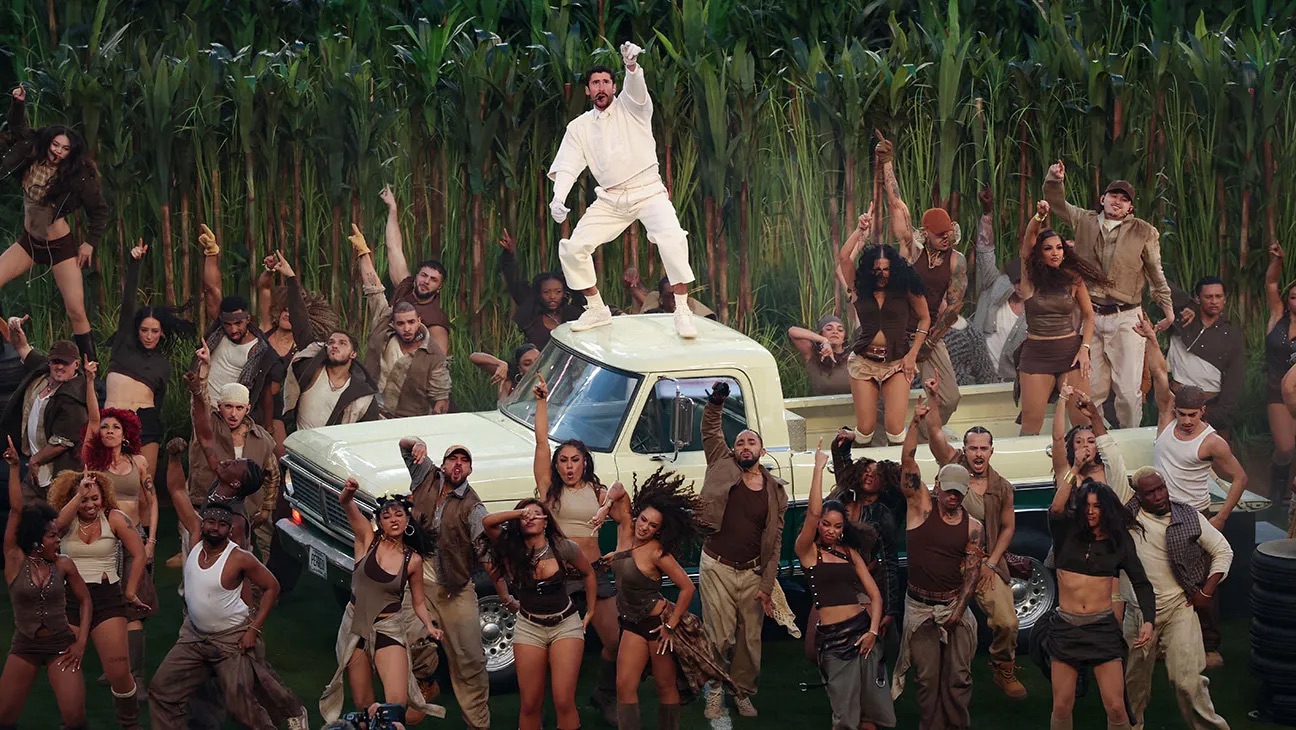
The show’s design itself carried meaning. Starting in a sugar cane field with figures in traditional pava hats and everyday scenes of Puerto Rican life, the production credited ordinary culture rather than abstract spectacle. Scenes of domino games, boxers training, and storefront gatherings were not aesthetic choices alone — they were ethnographic anchors of real community life.
Guest appearances by artists like Lady Gaga and Ricky Martin expanded the performance’s reach while affirming it as a collaborative cultural moment rather than a solo spectacle.
One of the most discussed aspects of the show was Bad Bunny’s decision to perform predominantly in Spanish. In an entertainment environment where English is often framed as the lingua franca of global pop culture, this was more than a stylistic choice — it was a challenge to longstanding assumptions about cultural centrality and artistic legitimacy.
This choice meant that tens of millions watching might not fully understand the lyrics without translation — yet that did not diminish the impact. Music, rhythm, emotion, and visual storytelling communicated across linguistic boundaries. Hundreds of millions saw a Spanish-language performance flood into American prime-time, communicating that belonging does not require concession to majority language norms.
This was a shift in cultural logic: the stage did not require the artist to change himself for acceptance; instead, the audience was invited to recognize him as he was. Such recognition — affirming identity rather than demanding translation — is a rare phenomenon on a platform of this scale.
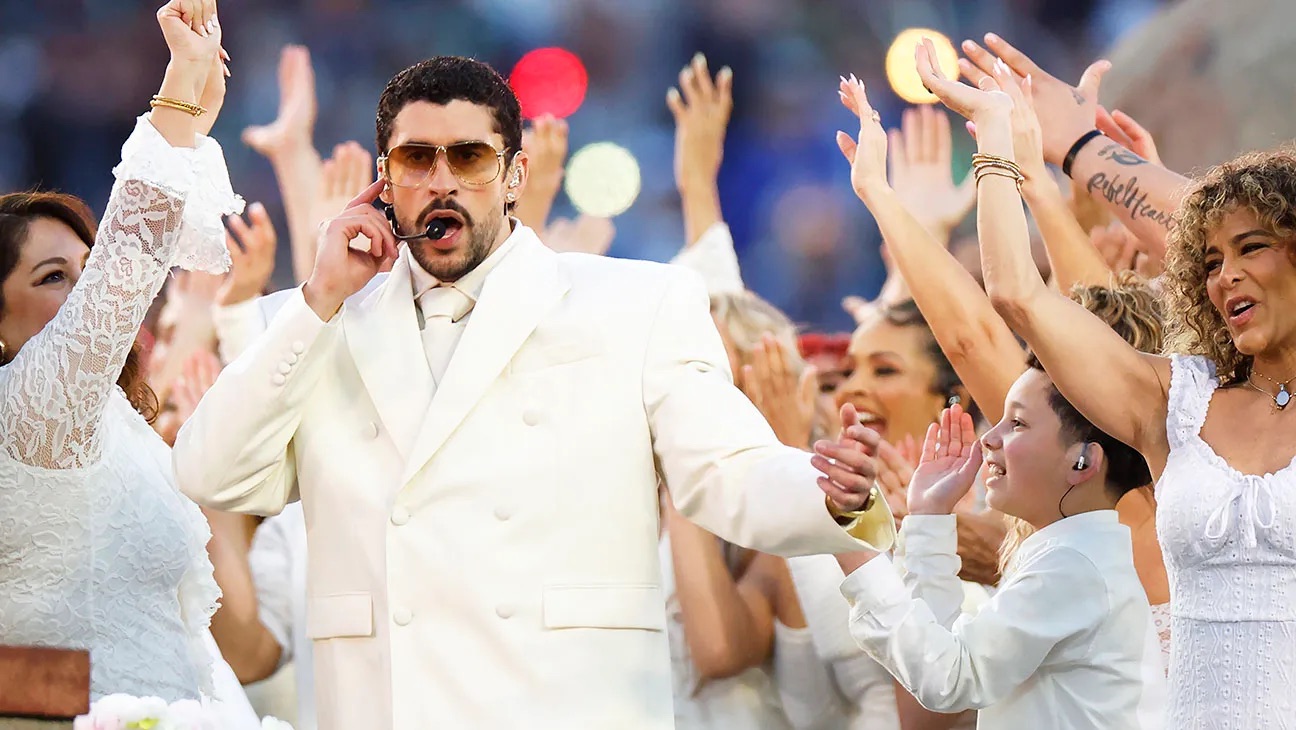
Beyond music, Bad Bunny’s Super Bowl Halftime Show registers as a moment of collective cultural affirmation for Latinx communities and global audiences alike.
1. Representation at Scale
The Super Bowl halftime show reaches often well over 100 million viewers globally. For a Spanish-language performance rooted in Puerto Rican cultural imagery to occupy that platform is a profound expansion of whose stories are considered universal moments.
Puerto Ricans on the island, it was reported, paused their day to collectively watch and celebrate — a reflection of the performance’s deep personal and communal resonance.
It signaled to millions that mainstream stages are not exclusive domains of one culture or tongue — a striking statement for a world where media narratives often marginalize non-Anglophone identities.
2. Cultural and Political Resonance
Bad Bunny’s own public stances — including decisions to skip U.S. tour dates amid immigration policy controversies — added layers of meaning to his Super Bowl appearance. Rather than retreating from politics, he has often integrated cultural identity, social commentary, and artistic expression.
Even critics noted that language itself can be seen as a form of political expression in a hyper-charged environment — though the artist’s broader message was one of unity and joy.
3. Shift in Global Music Hierarchies
Bad Bunny’s rise disrupts traditional power structures in music distribution. His success on streaming platforms, relentless touring, and global collaborations show that cultural influence no longer flows only from English-language markets. Spanish-language artists now create global trends without translation as a prerequisite.
The halftime performance, in this sense, was not just a career apex — it was a marker of a shifting cultural economy, where linguistic and cultural diversity are central forces rather than peripheral ones.
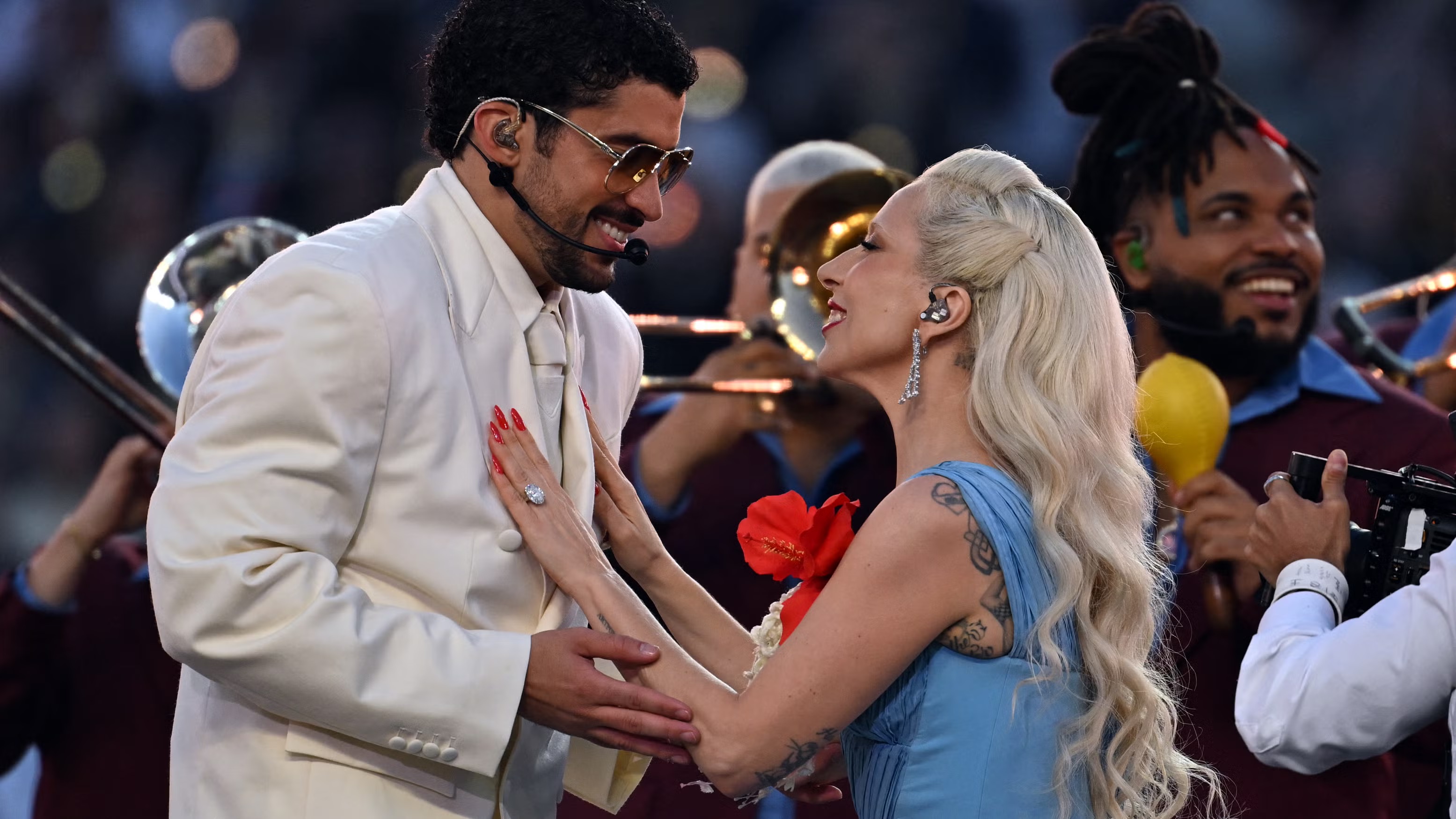
From his wardrobe — a cream ensemble featuring his real family name “Ocasio” and the number 64 — to the staged vignettes of community life, the performance was layered with intentional symbolism.
In one notable closing moment, Bad Bunny held up a football inscribed with the phrase “Together we are America,” then named countries across the Americas as dancers carried flags — not as a statement of protest, but as a declaration of continental inclusion and cultural solidarity.
Bad Bunny’s 2026 Super Bowl halftime show was more than a concert. It was a platform of recognition — visibility granted not through dilution but through authentic expression. It challenged assumptions about language, belonging, and cultural power in global media spaces. It affirmed that identity, history, and pride can resonate across borders without sacrificing their integrity. It mattered not because it was aperformance, but because it was a cultural paradigm shift in motion — witnessed by millions and felt by many more.

Why These Matter - WTM MEDIA is an independent editorial platform exploring the forces shaping our world—through people, culture, commerce, design, systems, and governance. Connecting the dots between today’s headlines and tomorrow’s realities.