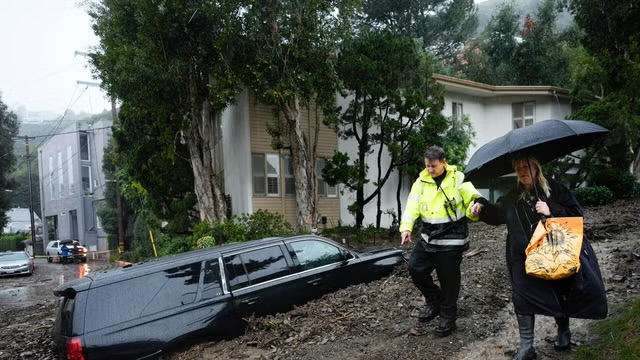
The devastating storms in California reveal the fragility of infrastructure, the politics of preparedness, and the urgent need for resilience in a warming world.
California is myth. Silicon Valley’s innovation. Hollywood’s glamour. Napa’s vineyards. Beaches, freeways, fortunes. Yet beneath the myth lies fragility. In recent years, storms of unprecedented ferocity have turned California’s myth into nightmare. Torrential rains collapse hillsides. Rivers overwhelm levees. Neighbourhoods vanish under mud. Power grids flicker. Insurance systems falter. The storm is not anomaly. It is signal. California is frontline of climate disruption. Its impact ripples beyond borders, shaping food supply, financial markets, migration, and global climate policy.
This editorial examines the storm impact: the destruction it unleashed, the fragility it revealed, the politics it exposed, and the lessons it demands for survival in a century of climate chaos.
The storm that battered California brought atmospheric rivers—narrow corridors of concentrated moisture—dumping record rainfall in days. Hills saturated. Rivers swelled. Dams strained. Coastal roads collapsed. Meteorologists traced patterns to warming oceans. Climate change amplifies storm intensity. What was once “once-in-a-century” is now every decade. The anatomy of the storm is clear: warmer air holds more moisture, releasing it violently. California’s skies are no longer benign—they are weaponised by physics.
The human toll was immediate. Families displaced. Homes destroyed. Farmers ruined. Insurance inaccessible. Fragility is unequal. Wealthy districts restore quickly. Poorer communities drown in bureaucracy. Migrant workers lose both homes and livelihoods. Indigenous lands face disproportionate destruction. The storm exposed inequality. Climate impact is not democratic—it targets the vulnerable. Survival depends not only on geography but on class, race, and privilege.
California’s infrastructure was revealed as inadequate. Levees broke. Bridges collapsed. Grids failed. Roads vanished. Billions in damage piled overnight. Infrastructure was designed for twentieth-century climate. The twenty-first requires resilience against extremes. Without reinvention, storms will overwhelm repeatedly. The storm is warning: infrastructure is not only outdated but existentially fragile.
California is breadbasket. Its Central Valley produces one-third of America’s vegetables, two-thirds of its fruits and nuts. Storms that destroy crops ripple globally. Prices spike in supermarkets from New York to Nairobi. Almond exports falter. Wine supplies shrink. Agriculture depends on stability. Storms annihilate stability. Global food security is bound to California’s climate. The storm impact is not local—it is global.
Billions in damages strain insurers. Companies withdraw from high-risk areas. Homeowners face impossible premiums. Banks reconsider mortgages. When insurance collapses, markets collapse. Property values plummet. Migration accelerates. Municipal budgets implode. The storm is not isolated disaster. It is financial crisis in waiting.
Preparedness is political. California invests in climate resilience, yet storms reveal underfunding and mismanagement. Local leaders clash with federal agencies. Budgets are diverted. Politics of preparedness is blame game. Citizens demand accountability. Leaders deflect responsibility. The storm exposes governance as fragile as infrastructure. Preparedness requires foresight. Politics rewards short-term. The storm widens this gap.
Storms displace populations. Families relocate inland. Migrant workers move north. Insurance redlining accelerates exodus. California’s displacement is microcosm of global trend. Climate migrants already reshape politics from the Sahel to Central America. Storm-driven migration in the U.S. will reshape demographics, economies, and elections. The storm impact extends beyond mudslides. It redraws maps of habitation.
The storm is not Californian alone. It is lesson for world. Cities from Mumbai to Miami face similar risks. Infrastructure, insurance, and politics are unprepared globally. Survival requires reinvention: resilient infrastructure, equitable aid, sustainable agriculture, reformed insurance, honest politics. Without reinvention, storms will collapse not only cities but civilisation. California is warning. The world must listen.
The California storm impact matters because it reveals civilisation’s fragility. Infrastructure, economy, politics, and society collapse under climate stress. This still matters because survival requires reinvention. The storm is not anomaly but signal. If California cannot adapt, neither can the world.
The question is not whether storms will intensify. They will. The question is whether humanity can build resilience before fragility becomes irreparable.
Kelly Dowd, MBA, MA, is an author, systems architect, and Editor-in-Chief of WTM MEDIA. Dowd examines the intersections of people, power, politics, and design—bringing clarity to the forces that shape democracy, influence culture, and determine the future of global society. Their work blends rigorous analysis with cultural insight, inviting readers to think critically about the world and its unfolding narratives.
Why These Matter - WTM MEDIA is an independent editorial platform exploring the forces shaping our world—through people, culture, commerce, design, systems, and governance. Connecting the dots between today’s headlines and tomorrow’s realities.