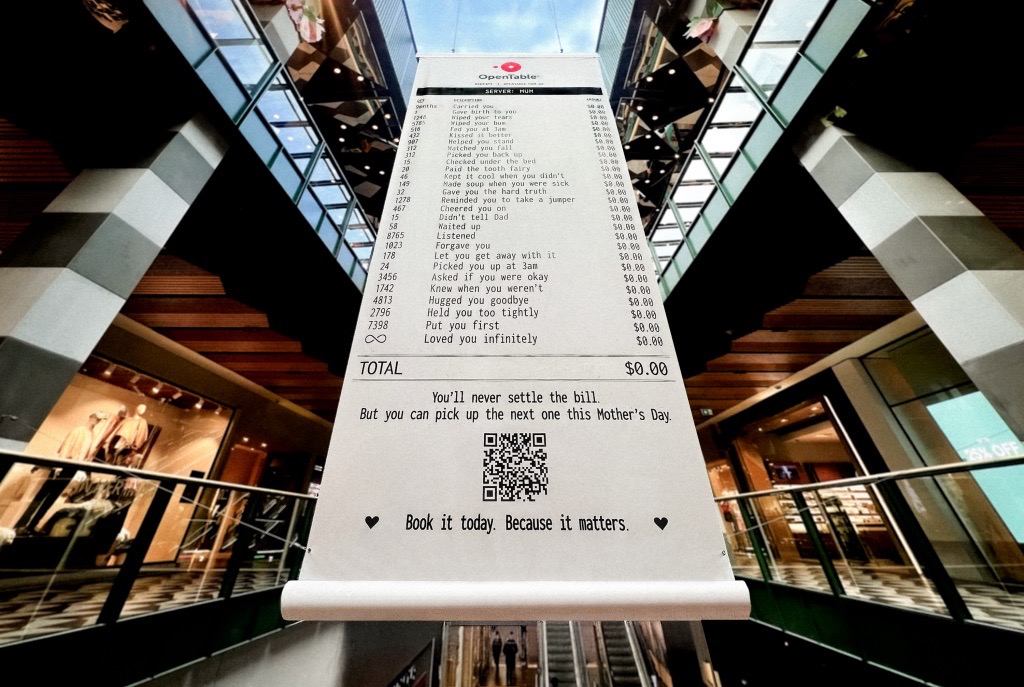
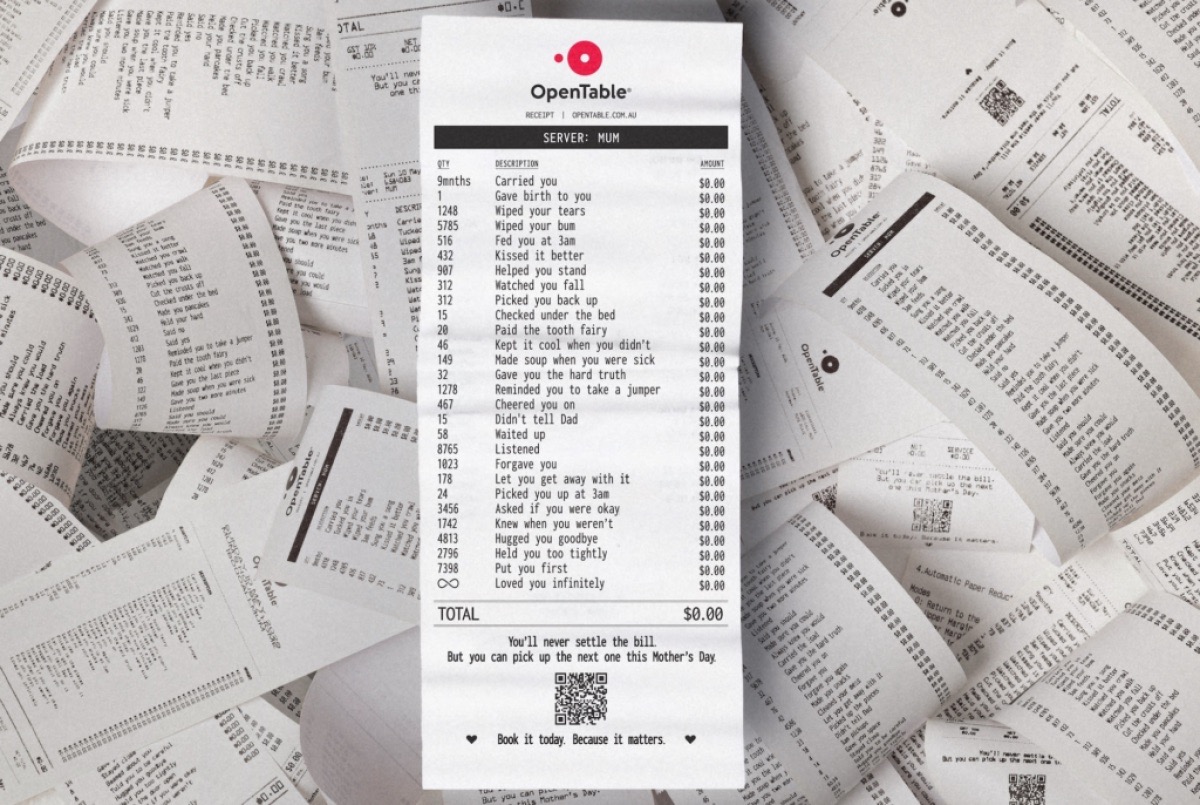
A Mother’s Day campaign by OpenTable recently circulated online featuring a mock restaurant receipt listing thousands of invisible maternal acts — “carried you,” “wiped your tears,” “waited up,” “loved you infinitely” — all priced at $0.00. The advertisement was emotionally devastating because it exposed a truth modern economies systematically ignore: the most civilisation-sustaining labour in human history has largely remained unpaid, feminised, invisible, and emotionally expected. The campaign was not simply clever marketing. It revealed how contemporary capitalism increasingly monetises emotional recognition precisely because society has failed to structurally value care itself.

Modern economic systems routinely measure productivity through wages, market outputs, financial growth, and scalable enterprise. Yet some of the most foundational forms of human labour never appear inside GDP calculations. Child-rearing, emotional regulation, domestic care, elder support, psychological stabilisation, and relational maintenance have historically been treated as natural obligations rather than economic contributions.
The receipt resonates because it quantifies what society intentionally refuses to quantify. Every sleepless night, emotional intervention, school pickup, hospital visit, conflict mediation, sacrifice, and act of protection forms part of an invisible infrastructure sustaining civilisation itself. Without caregiving systems, labour markets collapse. Educational outcomes deteriorate. Mental health destabilises. Social trust erodes.
Economists have long debated the monetary value of unpaid domestic labour. Studies by organisations such as Oxfam and the International Labour Organization have estimated that unpaid care work globally would amount to trillions of dollars annually if formally compensated. Women disproportionately perform this labour across cultures, frequently sacrificing career progression, financial security, retirement wealth, and physical wellbeing in the process.
The deeper tension is psychological. Societies celebrate motherhood symbolically while structurally underfunding it materially. Mothers are romanticised rhetorically but often abandoned institutionally through inadequate childcare systems, healthcare inequities, parental leave limitations, and wage penalties associated with caregiving responsibilities.
The OpenTable campaign worked because it translated emotional truth into commercial symbolism. It used the visual language of capitalism — a receipt — to reveal capitalism’s blind spot. In doing so, it transformed marketing into social commentary.
At a strategic level, the campaign also demonstrates how emotional intelligence has become one of the most valuable currencies in modern branding. Consumers increasingly respond not simply to products, but to brands capable of reflecting identity, memory, morality, and emotional recognition. Attention is no longer enough. Emotional resonance drives engagement.
Advertising has evolved dramatically from transactional persuasion into psychological positioning. The strongest modern brands no longer merely sell goods or services. They attempt to occupy emotional territory inside people’s identities.
Technology fragmented traditional institutions — churches, unions, neighbourhoods, local journalism, extended family systems — leaving many individuals emotionally untethered. Into that vacuum stepped brands. Nike speaks about social justice. Apple sells creativity and identity. Patagonia markets environmental morality. OpenTable now sells gratitude, remembrance, and emotional intimacy.
This shift reflects a larger transformation in capitalism itself. Consumers increasingly purchase symbolic alignment rather than purely functional utility. Emotional storytelling generates loyalty because people seek coherence in fragmented societies. Brands capable of articulating unspoken emotional truths gain cultural leverage.
Yet this evolution carries ethical complications. Emotional vulnerability itself has become commercially exploitable. Holidays such as Mother’s Day increasingly function as emotional spending rituals where guilt, gratitude, nostalgia, and obligation are monetised through targeted campaigns.
The OpenTable receipt walks a delicate line between meaningful recognition and emotional commodification. It succeeds because the message feels authentic rather than manipulative. But the campaign also raises difficult questions: why must emotional acknowledgment increasingly arrive through corporate mediation instead of community structures or public policy?
Modern marketing departments are now employing behavioural psychologists, neuroscientists, anthropologists, and emotional analysts because attention economies have matured into emotional economies. The brands that dominate the future will not merely understand consumer behaviour. They will understand loneliness, longing, identity, grief, memory, and belonging.
This represents a profound civilisational shift. Emotional architecture — once primarily built through families, religions, and local communities — is increasingly being redesigned through commercial ecosystems.

The viral success of the campaign also exposes growing relational exhaustion inside modern societies. Birth rates continue declining across many developed nations. Loneliness epidemics are accelerating. Caregiving systems are increasingly strained by ageing populations and rising economic pressure.
Younger generations increasingly delay marriage, children, and family formation due to financial instability, housing costs, career precarity, and emotional burnout. Simultaneously, caregiving expectations remain culturally enormous. Many mothers are now expected to function simultaneously as income earners, emotional stabilisers, educators, caretakers, therapists, and household managers.
This pressure creates invisible societal fractures. The crisis is not merely demographic. It is infrastructural. Civilisations cannot sustainably survive while systematically extracting unpaid emotional labour without reciprocal support systems.
Motherhood itself has also become psychologically politicised. Public discourse oscillates between idealisation and resentment. Social media intensifies unrealistic standards while simultaneously commodifying maternal identity into endless content production.
The receipt metaphor therefore cuts deeper than sentimentality. A receipt records transactions. The campaign quietly asks whether human love should ever be transactional at all — and whether modern society has accidentally transformed relationships into invisible economies of emotional debt.
In an age dominated by AI, automation, and algorithmic systems, caregiving may paradoxically become more valuable precisely because it remains profoundly human. Machines may optimise logistics, but they cannot replicate maternal presence, sacrifice, intuition, emotional memory, or embodied care.
The future economy may eventually rediscover what civilisation overlooked for centuries: emotional labour is not peripheral infrastructure. It is foundational infrastructure.
The OpenTable campaign matters because it reveals a larger truth about modern civilisation: societies consistently undervalue the systems that sustain human beings emotionally while overvaluing the systems that extract economic productivity. The advertisement went viral not because it sold restaurant reservations, but because millions recognised themselves inside it. Beneath every functioning economy sits an invisible architecture of care, sacrifice, and emotional endurance — overwhelmingly performed by people history rarely compensates proportionately. The future stability of societies may depend less on technological advancement alone and more on whether humanity finally learns how to structurally honour the labour that raised it.
Why These Matter - WTM MEDIA is an independent editorial platform exploring the forces shaping our world—through people, culture, commerce, design, systems, and governance. Connecting the dots between today’s headlines and tomorrow’s realities.