
For more than a century, windows have performed a simple function: admitting daylight while separating people from the elements. In the decades ahead, they may become something far more consequential. Transparent photovoltaic technologies promise to transform ordinary glass into distributed energy infrastructure, allowing buildings to generate electricity without sacrificing visibility or architectural aesthetics. Although today’s transparent solar technologies remain less efficient than conventional rooftop photovoltaic systems, their significance lies elsewhere. Modern cities contain billions of square metres of glazing across office towers, hospitals, universities, airports, residential developments, shopping centres, and transport hubs. Collectively, those transparent surfaces represent one of the largest underutilised assets within the built environment. If even a fraction of them become energy-generating façades, architecture itself begins evolving from a passive consumer of electricity into an active producer. The implications extend well beyond engineering. Invisible solar windows touch urban planning, construction economics, energy resilience, climate adaptation, property investment, national infrastructure, and public policy. They challenge a long-standing assumption that renewable energy must be visually separate from the buildings it serves. Instead, electricity generation becomes embedded within architecture itself. This is not merely another renewable-energy innovation. It represents a gradual redesign of how cities function, how buildings create value, and how the built environment participates in the energy system.
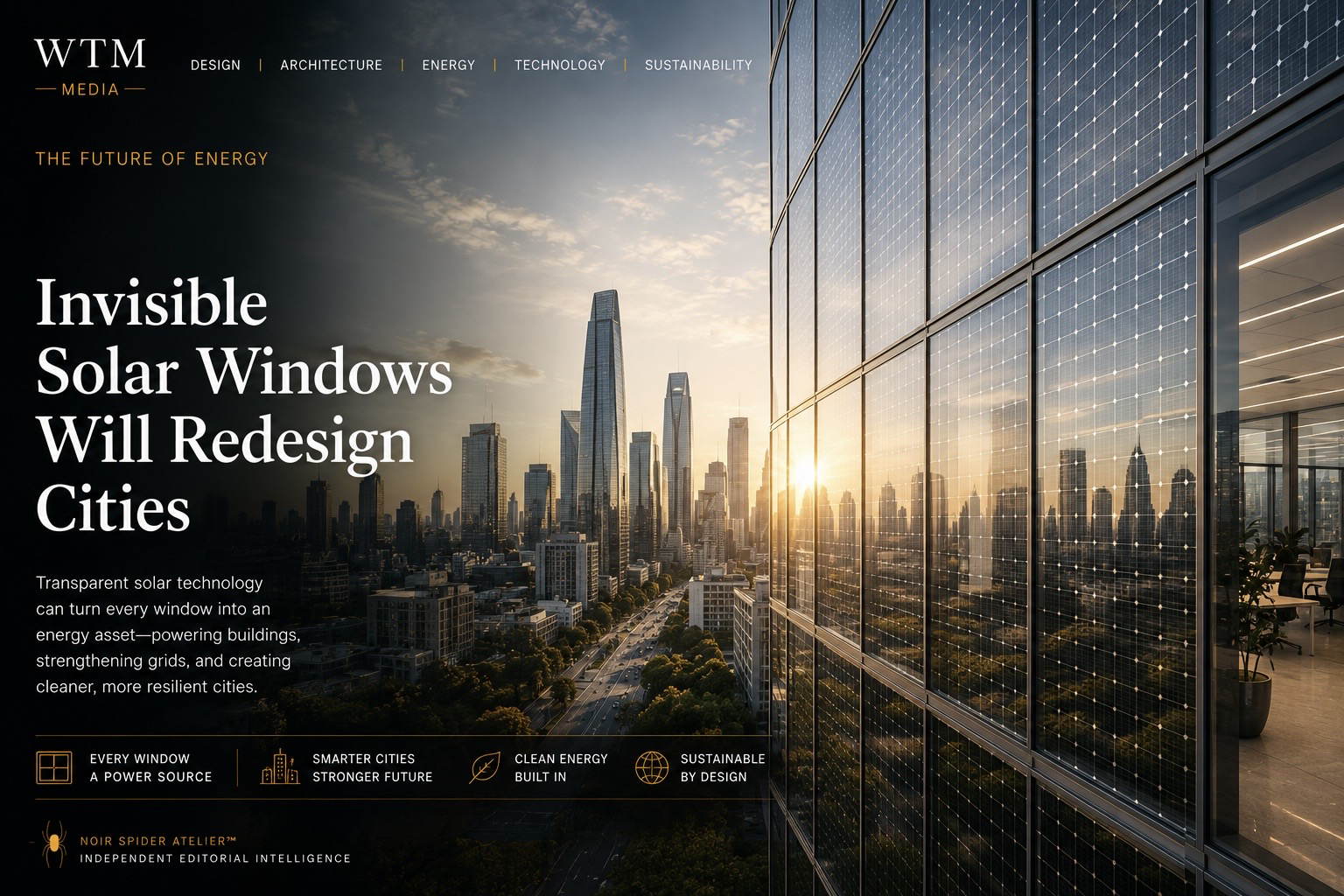
For generations, architects have treated buildings primarily as places where energy is consumed. Heating, cooling, lighting, ventilation, lifts, computing, and appliances have all depended upon electricity generated somewhere else and transported across increasingly complex grids. The building itself has remained largely passive, waiting for energy to arrive before it can function.
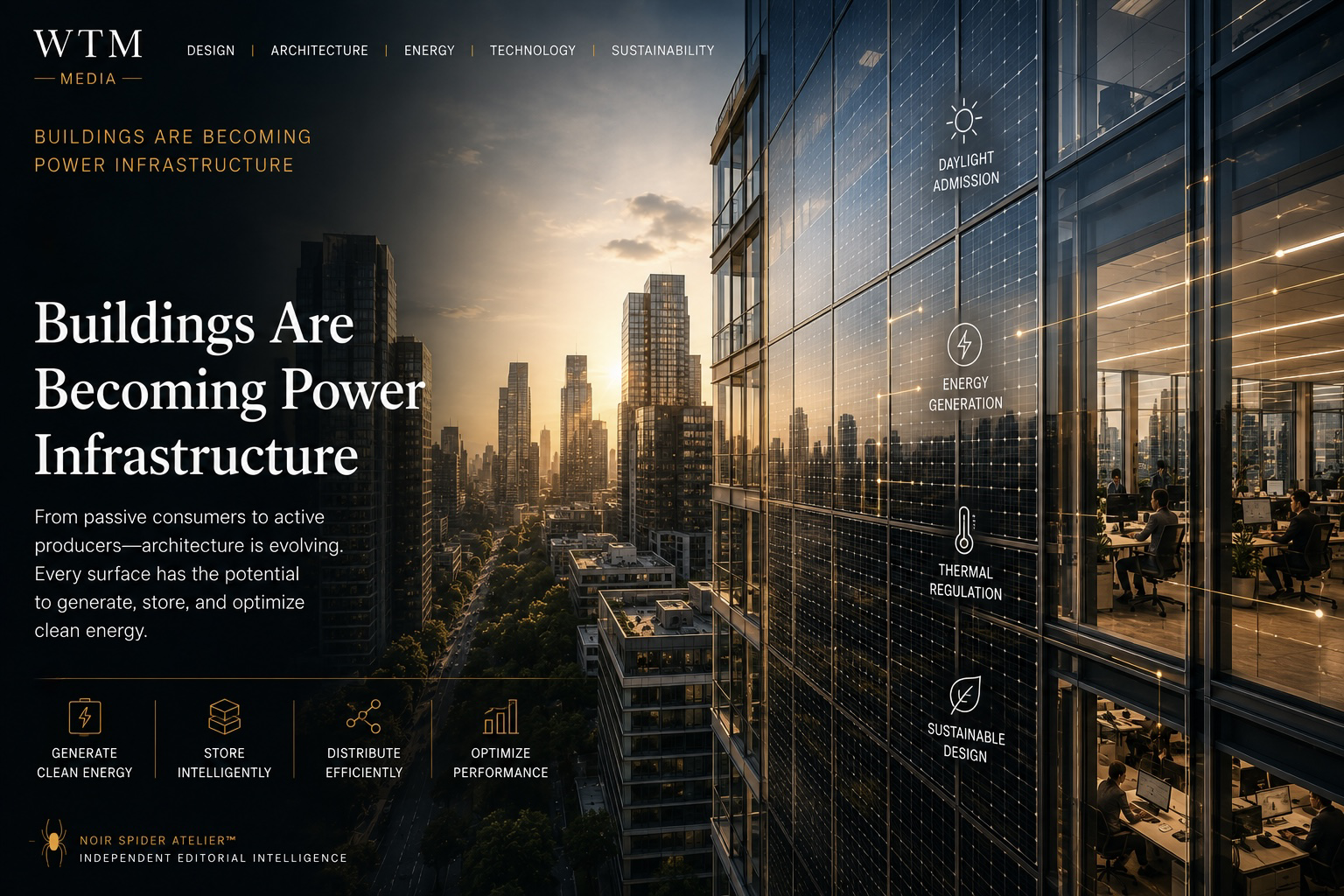
That assumption has already begun changing through rooftop solar, geothermal systems, battery storage, and intelligent energy management. Transparent photovoltaic glazing extends this transition by incorporating electricity generation directly into the building envelope. Rather than adding renewable technology onto architecture, the architecture itself becomes the technology.
This distinction matters because façades occupy vastly larger surface areas than roofs in many modern developments. Commercial towers often contain more glass than rooftop area. Airports, hospitals, universities, and office campuses present enormous vertical surfaces continuously exposed to daylight. Even if transparent solar glass captures less energy per square metre than traditional photovoltaic panels, the cumulative generation across these expansive façades could become substantial.
Equally important is the architectural flexibility such technologies offer. Traditional rooftop installations are frequently constrained by orientation, shading, structural limitations, heritage protections, or competing rooftop equipment. Transparent solar glazing integrates energy production into surfaces that already exist for functional reasons, potentially reducing visual compromise while preserving design intent.
Developers may eventually begin valuing façades differently. Windows would no longer represent solely construction costs or aesthetic choices; they become productive assets capable of contributing to operational performance throughout a building’s lifespan. This shifts investment decisions from short-term installation costs towards long-term energy economics.
Perhaps most significantly, invisible solar windows encourage architects to reconsider buildings as participants within broader urban infrastructure. Electricity generation becomes embedded within everyday architecture rather than isolated within dedicated energy facilities. That subtle shift may ultimately prove more transformative than the technology itself.
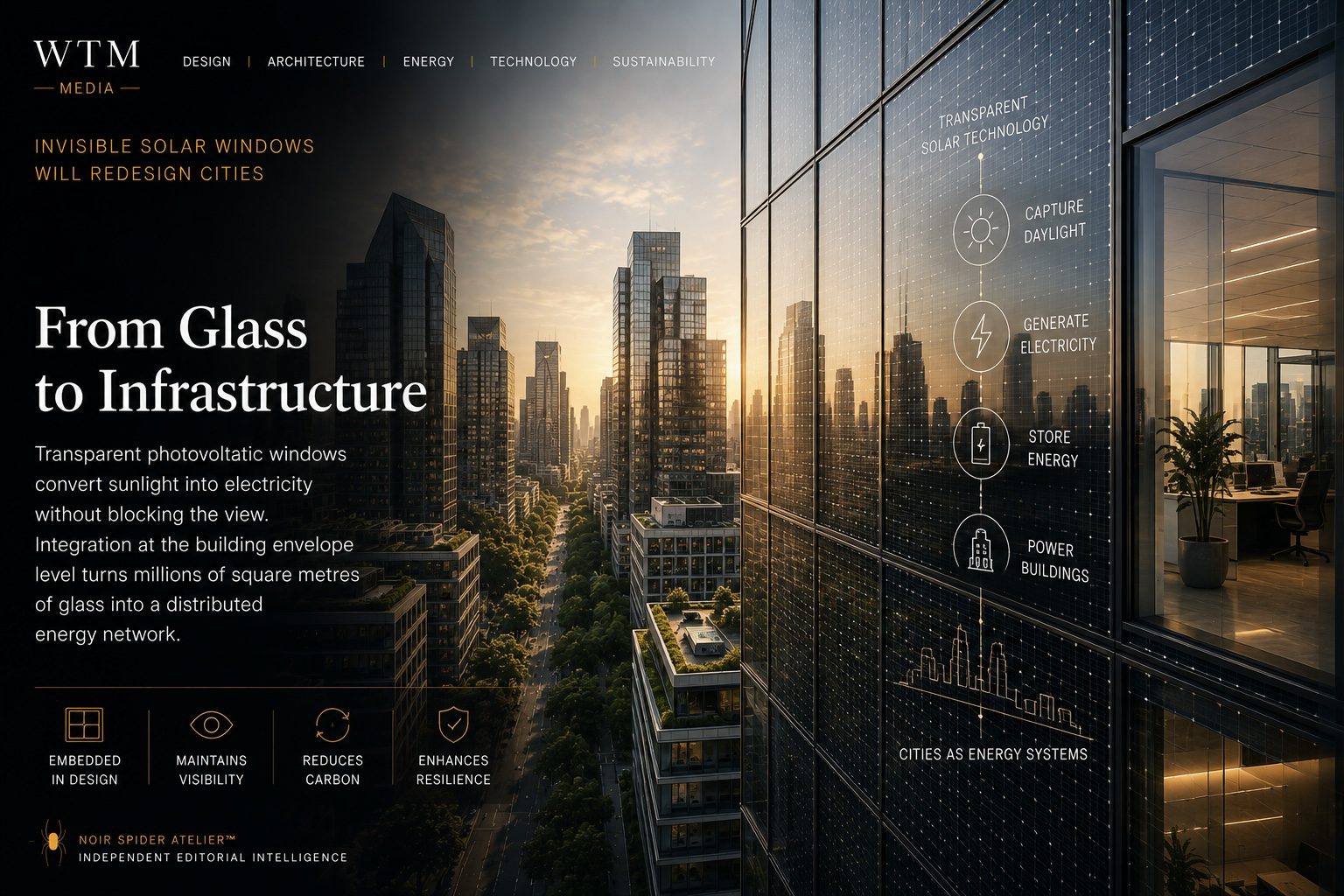
Historically, glass has represented a cost centre. It improves natural lighting, occupant wellbeing, aesthetics, and commercial appeal, yet it rarely generates direct financial returns beyond those indirect benefits. Transparent photovoltaics introduce the possibility that glazing may evolve into revenue-generating infrastructure.
Commercial property owners increasingly evaluate buildings through lifecycle costs rather than initial construction expenditure. Operating expenses, energy efficiency, maintenance requirements, regulatory compliance, and tenant demand influence asset values throughout decades of ownership. Energy-generating windows fit naturally within this longer-term investment perspective.
Office developments may become particularly attractive candidates. Their extensive curtain-wall façades receive consistent daylight exposure while simultaneously housing large daytime electricity demands. Electricity produced within the building can reduce dependence upon external supply, lower operating costs, and improve resilience during grid disruptions when combined with energy storage systems.
Residential developments present different opportunities. Apartment towers, mixed-use neighbourhoods, and high-density housing increasingly seek sustainable credentials alongside lower utility expenses. Transparent solar glazing may eventually complement rooftop installations, creating distributed production across entire residential districts rather than concentrating generation solely above them.
Institutional investors are also paying closer attention to environmental performance. Pension funds, sovereign wealth funds, insurers, and infrastructure investors increasingly assess long-term climate resilience alongside financial returns. Buildings capable of producing part of their own electricity may attract stronger valuations as environmental regulations tighten globally.
None of this suggests transparent solar glass will replace conventional photovoltaic systems. Rather, it expands the available toolkit. The future energy-efficient building will likely combine multiple technologies—rooftop solar, batteries, geothermal systems, intelligent controls, efficient materials, and energy-generating façades—into an integrated whole. The greatest value emerges from systems thinking rather than technological substitution.
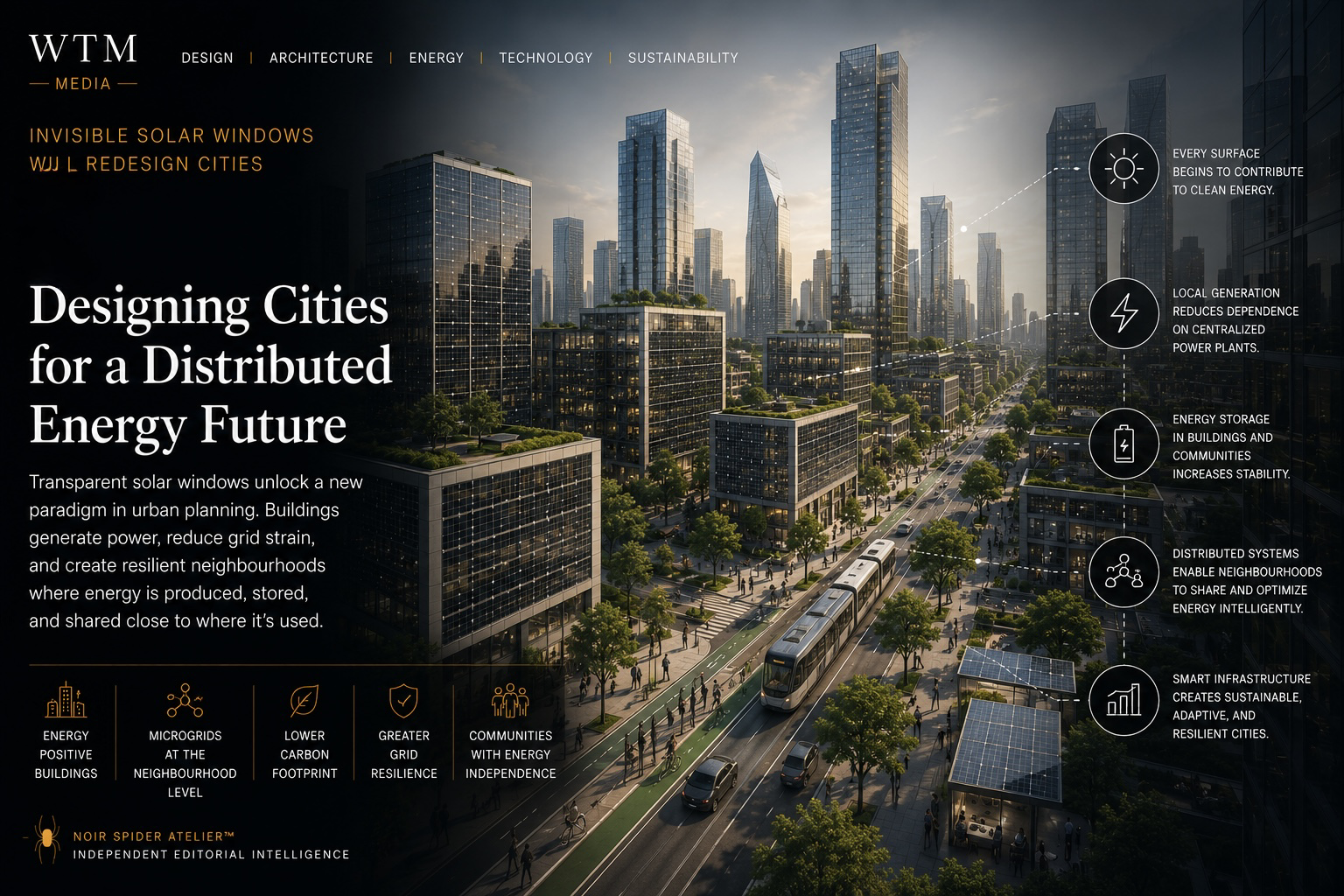
Technological breakthroughs alone rarely transform societies. Their broader impact depends upon planning systems, building regulations, financing mechanisms, public policy, and institutional coordination. Transparent solar windows are no exception.
Most cities were designed around assumptions established long before climate resilience became a planning priority. Energy generation occurred outside urban centres, while cities specialised in consumption. Future planning may increasingly blur that distinction, encouraging neighbourhoods that generate, store, distribute, and manage electricity locally.
Urban planners may eventually consider building orientation differently. Maximising daylight exposure has always influenced architectural design, but energy-generating façades introduce additional considerations. Street layouts, skyline density, shadow management, and façade geometry could all become more significant when every window possesses productive potential.
Building regulations will also evolve. Performance standards may increasingly reward integrated energy production alongside insulation, ventilation, and emissions reductions. Certification systems may shift from measuring operational efficiency alone towards evaluating how effectively buildings contribute to wider urban energy resilience.
Developing economies may find unique opportunities. Rapid urbanisation across Africa, Asia, and Latin America presents the possibility of incorporating advanced building technologies during expansion rather than retrofitting them decades later. Emerging cities often possess greater flexibility than established metropolitan areas constrained by ageing infrastructure.
The most resilient cities of the future are unlikely to depend upon one revolutionary technology. Instead, they will integrate thousands of incremental innovations that collectively reshape how urban systems function. Transparent solar glazing belongs within that broader transformation, not above it.
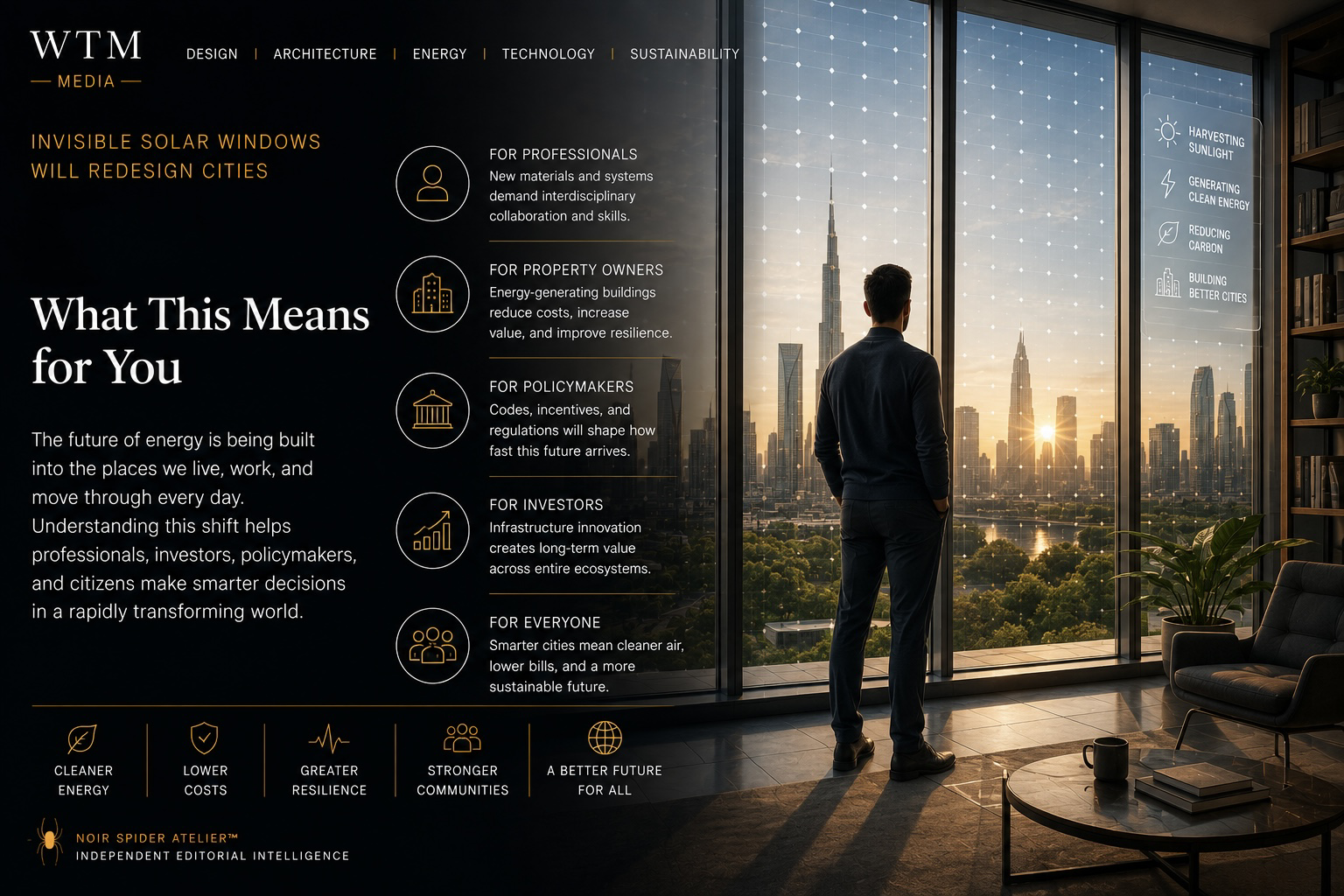
Whether or not you work in architecture or engineering, this transition carries practical implications. Buildings influence where we live, how much energy we consume, what properties retain value, and how cities respond to environmental pressures. Understanding these developments helps individuals anticipate structural rather than temporary change.
For professionals in construction, architecture, engineering, and real estate, transparent photovoltaics signal another reminder that interdisciplinary knowledge is becoming essential. Future projects will increasingly require collaboration between designers, materials scientists, energy specialists, software engineers, financiers, and policymakers. Competitive advantage will belong to those who understand systems rather than isolated disciplines.
Property owners may begin asking different questions when evaluating new developments. Beyond aesthetics and location, attention may increasingly focus upon energy performance, lifecycle resilience, adaptability, and operational independence. Buildings that generate part of their own electricity could become more attractive over time, particularly where energy costs remain volatile.
For policymakers, invisible solar windows illustrate why innovation policy extends beyond laboratories. Commercial deployment depends upon building codes, planning approvals, investment incentives, supply chains, workforce development, and regulatory clarity. Scientific progress without institutional readiness rarely achieves widespread adoption.
For investors, these developments reinforce the importance of monitoring infrastructure rather than headlines. Transformational industries often emerge gradually, supported by materials manufacturers, specialised glass producers, construction firms, semiconductor developers, software providers, and energy-management companies long before public attention intensifies.
Most importantly, this story reminds readers to view technological innovation through its wider consequences. The most valuable question is seldom, “Does this invention work?” It is, “What systems begin changing if it succeeds?” That perspective separates curiosity from strategic foresight.
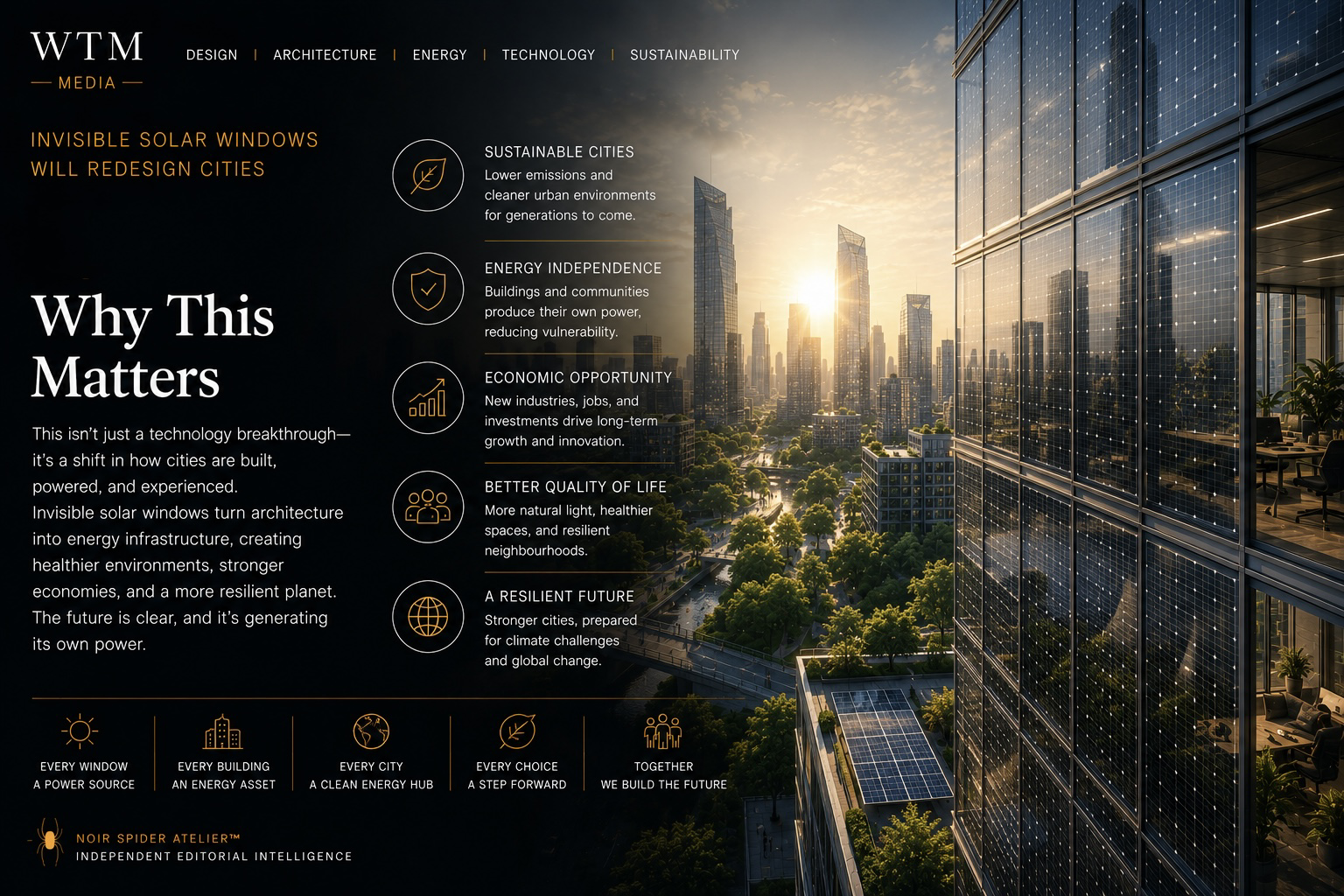
Every generation inherits technologies that quietly redefine civilisation. Electricity, reinforced concrete, elevators, steel, telecommunications, and the internet each altered society because they became embedded within infrastructure rather than remaining isolated inventions. Transparent solar windows may follow a similar trajectory if technical, economic, and regulatory barriers continue falling.
Their significance does not rest upon replacing conventional solar panels. Instead, they expand the surfaces capable of producing renewable energy. In a world increasingly shaped by electrification, resilience, and urban growth, unused architectural surfaces represent an enormous strategic resource.
This editorial is ultimately about systems thinking. Buildings, energy networks, transportation, environmental policy, finance, architecture, and public health no longer operate independently. Decisions affecting one increasingly reshape the others. Technologies that connect those systems deserve closer attention than those solving isolated technical problems.
For WTM Media, this story exemplifies the future of design intelligence. Design is not decoration. It is the intentional organisation of systems that influence how societies function. Invisible solar windows represent design operating simultaneously across engineering, architecture, economics, governance, and sustainability.
Cities have always reflected the technologies of their age. Stone defined ancient civilisations. Steel defined industrial modernity. Glass defined the twentieth-century skyline. The twenty-first century may remember glass differently—not because it allowed people to see outside, but because it quietly helped power everything within.
That possibility makes transparent solar technology more than a scientific curiosity. It makes it an architectural proposition, an economic opportunity, and a glimpse of how tomorrow’s cities may literally generate the energy required to sustain themselves.
Visual Intelligence: Noir Spider Atelier™ — A Division of WTM Media
Editorial Direction: Kelly Dowd, MBA, MA
Copyright: © 2026 WTM Media. All rights reserved.

Why These Matter - WTM MEDIA is an independent editorial platform exploring the forces shaping our world—through people, culture, commerce, design, systems, and governance. Connecting the dots between today’s headlines and tomorrow’s realities.