

Nigeria’s industrial resurgence is often framed as the vision of a single billionaire industrialist. That narrative is incomplete. This editorial examines the structural constraints shaping Nigeria’s manufacturing future — power reliability, port efficiency, transport corridors, foreign exchange stability, and regulatory credibility — and argues that industrialisation will succeed or fail not on ambition, but on systems coherence.
When international media profiles Nigeria’s industrial revival, it gravitates toward a familiar archetype: the visionary tycoon building refineries, cement plants, and megafactories. It is a compelling story — entrepreneurial grit in a challenging environment. But it is incomplete. Industrialisation is not a personality trait; it is a throughput condition. The real question is not whether an industrial titan can build at scale. It is whether the ecosystem around him can sustain that scale without collapsing under its own inefficiencies.
Nigeria is Africa’s most populous nation, with over 200 million people and one of the continent’s largest GDPs. Its demographic trajectory suggests long-term economic potential. Yet industrialisation in Nigeria has historically stalled at the same structural bottlenecks: unreliable electricity, congested ports, inadequate rail infrastructure, volatile foreign exchange markets, regulatory unpredictability, and security instability in certain regions. None of these constraints are resolved by capital expenditure alone.
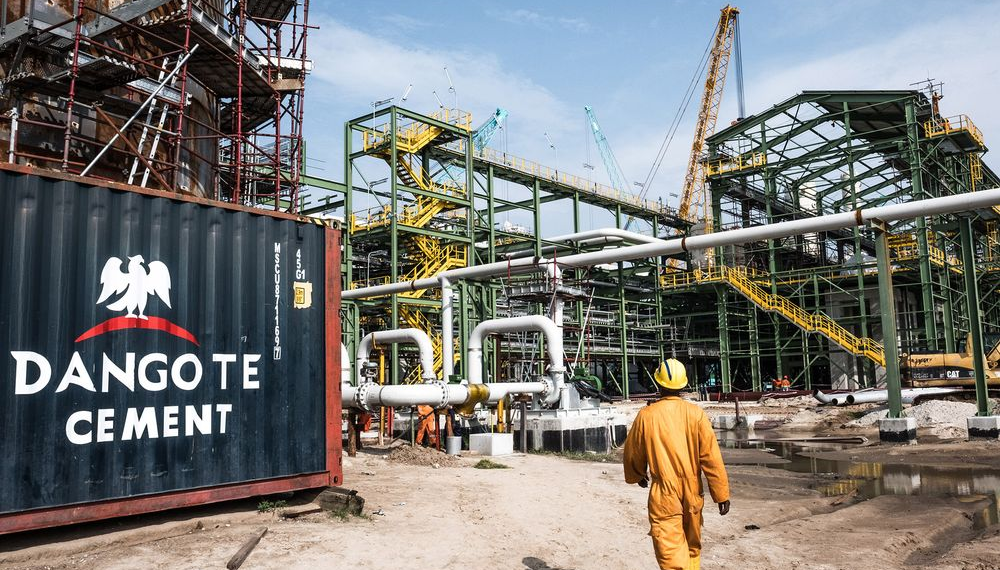
The industrial projects most often cited — cement expansion, petrochemical complexes, and oil refining capacity — represent billions of dollars in private investment. For example, the Dangote Refinery, one of the largest single-train refineries globally, has been positioned as transformative for Nigeria’s fuel import dependence. The logic is straightforward: refine domestically, reduce import bills, strengthen currency stability, and retain value locally. That logic holds only if distribution networks, pipeline security, and pricing frameworks operate predictably.
Electricity remains the foundational constraint. Nigeria generates far less grid power per capita than emerging industrial peers. Manufacturers often rely on private diesel generators, raising production costs significantly. The World Bank has repeatedly identified power sector reform as critical to Nigerian growth. Without reliable base-load electricity, heavy industry functions in survival mode. Industrialisation cannot scale sustainably on backup generators.
Ports represent another chokepoint. Lagos ports have long been criticised for congestion, customs delays, and infrastructure decay. While reforms and new deep-sea port developments aim to improve throughput, efficiency gains must outpace industrial growth to avoid new bottlenecks. Manufacturing thrives on predictable logistics timelines. If import clearance fluctuates from days to weeks unpredictably, supply chains become costlier and less competitive.
Rail infrastructure illustrates the compounding effect of systems weakness. Road freight dominates domestic cargo movement, but road transport increases wear, accident risk, and cost variability. Expanding rail connectivity between ports and inland industrial hubs could reduce congestion and stabilise delivery schedules. However, rail development requires sustained public investment and maintenance culture — not episodic ribbon-cutting.
Foreign exchange volatility adds another layer of fragility. Industrial projects often depend on imported machinery, spare parts, and raw materials. When currency controls shift or exchange rates swing sharply, production planning becomes uncertain. Investors price this uncertainty into risk premiums, raising capital costs. Stable FX policy is not merely a macroeconomic concern; it is a factory-floor issue.
Regulatory credibility is equally important. Businesses can operate in challenging environments if rules are consistent. What undermines investment confidence is sudden policy reversal — tariff adjustments, import bans, tax reinterpretations. Industrialisation requires long-term financing horizons. When regulatory signals fluctuate, financiers demand higher returns to compensate for unpredictability.
Security concerns cannot be ignored. Certain industrial corridors face risks from banditry, sabotage, or political unrest. Investors require assurances that assets will not become stranded by instability. Insurance premiums reflect these realities. Industrial ecosystems thrive in environments where security forces, judicial systems, and local communities align around economic continuity.
There is also the risk of concentration. When industrial expansion is heavily associated with a single corporate entity, the national economy can become structurally dependent on that actor. Monopolistic dominance may yield short-term coordination benefits but long-term competitive distortion. Healthy industrialisation distributes capacity across multiple producers, fostering innovation and resilience.

The media fascination with billionaire-led industrialisation overlooks the more mundane but decisive dimension: public-sector capacity. Industrial policy cannot be outsourced entirely to private capital. Governments must build regulatory agencies that enforce standards impartially, customs systems that process efficiently, and courts that adjudicate disputes swiftly. Without institutional scaffolding, industrial ambition becomes episodic.
There is also a labour question. Nigeria’s youthful population is frequently cited as a demographic dividend. But dividends require skill alignment. Industrial expansion demands technicians, engineers, machinists, logistics managers. Vocational education systems must scale in parallel. Otherwise, companies import expertise, and the domestic labour force remains underutilised.
Environmental governance presents another strategic challenge. Refining and heavy manufacturing bring pollution risks. Global markets increasingly demand ESG compliance. Nigerian industrial exports will face scrutiny from international buyers regarding carbon intensity and environmental standards. Balancing growth with sustainability is not optional; it is commercially necessary.
Financial sector development influences industrial sustainability as well. Domestic banks must possess the capital depth and risk management sophistication to finance long-term industrial projects. Overreliance on foreign credit exposes projects to global capital cycles. Strengthening local financial markets enhances resilience.
Regional integration could amplify gains. The African Continental Free Trade Area (AfCFTA) creates potential for Nigerian manufactured goods to reach broader markets. However, trade agreements are only as effective as border infrastructure and customs harmonisation allow. Nigeria must ensure that internal logistics capacity matches continental ambitions.
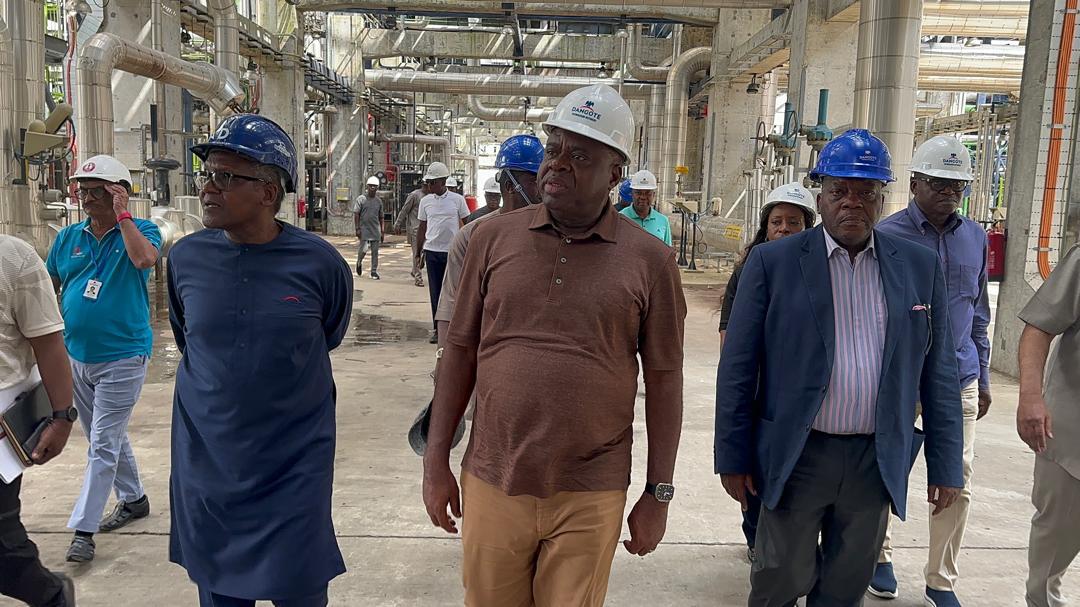
Industrialisation narratives often celebrate ribbon-cuttings and output milestones. What they miss is maintenance culture. Infrastructure decays without upkeep. Machinery requires continuous calibration. Regulatory institutions demand staffing and training. Sustainable industrial growth depends less on grand openings and more on operational discipline.
There is also a geopolitical dimension. As global supply chains diversify away from single-country dependence, Nigeria could position itself as a regional manufacturing hub. But multinational firms evaluate risk across dozens of variables — power reliability, currency convertibility, legal enforcement, and political continuity among them. Competing jurisdictions in Africa and Asia are advancing simultaneously.
Industrial transformation is therefore less a question of ambition and more a question of alignment. Private capital, public governance, labour development, infrastructure investment, and security stabilisation must move coherently. Fragmentation undermines scale.
Nigeria’s opportunity is real. Its domestic market size, entrepreneurial culture, and natural resource base offer advantages. Yet advantages convert to outcomes only when systems interlock. The success of flagship projects will be judged not by inauguration speeches but by throughput stability five years later.
The strategic error would be to interpret industrialisation as proof of arrival rather than a test of endurance. Megaprojects create headlines. Systems create prosperity.
Industrialisation is not theatre. It is the backbone of national self-sufficiency, employment generation, and currency stability. If Nigeria resolves its structural bottlenecks, it could anchor regional economic leadership for decades. If it fails to synchronise infrastructure, governance, and capital, industrial ambition risks becoming another cycle of high-profile openings followed by predictable constraints. The global media focuses on personalities. The future will be decided by plumbing.
Why These Matter - WTM MEDIA is an independent editorial platform exploring the forces shaping our world—through people, culture, commerce, design, systems, and governance. Connecting the dots between today’s headlines and tomorrow’s realities.