Explore the history, true stories, and cultural significance of The Devil Wears Prada, plus insider gossip on the sequel. Fashion, ambition, and power—Why These Matter.

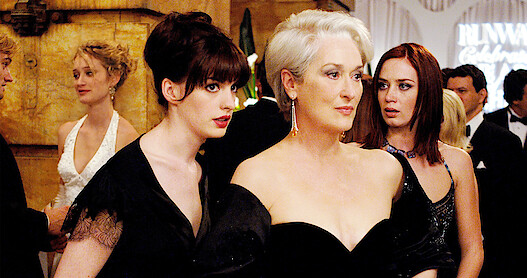
Before it was a global cultural touchstone, The Devil Wears Prada began as a 2003 novel by Lauren Weisberger, inspired by her time assisting one of fashion’s most formidable editors. The adaptation in 2006, directed by David Frankel and written by Aline Brosh McKenna, became an instant hit, grossing over $326 million worldwide and securing Meryl Streep a Golden Globe for her iconic portrayal of Miranda Priestly.
One of the film’s most quoted moments—Miranda’s monologue on the origin of a humble “cerulean” sweater—wasn’t originally in the book. The scene crystallized how deeply fashion influences our everyday choices, often without us realizing it. What started as a script tweak became a pop-culture lecture on taste, hierarchy, and the invisible architecture of influence.
Though Weisberger has never named names, speculation has always swirled that Miranda was inspired by a real-world editorial titan. The film kept things tasteful, leaving audiences to draw their own lines between fiction and reality.
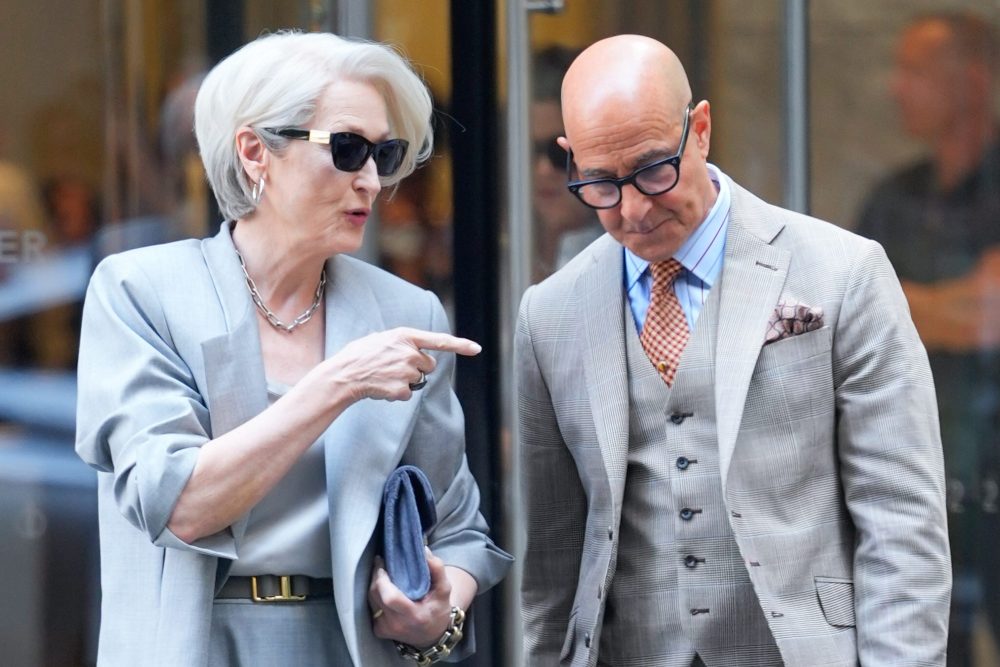
The film reframed how we talk about ambition, mentorship, and overwork in high-prestige industries. It also popularized “power as aesthetic,” influencing leadership style beyond the fashion world.
Patricia Field’s costume department pulled from archives, emerging designers, and stunt couture at a pace that felt like reverse sample sales. Rumors for the sequel suggest a sharper, more structured wardrobe—fashion as corporate armor.
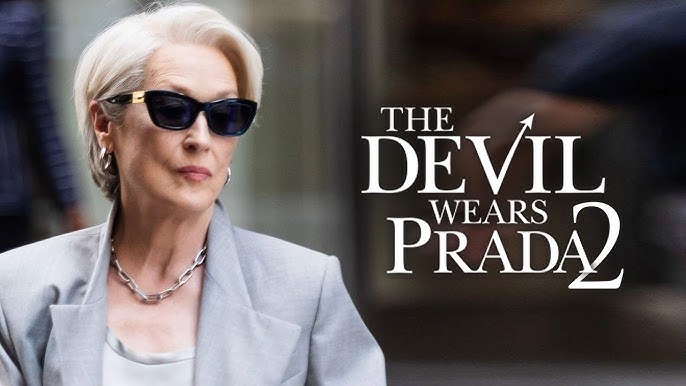
Confirmed for release on May 1, 2026, the sequel sees Miranda navigating a post-print world, Emily in a corporate power role, and the return of the original core cast. The timing—just before the Met Gala—is pure marketing couture.
Because Prada is more than a fashion film. It’s a fable about ambition, access, and the cost of entry. It taught us that the look changes; the hierarchy rarely does—and the sequel promises to prove it again.

Artificial intelligence is often presented as a triumph of engineering and computational scale, yet its true foundation is neither autonomous nor purely technical. It is built continuously, incrementally, and globally through human interaction that is largely unrecognised and uncompensated. Every click, correction, upload, and behavioural signal contributes to the training and refinement of AI systems, forming a vast, distributed layer of labour embedded within everyday digital life. This labour is not formally acknowledged, yet it generates immense value for platforms that aggregate, structure, and monetise it. The result is a quiet inversion of traditional economic models: users are no longer merely consumers, but active contributors to production—without ownership, compensation, or control. This editorial examines how data functions as labour, how platforms extract value from participation, and why the economic architecture of artificial intelligence raises fundamental questions about fairness, ownership, and the future of human agency in digital systems.

Artificial intelligence is not a speculative concept; it is a transformative force already reshaping industries, infrastructure, and human capability. Yet the financial behaviour surrounding it reveals a familiar and recurring dislocation between technological reality and market expectation. The rapid valuation ascent of companies such as NVIDIA signals not only confidence in AI’s future, but a compression of that future into present-day pricing. This compression introduces structural tension, where capital markets begin to reward anticipated outcomes long before underlying systems, adoption cycles, and revenue models have fully matured. As investment concentrates and narratives accelerate, the question is no longer whether AI will change the world, but whether markets have mispriced the timeline of that change. This editorial examines the widening gap between innovation and valuation, arguing that the risk is not technological failure, but financial overextension built on premature certainty.

Diplomacy has long been framed as a mechanism for negotiation and de-escalation, yet in today’s geopolitical landscape it increasingly functions as a calculated instrument of signalling, leverage, and controlled escalation. Actions such as ambassador expulsions, staged negotiations, and strategically timed public statements are no longer solely aimed at resolution; they are designed to shape perception, influence markets, and reposition power without direct confrontation. This evolution reflects a deeper transformation in global strategy, where diplomacy operates not as a counterbalance to conflict but as an extension of it—subtle, deliberate, and often performative. This editorial examines how diplomatic behaviour has shifted from quiet negotiation to visible theatre, and how this shift reshapes the boundaries between stability and escalation in an increasingly fragile international system.