
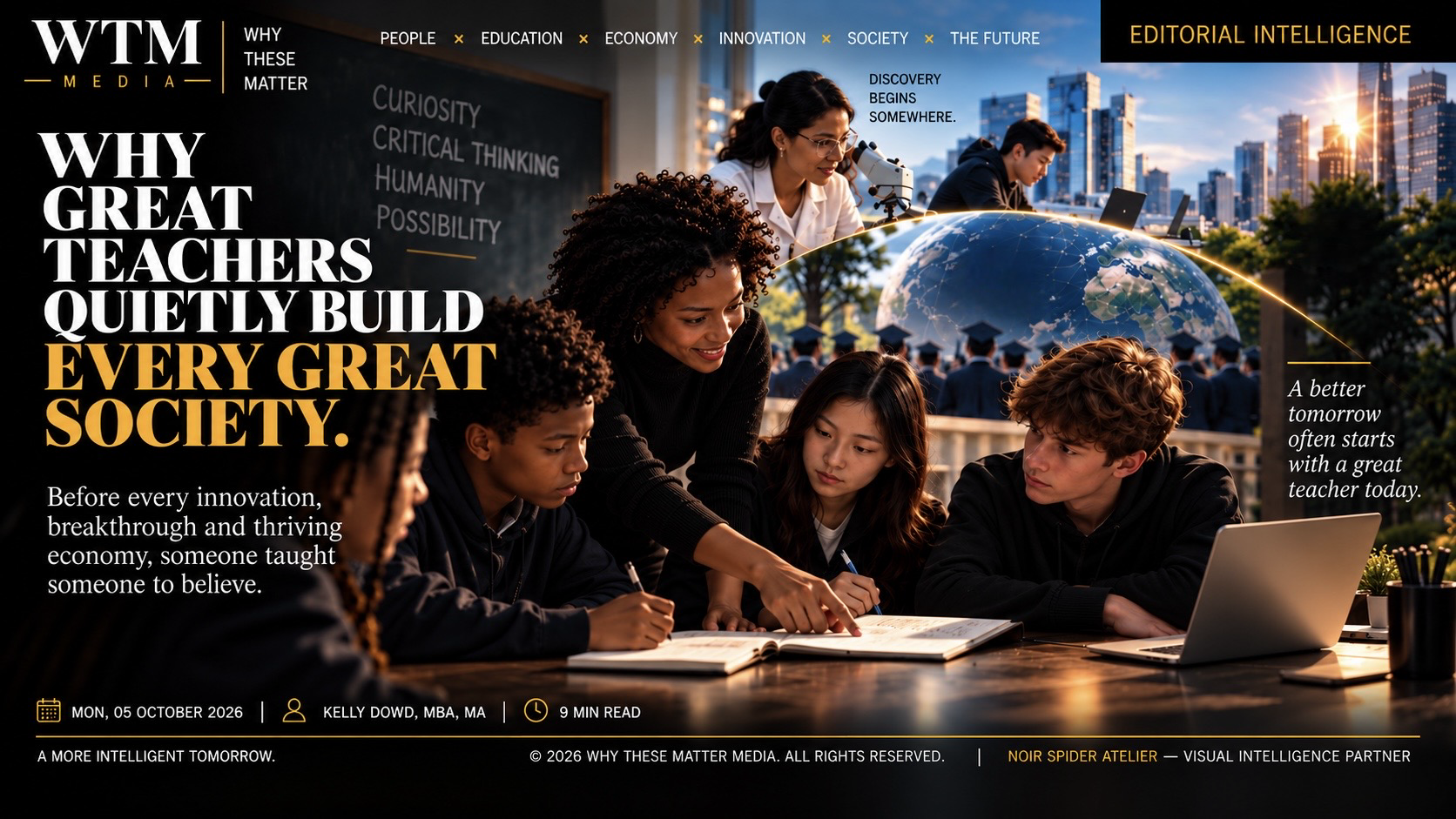
A handwritten note from a bestselling author to his third-grade teacher reveals a truth far greater than gratitude. Every scientist, entrepreneur, physician, architect, engineer, artist and public leader was once a child whose future depended on whether someone recognised potential before achievement existed. While societies measure educational success through examination scores, graduation rates and budgets, the greatest return on education is often invisible: a teacher’s ability to cultivate belief. Long before innovation transforms industries or economies, someone quietly convinces a young mind that extraordinary things are possible. Education is therefore not merely a public service—it is the earliest form of long-term nation building.

Education is frequently discussed as though its primary purpose were the transfer of knowledge. Governments debate literacy rates, curriculum reforms, funding formulas and international rankings. These metrics undoubtedly matter, yet they measure outputs rather than origins. Every remarkable achievement begins not with information, but with conviction. Before knowledge becomes expertise, someone must first believe that learning is worthwhile. That belief is rarely manufactured independently. More often, it is cultivated by an educator whose influence extends far beyond the classroom.
The most profound moments in education are often invisible at the time they occur. A teacher offers encouragement after a disappointing examination. A mentor notices curiosity where others perceive distraction. A simple statement—“You could become an engineer,” “Your writing matters,” or “Keep asking difficult questions”—may occupy only seconds in conversation yet remain lodged in memory for decades. History remembers Nobel laureates, founders and artists, but seldom records the quiet interactions that persuaded them to persist before success became plausible.
This invisible architecture explains why educational influence compounds over time. A single lesson may be forgotten, but confidence acquired through consistent encouragement often becomes permanent. Unlike financial capital, belief does not diminish when shared. It expands. One educator may indirectly influence thousands of lives through the future decisions of a single student who later creates a business, develops a medical breakthrough, designs a safer city or teaches another generation in turn.
Author Jon Acuff’s public letter to his third-grade teacher captured precisely this phenomenon. More than forty years after she laminated a small collection of poems and made a young boy feel like a genuine writer, Acuff addressed thousands of educators while reflecting on the lasting impact of that moment. He has since published numerous bestselling books translated into dozens of languages and read across the world. His achievements are visible. The teacher’s contribution remains largely unseen, yet it may have been indispensable.
Psychologists have long understood that expectations shape performance. The phenomenon commonly associated with the “Pygmalion effect” demonstrates that belief expressed by authority figures can influence educational outcomes and confidence over time. Children often internalise the expectations placed upon them, gradually constructing an identity that either expands or restricts their perceived potential. Teachers therefore do far more than explain mathematics or literature; they help shape a student’s understanding of who they might become.
Every civilisation ultimately depends upon individuals who first encountered someone willing to recognise possibility before evidence existed. Before invention comes curiosity. Before leadership comes confidence. Before achievement comes permission to imagine achievement itself. Great teachers therefore perform one of society’s most economically valuable yet least measurable forms of investment: they create belief before results.
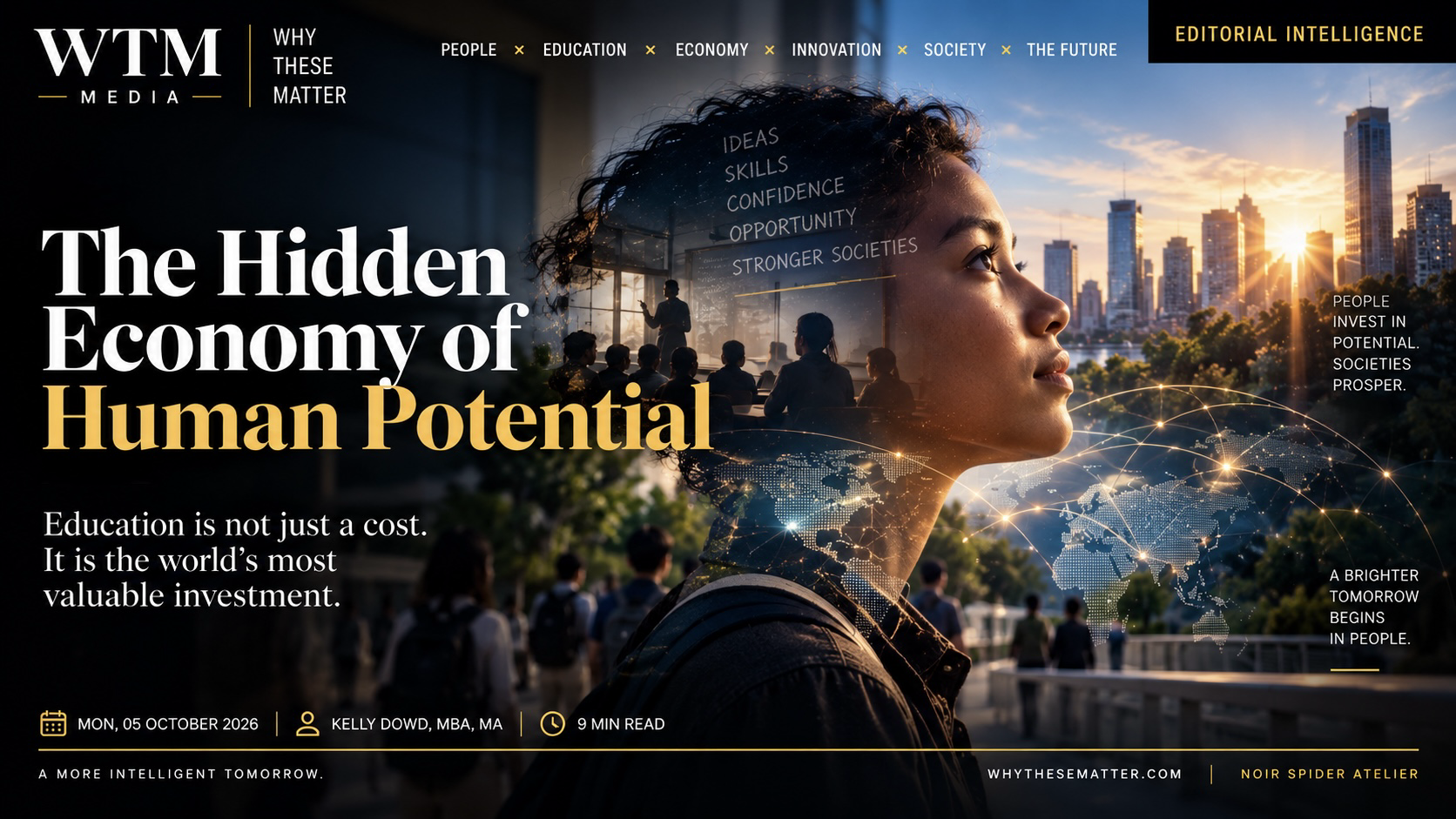
Economists traditionally define investment through measurable returns generated by capital allocation. Education certainly fits within that framework, producing higher productivity, stronger labour markets and increased national prosperity. Yet the conventional discussion overlooks education’s earliest return: belief. Before skills generate economic value, confidence motivates individuals to acquire them. Without aspiration, knowledge remains dormant.
Human capital has become one of the defining competitive advantages of the twenty-first century. Countries no longer compete solely through natural resources or industrial capacity. They compete through creativity, scientific discovery, entrepreneurship and problem-solving. These qualities cannot simply be manufactured through infrastructure spending. They emerge from educational cultures that encourage questioning, experimentation and resilience long before individuals enter the workforce.
Artificial intelligence has intensified this reality rather than diminished it. Machines increasingly automate routine tasks, making distinctly human capabilities—judgement, imagination, empathy, ethical reasoning and creativity—more economically valuable. Teachers remain uniquely positioned to cultivate these attributes because they develop people rather than merely transmitting information. Technology can personalise instruction, but it cannot replace the profoundly human act of convincing a child that their ideas possess value.
Research consistently demonstrates that teacher quality significantly influences long-term life outcomes beyond academic performance, affecting income, health, civic engagement and social mobility. Outstanding educators frequently alter life trajectories in ways that statistical models struggle to capture because their greatest contributions emerge years or even decades later. The return on their work compounds quietly across entire communities.
The irony is striking. Investors celebrate compound interest because financial growth accelerates over time. Teachers generate an even broader form of compounding through people. A student inspired today may eventually employ thousands, educate hundreds, invent technologies used by millions or improve institutions that outlive them entirely. One classroom therefore contains not merely children, but future economies waiting to unfold.
If nations genuinely wish to strengthen competitiveness, innovation and social resilience, education cannot remain viewed simply as expenditure. It should be understood as strategic infrastructure. Roads connect cities. Digital networks connect information. Teachers connect human potential to future possibility. Their influence becomes visible only after society begins enjoying the benefits they quietly helped create decades earlier.

Modern culture often celebrates visible success while overlooking the relationships that made it possible. Awards recognise achievement. Headlines profile entrepreneurs. Annual reports celebrate corporate performance. Yet few public honours acknowledge the countless educators whose influence quietly preceded these accomplishments. Visibility and value have become mistakenly intertwined.
This imbalance affects how societies allocate prestige. Careers generating immediate financial returns frequently receive greater recognition than professions whose benefits emerge gradually. Yet civilisation itself depends upon long-term thinking. Great teachers plant seeds whose harvest they may never witness. They accept uncertainty, investing daily in futures that remain impossible to predict.
There is profound wisdom in recognising that education is fundamentally an act of faith. Teachers encounter children before talent becomes expertise, before confidence becomes leadership and before imagination becomes innovation. They work with possibility rather than certainty. This requires patience, generosity and optimism—qualities that rarely appear on economic balance sheets but remain essential to societal progress.
The significance extends beyond classrooms. Parents, coaches, mentors and community leaders perform similar roles by recognising potential before achievement exists. Healthy societies create ecosystems where encouragement becomes cultural rather than exceptional. They understand that confidence spreads socially just as fear does. Communities therefore prosper when belief becomes a shared responsibility rather than the task of educators alone.
The future will undoubtedly demand new technologies, new industries and new forms of work. Yet every transformation will continue to depend upon individuals capable of imagining possibilities beyond present limitations. That capacity originates not inside algorithms but inside relationships built upon trust, curiosity and encouragement. Human development remains the foundation upon which every technological revolution ultimately rests.
Perhaps history’s greatest paradox is that the world’s most valuable investments are often invisible when they are first made. A conversation after class. A handwritten note. A teacher choosing to believe before achievement exists. Those seemingly ordinary moments become extraordinary because they quietly alter the trajectory of lives—and, eventually, the trajectory of nations.

Public conversations about the future increasingly revolve around artificial intelligence, productivity, geopolitical competition and economic resilience. These are important debates, yet they often begin too late in the story. By the time societies discuss innovation, the innovators themselves have already spent years inside classrooms shaped by educators who influenced how they thought about possibility. The future economy is built long before it enters the marketplace.
WTM’s intelligence perspective is that teachers should be understood not simply as educators, but as architects of human capital. They design confidence, curiosity and resilience—the invisible assets that later produce scientific discovery, entrepreneurial growth, institutional leadership and cultural progress. Nations that neglect this reality may invest heavily in technology while quietly underinvesting in the people capable of creating its next breakthroughs.
This shift in perspective changes how education should be evaluated. Examination scores remain useful, but they are incomplete. The deeper measure of an education system is the number of futures it unlocks, the confidence it cultivates and the opportunities it makes imaginable. Every society eventually inherits the consequences of what its teachers encourage—or fail to encourage.
The lesson extends well beyond education policy. Businesses, institutions and governments all rely upon people who once experienced someone believing in them before success existed. Leadership therefore begins with recognising potential rather than merely rewarding performance. The highest-return organisations often create cultures where individuals feel capable of becoming more than they initially imagined.
Jon Acuff’s letter reminds us that gratitude is not simply personal—it is systemic. One teacher’s encouragement can ripple through millions of readers, thousands of employees or generations of communities without ever appearing in official statistics. This is how influence compounds across society: quietly, patiently and often anonymously.
The greatest investment the world will never fully measure may not be found on a stock exchange or inside a sovereign wealth fund. It may be found in classrooms where teachers continue to invest in children whose future achievements remain invisible today. Before every civilisation advances, someone first convinces a young mind to believe, “Perhaps I can.” That moment remains one of humanity’s most valuable forms of capital.


Why These Matter - WTM MEDIA is an independent editorial platform exploring the forces shaping our world—through people, culture, commerce, design, systems, and governance. Connecting the dots between today’s headlines and tomorrow’s realities.