Long before diversity became a corporate objective, inclusion became a boardroom discussion, or representation evolved into an acronym, Diahann Carroll quietly redesigned the architecture of possibility. She did not simply become the first Black woman to achieve numerous milestones across Broadway, television, and film. She systematically altered what American institutions believed audiences would accept, advertisers would support, and executives would finance. Every role she accepted—and every role she declined—expanded the boundaries of cultural imagination. This is not merely the story of an actress. It is the story of institutional design, told through performance.

For generations, Hollywood did not suffer from a shortage of gifted Black performers. It suffered from an institutional shortage of imagination. The prevailing assumption inside studios, television networks, advertisers, and sponsors was not that Black actors lacked capability. It was that mainstream audiences would reject them in leading roles. Those assumptions hardened into business models, casting practices, and financial forecasts. The industry’s architecture became self-reinforcing because nobody questioned its underlying premises.
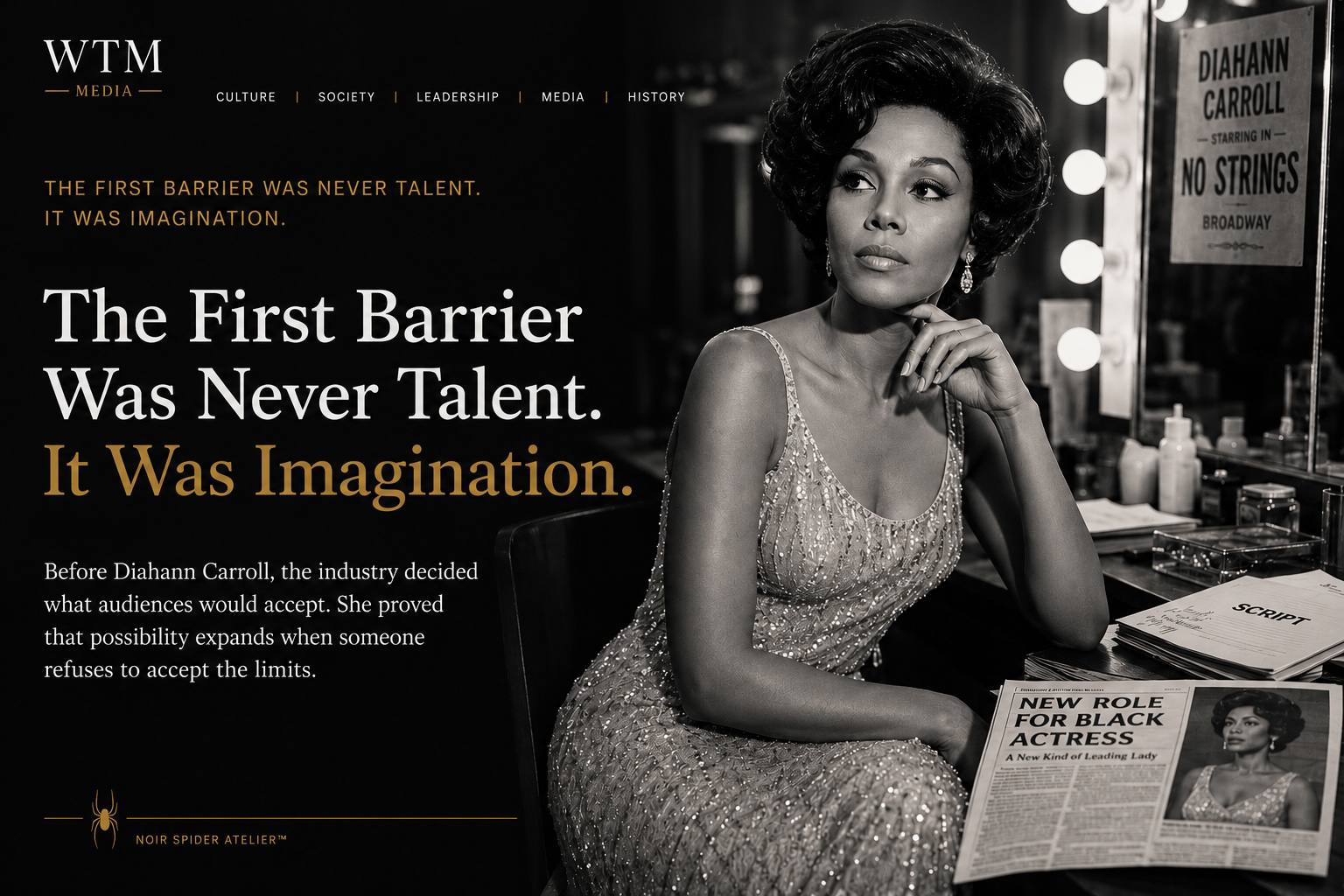
Diahann Carroll entered this environment with extraordinary talent, technical discipline, and remarkable poise. Yet her greatest contribution extended beyond artistic excellence. She challenged the assumptions underpinning institutional decision-making. Every successful performance forced executives to confront an uncomfortable possibility: perhaps the constraints they had accepted for decades were not reflections of audience demand, but reflections of institutional fear. That distinction changed everything.
Her career unfolded during an America wrestling with civil rights, social transformation, and competing visions of national identity. Cultural institutions often move more slowly than political movements because they depend upon commercial incentives as much as moral arguments. Carroll navigated both worlds simultaneously. She understood that changing public perception required changing what people repeatedly saw on their television screens, cinema screens, and theatre stages.
Representation, therefore, became less about symbolism and more about systems. When audiences repeatedly encounter competent, sophisticated, multidimensional Black professionals, those portrayals gradually reshape expectations. Stories alter assumptions. Assumptions influence behaviour. Behaviour eventually influences institutions. Carroll recognised, whether explicitly or intuitively, that sustained visibility compounds over time.
Importantly, she refused to allow her identity to become her only defining characteristic. She pursued excellence with the same seriousness that architects pursue structural integrity. Her performances demanded respect because they were technically accomplished, emotionally nuanced, and intellectually convincing. Identity opened conversations; excellence sustained them.
Looking backwards, it becomes clear that the first revolution was psychological rather than legislative. Before organisations changed hiring practices, before corporations adopted diversity initiatives, before universities introduced inclusive curricula, audiences first had to imagine a different reality. Diahann Carroll helped construct that imagination.
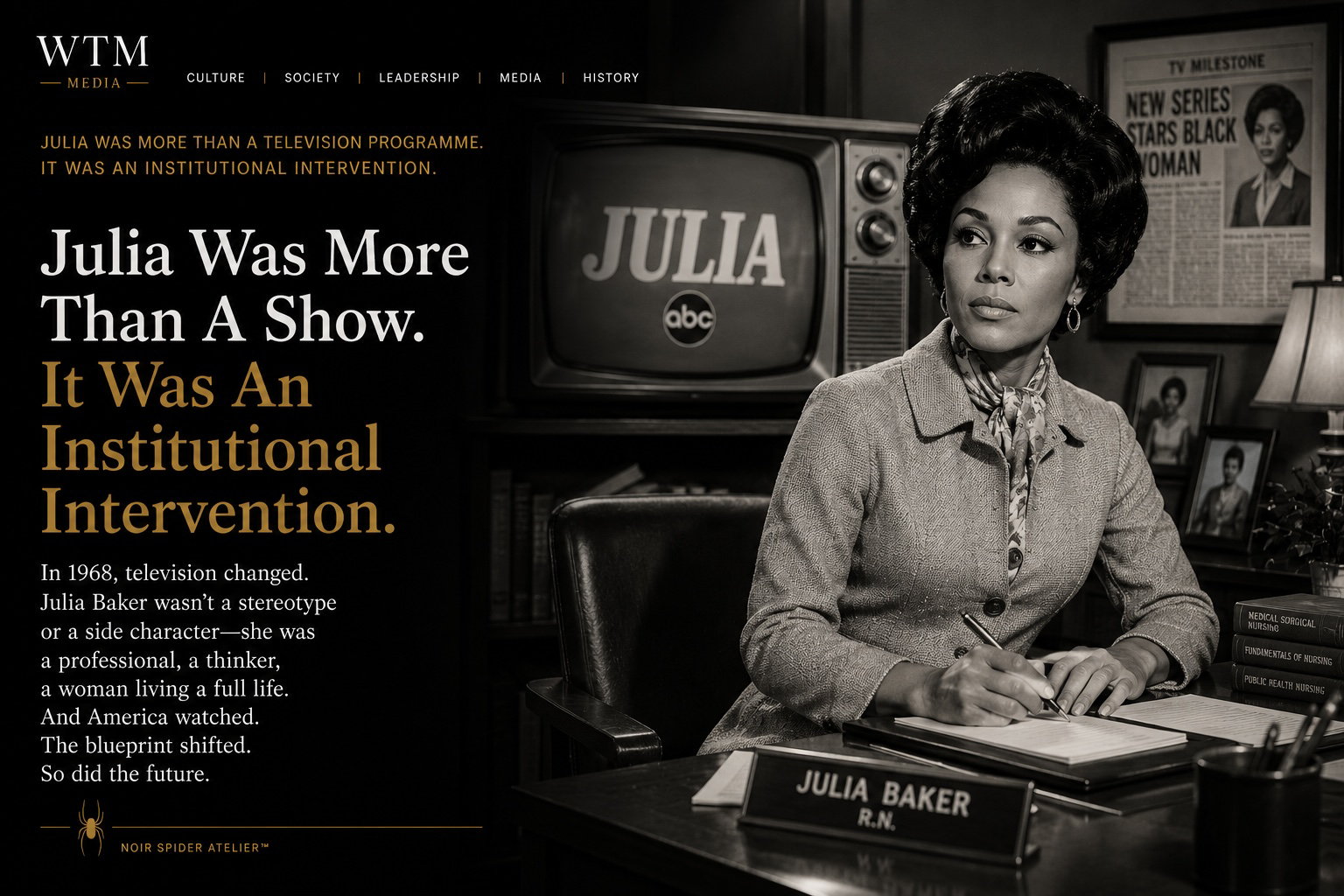
When Julia premiered in 1968, its significance extended far beyond entertainment. At a moment when American television frequently confined Black women to domestic roles or comic stereotypes, Julia Baker appeared as a widowed nurse, educated, professional, articulate, and economically independent. That single creative decision quietly challenged decades of industry convention.
The programme did not eliminate prejudice, nor did it resolve America’s racial tensions. Critics argued that it softened difficult realities and presented an overly optimistic vision of American society. Those criticisms deserve acknowledgement. Yet systemic change rarely arrives through perfect interventions. It often begins through incremental shifts that gradually redefine what appears normal.
Television possesses extraordinary cultural influence because it enters people’s homes repeatedly. A film may be watched once. A television character becomes familiar over months and years. Familiarity changes perception. The more ordinary Julia appeared, the more extraordinary her long-term influence became. She normalised competence where stereotypes had previously dominated.
Advertisers also paid attention. Successful ratings demonstrated that audiences were willing to embrace programming executives had previously considered commercially risky. Once financial assumptions changed, programming decisions followed. Institutional incentives evolved because commercial evidence challenged established beliefs.
This illustrates a broader principle about cultural systems. Progress accelerates when moral arguments align with economic incentives. Carroll did not simply persuade audiences emotionally. She demonstrated commercial viability. That distinction transformed isolated achievement into scalable institutional change.
Today, many discussions surrounding representation focus primarily on numerical inclusion. Carroll’s career reminds us that representation alone is insufficient. The quality of representation matters equally. Characters must possess agency, complexity, dignity, and humanity. Otherwise, inclusion becomes cosmetic rather than transformative.
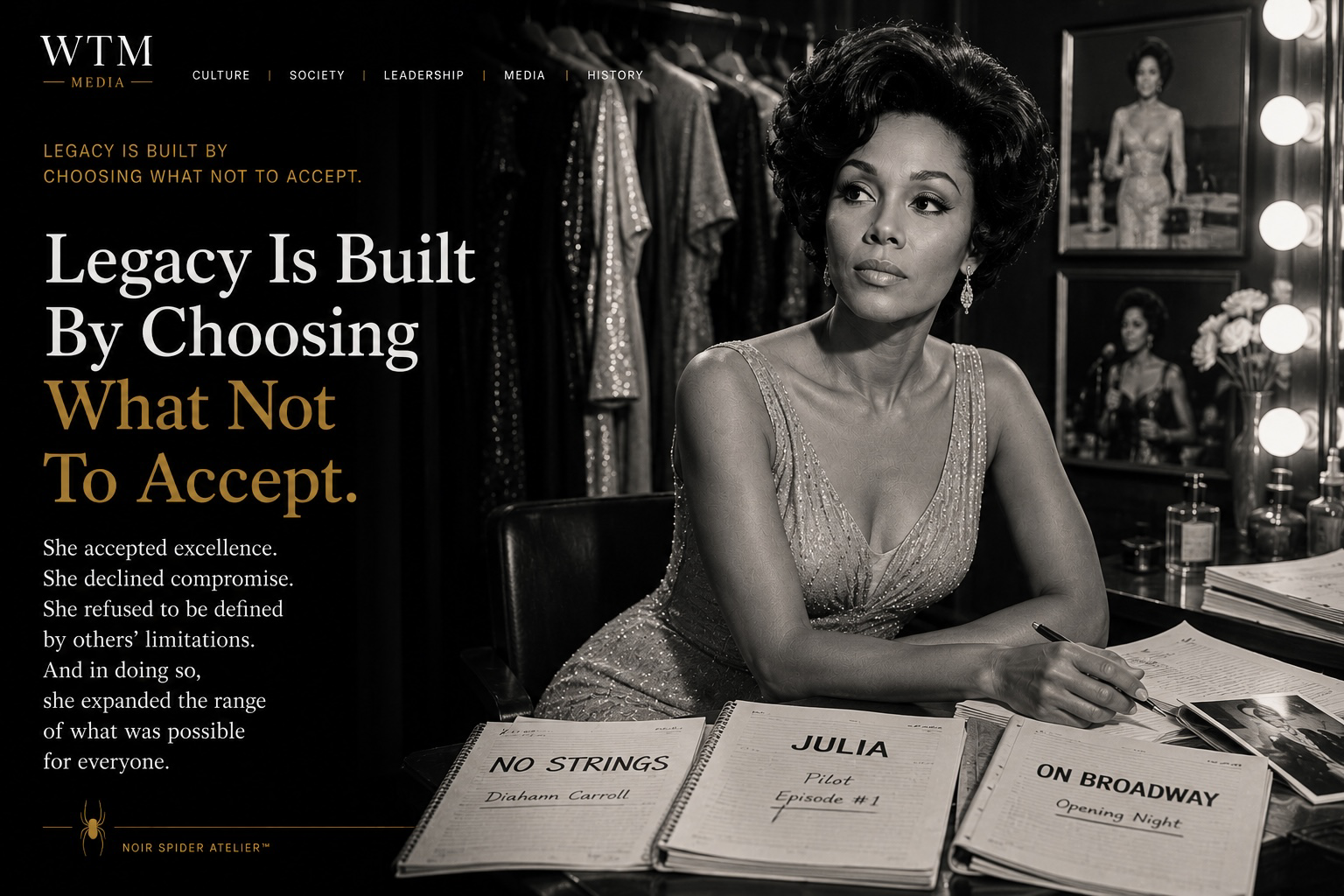
History often celebrates the roles performers accepted. Less attention is given to the opportunities they rejected. Yet restraint frequently reveals character more clearly than ambition. Carroll understood that accepting every opportunity risked reinforcing the very stereotypes she sought to dismantle.
Professional success frequently creates subtle pressures. As visibility increases, institutions attempt to define an individual’s public identity. Carroll consistently resisted becoming confined within expectations that diminished her complexity. She insisted upon being regarded as an actress rather than merely a representative figure.
This required unusual resilience. Progress rarely follows a straight path. Every breakthrough generates resistance, criticism, and misunderstanding. Carroll experienced professional setbacks, public scrutiny, and industry limitations despite her accomplishments. Yet she continued expanding the range of characters she portrayed across theatre, television, and film.
Her longevity offers another important lesson. Influence is rarely measured by moments alone. It is measured by duration. Remaining relevant across multiple decades requires continuous reinvention without abandoning one’s principles. Carroll demonstrated that adaptability and integrity need not exist in tension. Together, they create enduring relevance.
Modern professionals encounter comparable challenges. Organisations often reward conformity more immediately than originality. Yet sustainable influence usually belongs to individuals capable of expanding institutional thinking rather than merely fitting within existing frameworks. Carroll’s career illustrates that long-term impact frequently requires short-term courage.
Ultimately, legacy emerges from accumulated decisions. Every role accepted, every opportunity declined, every standard defended, and every expectation challenged contributed to an architectural redesign of possibility. Individual choices gradually became institutional precedent.
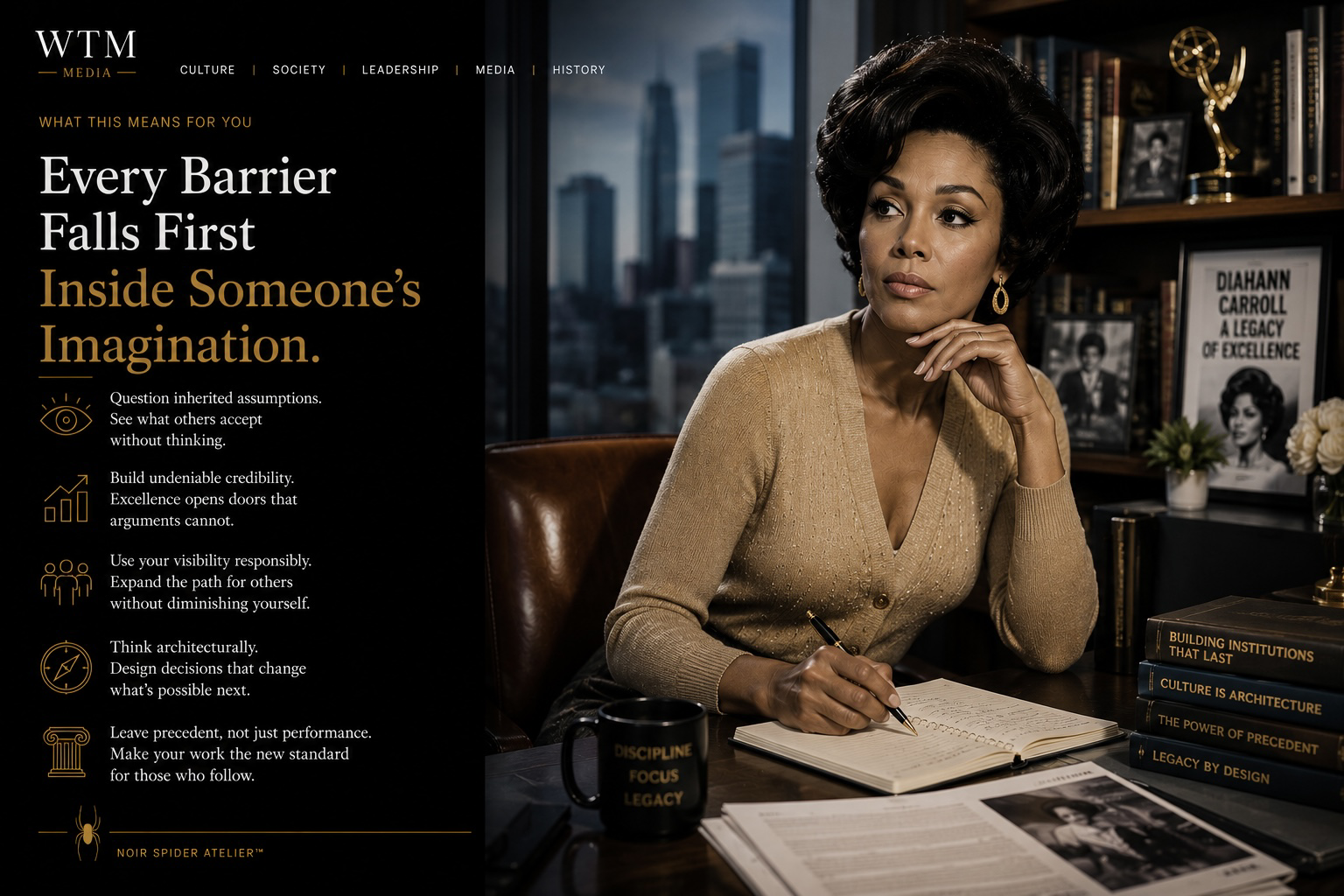
Diahann Carroll’s story is not confined to Hollywood. Every profession contains inherited assumptions about who leads, who belongs, who speaks, and who succeeds. Those assumptions often remain invisible until somebody quietly disproves them through consistent excellence.
The first lesson is to distinguish between barriers created by reality and barriers created by expectation. Organisations frequently preserve traditions because they appear familiar rather than because they remain effective. Learning to recognise inherited assumptions is an essential leadership capability.
Second, credibility compounds. Carroll did not depend upon slogans or public campaigns to establish authority. She invested relentlessly in mastery. Competence remains one of the most durable forms of influence because it survives changing political climates and organisational fashions.
Third, understand that visibility carries responsibility. Whenever individuals become pioneers, they inevitably represent possibilities larger than themselves. That burden can feel unfair, yet it also creates opportunities to widen pathways for others without sacrificing personal ambition.
Fourth, think architecturally rather than transactionally. Instead of asking whether today’s decision produces immediate recognition, ask whether it changes future expectations. Systems evolve because enough people repeatedly demonstrate that different outcomes are possible.
Finally, recognise that institutions remember precedent. Every innovation that becomes normal once appeared impossible. Whether leading teams, building organisations, designing products, or shaping public conversations, your greatest contribution may be creating examples others eventually consider ordinary.
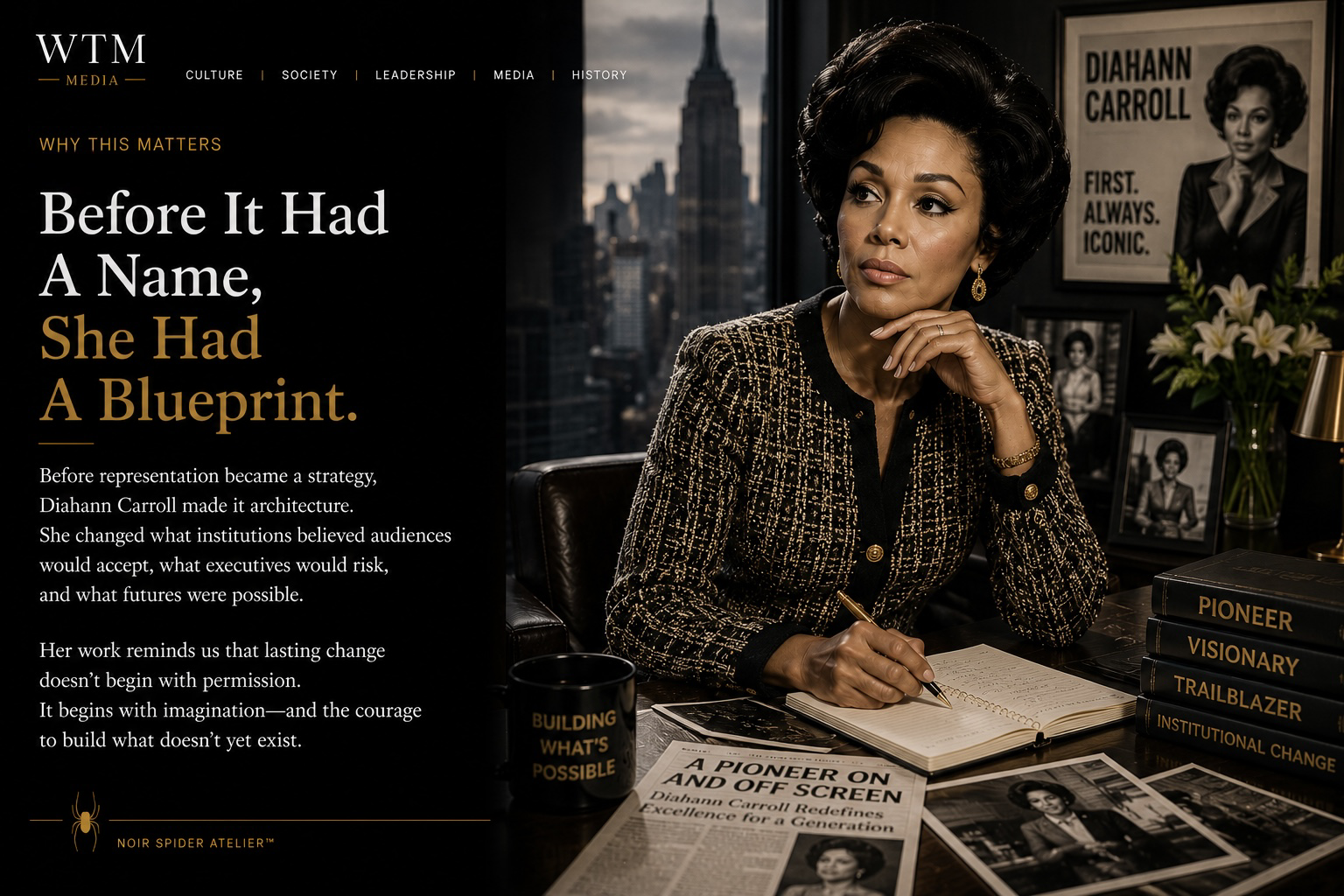
History frequently remembers individuals through awards, titles, and milestones. Those achievements deserve recognition. Yet institutions are transformed less by trophies than by altered assumptions. Diahann Carroll’s deepest contribution was changing what powerful organisations believed could succeed.
Today’s conversations surrounding representation often focus upon visibility. Visibility remains important, but visibility alone cannot sustain institutional change. Enduring transformation requires competence, credibility, economic viability, and cultural endurance. Carroll demonstrated all four simultaneously.
The lesson extends well beyond entertainment. Every industry confronts moments when inherited models become inadequate. Whether in technology, finance, education, healthcare, journalism, or government, progress depends upon leaders willing to redesign assumptions rather than merely optimise existing structures.
Institutions shape society because they determine opportunity at scale. When institutions expand their imagination, societies gradually expand theirs. The reverse is equally true. Narrow institutional thinking eventually produces narrow public possibility. Carroll understood that changing stories ultimately changes systems.
For readers, this editorial is an invitation to reconsider leadership itself. True leadership does not simply occupy existing spaces. It enlarges them. It creates conditions in which future generations inherit possibilities that previously did not exist.
Diahann Carroll should therefore be remembered not only as an actress, nor solely as a pioneer, but as an institutional architect. Before representation became a strategic objective discussed in boardrooms, measured in annual reports, or debated across industries, she had already demonstrated that the most enduring change begins by redesigning what people believe is possible.
Editorial Intelligence: Kelly Dowd, MBA, MA
Visual Intelligence: Noir Spider Atelier™ – A Division of WTM Media
Editorial Direction: Kelly Dowd, MBA, MA – Editor-in-chief
Copyright: © 2026 WTM Media. All rights reserved.

Why These Matter - WTM MEDIA is an independent editorial platform exploring the forces shaping our world—through people, culture, commerce, design, systems, and governance. Connecting the dots between today’s headlines and tomorrow’s realities.