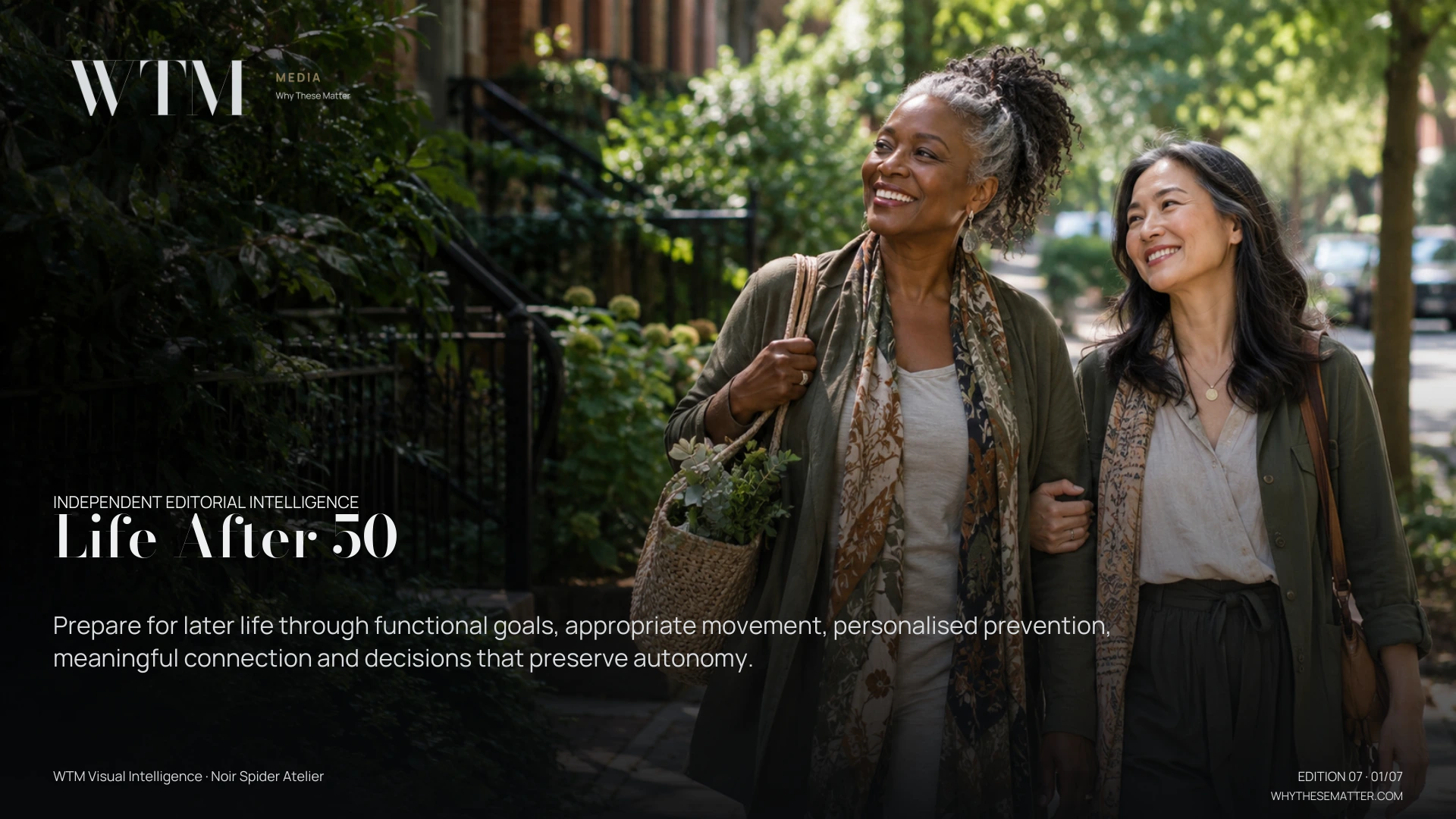
Prepare for later life through functional goals, appropriate movement, personalised prevention, meaningful connection and decisions that preserve autonomy.
Turning fifty is not a biological deadline. Ageing varies by genetics, environment, health, opportunity and individual circumstances. The more useful question is which capabilities, relationships and choices can be supported over the next decades. Prevention is not a promise of immortality; it is a way to preserve function and autonomy.
Reader value: Prepare for later life through functional goals, appropriate movement, personalised prevention, meaningful connection and decisions that preserve autonomy.
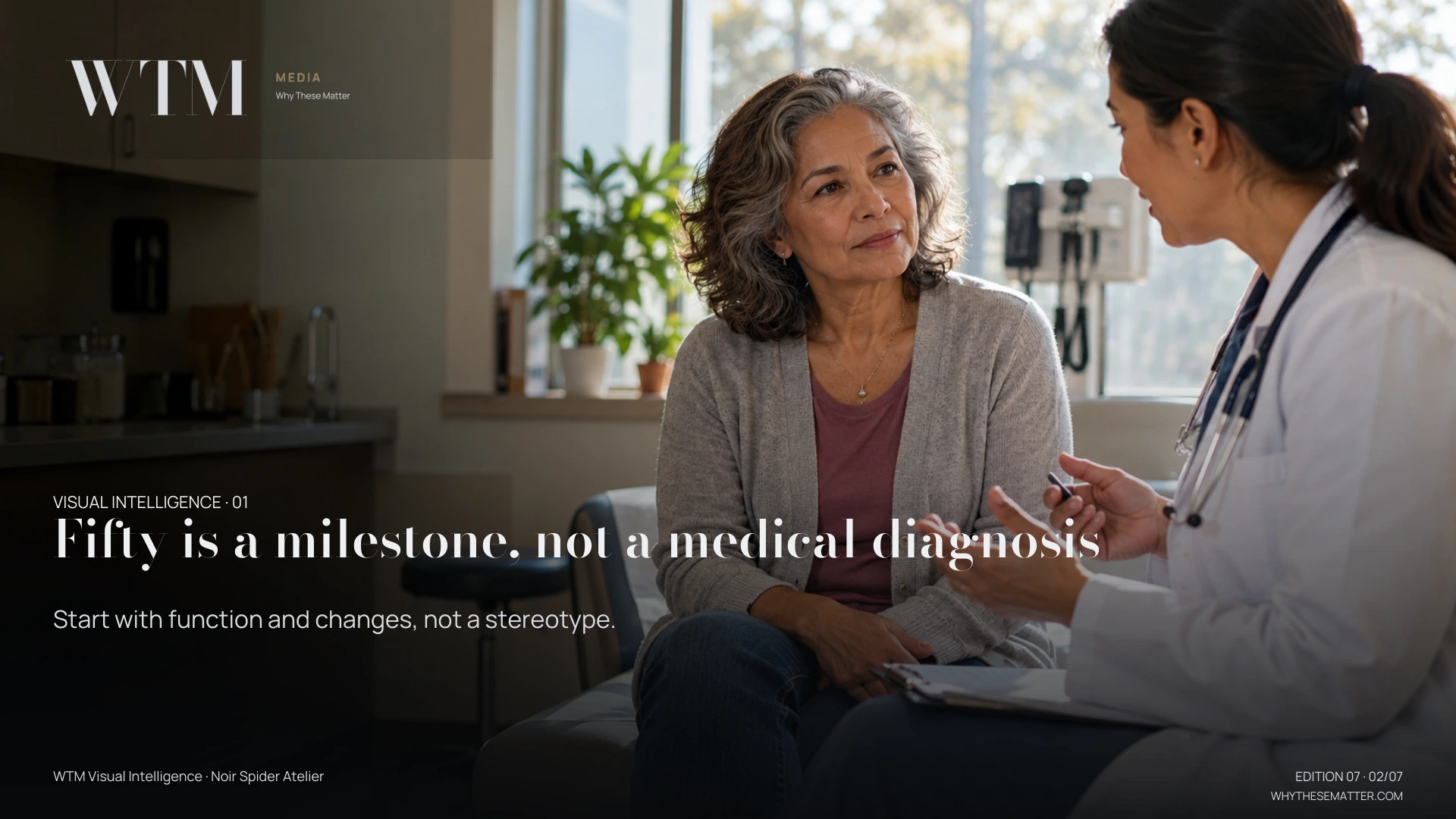
Strength, sleep, sensory function, metabolism and cardiovascular risk can change with age, but neither the timing nor severity is uniform. Symptoms should not automatically be dismissed as normal ageing. Chronological age is one factor among medical history, lifestyle and environmental exposures. Write down what matters most in daily function: walking comfortably, climbing stairs, hearing conversations, maintaining energy or continuing valued activities. Discuss new symptoms or concerning changes with a qualified clinician rather than self-diagnosing from age-based lists.
A milestone birthday can prompt a review without becoming a diagnosis. Distinguish a longstanding limitation from a new or progressive change. Note when a concern began, what makes it better or worse and how it affects daily life. This record supports a clinical conversation; it does not determine the cause.
Choose goals in the person's own terms. Being able to enjoy a walk, follow a conversation or cook comfortably may matter more than an appearance-based target. Avoid promising to reverse biological age. Where symptoms are sudden or severe, routine self-improvement planning is not an appropriate substitute for timely medical assessment.
Prepare for a consultation by describing function in specific terms. A change in getting dressed, following a conversation or completing a familiar journey gives the clinician something more useful than a general feeling of getting older. Note duration, circumstances and associated concerns. The record is a starting point for assessment, not an explanation of the cause.
Keep the person's priorities central. One reader may value demanding exercise; another may prioritise comfortable movement, creative work or time with friends. A plan organised only around a numerical age can miss those differences. Ask which limitation most affects a valued activity and which question needs professional attention before a new routine is attempted.
Consider the environment alongside the individual. A difficult stair, poor lighting or inaccessible service can reduce participation without proving a biological loss of capability. This does not make health concerns unimportant. It widens the enquiry so that practical obstacles can be addressed without treating every difficulty as an inevitable feature of ageing.
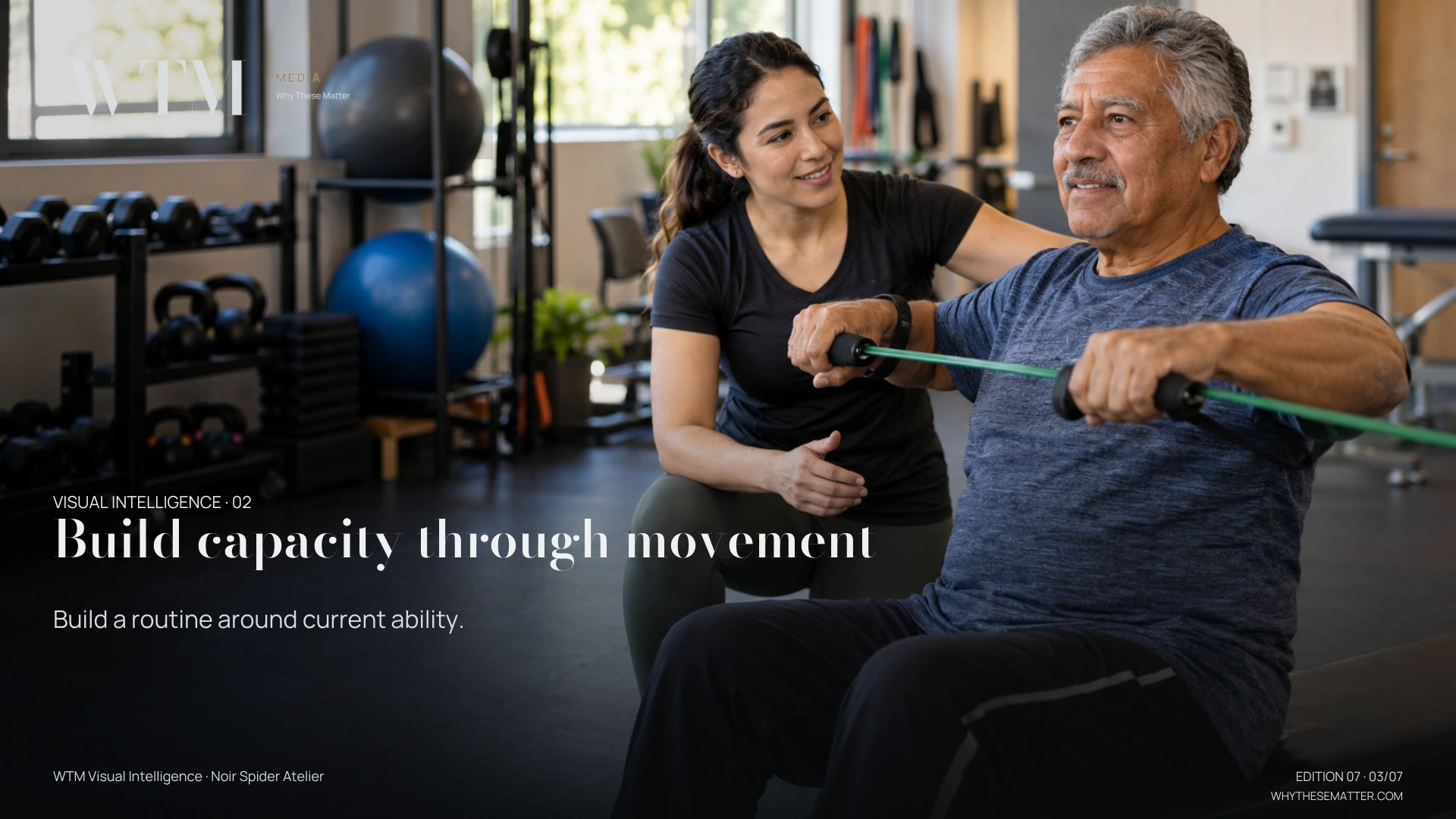
Appropriate aerobic activity, muscle-strengthening and balance practice can support functional independence. The right programme depends on medical circumstances, current capacity and safety. Progression should be gradual, particularly after inactivity or illness. Exercise is not a substitute for assessment of unexplained pain or other symptoms. Choose a realistic functional target, such as carrying groceries or walking a particular route comfortably. Track consistency and capability rather than appearance. Ask a qualified professional for adaptation when mobility limitations, fall risk or medical conditions are present.
CDC guidance for adults 65 and older includes aerobic, strength and balance activity and recognises adaptation to ability and health conditions. [1] That age-specific guidance should not be described as a universal prescription for every person over fifty. A qualified professional can help translate goals into an appropriate plan where individual circumstances require it.
Choose a repeatable activity and a practical way to observe progress, such as completing a familiar task more comfortably. These are personal tracking ideas, not diagnostic tests. Avoid turning a missed session into a moral failure. The useful question is what makes safe participation easier: access, transport, suitable equipment, companionship or a different starting point.
Make the starting point explicit before comparing progress. A person returning after illness may need a different approach from someone already active. Record the activity, the context and any professional advice received. A comparison with a stranger's routine is less useful than understanding what is appropriate and repeatable for this particular person.
Access can determine whether an activity remains realistic. Consider transport, cost, suitable facilities and whether an adapted version is available. An appealing recommendation that cannot be used is not yet a plan. The practical work is to connect a valued functional goal with an accessible opportunity, rather than assume that motivation alone resolves the obstacle.
Review the experience without equating discomfort, pain and progress. Ask an appropriate professional about concerning symptoms or uncertainty over safe participation. A tracking record can support that conversation, but it cannot diagnose an injury or establish that an activity is suitable. Progress is meaningful when the person can continue valued activities with an appropriate level of support.
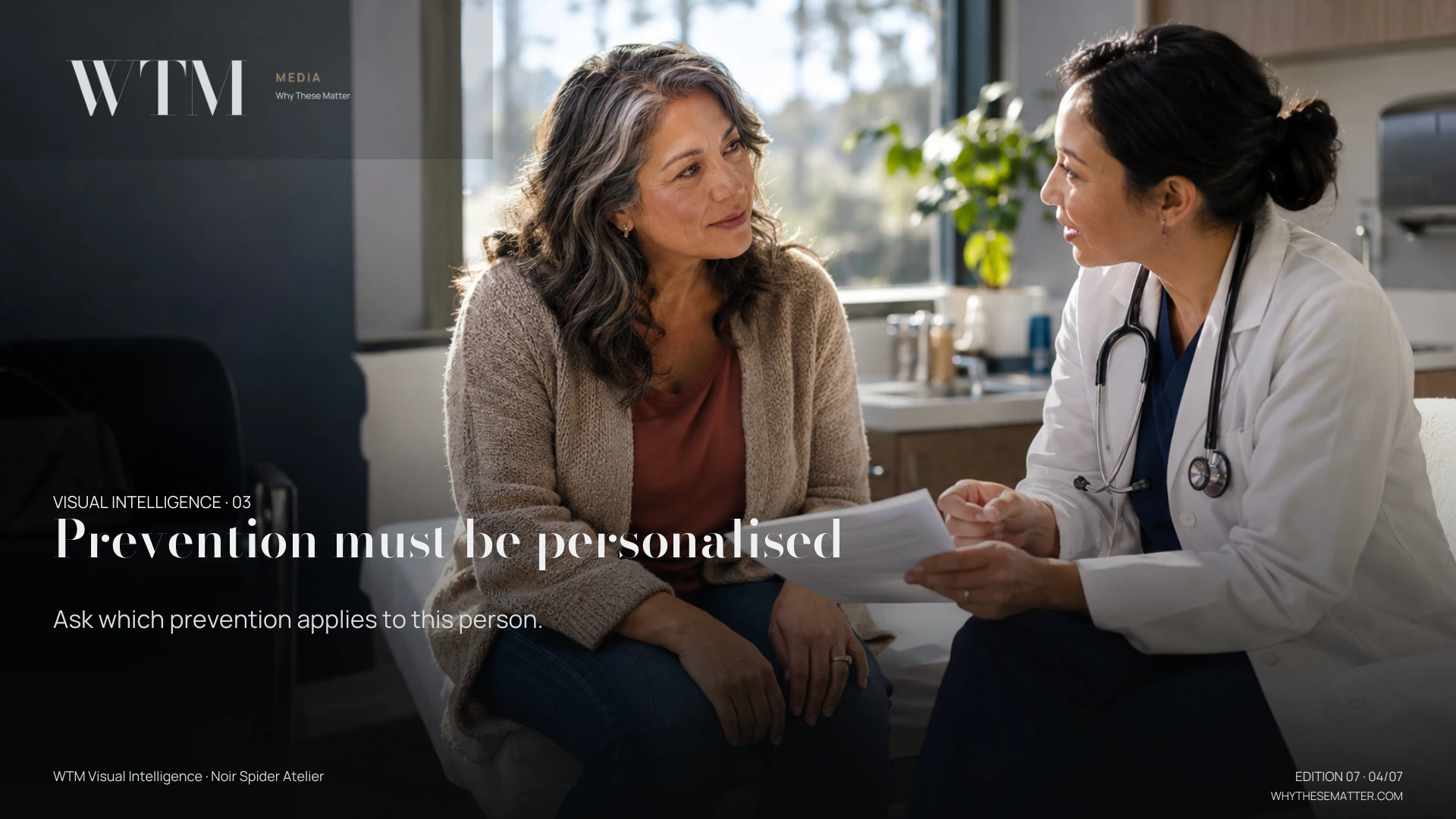
Preventive care can include blood pressure monitoring, appropriate cancer screening, vaccinations, medication review and attention to cardiovascular or metabolic risks. Screening recommendations vary by sex, anatomy, family history, past findings and jurisdiction. More testing does not automatically improve outcomes; false positives and follow-up harms also matter. Prepare a one-page medical summary listing medicines, allergies, family history, symptoms and questions. Review which screenings and immunisations apply with a clinician. Ask what each test can and cannot establish.
The USPSTF's recommendations specify populations, ages and risk conditions; they are not a single checklist for all adults. [2] An editorial about life after fifty should not silently turn an age range for one screening into an instruction for every reader. Ask the clinician which guidance applies to anatomy, history, past results and personal priorities.
Bring a current medication and supplement list, including non-prescription products. Ask what a proposed test is intended to establish, what an uncertain result would mean and what follow-up might involve. Vaccination and screening schedules can change, so check the relevant current clinical guidance at the time of care. This article supports preparation for a consultation and does not prescribe a schedule.
Ask how a recommendation applies to the individual rather than requesting every available test. The relevant population, past results and personal circumstances matter to interpretation. A clinician should be able to explain the purpose, possible outcomes and likely next steps. More information is useful when it can improve a decision, not merely enlarge a file.
Keep records current enough to support continuity of care. An accurate list of medicines, supplements, allergies and relevant history can make an appointment more focused. Note changes since the previous review and questions that remain unanswered. This is preparation for professional judgement; it does not give a reader the basis to alter treatment independently.
Leave room for preferences and practical burdens in the discussion. Travel, follow-up, care responsibilities and uncertainty about a result can affect how a person experiences a proposed intervention. Raise those concerns with the clinician rather than assuming they are irrelevant. Personalised prevention requires understanding both the evidence and the life in which a decision will be carried out.
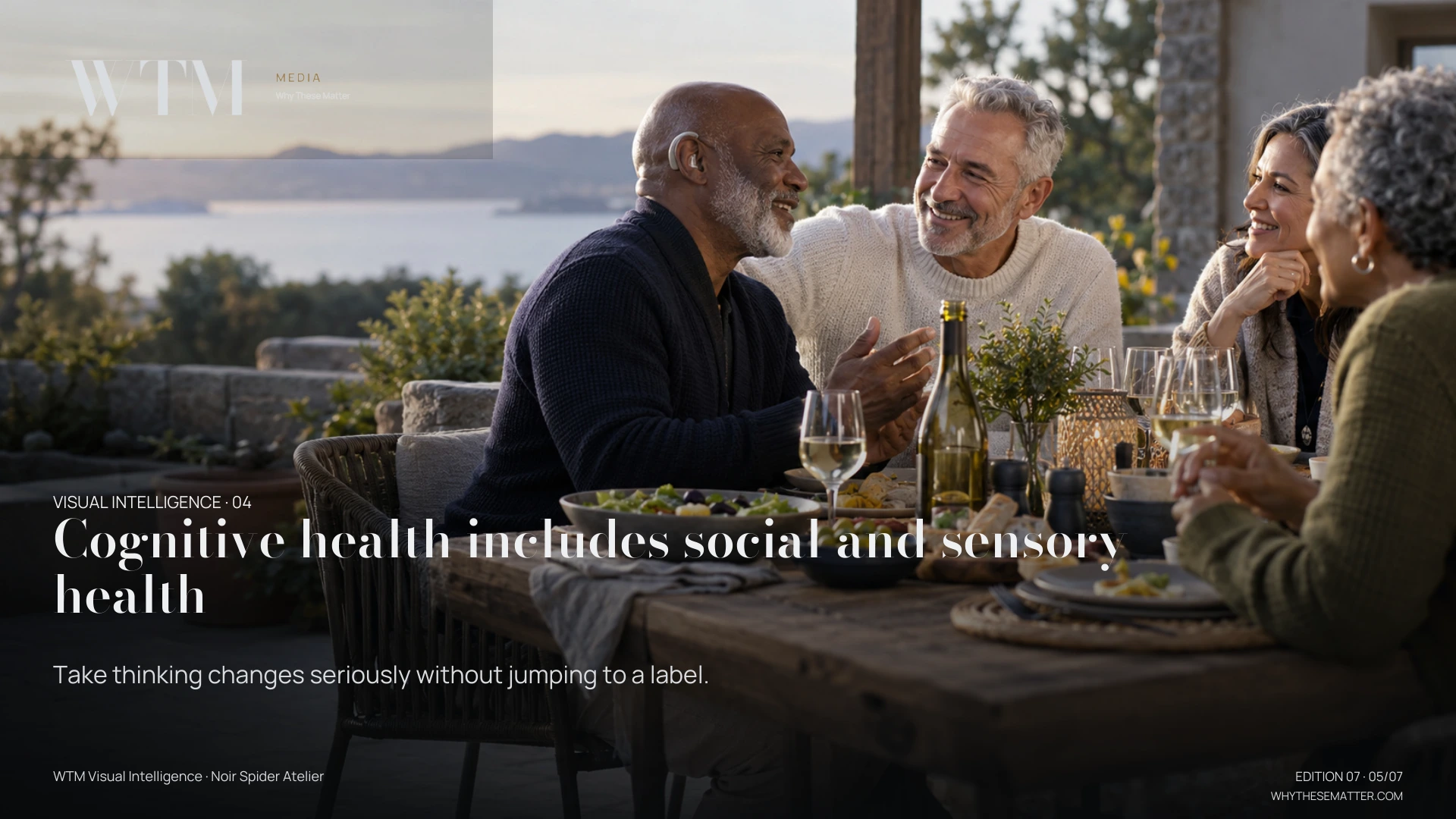
A change in memory is not automatically dementia, and different conditions can affect thinking. MedlinePlus describes several possible causes and the need for appropriate assessment. [4] Record what has changed and its effect on daily life rather than using an online checklist to assign a diagnosis. Address hearing and vision concerns, maintain meaningful contact and seek assessment for persistent changes in memory, mood or behaviour. Avoid miracle supplements and unsupported claims of brain-age reversal.
NIH News in Health reports that treating hearing loss slowed cognitive decline in a higher-risk subgroup in a clinical trial, while the trial did not show the same overall effect across all participants. [3] This distinction matters: a promising result in a specified group is not proof that an intervention prevents dementia for everyone.
Maintain activities and relationships that are meaningful and accessible, and seek assessment for persistent or concerning change. A hearing aid, a clearer conversation environment or a medication review may be relevant for some people, but none should be presented as a universal explanation or cure. No puzzle, supplement or lifestyle checklist in this article guarantees protection against cognitive decline.
Describe a concerning change through examples rather than a label. Forgetting a familiar task, struggling to follow speech and feeling exhausted can prompt different questions. Record what happened and when, and seek appropriate assessment. The purpose is to improve the clinical conversation without deciding in advance that the cause must be ageing, dementia or a single sensory difficulty.
Make social participation accessible in concrete ways. A quieter setting, clearer communication or an agreed way to ask for repetition may help someone participate. These are practical accommodations to consider, not proof that any arrangement prevents cognitive decline. The person should be able to say what is useful without being reduced to a problem for others to manage.
Read health research with attention to who was studied and what was measured. A result in a particular risk group can be valuable while remaining insufficient for a claim about everyone over fifty. Retain those boundaries when discussing a promising finding. Hope becomes more useful when the next question is clear, rather than enlarged into a guarantee.
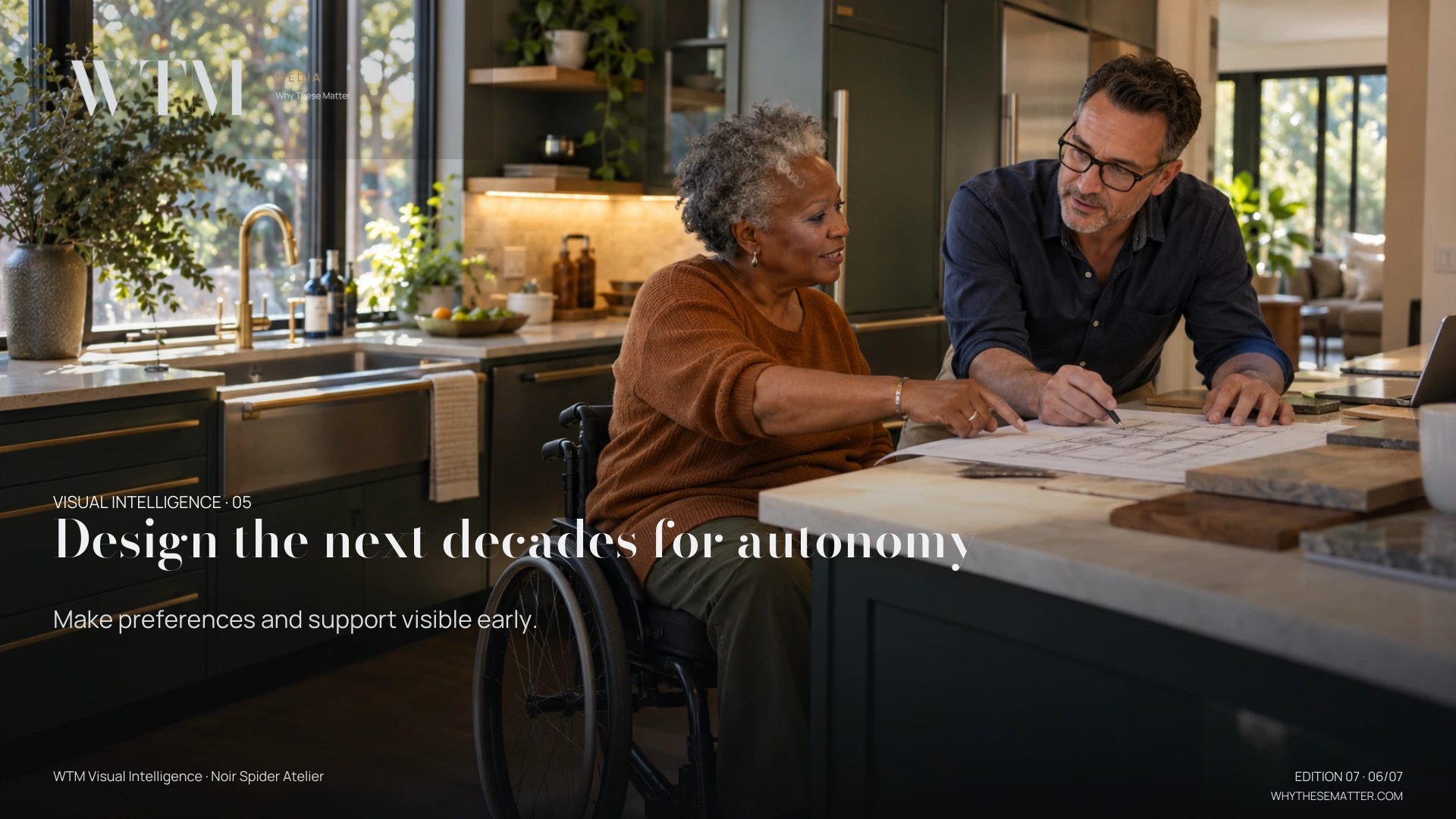
Accessible housing, financial safeguards, trusted relationships, advance-care discussions and realistic caregiving expectations can protect choice. Planning early is not surrendering independence; it helps ensure that personal preferences remain visible when circumstances change. Review home safety and accessibility, identify trusted contacts and discuss wishes about care, housing and major decisions. Revisit the plan after changes in health, household or finances. Treat ageing as a human dignity and systems-design question, not simply a medical problem.
Review everyday accessibility with the person who uses the space. A route, storage height or bathroom arrangement can be examined before a crisis forces a rapid decision. Discuss who may be contacted and what kind of help is welcome. The aim is control over choices, not an assumption that age removes competence.
Formal care and decision-making documents depend on local law and individual circumstances. Seek suitable advice and revisit preferences as life changes. An older adult may choose interdependence, community and assistance while retaining authority over their life. WTM's systems question is whether housing, healthcare and trusted relationships make that authority easier to exercise.
Name the decisions a person wants to keep directing. Housing, transport, money and care can involve different forms of help. Assistance with a task need not mean surrendering authority over its purpose. Discuss what support is welcome, what information may be shared and which decisions require suitable formal arrangements.
Consider the reliability of the proposed support network. A trusted person may still have limits of time, distance or expertise. Ask what would happen if that individual were unavailable and which services could provide an alternative. Planning acknowledges interdependence without assuming that a family relationship automatically creates unlimited practical capacity.
Review arrangements with the person rather than only on their behalf. Preferences can change after a move, a diagnosis or an experience of care. A plan earns its value when it remains understandable and responsive to that life. The objective is to preserve choice, including the choice to accept assistance, rather than use independence as a test nobody may question.
Later life deserves an account of possibility as well as risk. A person may want to continue work, explore a new interest, care for others or simply make familiar activities more comfortable. Begin with those purposes rather than assume that a birthday supplies a complete description of needs or capability.
Health evidence becomes more useful when its population and limits remain visible. Guidance for one age group or a finding in a higher-risk subgroup should not become a universal promise. Preparing a better question for a clinician can be a more valuable outcome than collecting a long list of interventions without individual context.
Return on Investment can include preserving useful function, time and access to valued activities. Return on Integrity means respecting the person's authority and avoiding unsupported claims about reversal, prevention or inevitable decline. Neither should turn ageing into a competition or make accepting assistance appear to be a personal failure.
Practical design belongs beside clinical care. A clearer route, an accessible service or a reliable contact can make choices easier to exercise. These changes do not diagnose or cure disease. They address the conditions in which a person lives, and they deserve assessment through that person's experience of use.
Review the plan after a meaningful change rather than only at a milestone age. Ask what now matters, what has become difficult and which professional or practical support is appropriate. The resulting arrangement should remain understandable and revisable, with preferences expressed by the person whose life it concerns.
Ageing well should not be a contest in appearing untouched by time. The more useful ambition is to keep valued activities and choices possible, with support when it is needed. Start from the person, their circumstances and what they want their next decades to contain. Independence can include accepting good assistance.
Evidence reviewed 18 October 2026. This is public-source educational editorial analysis. Numerical scenarios and WTM exercises are illustrations, not measured outcomes or personalised professional advice. Recheck changing guidance before release.
Visual provenance: AI-generated illustrative scenes of fictional adults. These visuals support the analysis; they do not document reported events, identify actual research participants or imply endorsement. WTM Visual Intelligence · Noir Spider Atelier.
Download the WTM Visual Intelligence PDF · Support independent WTM journalism
Why These Matter - WTM MEDIA is an independent editorial platform exploring the forces shaping our world—through people, culture, commerce, design, systems, and governance. Connecting the dots between today’s headlines and tomorrow’s realities.

article-support-3
Noir Spider Atelier

article-support-2
Noir Spider Atelier

article-support-1
Noir Spider Atelier

press-partnership
Noir Spider Atelier
press-reader-desk
Noir Spider Atelier

resource-access
Noir Spider Atelier
membership-example
Noir Spider Atelier

membership-tools
Noir Spider Atelier

membership-reader
Noir Spider Atelier
membership-public
Noir Spider Atelier
pathway-design
Noir Spider Atelier
pathway-institutions
Noir Spider Atelier
pathway-technology
Noir Spider Atelier