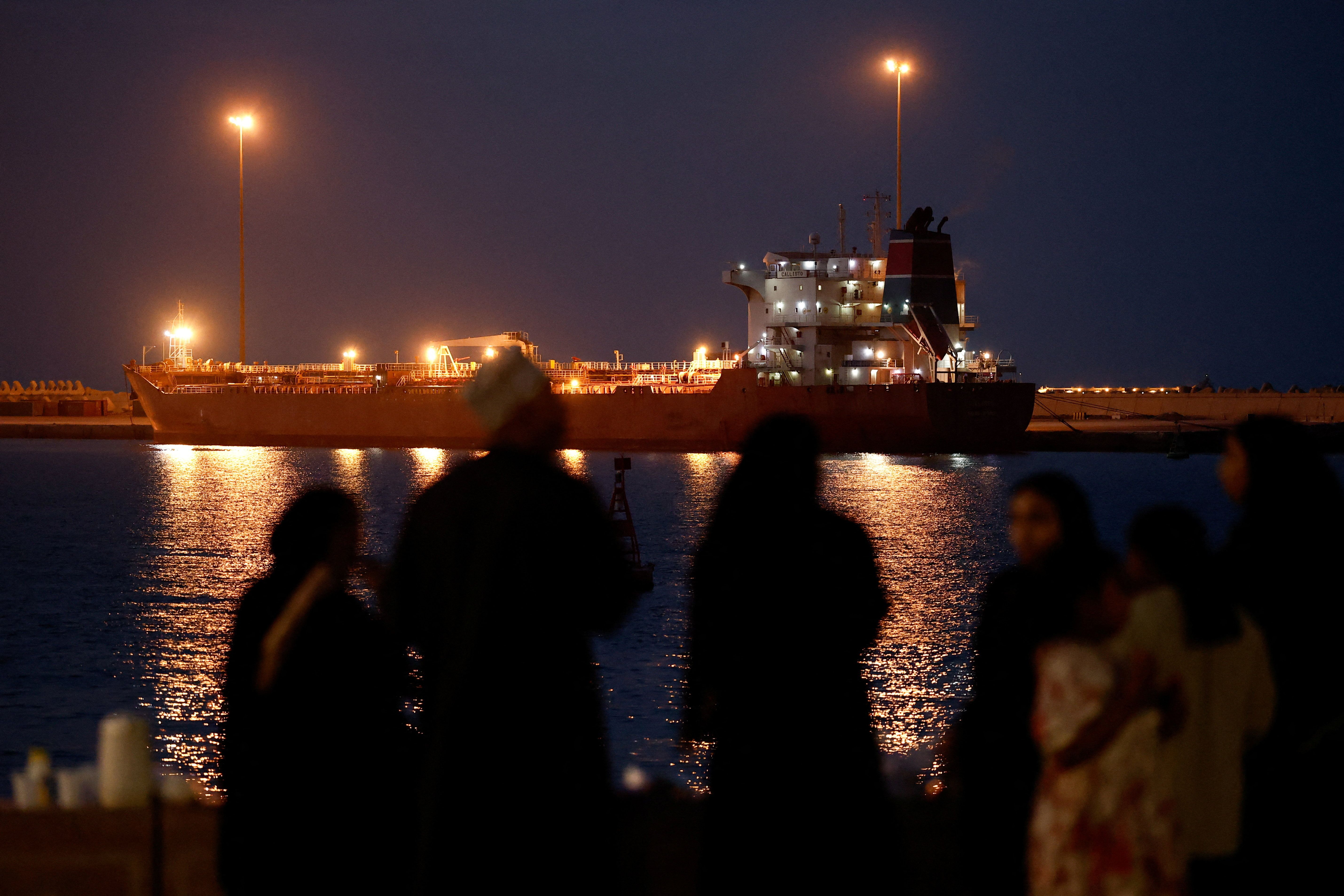
The global energy system is often analysed through the lens of markets, policy, and geopolitics, yet its most immediate consequences are human. Nearly one-fifth of the world’s petroleum supply moves through the narrow Strait of Hormuz, creating a structural dependency that quietly shapes the cost of living, employment stability, and daily survival across continents. As Iran continues to export oil to China under sanctions, and geopolitical tensions recalibrate enforcement, alliances, and risk perception, the illusion of stable energy flow begins to fracture—not in abstract charts, but in real lives. Rising fuel costs, disrupted supply chains, and economic volatility do not arrive evenly; they cascade first into households, communities, and vulnerable populations. This editorial reframes the Strait of Hormuz not as a distant geopolitical corridor, but as a human pressure point—where systemic fragility translates into lived consequence, and where global decisions quietly determine how millions experience stability, scarcity, and survival.
The modern global economy operates on an assumption so deeply embedded that it is rarely questioned: that energy flows are stable, continuous, and insulated from geopolitical volatility. This assumption is not supported by the structure of the system itself, but rather by decades of relative continuity that have masked its underlying vulnerabilities. At the centre of this illusion sits a narrow maritime corridor, the Strait of Hormuz, through which approximately one-fifth of the world’s petroleum liquids are transported each day, according to data from the International Energy Agency and the U.S. Energy Information Administration. This is not a peripheral detail of global trade; it is a structural dependency upon which industrial economies rely.
The significance of the Strait of Hormuz lies not only in the volume of energy that passes through it, but in the degree to which that volume is concentrated within a single, geographically constrained pathway. At its narrowest navigable point, the strait measures approximately 21 miles, yet it serves as the primary export route for major oil-producing nations including Saudi Arabia, Iraq, Kuwait, and the United Arab Emirates. This concentration is not accidental, but the result of decades of infrastructure development optimised for efficiency rather than resilience, where cost reduction and logistical simplicity were prioritised over redundancy and diversification.
Efficiency, while economically advantageous, introduces systemic risk when it is built upon single points of failure, and the Strait of Hormuz represents one of the most consequential of these points within the global economy. Alternative routes, such as pipelines that bypass the strait, exist but lack the capacity to fully replace maritime transport at scale, thereby ensuring that any disruption within Hormuz would have immediate and far-reaching implications. This dependency transforms the strait from a logistical asset into a strategic vulnerability, where the stability of global markets is contingent upon conditions within a highly contested geopolitical region.
Iran’s position within this system exemplifies how geography can be leveraged as a form of influence without requiring direct control over the broader market. While Iran does not dominate global oil production, its proximity to the Strait of Hormuz allows it to exert pressure on a system that cannot easily adapt to disruption. This influence is not exercised through constant interference, but through the implicit understanding that disruption remains a credible possibility, thereby introducing a persistent layer of risk into global energy markets.
This risk is further compounded by Iran’s evolving role within global trade networks, particularly in its relationship with China. Despite extensive sanctions, Iran continues to export oil through a series of adaptive mechanisms that include ship-to-ship transfers, the use of intermediary entities, and the reclassification of cargo to obscure origin. These practices have transformed sanctions from restrictive barriers into catalysts for alternative systems, where flows are not eliminated but redirected through less transparent channels. China’s willingness to engage with these flows, often at discounted rates, reflects a strategic approach to energy security that prioritises access over alignment with Western regulatory frameworks.
The emergence of these parallel networks introduces complexity into the global energy system, as official market data no longer fully captures the extent of actual flows. This opacity complicates both policy enforcement and market forecasting, as traditional metrics become less reliable indicators of supply and demand. At the same time, it reinforces the centrality of the Strait of Hormuz, as even these shadow flows often rely on the same physical infrastructure to reach global markets.
Maritime risk within the region is not merely theoretical, but actively priced into the system through insurance premiums, shipping costs, and contractual terms that fluctuate in response to perceived geopolitical tension. These financial adjustments serve as real-time indicators of systemic stress, reflecting the market’s attempt to quantify uncertainty that cannot be eliminated. The presence of military forces, particularly those of the United States, introduces a stabilising element, yet this stability is contingent rather than absolute, as it operates within a broader environment of strategic competition and asymmetrical threat.
The nature of potential disruption within the Strait of Hormuz has also evolved, shifting away from scenarios of full-scale closure toward more nuanced forms of interference that are difficult to attribute and challenging to counter. These include the use of drones, fast-attack vessels, cyber interference, and targeted harassment of shipping traffic, all of which can introduce delays and uncertainty without triggering conventional military responses. Such actions do not need to halt the flow of oil to be effective; they only need to disrupt the perception of stability upon which markets depend.
Market responses to disruption are driven not only by actual supply constraints but by expectations of future conditions, meaning that even limited incidents can produce disproportionate effects on pricing and behaviour. A delay in transit, an increase in insurance costs, or a perceived escalation in tension can trigger adjustments across the supply chain, affecting industries far removed from the point of origin. This sensitivity underscores the extent to which the global economy is interconnected, where localised events can propagate through complex networks with minimal friction.
The structural fragility of this system becomes more apparent when considering scenario modelling, where even partial disruption of the Strait of Hormuz can lead to significant volatility in energy markets. A complete closure, while unlikely, would represent a systemic shock with immediate consequences for supply, pricing, and economic stability, while more probable scenarios of intermittent disruption would create a sustained environment of uncertainty that gradually erodes confidence and increases operational costs. In both cases, the impact extends beyond energy markets, influencing transportation, manufacturing, and broader economic activity.
What distinguishes the Strait of Hormuz from other chokepoints is not only its throughput but its symbolic role within the global system, as it represents the intersection of physical infrastructure and geopolitical tension. It serves as a reminder that globalisation, despite its digital and financial layers, remains grounded in physical pathways that are subject to political and environmental constraints. These pathways are not easily replicated, and their stability cannot be assumed.
The global economy is often described as resilient, diversified, and adaptable, yet the reliance on concentrated infrastructure such as the Strait of Hormuz reveals a different reality—one in which efficiency has been achieved at the expense of redundancy, and where stability depends on conditions that are inherently uncertain. This does not imply that disruption is inevitable, but it does indicate that the system is more fragile than it appears, with vulnerabilities that are not fully accounted for in prevailing narratives.
Understanding this fragility is essential for policymakers, businesses, and individuals alike, as it informs decisions related to energy strategy, supply chain management, and risk assessment. Efforts to diversify energy sources, develop alternative routes, and invest in resilience are not merely strategic options but necessary responses to structural conditions that cannot be ignored. At the same time, recognising the role of geopolitical signalling in shaping market behaviour highlights the importance of perception as a driver of economic outcomes.
The Strait of Hormuz is not an anomaly within the global system; it is an example of how that system is constructed, revealing the extent to which critical functions are concentrated within narrow and contested spaces. As long as this concentration persists, the global economy will remain exposed to disruptions that do not require large-scale conflict to be effective. The stability that has been observed in recent decades should therefore be understood not as a permanent condition, but as a temporary equilibrium maintained within a system that is fundamentally contingent.
Why These Matter - WTM MEDIA is an independent editorial platform exploring the forces shaping our world—through people, culture, commerce, design, systems, and governance. Connecting the dots between today’s headlines and tomorrow’s realities.