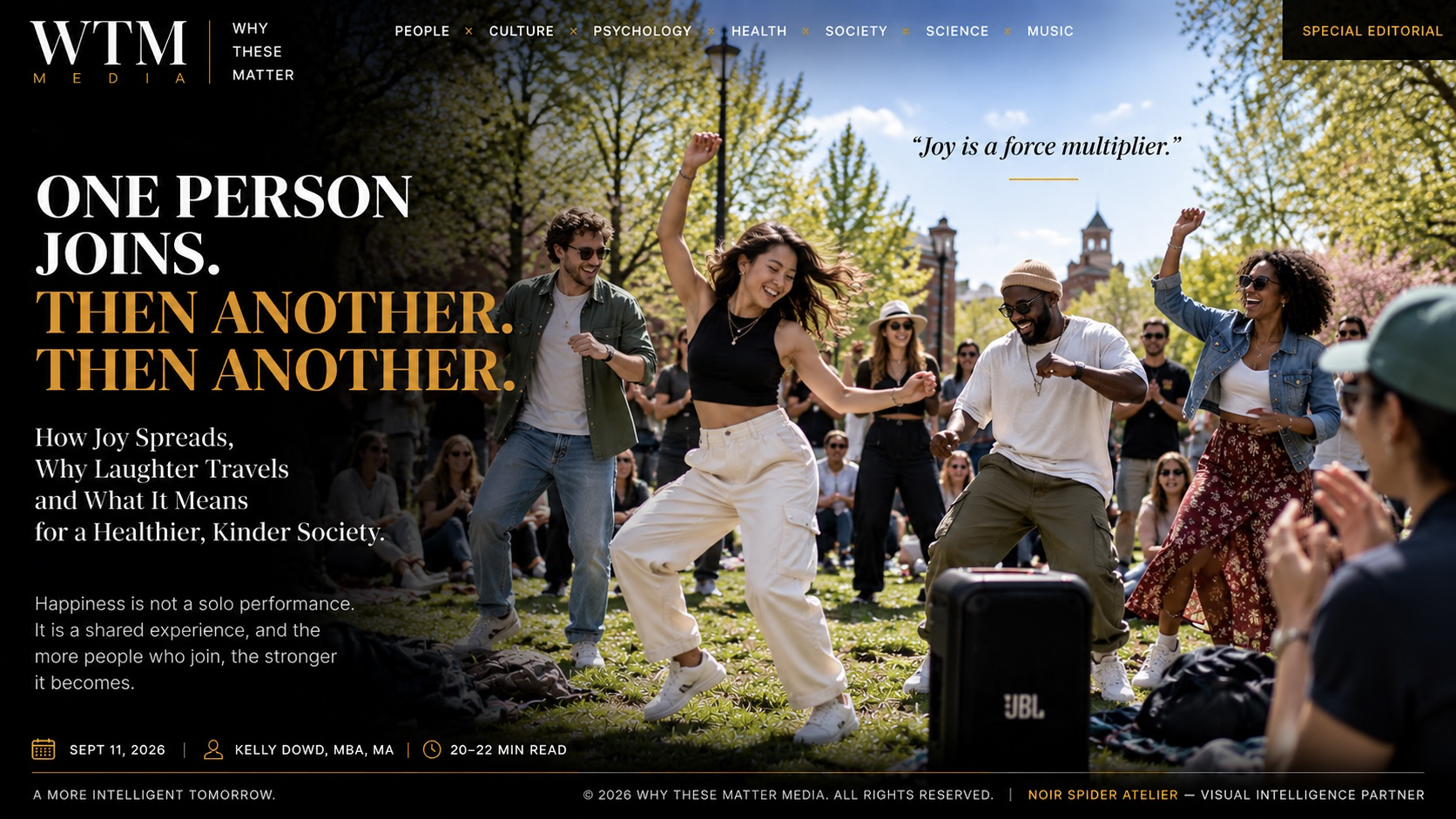
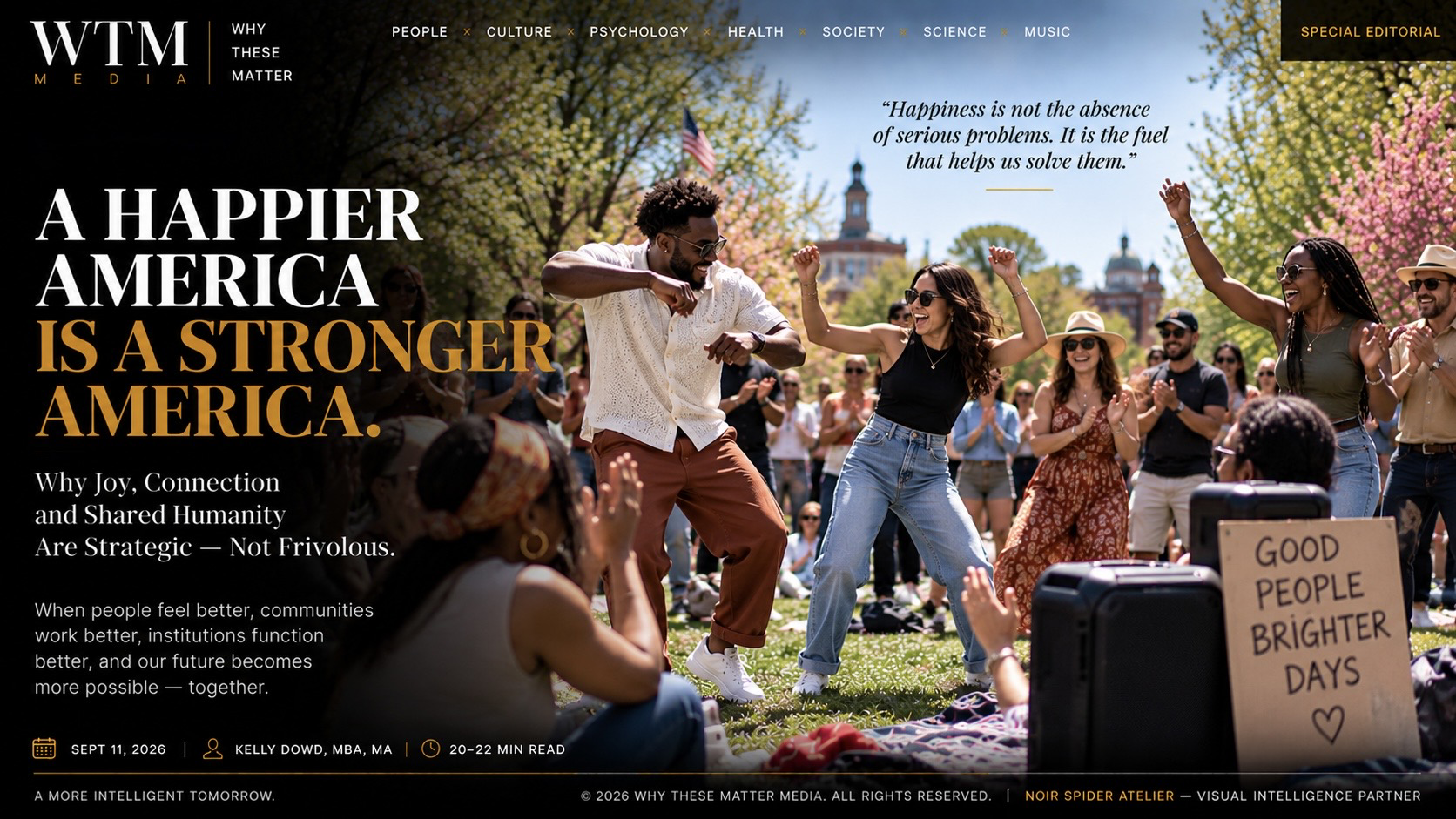
I was ill when a stranger started dancing. Not beside me. Not for me. I was nowhere near him. He was on my phone, somewhere in a park, carrying on with the sort of public exuberance I might ordinarily have regarded with suspicion. A speaker was playing loudly. One man began to dance. Then another person joined him. Then another. Within minutes, what had been an ordinary afternoon in a public park appeared to become something closer to an accidental festival. I smiled. That would be an unremarkable detail except that, for much of the previous twenty-four hours, smiling had been fairly low on my body’s agenda. A blocked nostril had arrived seemingly from nowhere. Fatigue followed. Then came the migraine, the pounding kind that makes seven hours in bed feel less like sleep than an extended negotiation with your own skull. Eventually, I told my darling that something was wrong. He asked whether I had taken my Qulipta. I had not. It was in my handbag. I retrieved it, took it as prescribed, and after some hours the migraine subsided. The medicine treated the migraine. The dancing did something else. And understanding that difference may tell us something important about happiness.
The day after Labour Day did not begin as an investigation into human wellbeing.
I had work to do. WTM does not disappear because its editor has spent the night wrestling with a migraine, although sometimes its editor probably should. I worked on the social intelligence snippets, dealt with other things and eventually negotiated with myself: give it another hour. See how the body feels. If things improve, perhaps go to the outlet mall. Not necessarily to buy anything. Just go somewhere.
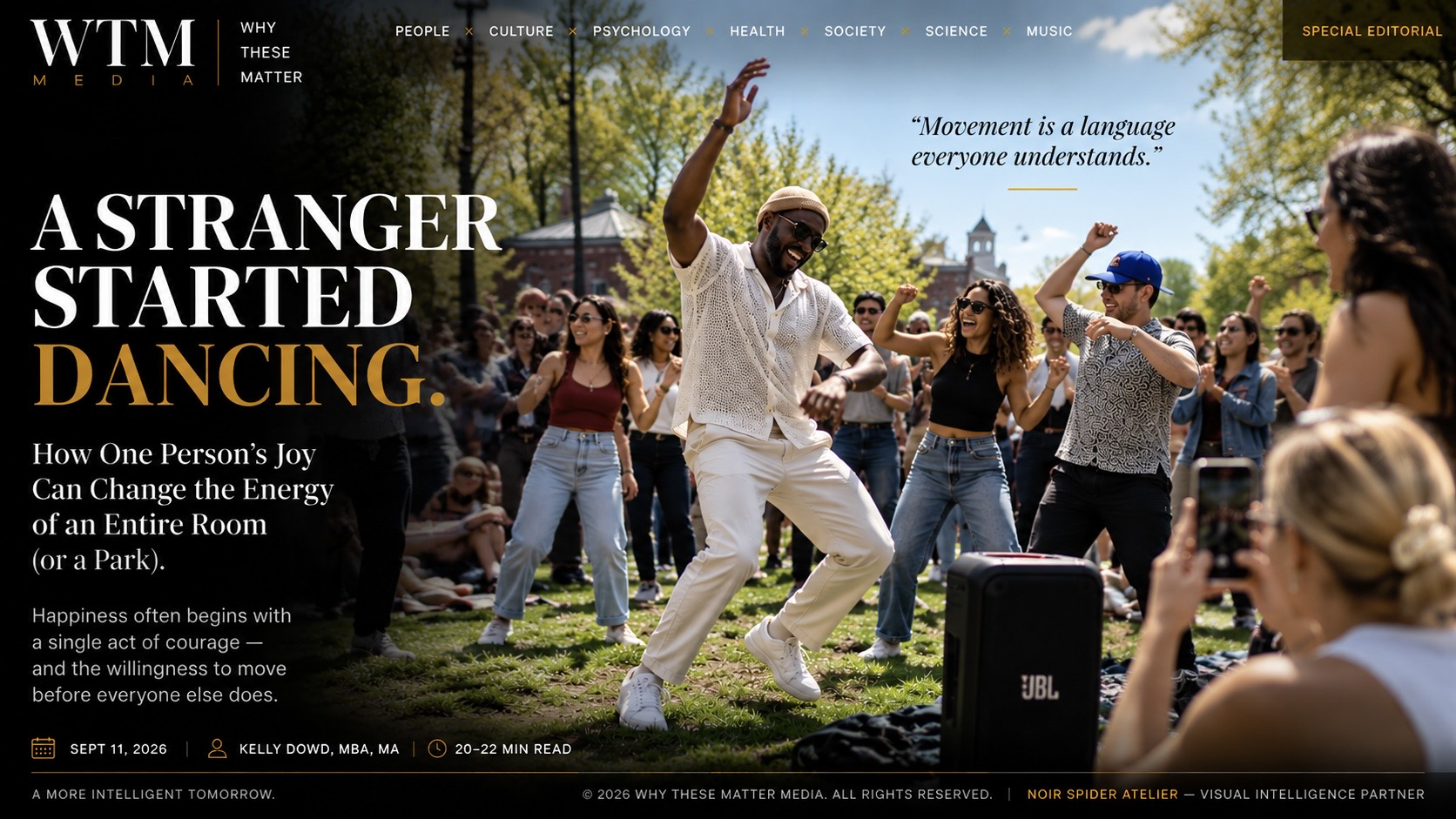
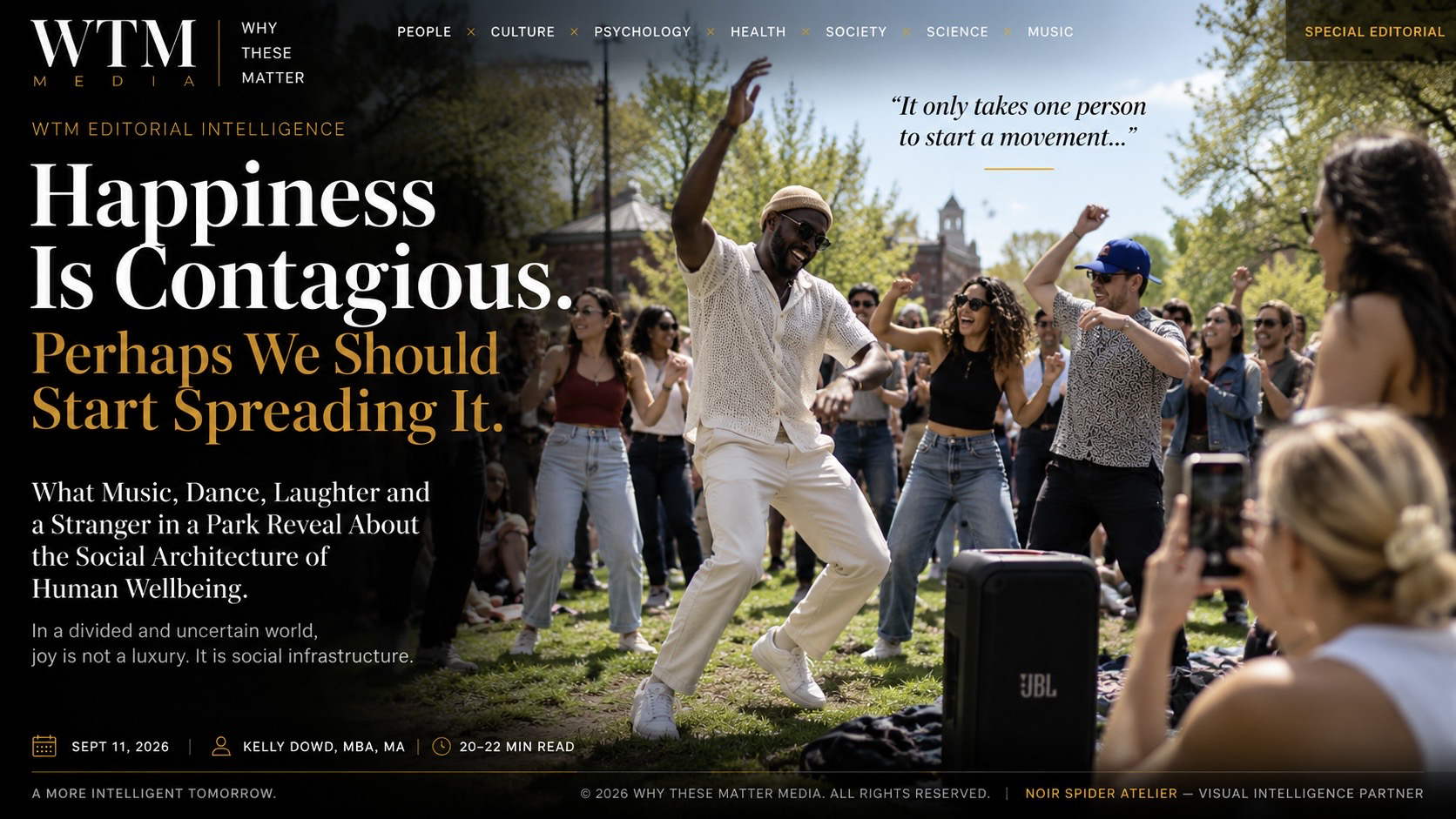
Then I opened Instagram. The video was almost absurdly simple. People were sitting across a park on blankets and grass. A man stood up and began dancing to music coming from a portable speaker. There was nothing particularly revolutionary about this. No sophisticated choreography. No stage. No production architecture. No invitation apparently issued to the surrounding crowd.
My first instinct under different circumstances might have been: Sir, must everyone participate in your JBL?
But this time I watched.
And smiled.
Someone joined him. Then someone else. Bodies that had been sitting became bodies in motion. People began watching. Some recorded it. Others danced. The social permission changed.
One person’s willingness to look slightly ridiculous had altered the behaviour of a small public space.
The video’s caption captured the obvious interpretation: It only takes one person to start a movement.
But what interested me was not the movement.
It was the mood.
How had a stranger’s happiness travelled from a park I had never visited, through somebody else’s camera, through a social-media platform, through my phone and into a room containing a man who had felt dreadful only hours earlier?
That question is considerably more interesting than the video.
Many moons ago, when I was perhaps sixteen or seventeen, I was ill.
I remember fever. I remember lying in bed. I remember feeling as though my body simply did not want to participate in the day.
My mother came into the room and asked how I was feeling.
Not particularly well.
Then I made what must have sounded like an unusual request from a sick teenager.
Play Makossa.
Makossa emerged from Cameroon and became one of Central and West Africa’s great musical exports, built around rhythmic movement and an extraordinary relationship between percussion, bass, melody and body. The tempo can change. The expression can change. But Makossa does not particularly encourage passive observation.
My mother played the music.
Eventually, I pulled myself up.
Then I moved.
Then I danced.
And somewhere during that sequence, I smiled.
I would be committing the very mistake WTM exists to resist if I turned a childhood memory into medical evidence. I cannot tell you that Makossa reduced my fever. I cannot tell you that dancing changed the biological cause of whatever illness I had. Memory itself is an imperfect archive.
What I can say is that my experience of being ill changed.
That distinction matters.
Medicine frequently asks whether an intervention changes disease. Wellbeing asks another question too: what changes the human experience of living inside a body, a community and a particular moment?
Science has increasingly taken that second question seriously.
The World Health Organization’s major review of arts and health examined more than 3,000 studies spanning music, dance, visual arts, performance and other forms of cultural participation. Its conclusion was not that art replaces medicine. It was that a substantial body of evidence indicates that artistic participation can contribute to health promotion, illness prevention and the management of health conditions.
The distinction is elegant.
The medicine treated my migraine.
The music changed the room.
The dancing changed my participation in it.
These things can coexist without pretending they are the same thing.
We commonly describe music as though it enters through the ears and terminates somewhere inside the mind.
The body disagrees.
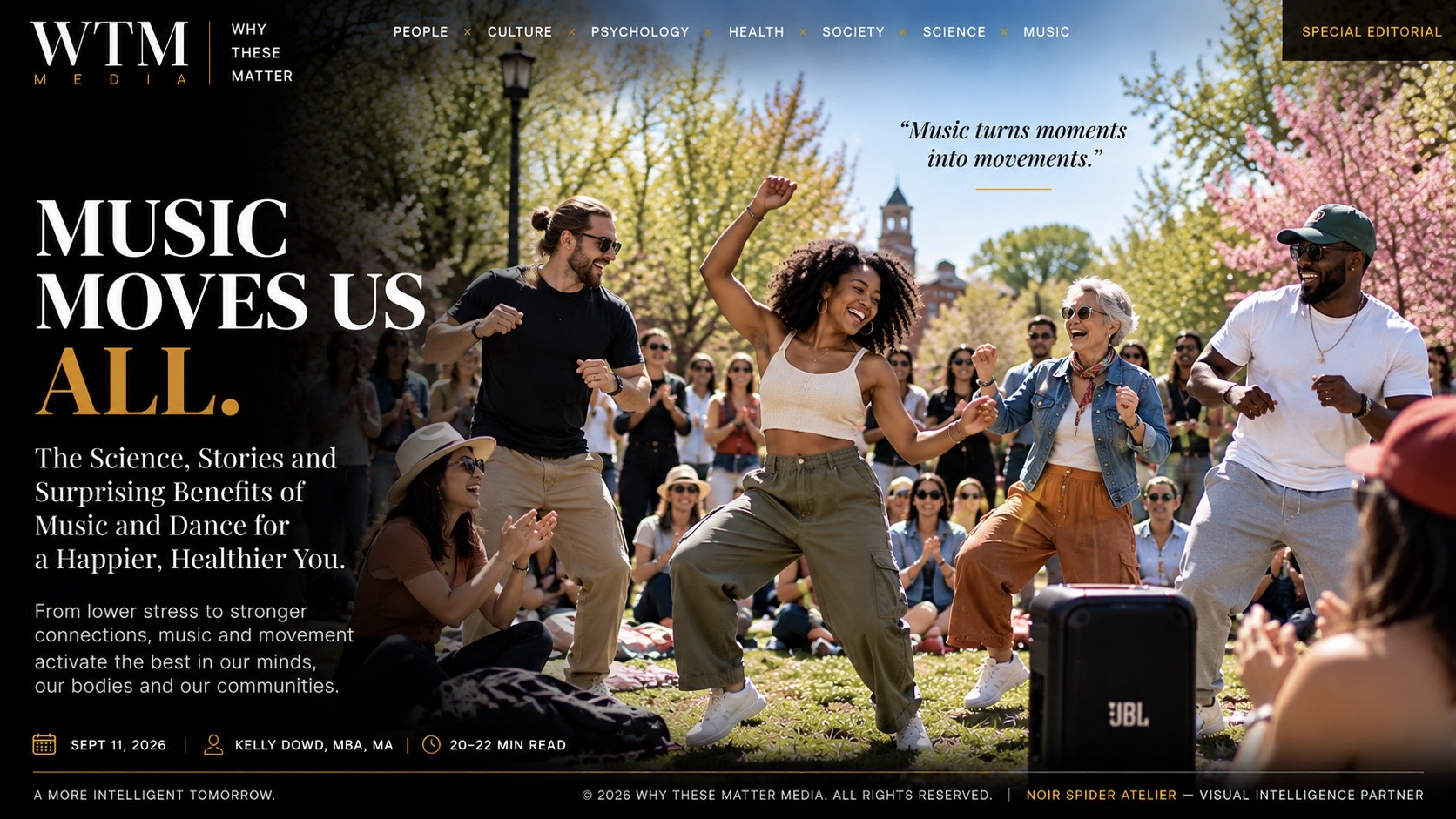
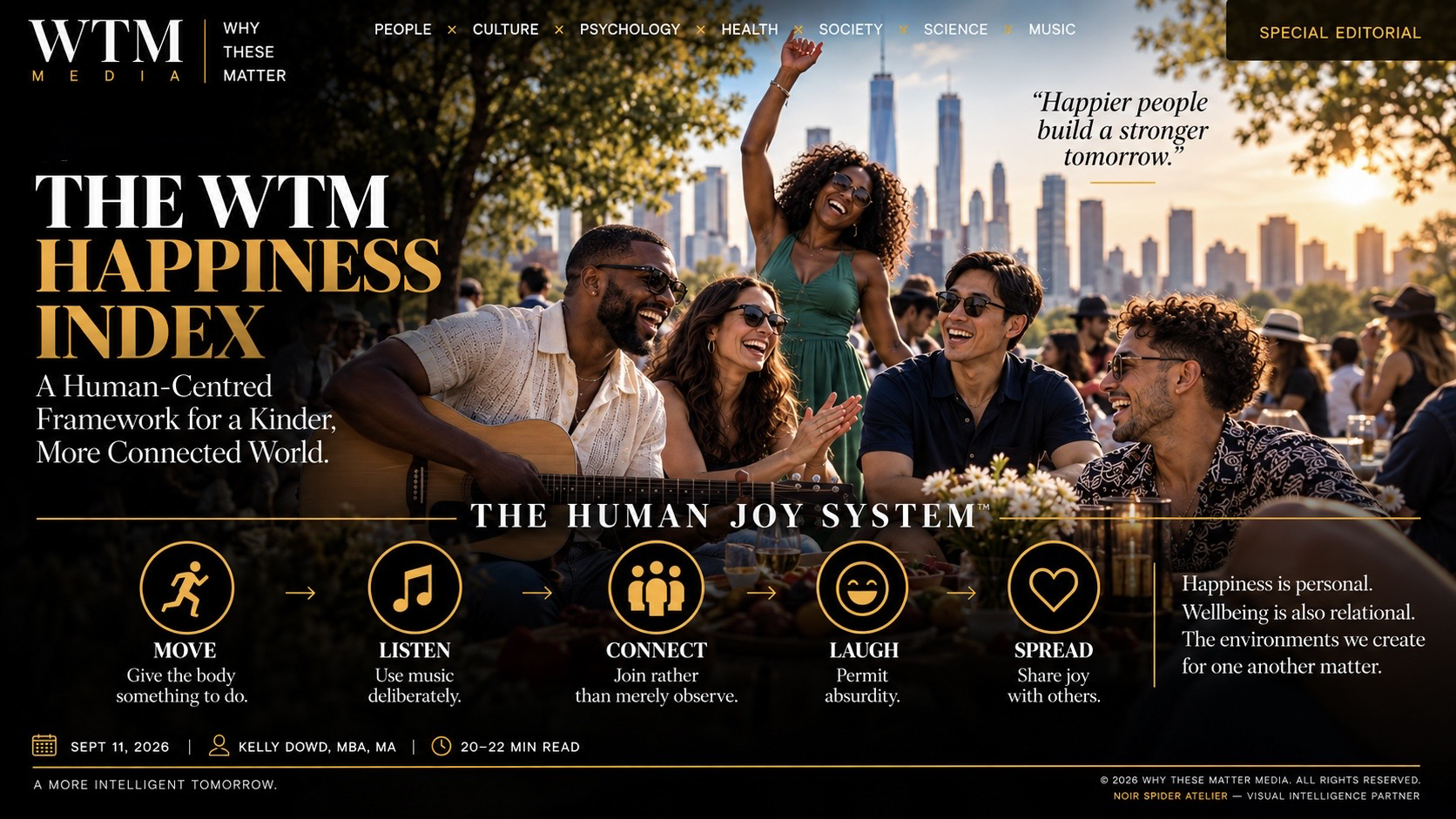
Music can invite movement. Movement changes breathing, muscular activity and attention. Rhythm can organise groups of bodies around shared timing. Dance adds physical activity, expression and social interaction. When these experiences occur collectively, they can become simultaneously artistic, physical, psychological and social.
This multimodality helps explain why researchers have become interested in arts-based interventions. WHO’s evidence review does not identify one magical mechanism. It describes arts participation as capable of engaging psychological, physiological, social and behavioural processes simultaneously.
That matters because human wellbeing is itself a system.
We sometimes behave as though mental wellbeing exists in one compartment, physical wellbeing in another and social wellbeing somewhere down the corridor. Humans are not organised according to administrative departments.
Consider dancing.
You hear rhythm.
Attention shifts.
You anticipate the beat.
The body moves.
Another person moves.
You recognise their movement.
Perhaps you synchronise.
Perhaps you laugh because neither of you possesses the slightest business attempting the move you have just attempted.
Suddenly an activity that began as sound has become movement, cognition, interpersonal communication and social belonging.
Laughter operates through similarly interconnected systems. A 2026 systematic review and meta-analysis covering 15 randomised controlled trials and 1,344 adults found that laughter interventions were associated with reductions in stress. But the researchers also reported very high variation between studies and variable methodological quality, meaning the size and generalisability of the effect should be treated cautiously.
An earlier systematic review examining spontaneous laughter and cortisol likewise found evidence worth investigating in relation to the physiological stress response.
The responsible conclusion is therefore neither “laughter is medicine” nor “this is nonsense”.
It is more interesting:
Human beings appear to possess multiple pathways through which joy, expression, movement and social experience interact with wellbeing. We are still learning exactly how.
There was another moment in the park video that interested me.
The first dancer was not ultimately the important person.
The second one may have been.
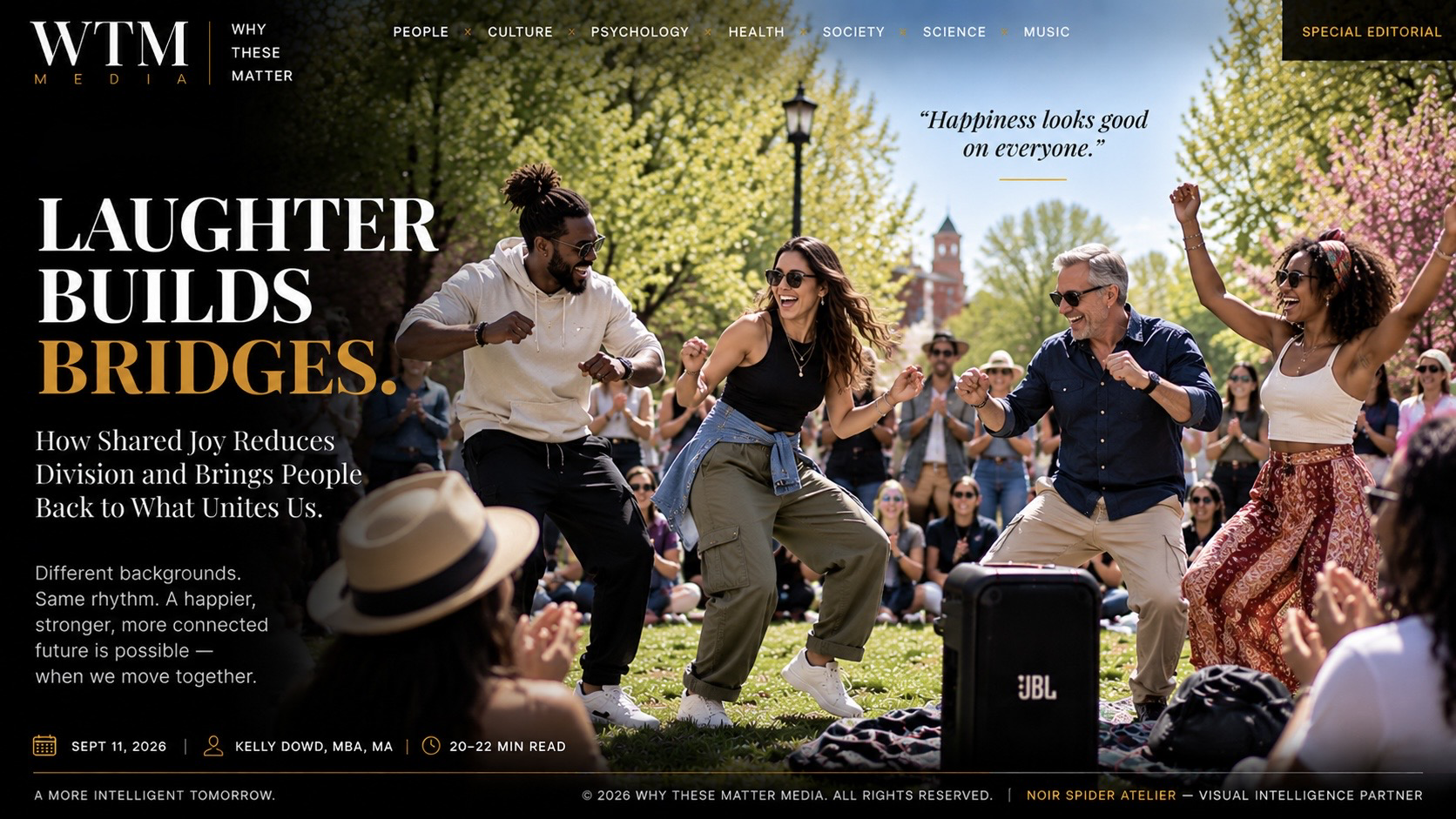
One person behaving unusually is an eccentricity. A second person joining changes the social information available to everyone watching.
Now participation is possible.
Then a third joins.
The perceived cost of joining falls again.
Eventually, the behaviour belongs to the group.
Something similar happens with emotion.
People smile when other people smile. Laughter can move through a room with remarkable speed. A baby’s laughter can make adults who have no idea what the baby finds amusing begin laughing themselves. Tension can do the opposite. Walk into a room immediately after an argument and sometimes nobody needs to tell you that something happened.
Psychologists generally discuss aspects of this under emotional contagion, interpersonal synchrony and related processes rather than placebo.
Your instinct was therefore directionally correct.
One famous longitudinal analysis of 4,739 people in the Framingham Heart Study found clusters of happiness within social networks and statistical associations between changes in an individual’s happiness and happiness among people socially connected to them. The researchers argued that happiness should therefore be considered partly as a collective phenomenon rather than solely an individual property.
That study has limitations, and observational network research cannot reduce the extraordinarily complicated phenomenon of happiness to a simple transmission equation.
But its central insight deserves attention:
We experience our emotions individually, but we do not manufacture them entirely alone.
The people around us constitute part of our emotional environment.
So do our homes.
Our workplaces.
Our neighbourhoods.
Our screens.
Our institutions.
And increasingly, our algorithms.
There is a wonderful irony in my experience.
I was watching people escape their screens through a screen.
The park contained something contemporary life increasingly struggles to produce: unplanned collective participation.
Nobody appeared to have registered for a seminar on community wellbeing. There was no institutional programme called Urban Happiness Activation. Nobody needed an app to optimise the experience.
Someone danced.
Someone joined.
People laughed.
The thing grew.
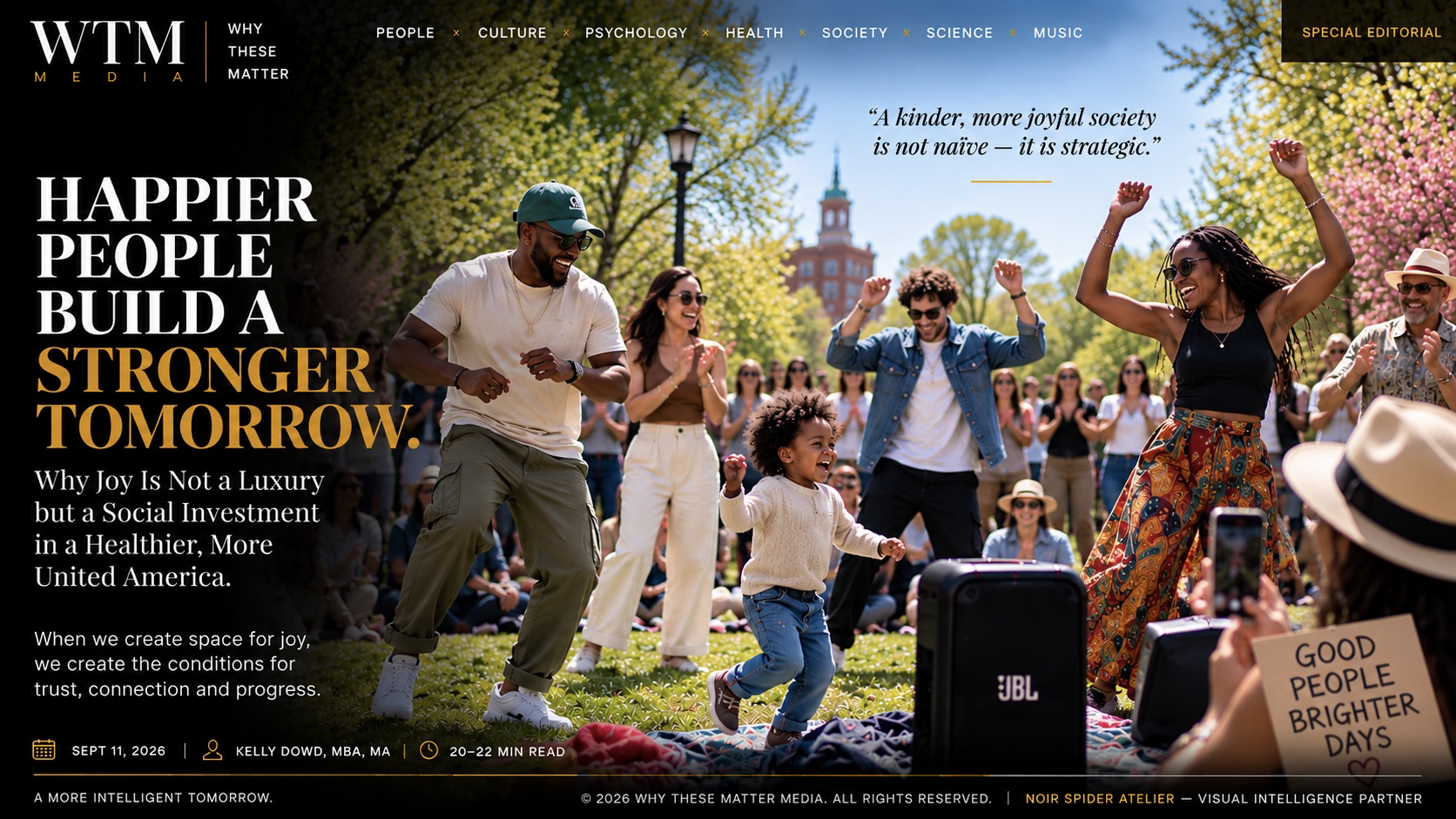
Yet I encountered that analogue moment because somebody filmed it and uploaded it to a digital platform.
That makes the story more complicated than saying social media is bad for happiness.
The World Happiness Report 2026 is largely devoted to precisely this complexity. Its researchers report substantial declines in wellbeing among young people in several English-speaking countries and Western Europe, alongside concerns about heavy or problematic social-media use. But the relationships vary by age, gender, geography, platform and how digital technologies are used. Social connection, trust and belonging remain enormously important variables.
The distinction may be between connection and consumption.
A digital technology that helps people arrange dinner, discover a community, laugh together, call a grandmother or encounter a stranger dancing may support relationships.
A digital environment that displaces relationships, amplifies comparison, rewards outrage and keeps the user consuming other people’s lives rather than participating in their own may produce something very different.
The technology is not socially neutral.
Neither is its design.
The same screen can make us envious of a stranger’s holiday or delighted by a stranger’s dancing.
The business model determines which emotion is more profitable to keep showing us.
That should concern executives considerably more than it currently does.
There is a temptation when discussing happiness to become sentimental.
That would be inappropriate now.
Americans have legitimate reasons to feel anxious, exhausted, distrustful or angry. Economic insecurity is real. Housing affordability is real. Political polarisation is real. War, inequality, technological disruption, loneliness, institutional distrust and uncertainty about the future do not disappear because somebody plays music in a park.
Happiness should never become a demand that people smile through structural problems.
But neither should structural problems convince us that joy is frivolous.
The World Happiness Report 2026 ranks the United States 23rd, with a life-evaluation score of 6.816. More troubling is the generational picture. The report says life evaluations among people under 25 in the United States, Canada, Australia and New Zealand have fallen by almost a full point on a ten-point scale over roughly the past decade.
There are social signals underneath those numbers.
The previous year’s World Happiness Report found that roughly one in four Americans reported eating every meal alone on the previous day in 2023, a 53 per cent increase from 2003. Across 142 countries and territories, people who shared more meals reported higher life satisfaction and positive affect and lower negative affect. The researchers are careful about unresolved questions of causality, but the association between shared meals, social connection and wellbeing is striking.
We have become extraordinarily sophisticated at measuring economic production.
Perhaps we should become equally sophisticated at measuring whether the systems producing that economy leave people with anyone to eat dinner with.
GDP matters.
Employment matters.
Productivity matters.
Housing matters.
Healthcare matters.
But so do parks.
So do libraries.
So do cafés.
So do neighbourhoods.
So do arts organisations.
So do community festivals.
So does having somebody who will notice when you do not show up.
A nation is not merely an economy populated by consumers.
It is a social system populated by humans.
The man dancing in the park did not fix America.
He did something much smaller.
That may be precisely why the moment matters.
We have become accustomed to imagining change at a scale so enormous that ordinary human agency begins to feel irrelevant. Elections. Markets. Governments. Corporations. Wars. Algorithms. Artificial intelligence. Climate systems. Interest rates.
Against those forces, dancing looks ridiculous.
Perhaps it is.
But civilisation is also constructed from millions of ridiculously small interactions.
Someone invites another person to dinner.
Someone holds the lift.
Someone checks on a neighbour.
Someone volunteers.
Someone makes a child laugh.
Someone plays Makossa for a sick teenager.
Someone gets up in a park and dances badly enough, confidently enough or joyfully enough that another human being decides to join.
Then another.
The 2025 World Happiness Report found that people systematically underestimate the kindness of others and that expectations of kindness are themselves associated with happiness. It also found that benevolent behaviour remained above pre-pandemic levels globally. In other words, our perception of social deterioration may sometimes outrun the behaviour of the people actually around us.
That is worth contemplating in an America increasingly organised around suspicion.
We do not have to agree politically to dance to the same song.
We do not have to belong to the same religion to laugh at the same baby.
We do not need identical incomes to share a table.
We do not need the same ethnicity, sexuality, ideology, age or biography to experience the peculiar human phenomenon of watching somebody else become happy and discovering that some portion of their happiness has arrived in us.
And no, happiness cannot solve everything.
It cannot replace medicine.
It cannot cure poverty.
It cannot substitute for competent government.
It cannot erase discrimination.
It cannot repair an institution that has betrayed public trust.
It cannot make an unaffordable home affordable.
But happiness can influence the human beings who must solve those problems.
Connection can affect whether we regard strangers as threats or neighbours.
Trust can affect whether institutions function.
Belonging can affect whether communities cooperate.
Music can create common experience without requiring common biography.
Dance can transform spectators into participants.
Laughter can interrupt tension long enough for another emotional possibility to enter the room.
Perhaps that is the mistake we make when we treat happiness as the reward we receive after society has solved its problems.
Sometimes happiness is part of the social capacity required to solve them.
That afternoon, I was still recovering.
The video did not make the congestion disappear. It did not replace medication. It did not provide a diagnosis. If an illness is persistent, severe or unusual, medical evaluation remains the appropriate response.
But something had changed.
I was smiling.
And somewhere in that smile was a teenager asking his mother to play Makossa.
Somewhere in it was my mother agreeing.
Somewhere in it was a man dancing in a park years later.
Somewhere in it were strangers deciding that watching was no longer sufficient and joining him.
And somewhere in Ohio, another stranger watched all of them through a small glass screen and momentarily felt better about being human.
Perhaps happiness sometimes travels exactly like that.
Not as a grand programme.
Not as an ideology.
Not as an instruction to pretend everything is fine.
But from one human being to another.
A rhythm.
A laugh.
A ridiculous dance.
A little permission.
And then somebody else joins.
If sadness can travel through a society, perhaps joy deserves an infrastructure too.
Author: Kelly Dowd, MBA, MA
Visual Intelligence: Noir Spider Atelier™ — A Division of WTM Media
Editorial Direction: Kelly Dowd, MBA, MA
© 2026 Kelly Dowd / Why These Matter Media. All rights reserved.
Third-party company names, research, publications and trademarks remain the property of their respective owners and are referenced for reporting, criticism, analysis and attribution. Historical comparisons are interpretive devices, not predictions that artificial intelligence will reproduce the employment effects of previous technologies.
WTM Editorial Intelligence principle: the relevant question is not whether technology replaces humanity. It is whether humanity develops the judgement to redesign itself around what technology makes possible.The personal illness experiences described in this editorial are autobiographical observations and should not be interpreted as evidence that music, dance or laughter treats migraine, fever, infection or other medical conditions. Research cited concerns associations and interventions involving wellbeing, stress, arts participation and social connection; strength and causality vary by study.
Why These Matter - WTM MEDIA is an independent editorial platform exploring the forces shaping our world—through people, culture, commerce, design, systems, and governance. Connecting the dots between today’s headlines and tomorrow’s realities.

article-support-3
Noir Spider Atelier

article-support-2
Noir Spider Atelier

article-support-1
Noir Spider Atelier

press-partnership
Noir Spider Atelier
press-reader-desk
Noir Spider Atelier

resource-access
Noir Spider Atelier
membership-example
Noir Spider Atelier

membership-tools
Noir Spider Atelier

membership-reader
Noir Spider Atelier
membership-public
Noir Spider Atelier
pathway-design
Noir Spider Atelier
pathway-institutions
Noir Spider Atelier
pathway-technology
Noir Spider Atelier