Targeted killings of national leaders are often framed as decisive solutions to security threats. History and deterrence theory suggest the opposite. This editorial examines the strategic logic behind leadership “decapitation” strikes, why they rarely dismantle nuclear programmes, how they alter escalation incentives, and what this means for global stability in an age of high-precision warfare and low-trust diplomacy.

The idea that removing a single leader can neutralise a national security threat is one of the most persistent fantasies in modern geopolitics. It is clean, dramatic, and morally legible. It suggests that a complex system can be solved by subtracting one person. Yet when examined through the lenses of deterrence theory, regime design, and historical precedent, the logic begins to unravel. Leadership decapitation is not a scalpel. It is a signal. And signals travel further than missiles.
The doctrine of leadership targeting has deep roots. During the Second World War, Allied planners debated assassination options against Adolf Hitler, ultimately rejecting them partly on strategic grounds. During the Cold War, both the United States and the Soviet Union developed plans for disabling command-and-control nodes, recognising that nuclear deterrence rests on credible retaliation. The problem is structural: if an adversary believes its leadership is vulnerable, it has two options — harden succession and retaliatory mechanisms, or adopt a “use it or lose it” posture. Neither outcome reduces long-term risk.
Modern examples illustrate the paradox. The United States’ 2020 drone strike that killed Iranian General Qassem Soleimani was justified as deterrence restoration. The immediate aftermath included retaliatory missile strikes and heightened regional tension, not capitulation. Similarly, Israeli targeted killings of militant leaders over decades have degraded specific networks but have not ended the underlying conflicts. Leadership removal disrupts operations; it rarely transforms ideology or dismantles bureaucratic continuity.
This matters acutely in nuclear contexts. Nuclear programmes are not personality projects; they are institutional enterprises embedded within scientific communities, military establishments, and political narratives of sovereignty. The International Atomic Energy Agency (IAEA) reports on enrichment capacity, centrifuge deployment, and breakout timelines — all variables that exist independently of a single officeholder. When a state invests decades in nuclear capability, it builds redundancy precisely to survive shocks. Assassinating a leader does not delete centrifuges.
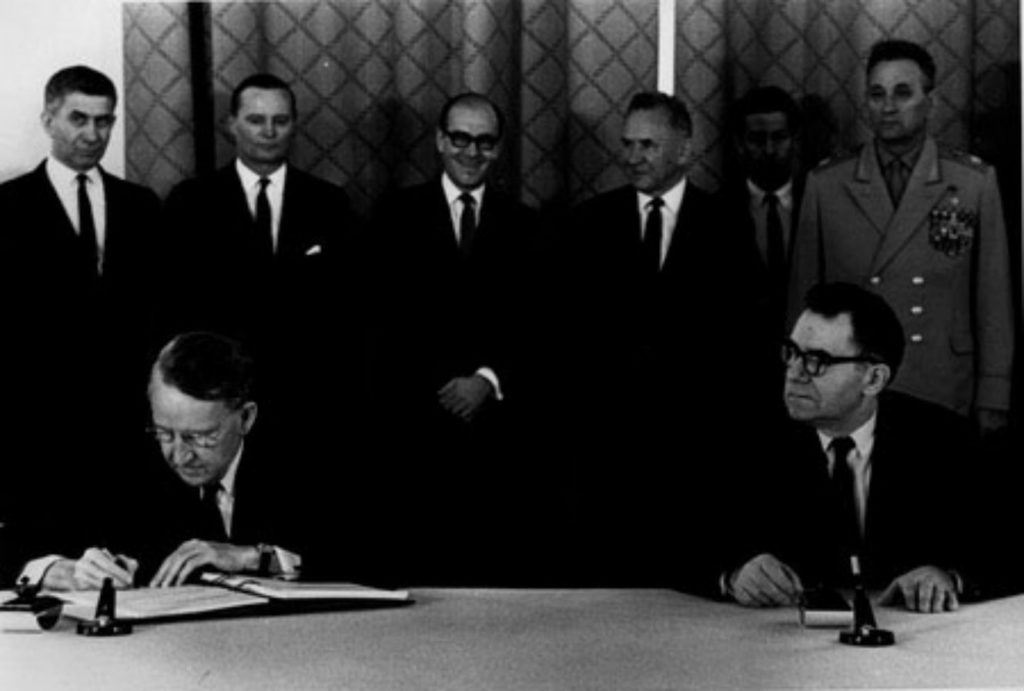
The strategic logic often presented publicly is preventive: eliminate the decision-maker before a catastrophic choice is made. Yet deterrence theory, from Thomas Schelling to modern strategic studies, emphasises credibility and communication over elimination. Nuclear stability depends on second-strike assurance — the belief that even if attacked, retaliation is possible. If leadership is targeted, states may decentralise command or delegate launch authority to avoid paralysis. Delegation increases the risk of miscalculation or unauthorised escalation. In attempting to neutralise a threat, the strike can make the system more brittle.
Another dimension rarely discussed in mainstream coverage is regime consolidation. External attack often compresses domestic dissent. Political factions close ranks. Security services gain expanded authority. Hardliners acquire rhetorical advantage. A leadership strike can unintentionally validate the narrative that the state is under existential siege, thereby accelerating the very militarisation it sought to prevent.
International law complicates matters further. The UN Charter prohibits the use of force except in self-defence or with Security Council authorisation. States invoking anticipatory self-defence must demonstrate imminence — a standard contested among scholars. Targeting a sitting head of state or supreme authority crosses into territory traditionally associated with assassination bans articulated in various executive orders and customary norms. When powerful states blur these boundaries, they reshape the rules for everyone else.
Technology has lowered the operational threshold for such actions. Precision-guided munitions, persistent surveillance, and real-time geolocation make individual targeting more feasible than at any point in history. But precision does not equal strategic clarity. The ability to strike accurately does not answer the question of whether striking stabilises or destabilises the system. High-resolution capability paired with low-resolution diplomacy is a volatile mix.
There is also a market dimension. Financial markets react swiftly to leadership shocks. Oil prices spike, shipping insurance premiums rise, and currency volatility expands. The global economy absorbs the reverberations. In nuclear-armed or near-nuclear states, these economic ripples amplify political pressure. Economic shock can harden nationalist sentiment, not moderate it.
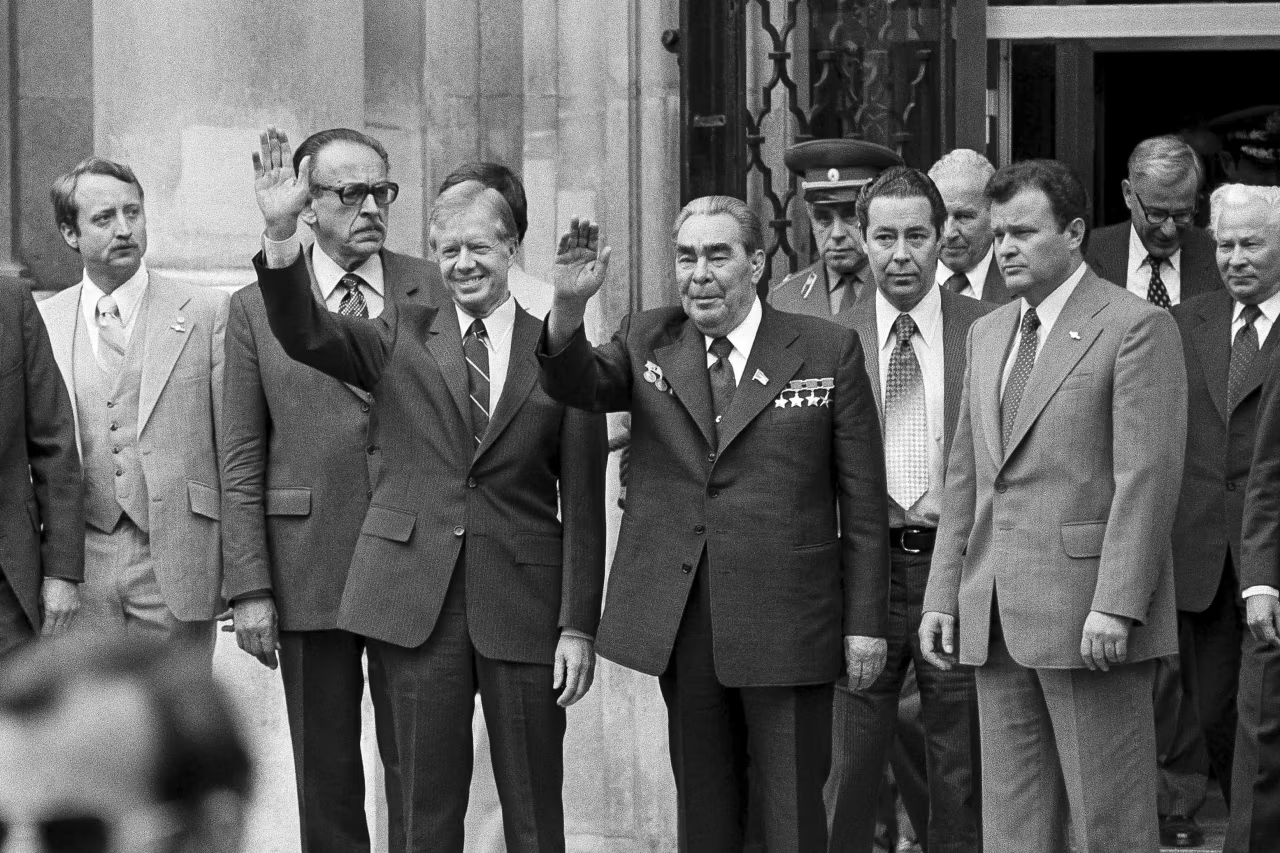
The information ecosystem compounds the risk. In the hours following a high-profile strike, social media fills with conflicting claims, unverifiable casualty numbers, and manipulated imagery. States release selective intelligence. Media outlets race to publish. The public experiences certainty before verification. In nuclear crises, perception can be as consequential as fact. Misinterpretation of intent — or misreading of red lines — can cascade into escalation.
Historical attempts to remove leaders for strategic gain show mixed and often counterproductive outcomes. The 1989 U.S. invasion of Panama removed Manuel Noriega but required full-scale military intervention. The 2011 NATO intervention in Libya removed Muammar Gaddafi but left institutional collapse and protracted instability. Removing the figurehead did not automatically yield stable governance. When applied to nuclear-capable states, the stakes multiply.
What is often missing from debate is the succession mechanism. Most states with centralised leadership maintain constitutional or informal succession pathways. Clerical councils, military committees, or party elites are prepared for continuity. In some systems, the removal of a dominant personality can accelerate collective leadership, distributing authority across a smaller but more ideologically unified group. That distribution may reduce the space for diplomatic engagement.
Diplomacy, while slower and politically costly, addresses capability rather than personality. Arms control treaties — from the Nuclear Non-Proliferation Treaty (NPT) to the Joint Comprehensive Plan of Action (JCPOA) — aim to constrain enrichment levels, inspection regimes, and stockpile sizes. These agreements require verification and trust-building mechanisms. They do not depend on liking the other side’s leader; they depend on predictable compliance frameworks. Killing a leader does not substitute for inspection protocols.
The broader implication is normative. If major powers legitimise decapitation as a nuclear policy tool, they invite reciprocity. Cyber capabilities make leadership targeting possible without conventional war. Smaller states observing this precedent may conclude that personal security is inseparable from nuclear deterrence. In that logic, nuclear capability becomes insurance against assassination. The very act intended to curb proliferation could incentivise it.

None of this suggests that targeted killings are never tactically effective. They can disrupt networks, deter specific operations, and signal resolve. The question is whether they solve structural threats. Nuclear strategy is structural. It rests on doctrine, command architecture, and industrial capacity. It requires political transformation or negotiated constraint, not subtraction.
For policymakers, the sober assessment is this: leadership removal is an accelerant. It speeds timelines. It clarifies hostilities. It narrows diplomatic space. It may achieve short-term psychological impact. It rarely dismantles long-term capability. In nuclear contexts, speed and clarity can be dangerous virtues.
For media institutions, the responsibility is restraint. Avoid framing leadership strikes as cinematic finales. Investigate enrichment data, succession protocols, and escalation ladders. Examine whether diplomatic channels remain open. Track international law analysis. Replace spectacle with systems.
For citizens, the imperative is critical literacy. Understand that national security is not a chessboard of personalities but an ecosystem of incentives. The most dangerous policies are often those that feel decisive. Complexity does not yield to drama.
The global stage is already tense. Great-power competition, technological acceleration, and eroding arms-control architectures create an environment of heightened suspicion. In such a world, adopting doctrines that personalise existential threats is risky. Institutions are resilient. Ideologies persist. Capabilities survive. Stability depends not on eliminating adversaries but on managing coexistence.
Leadership decapitation is seductive because it promises simplicity. Nuclear strategy punishes simplicity. If history teaches anything, it is that removing the head rarely dissolves the body. It often teaches the body to grow another head faster.
Nuclear stability is not governed by emotion but by structure. If policymakers and publics misunderstand the limits of leadership targeting, they may support actions that increase escalation risk rather than reduce it. In a world where technological precision outpaces diplomatic trust, strategic patience and institutional design matter more than spectacle. Getting this wrong is not a political misstep; it is a civilisational hazard.

Why These Matter - WTM MEDIA is an independent editorial platform exploring the forces shaping our world—through people, culture, commerce, design, systems, and governance. Connecting the dots between today’s headlines and tomorrow’s realities.