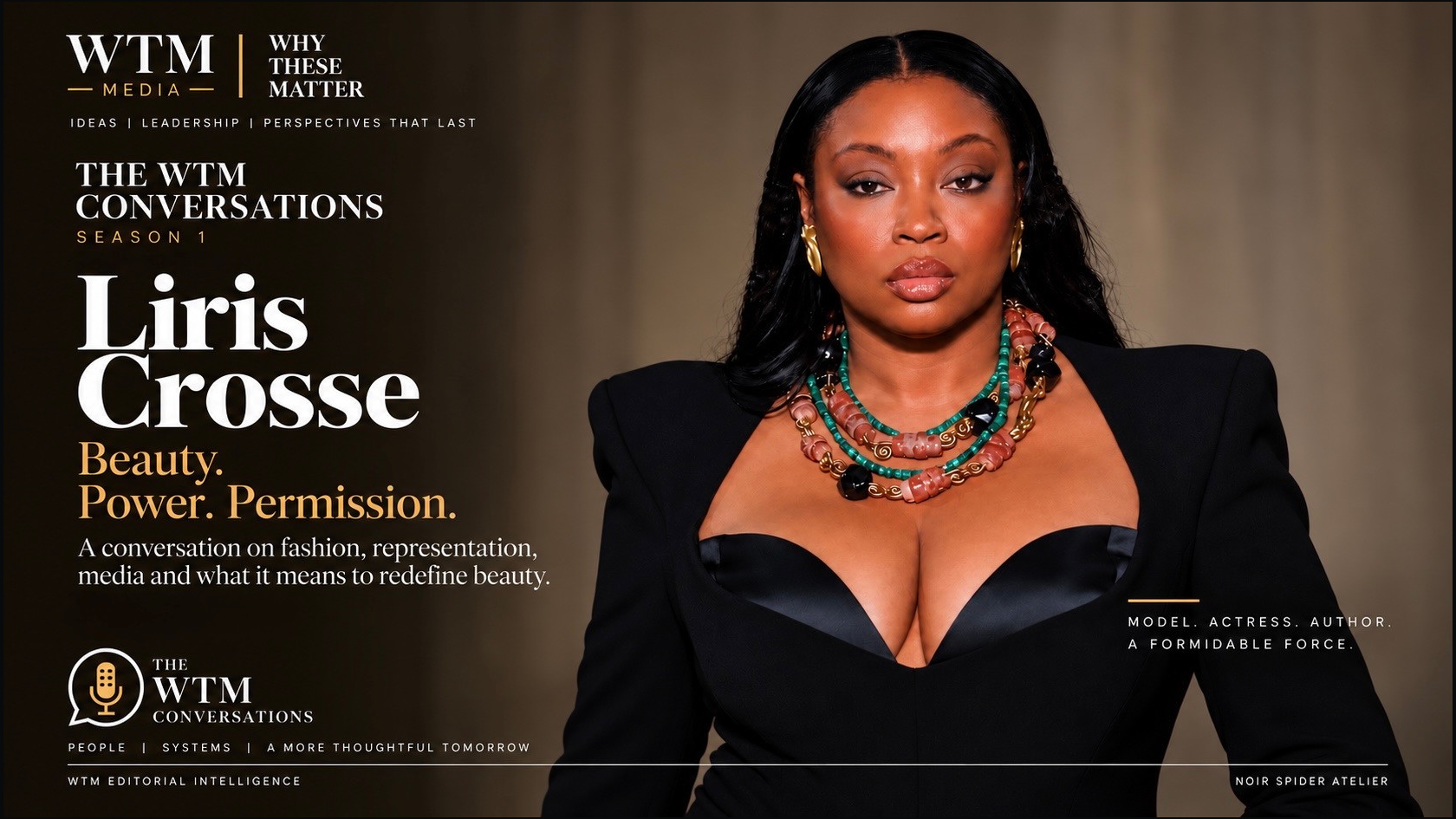
Liris Crosse’s account of fashion makes representation a question of access, working conditions and creative authority. In Episode 3 of The WTM Conversations, she joins Kelly Dowd and co-host Siddharth Pannir to discuss agency hierarchies, fuller-figured Black visibility, ageing, confidence and AI. Her experience suggests a demanding test for inclusion: the people welcomed into an image should also find opportunities in the work behind it. This editorial examines what that means for casting, product design, professional longevity and control over digital likeness. It concludes with an unscored decision audit for brands, creative teams and commissioners.
In Episode 3 of The WTM Conversations, host Kelly Dowd and co-host Siddharth Pannir explore those conditions with Crosse. Her account moves from agency hierarchies and early magazine appearances to age, collective support and AI-generated imagery. WTM’s reading is that representation becomes durable when it changes access to work, the products people can actually use and the authority creatives retain over their contribution. A more varied campaign can begin that process. Whether it continues depends on decisions made before casting and after the photographs disappear from view.

Crosse begins with something she did not understand when entering fashion: the hierarchy between agencies. In her experience, particular designers, photographers and jobs could become harder to reach because of which agency represented a model. This is an important starting point. Public debates about beauty often concentrate on the finished image, while access to that image has already been shaped by professional relationships and institutional choices.
Her understanding of beauty was broader than the industry's prevailing ideal. She recalls seeing beauty in her mother, aunts, father and other people she loved. That everyday knowledge gave her a basis for questioning why fashion recognised such a narrow range of bodies. The resulting challenge concerned professional eligibility: why should an inability to wear a particular dress size limit what her presence could contribute?
She identifies early work for Black Elegance and Seventeen as moments when that challenge became publicly meaningful. Crosse recalls the response to seeing a fuller-figured Black woman in a magazine that influenced young readers' ideas about themselves. These are her recollections, rather than a measured account of audience effects. Their significance lies in the connection she describes between being commissioned and becoming imaginable to someone else.
Her persistence included attending castings that had not requested plus-size models. Yet she also credits the existence of a plus-size agency board and the bookers, photographers and stylists willing to work with her. The combination matters. Individual resolve can expose an exclusion, but someone with access to a job must still alter a decision. A heroic account of persistence alone would leave those gatekeepers comfortably outside the story.
Crosse is equally clear that modelling is a difficult place to acquire self-belief from scratch. Rejection is frequent, and confidence needs support beyond the next booking. For aspiring creatives, that is practical advice. For institutions, it should also provoke scrutiny: the ability to endure repeated rejection cannot be the sole route through which an overlooked person earns a fair hearing or a serious opportunity.
A commissioning team can translate this account into a review of its own access points. Which agencies receive the brief? Who is repeatedly considered, and who never enters the conversation? What happens after an unfamiliar model succeeds? Opening one casting is meaningful; changing the assumptions governing subsequent work would make the opening more durable. Representation begins with people being considered for their contribution before they become campaign symbols.
When asked about brands that proclaim diversity, Crosse describes checking their public record. She looks through websites and social feeds to see whether the people pictured resemble the breadth of the promise. Her account supplies a useful editorial method: compare the statement with a sustained body of work. A single inclusive campaign offers limited evidence about what an organisation normally commissions, produces or values.
The next test extends beyond imagery. Crosse observes that people of different sizes continue to exist regardless of which body type fashion currently favours. They still need clothes. That point is straightforward but demanding: a brand addressing a customer through representation should examine whether its products can serve that customer. A photograph cannot resolve unavailable sizes, an unsuitable fit or a collection conceived around somebody else's body.
The conversation also touches on weight-loss culture and changing beauty ideals. Crosse treats these as shifts she has observed across a long career, rather than evidence that larger bodies will disappear. The relevant editorial conclusion requires no medical claim or speculation about anyone's treatment. Customers' needs should not become conditional on a prediction that they will eventually acquire the body a brand prefers to design for.
Crosse describes a tension between demand and the preferences of designers who remain unwilling to dress plus-size women. She points to Christian Siriano as someone whose work demonstrates a different choice. Her example challenges the assumption that a narrow aesthetic is inevitable. It does not establish that every extension will be commercially successful. It does ask decision-makers to distinguish a genuine production constraint from an inherited judgement about desirability.
WTM's proposed response is to bring the intended wearer into product decisions early enough to influence them. Consider fit testing, construction, movement, assortment and the experience of buying the garment. These are questions for a brand's design and commercial teams to investigate with customers, not outcomes established by this interview. Their purpose is to connect the promise made by a campaign to the experience available beyond it.
Accountability therefore needs continuity between departments. A marketing team can commission inclusive images while a product team serves a narrower customer. Leaders should ask who owns that gap, what resources could close it and what evidence would show improvement. The strongest claim is one that survives a customer's attempt to use the offering. Inclusion becomes more credible when an organisation can explain what changed in its decisions.

Crosse's argument for longevity expands diversity beyond a single category. She names size, age, ethnicity and ability, describing the possibilities available when an industry recognises more of the people who participate in ordinary life. This widens the question from who appears in a launch to who can remain part of fashion. An invitation that expires when a body changes provides a fragile form of belonging.
She speaks warmly of mature model and mentor Coco Mitchell, whose continuing presence offers a different example from an industry organised around perpetual youth. Crosse also challenges the suggestion that value diminishes with age. Her position is rooted in experience and conviction. For an editorial reader, its force lies in asking why growing older should require someone to surrender public visibility or a professional identity.
The commercial argument is part of her case: older people attend events, work and buy products. Those observations challenge a narrow imagined customer without establishing a universal revenue formula. Brands would still need to understand the audience, price, product and context. Commercial inquiry becomes more useful when it starts with actual lives rather than treating youth as a dependable substitute for evidence about desire or demand.
The creative question is equally important. A person of a different age should be able to influence the story being told, rather than simply fill a newly identified demographic position. Teams can ask whose experience shaped the brief and whether the model has room to contribute interpretation. Broader casting has more substance when it is accompanied by curiosity about the person, beyond what their appearance signifies.
This perspective also exposes the limits of one-dimensional inclusion. A campaign may broaden age while retaining narrow expectations about size, or broaden size while overlooking racial diversity. No single casting decision can represent everyone. The more useful discipline is to examine repeated patterns across work, listen to people whose needs remain absent and make deliberate choices about how the next commission will address a particular omission.
For agencies and commissioners, longevity should include the possibility of development and renewed work. Who receives another brief? Who gains a more substantial role? Whose expertise is sought as the industry changes? Crosse's insistence on continuing her own career makes those questions concrete. A system can honour someone's contribution to progress while still failing to provide a place for that person within the progress it celebrates.

Crosse approaches AI with both interest and concern. She can see useful applications while worrying about the replacement of human creative work. Her account also contains an important boundary: at the time of the interview, she says her agents were still referring models to photographers, rather than directing them to use AI pictures. That experience should not be expanded into an industry-wide claim about adoption or its eventual direction.
The work she describes involves more than a body appearing before a camera. A model decides how to smile, which memory might produce an expression and how to interpret the moment. A make-up artist contributes a different set of decisions. Crosse's emphasis is on the thinking behind the result. For a commissioner, a useful question is which contributions a proposed production method preserves, changes or removes.
Her concern extends across the people involved in a shoot, including photographers, stylists, hair and make-up artists. The interview does not quantify displacement, and a synthetic image does not by itself establish what happened to employment. It does invite a broader account of a production decision: whose paid work changes, whose skills remain necessary and how the new arrangement affects the team's ability to develop future talent.
Crosse also raises the possibility of models controlling their own digital avatars and being paid for the use of their likeness. She presents this as a way people might retain a stake if demand shifts. It is a possibility to examine, not a settled protection. A proposed arrangement needs clear answers about permitted uses, duration, approval, compensation and what happens when the original commission ends.
Her prediction that audiences may eventually seek more visible human texture is explicitly a prediction. ‘I want to see the pores,’ she says while imagining that response. The interview cannot establish whether such a shift will occur, or whether generated and photographed models will sell differently. Teams should test audience understanding and product accuracy rather than assuming either novelty or human origin guarantees a favourable result.
WTM's practical conclusion is to put creative authority into the brief before selecting the production method. Identify the human contribution, permitted source material, approval process and responsibility for misleading outcomes. If a real person's likeness is involved, clarify their participation and terms rather than treating visual similarity as permission. These are commissioning questions, not a prediction of what AI must become or an assurance that every agreement is fair.
Crosse explains that Make the World Your Runway grew from the limits of what she could do in person. After a confidence-focused version of her modelling boot camp appeared on The Steve Harvey Show in 2017, viewers wanted workshops in their own cities. She could not simply travel everywhere. A book offered another way to share the principles people were asking her to teach.
Her visibility increased through Project Runway, where she won the model portion of Season 16. The distinction matters: she was competing as a model, not winning the designers' competition. Her book, with a foreword by Tim Gunn, takes stories and principles from her working life to a broader readership. Its value in this conversation lies in the movement from watching someone's confidence to exploring how a reader might practise their own.
She describes chapters on presentation and preparing for success, each followed by a ‘runway action plan’. The practical emphasis connects with her account of researching a brand before a casting: studying its products, imagery and styling so she can arrive prepared. This is professional judgement at work. Understanding a brief can help a person make deliberate choices without requiring them to accept every assumption behind it.
That distinction matters because advice about presentation can easily become another demand to assimilate. Crosse's larger position is that she should be able to show up in her Blackness and her curves. Preparation serves that presence by making her contribution legible. It should not make acceptance depend on erasing the characteristics that challenged the original boundary. Confidence has practical value when it supports informed choice and participation.
Her repeated acknowledgement of a village prevents the argument from collapsing into individual self-improvement. She remembers people who recognised her potential and helped create opportunities. For established professionals, sharing knowledge can include explaining how decisions are made, offering useful feedback and opening introductions. The relevant question is whether support gives someone a more realistic path into the work, rather than simply encouragement to withstand its obstacles.
There is also a boundary to the responsibility placed on visible pioneers. A person who has challenged exclusion should not have to remain permanently available as its unpaid interpreter. Crosse wants to keep modelling because she loves the work and wants to experience the change herself. Institutions should consider how they reward that contribution through real opportunities, while allowing the contributor to remain a professional with ambitions of her own.
Fashion's choices connect public images with less visible decisions about work and belonging. Crosse's account makes those connections easier to examine because it moves between being seen, seeking a booking and maintaining a career. WTM's interpretation is that representation should be judged across that whole journey. The person in the image needs a place in the decisions and opportunities surrounding it.
For brands, the immediate implication is to connect commitments with the product and the commission. Review whom a collection serves, how talent is found and what happens after the campaign. A public statement can help make an intention visible. Credibility develops when the organisation can point to decisions, resources and customer experiences that give that intention practical meaning over time.
For creative workers, the interview affirms that appearance and judgement belong in the same account of their value. Modelling, styling and photography involve interpretation, preparation and choices that a finished image can conceal. When production methods change, workers should have a meaningful opportunity to understand the proposal, contribute to its design and examine the terms on which their identity or expertise will be used.
For audiences, Crosse's example suggests looking beyond the most visible promise. Examine a brand's wider record and whether the people it addresses can find a product made with them in mind. Consumers should not carry the entire burden of correcting an industry's exclusions. Their questions can nevertheless reveal discrepancies that organisations would prefer to leave unexamined, especially when attention is followed by sustained scrutiny.
For those making decisions about AI, the essential issue is who retains the capacity to act. A production process may expand what can be created while reducing a particular person's influence over the result. Evaluate those effects together. Useful innovation should be open to challenge from the people whose work, likeness and opportunities it changes, with responsibility remaining visible when disagreements or errors arise.
Crosse gives this discussion its clearest human measure: ‘I also want to experience the change that I'm helping to create.’ Progress deserves that test. It should allow the people who challenged a boundary to participate in what follows, on terms that recognise their contribution and ambitions. Representation becomes consequential when it changes the opportunities available to people while they are still here to use them.
Use these questions before a campaign, collection or AI-assisted production. This is an unscored editorial discussion tool. Record the evidence, responsible person and next action for each relevant question; do not turn unanswered questions into a reassuring total.
Explore five decisions behind meaningful representation in the companion visual framework. These are WTM editorial interpretations of the conversation, not measured findings or a validated assessment.
Download the Episode 3 Visual Intelligence companion (PDF).
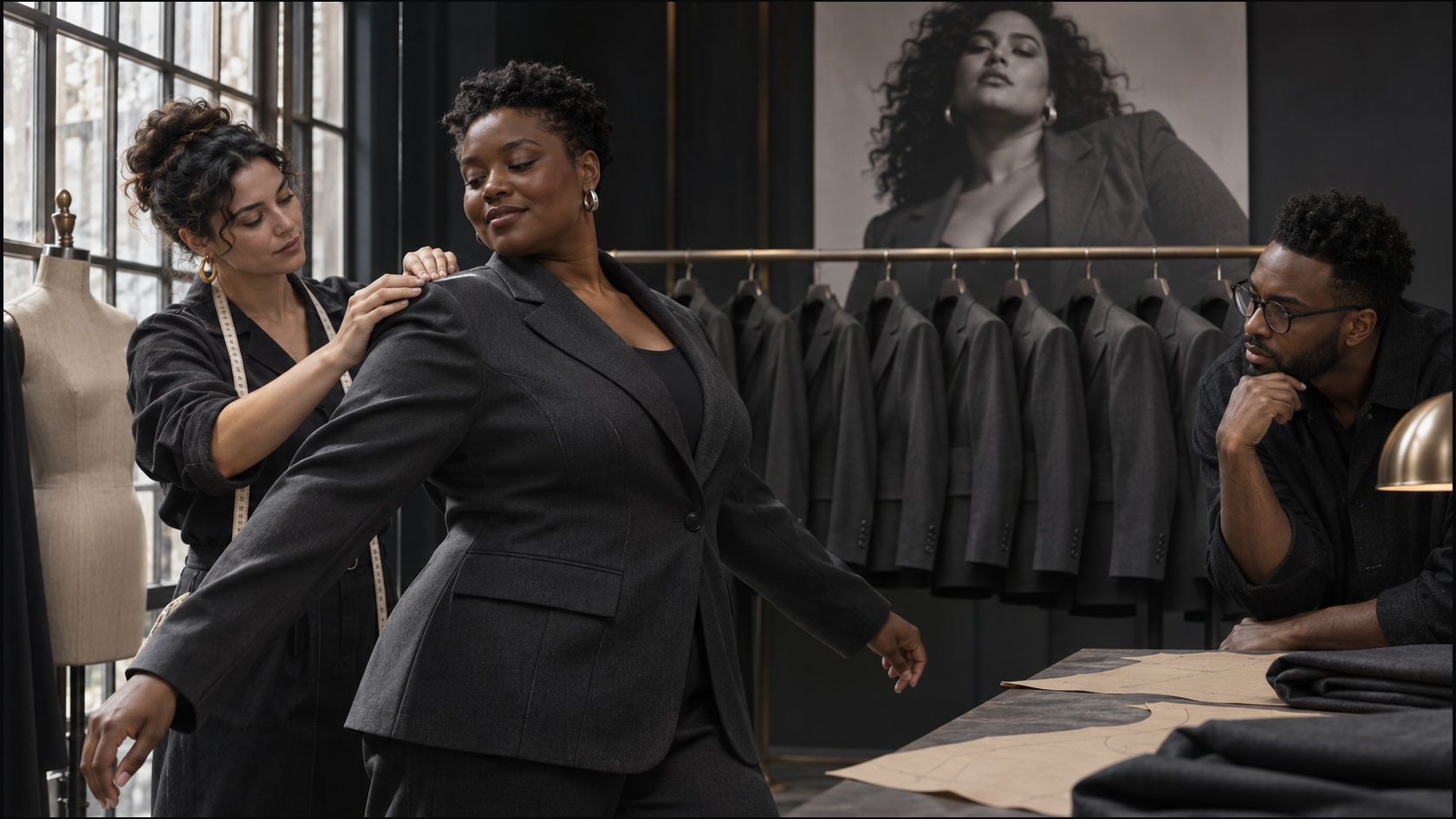
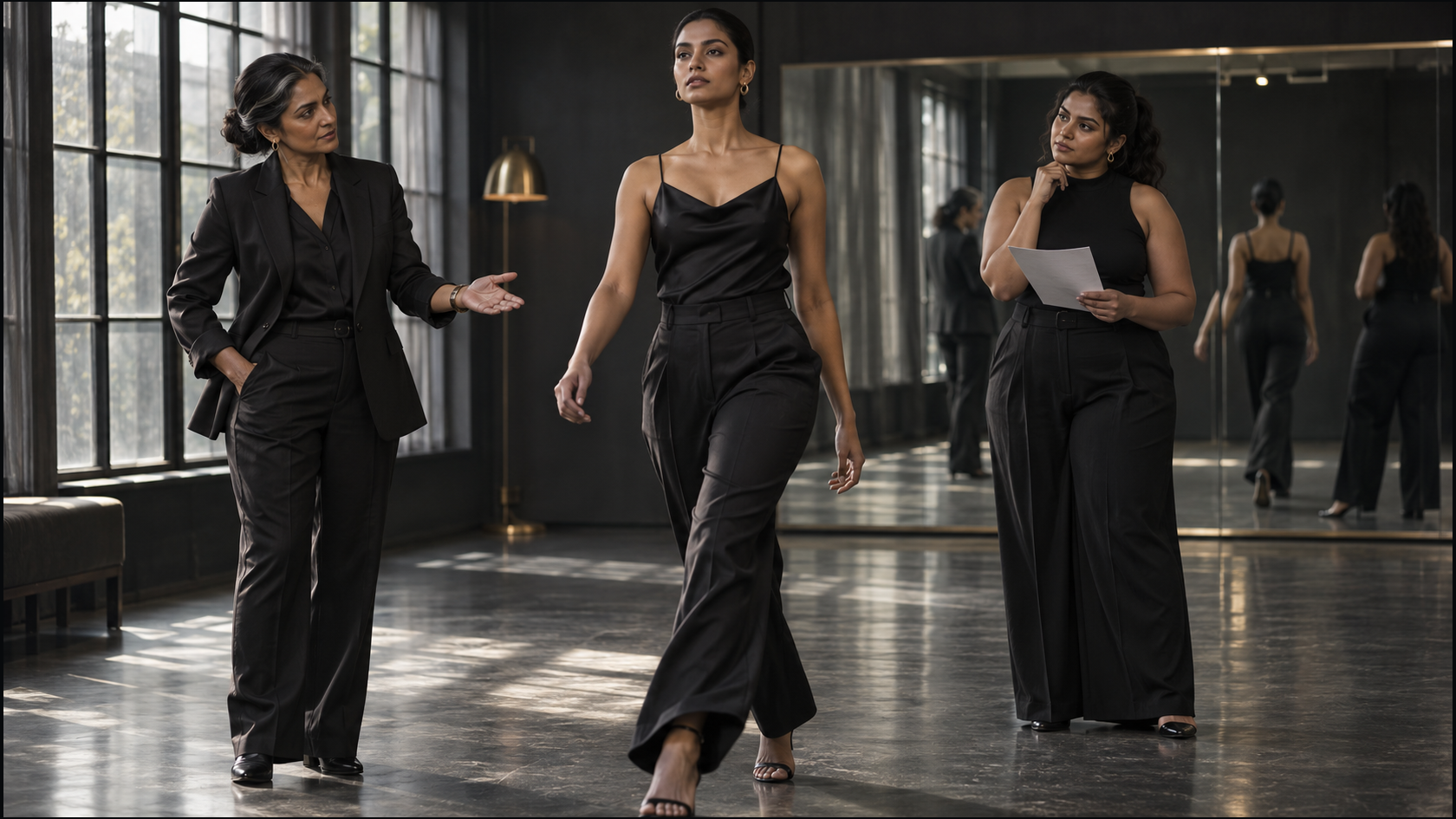
Cover: user-supplied WTM artwork. Section visuals: AI-generated conceptual illustrations by Noir Spider Atelier, depicting fictional adults and scenes. They do not depict Liris Crosse or document reported events.
Editorial analysis: WTM Media | Why These Matter. Host: Kelly Dowd, MBA, MA. Co-host: Siddharth Pannir. Featured guest: Liris Crosse. Series: The WTM Conversations, Season 1, Episode 3.
This editorial draws on the supplied conversation transcript. Guest recollections and opinions are attributed to Crosse; the decision audit and institutional recommendations are WTM editorial analysis. Public references below corroborate biographical and book details. Short quotations follow the transcript, with spelling of names checked against public sources. AI outcomes discussed in the conversation remain possibilities, not established forecasts.
Why These Matter - WTM MEDIA is an independent editorial platform exploring the forces shaping our world—through people, culture, commerce, design, systems, and governance. Connecting the dots between today’s headlines and tomorrow’s realities.

article-support-3
Noir Spider Atelier

article-support-2
Noir Spider Atelier

article-support-1
Noir Spider Atelier

press-partnership
Noir Spider Atelier
press-reader-desk
Noir Spider Atelier

resource-access
Noir Spider Atelier
membership-example
Noir Spider Atelier

membership-tools
Noir Spider Atelier

membership-reader
Noir Spider Atelier
membership-public
Noir Spider Atelier
pathway-design
Noir Spider Atelier
pathway-institutions
Noir Spider Atelier
pathway-technology
Noir Spider Atelier