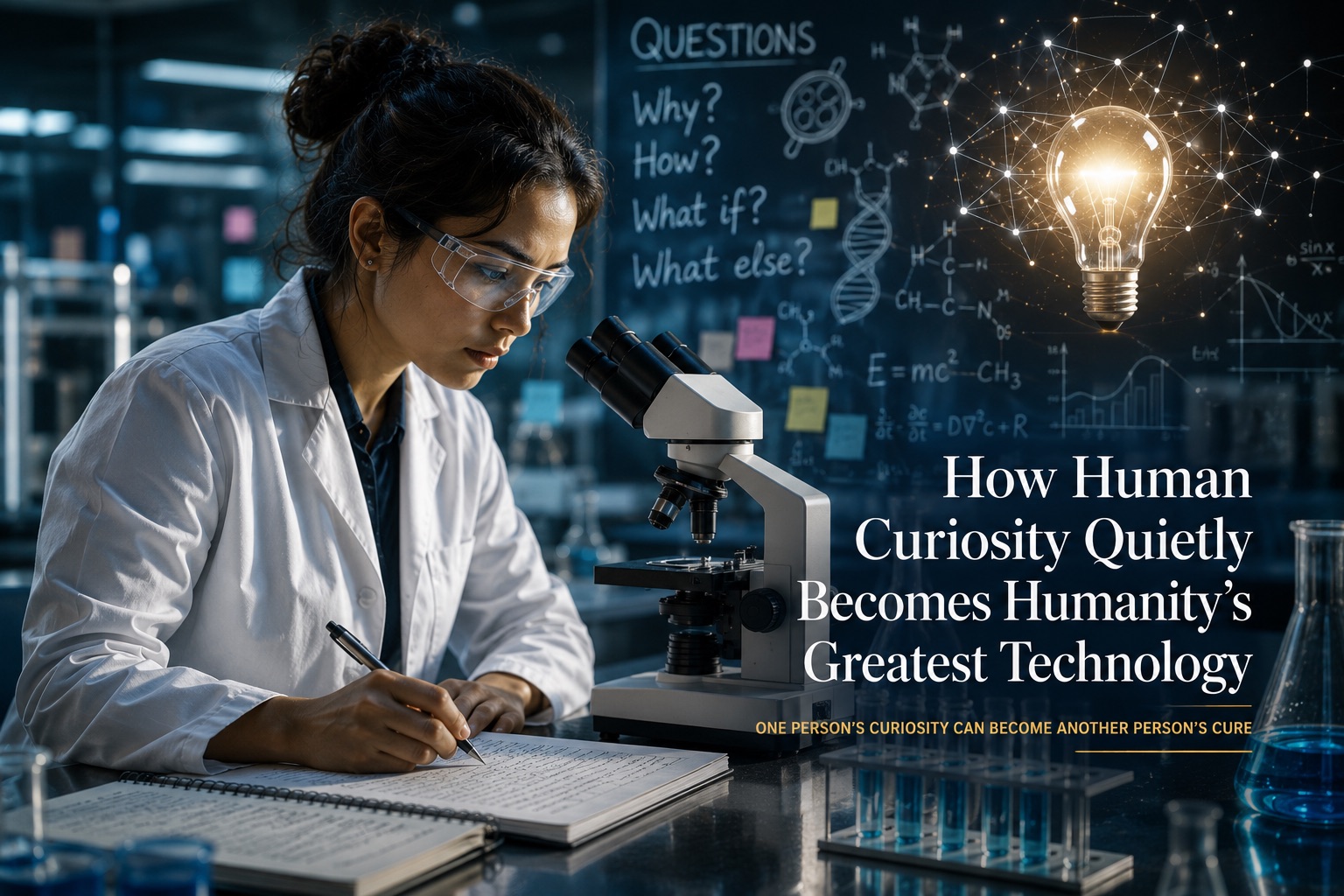
Every breakthrough begins long before the breakthrough itself. Before a vaccine saves lives, before a new material reshapes industry, before artificial intelligence transforms work, someone simply became curious. They asked a question that everyone else overlooked. Human progress is rarely born from certainty. It begins with disciplined curiosity. Science is therefore not merely the production of knowledge; it is the systematic pursuit of better questions. Every laboratory, university and research institution exists because curiosity, when protected and cultivated, eventually becomes innovation. The distance between a question and its answer may span years or even decades, but history repeatedly demonstrates that one person’s search for understanding can become another person’s opportunity, safety or survival.
The greatest misconception about innovation is that it begins with intelligence. More often, it begins with discomfort. Someone notices something that does not fit existing explanations. Rather than ignoring the anomaly, they investigate it. Curiosity is therefore less about knowing and more about refusing to stop asking.
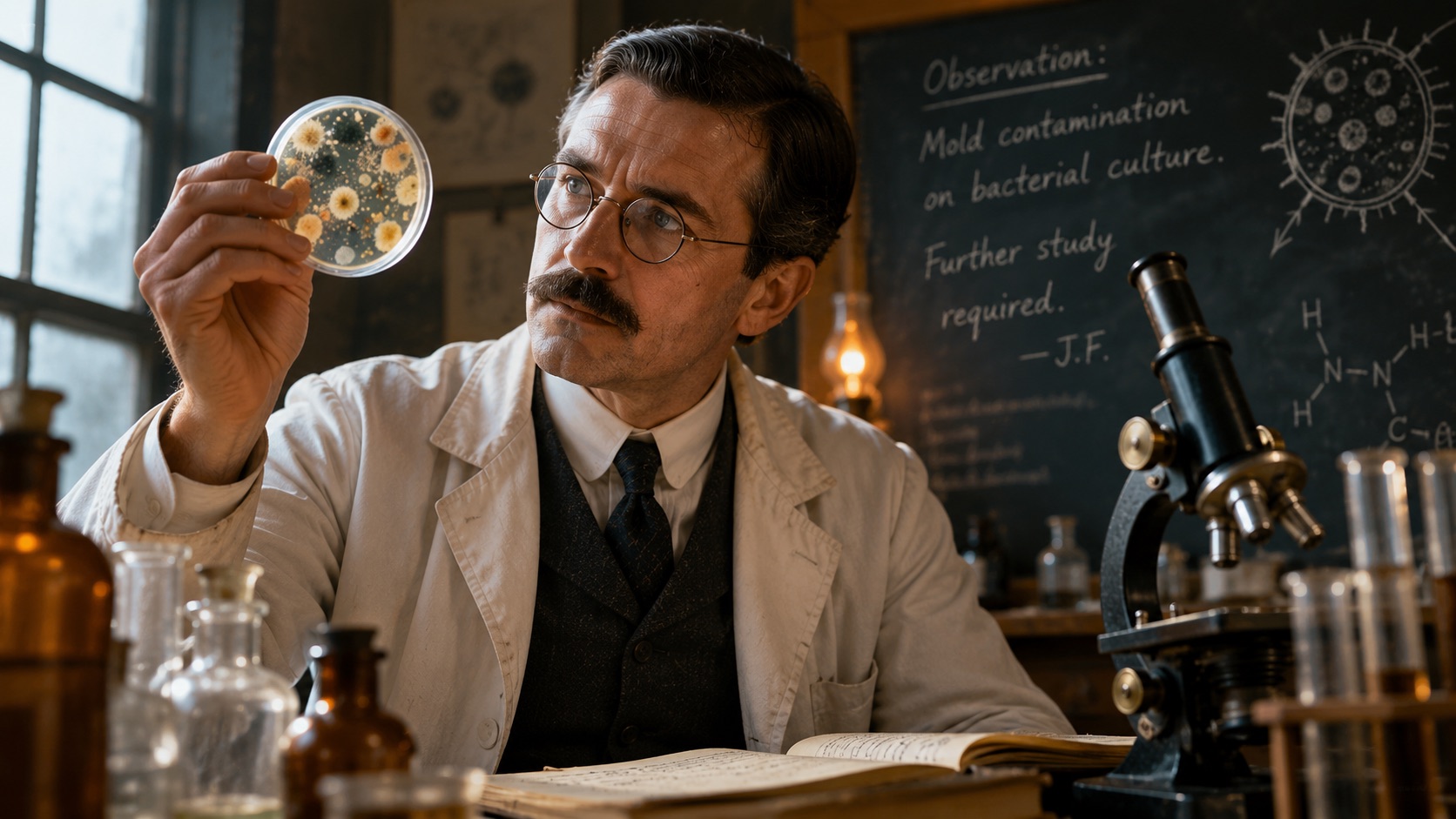
The history of civilisation illustrates this pattern repeatedly. Penicillin emerged because an unexpected observation was investigated rather than discarded. Modern genetics advanced because inherited traits raised deeper questions about biological inheritance. Space exploration began with people asking what existed beyond the horizon. The initial question often appears insignificant compared with the eventual consequences.
Curiosity also requires intellectual humility. It assumes that present knowledge is incomplete. This mindset distinguishes discovery from certainty. Societies that reward questioning tend to innovate more rapidly because they recognise that ignorance is not failure; it is the starting point of understanding.
Research institutions are therefore not simply repositories of expertise. They are environments designed to protect uncertainty long enough for discovery to occur. Scientists frequently spend years investigating ideas that produce no immediate commercial return. Yet those same investigations often become the foundations of future industries.
Curiosity flourishes where failure is tolerated. Experiments that produce unexpected results frequently generate the greatest breakthroughs because they reveal realities previously hidden from accepted assumptions. Scientific progress depends as much upon learning what is false as discovering what is true.
Every extraordinary discovery therefore begins with an ordinary question. The world changes not because someone already possessed the answer, but because someone believed the question deserved attention.

Scientific discovery rarely becomes useful immediately. Between curiosity and cure exists an entire ecosystem of researchers, engineers, clinicians, regulators, manufacturers, investors and educators. Innovation is never the product of one brilliant individual alone; it is the cumulative work of interconnected institutions.
Medical breakthroughs illustrate this particularly well. A molecular discovery inside a laboratory may require decades before becoming an approved treatment available in hospitals. Countless individuals contribute throughout this journey, many receiving little public recognition despite playing indispensable roles.
This long timeline explains why sustained investment in research matters. Governments, universities and philanthropic foundations frequently finance investigations without knowing which projects will ultimately succeed. They invest not in guaranteed outcomes but in the probability that curiosity eventually produces public benefit.
The same architecture exists beyond medicine. Curiosity about electricity produced modern communications. Curiosity about semiconductors produced computers. Curiosity about human cognition now shapes artificial intelligence. Every major technological revolution can be traced back to questions that initially appeared theoretical.
Economic prosperity increasingly depends upon protecting these ecosystems of inquiry. Nations that consistently invest in scientific research often create disproportionate long-term advantages because knowledge compounds much like financial capital.
Humanity therefore benefits whenever curiosity is allowed to mature into infrastructure. The laboratory becomes the clinic. The prototype becomes the industry. The question becomes the solution.
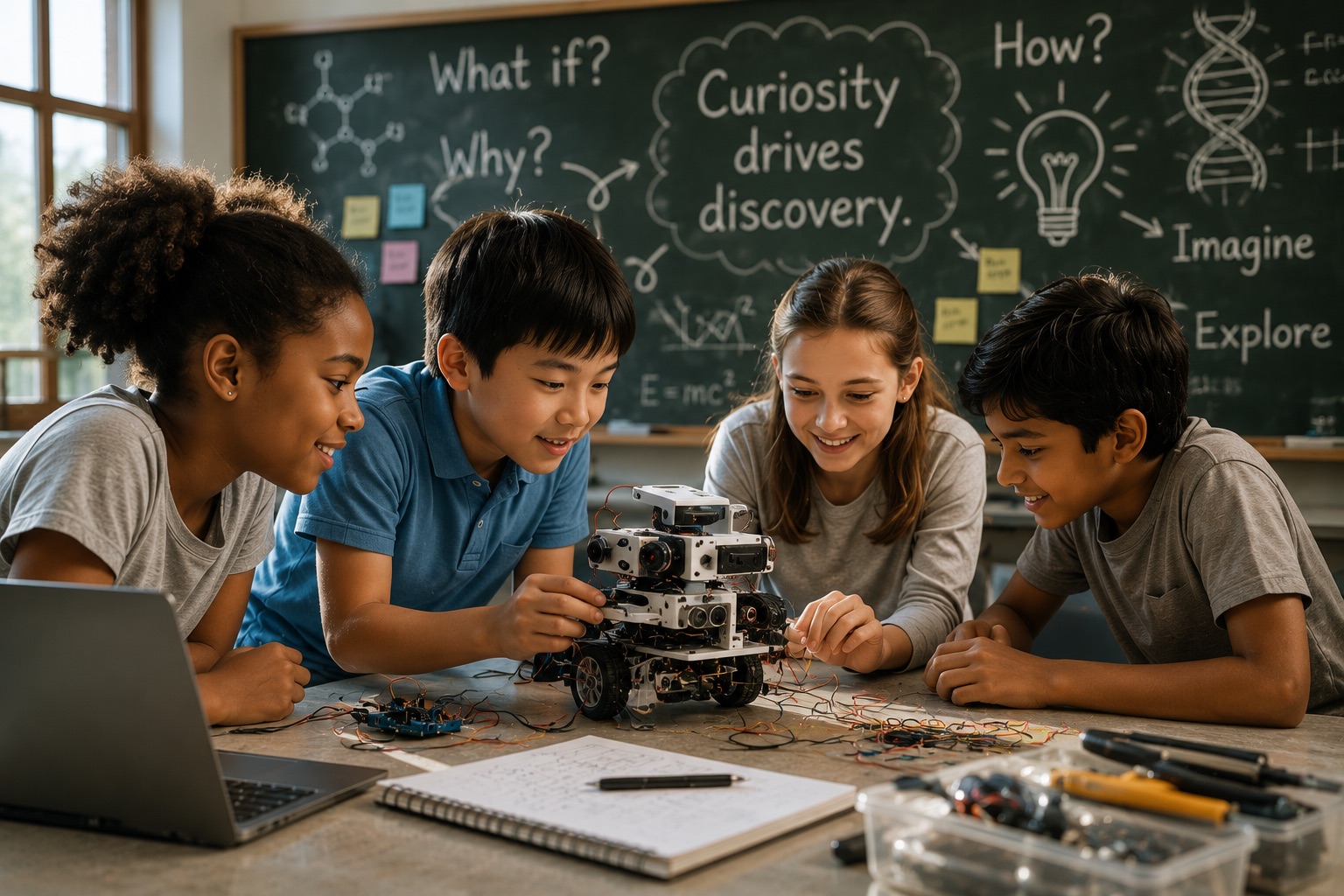
Unlike oil, minerals or land, curiosity expands through use. Every answer generates additional questions. Knowledge rarely concludes inquiry; it multiplies it. This makes curiosity one of civilisation’s few truly renewable resources.
Educational systems play a decisive role in determining whether societies preserve or suppress curiosity. Schools that reward memorisation alone risk producing competent workers but fewer discoverers. By contrast, environments that encourage thoughtful questioning cultivate future scientists, entrepreneurs, artists and inventors.
Artificial intelligence makes this distinction even more significant. Machines increasingly generate answers at extraordinary speed. Human advantage will increasingly reside in asking better questions. Curiosity becomes a strategic capability rather than merely an educational virtue.
This shift also transforms leadership. Organisations facing rapid technological change require leaders capable of continuous learning rather than static expertise. Adaptability begins with curiosity. Leaders who stop asking questions eventually begin repeating outdated answers.
On an individual level, curiosity protects against intellectual stagnation. It encourages empathy by inviting people to understand experiences different from their own. It expands creativity by connecting previously unrelated ideas. It strengthens resilience by framing uncertainty as opportunity rather than threat.
The future will increasingly belong not to those who possess the most information, but to those who remain most curious about what information still cannot explain.

Science is often celebrated only after it succeeds. We applaud the vaccine, the medicine, the satellite or the algorithm while overlooking the years of uncertainty that made each achievement possible. Yet every breakthrough began with someone asking a question that seemed ordinary at the time.
WTM argues that curiosity deserves recognition as strategic infrastructure rather than personal temperament. Economies grow because researchers remain curious. Healthcare advances because scientists continue questioning accepted knowledge. Democracies improve because citizens remain willing to investigate truth rather than accept assumption.
This understanding should reshape how societies think about education, research funding and innovation policy. Investment in curiosity is not an academic luxury. It is one of the highest-return investments any civilisation can make. Today’s unanswered question may become tomorrow’s life-saving treatment, clean-energy breakthrough or technological revolution.
The principle also extends beyond science. Entrepreneurs build companies because they become curious about unmet needs. Designers improve products because they become curious about human behaviour. Journalists expose hidden realities because they remain curious about power. Curiosity is the common architecture behind nearly every meaningful form of progress.
Perhaps this is why the most advanced societies consistently protect freedom of inquiry. They understand that curiosity cannot be centrally planned, yet its outcomes shape economies, cultures and generations. The environments that encourage questioning become the environments where discovery flourishes.
One person’s curiosity can indeed become another person’s cure. More profoundly, it can become another person’s livelihood, education, safety, opportunity or hope. The future is rarely created by those who already know. It is built by those who continue asking what nobody else has thought to ask.

Why These Matter - WTM MEDIA is an independent editorial platform exploring the forces shaping our world—through people, culture, commerce, design, systems, and governance. Connecting the dots between today’s headlines and tomorrow’s realities.