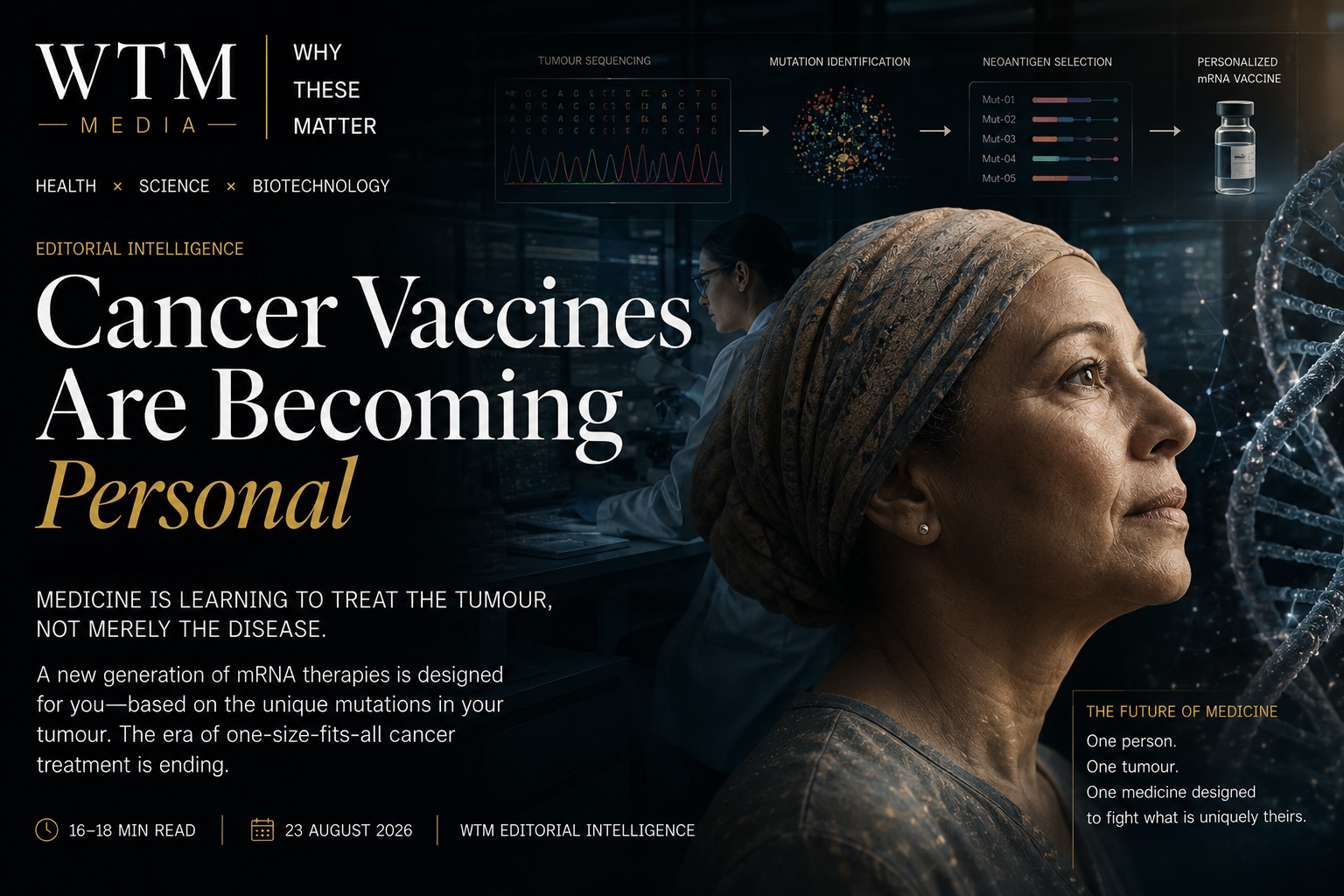
For more than a century, the word vaccine has largely meant prevention: teach the immune system to recognise a threat before disease takes hold. Cancer is forcing medicine to reconsider that architecture. A new generation of experimental therapies is attempting something considerably more individual: sequence a patient’s tumour, identify mutations particular to that cancer, manufacture instructions corresponding to selected tumour-specific targets, and teach the patient’s immune system to recognise what belongs to the cancer growing inside that particular body. On 19 August, Moderna and Merck announced that their Phase III trial of the investigational personalised mRNA therapy intismeran autogene, used with Merck’s checkpoint inhibitor Keytruda after surgery for high-risk melanoma, achieved statistically significant and clinically meaningful improvements in recurrence-free survival and distant-metastasis-free survival compared with Keytruda alone. The global trial enrolled 1,137 patients with resected stage IIB–IV melanoma. No new safety concerns were identified in the announcement. Full detailed Phase III results remain pending. The result matters because this is not simply another medicine administered to everyone carrying the same diagnosis. Intismeran is designed individually. Tumour and normal tissue are sequenced; mutations are analysed computationally; selected neoantigens — abnormal molecular features produced by the tumour — become the targets encoded into an mRNA therapy manufactured for that patient. Earlier Phase IIb evidence provides important context rather than a substitute for the unreleased Phase III detail. At five-year median follow-up, Moderna and Merck reported that intismeran plus Keytruda reduced the risk of recurrence or death by 49 per cent and distant metastasis or death by 59 per cent compared with Keytruda alone in that smaller study. The larger significance therefore extends beyond melanoma. Medicine has spent generations classifying disease so that patients with sufficiently similar conditions can receive sufficiently similar treatments. Personalised cancer vaccines suggest a different possibility: the diagnosis may identify the disease, while the tumour itself helps design the medicine. If that model succeeds across cancers, one of medicine’s great industrial achievements — standardisation — will begin coexisting with its apparent opposite: manufacturing treatment for one.
Cancer is simultaneously collective and individual. Two people may both be diagnosed with melanoma, yet the genetic mutations driving their tumours need not be identical. Even cells within one tumour can differ from one another. The diagnostic label remains indispensable, but underneath it sits biological variation that helps explain why apparently similar cancers can behave differently and why treatment response can vary from patient to patient.
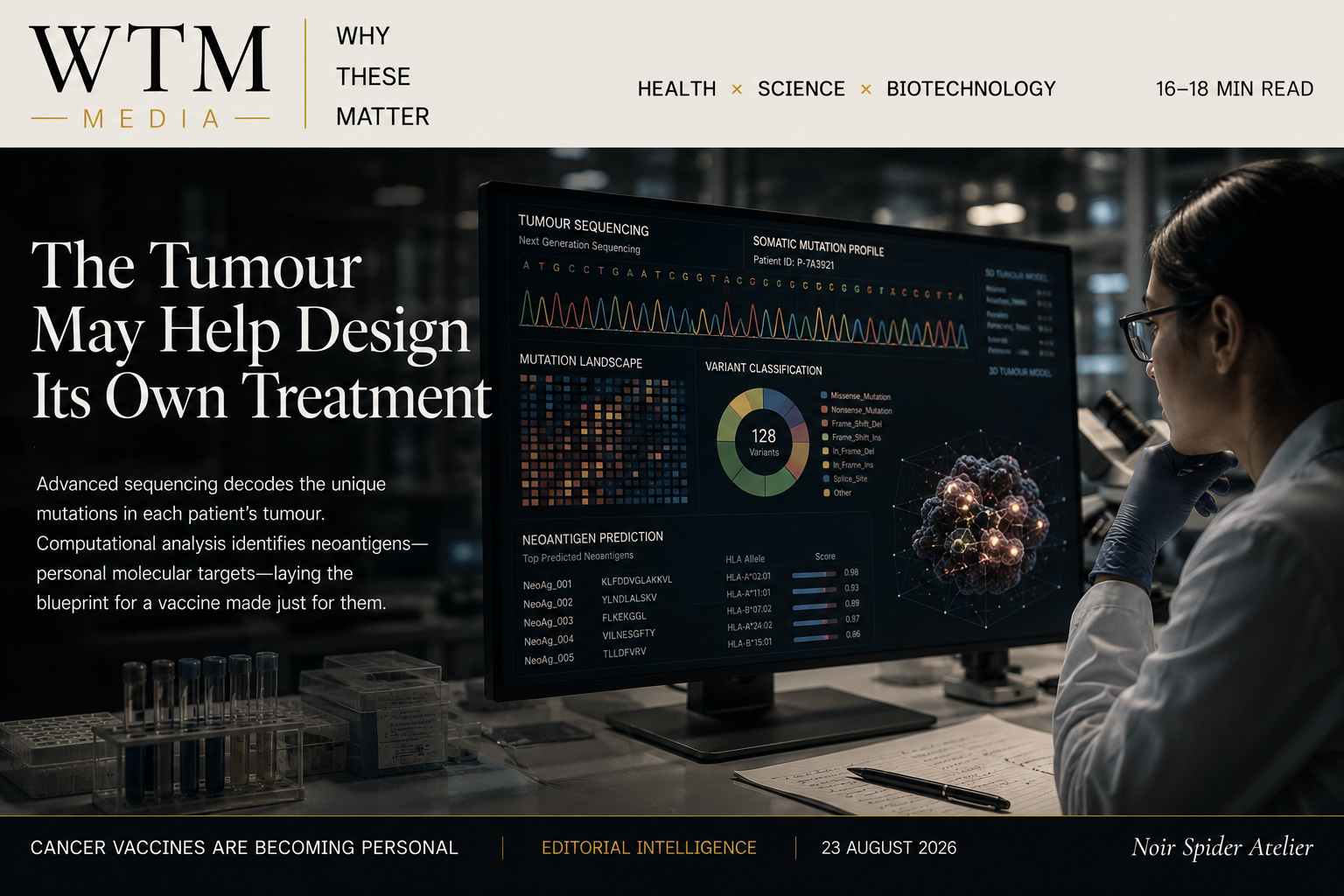
Personalised neoantigen therapy attempts to exploit that variation rather than merely tolerate it. After a patient’s tumour is surgically removed, tumour material and normal tissue can be sequenced. Computational analysis compares them, searching for mutations associated with the cancer. Some mutations produce altered proteins containing neoantigens — molecular features that may distinguish tumour cells from normal cells and potentially make them recognisable to the immune system.
Intismeran is designed to encode selected neoantigens identified from an individual patient’s tumour. The mRNA does not rewrite the patient’s genome. It provides temporary molecular instructions intended to expose the immune system to selected tumour-specific targets, helping generate an immune response against cells carrying them. In the current melanoma programme, this personalised therapy is paired with pembrolizumab, sold as Keytruda, which blocks PD-1 — one of the mechanisms cancers can exploit to suppress immune attack.
The architecture is therefore a combination of biological specificity and immune release. One component attempts to tell the immune system what to recognise. The other helps remove a molecular brake that can prevent immune cells from attacking effectively. That distinction matters because the phrase “cancer vaccine” can otherwise create the mistaken impression that this is simply a conventional preventative vaccine redirected towards cancer.
It is also why the August Phase III announcement carries unusual significance. Earlier personalised cancer-vaccine programmes have generated decades of scientific interest without becoming routine oncology. The new result does not prove that personalised mRNA therapy will work across cancers, nor does it establish long-term overall-survival benefit. But a large randomised Phase III melanoma study meeting its recurrence and metastasis endpoints moves the concept substantially closer to clinical reality than scientific promise alone. The intellectual shift is profound. For industrial medicine, variability has often been a problem to control. Here, variability becomes information.
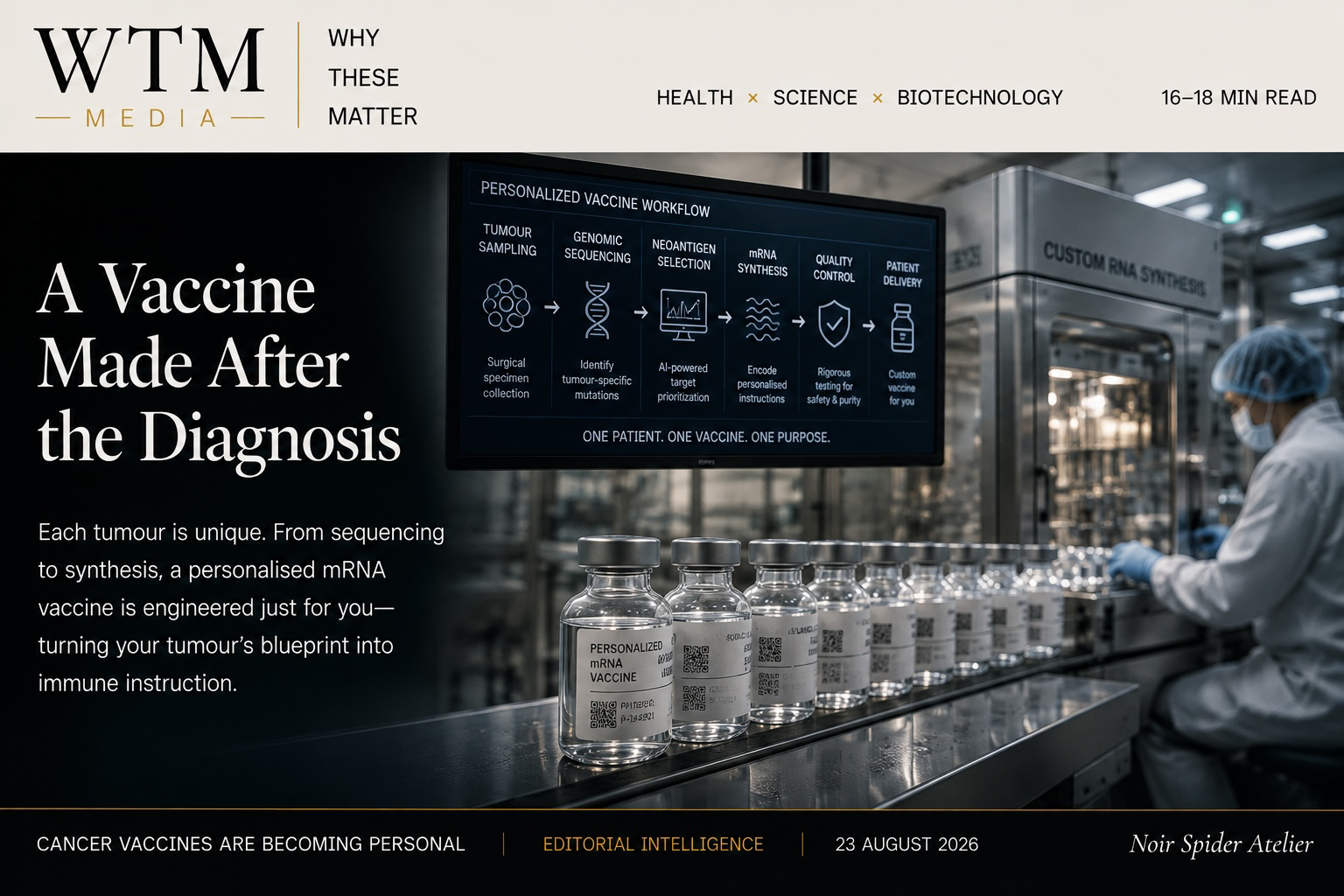
The word vaccine creates a useful paradox. Most vaccines are manufactured before the recipient ever encounters the disease they are intended to prevent. A personalised cancer vaccine reverses that sequence. The cancer must already exist. Its biological information becomes part of the manufacturing specification.
That changes the treatment pipeline. Conventional pharmaceuticals can be developed, manufactured in large batches, distributed through established supply chains and prescribed to thousands or millions of people. Individualised neoantigen therapy requires something closer to a closed-loop system: biopsy or surgery, tissue handling, sequencing, computational interpretation, target selection, bespoke manufacturing, quality control, distribution and treatment — all linked to one patient. The therapy is therefore not merely a pharmaceutical product, It is a production architecture.
That architecture explains why mRNA is especially interesting. Once the relevant tumour targets have been identified, the platform offers a programmable mechanism for encoding different antigen instructions without reinventing the entire drug-development process for every patient. The manufacturing challenge does not disappear; it changes from mass-producing one identical molecular product towards reliably producing variations on a common technological platform.
This distinction could become one of personalised medicine’s defining economic questions. Pharmaceutical manufacturing historically derives enormous efficiency from standardisation. Bespoke medicine introduces complexity precisely where industrial systems normally eliminate it. Sequencing must be accurate. Computational selection must be reliable. Manufacturing must be fast enough to remain clinically useful. Logistics must preserve product integrity. Hospitals require the capabilities to coordinate the process.
And patients do not experience any of those components separately. They experience one thing: waiting for treatment.The scientific breakthrough will therefore be incomplete if the manufacturing system cannot make individualisation routine rather than exceptional. The next frontier in personalised oncology is consequently not only biological, It is operational.
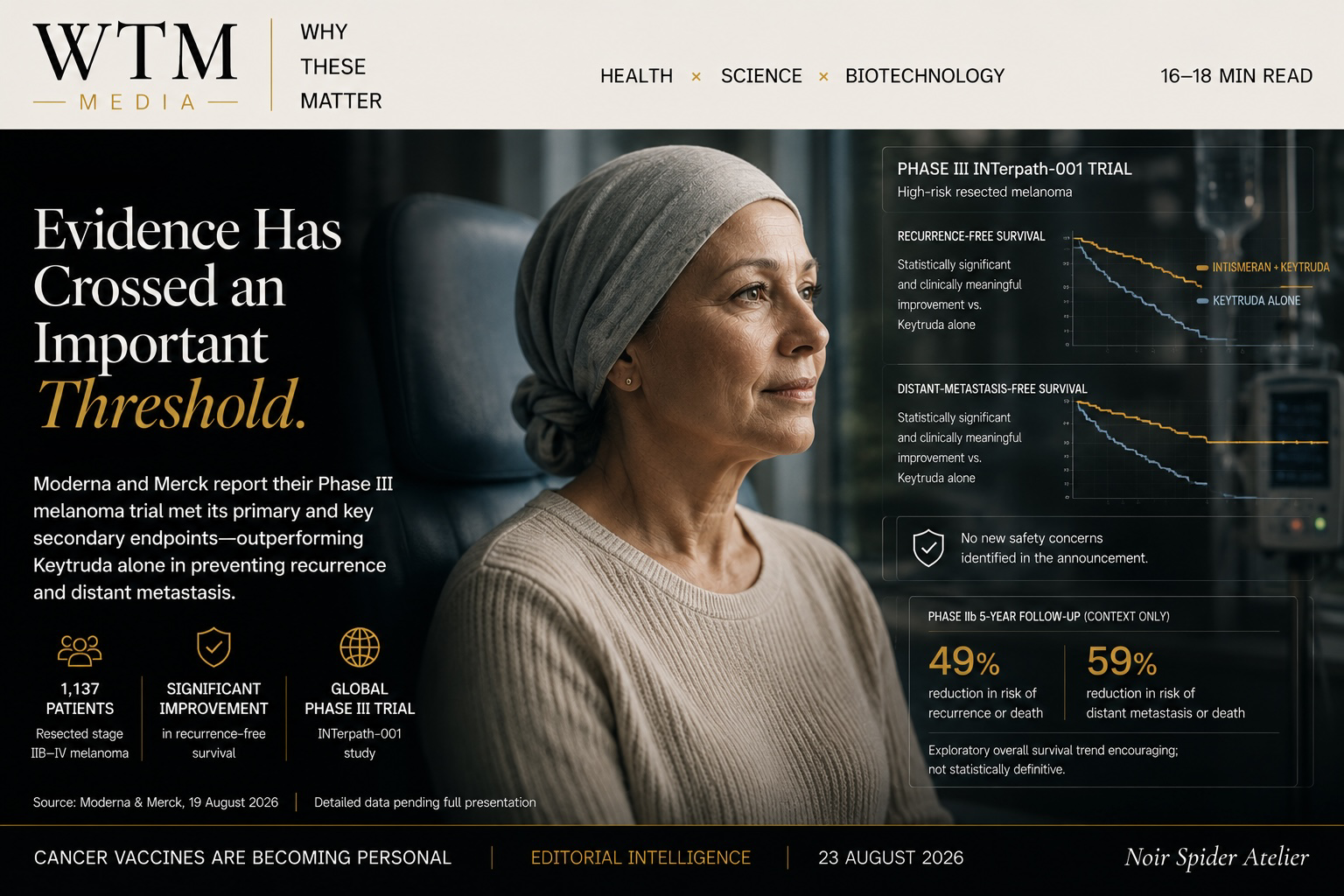
Scientific enthusiasm should be calibrated to what has actually been demonstrated. The strongest newly reported fact is straightforward: Moderna and Merck say their Phase III INTerpath-001 study enrolled 1,137 patients with completely resected high-risk stage IIB–IV melanoma and met its primary recurrence-free-survival endpoint as well as the key secondary endpoint of distant-metastasis-free survival. The combination outperformed Keytruda alone on both measures, with the companies describing the improvements as statistically significant and clinically meaningful.
What we do not yet have publicly is equally important. The companies had not released the complete numerical Phase III efficacy dataset with the initial announcement. Overall-survival evidence remains immature. Regulatory review still lies ahead. Manufacturing at commercial scale must be demonstrated. And success in melanoma cannot simply be extrapolated to lung, bladder, kidney or other cancers.
There is, however, longer-term evidence from the preceding Phase IIb study. At approximately five years of median follow-up, intismeran plus Keytruda was associated with a 49 per cent reduction in the risk of recurrence or death and a 59 per cent reduction in the risk of distant metastasis or death relative to Keytruda alone. Overall survival showed an encouraging trend, but that exploratory analysis was not statistically definitive.
The Phase III trial is considerably larger. Its importance is therefore not that it magically resolves every uncertainty, but that an individualised mRNA approach has now succeeded against major efficacy endpoints in a pivotal randomised study. Reuters reports that it is the first mRNA cancer vaccine to demonstrate statistically and clinically significant benefit when added to an existing checkpoint inhibitor in this setting.
The research programme is also testing the platform beyond melanoma. Moderna and Merck have trials underway across multiple tumour types, including non-small-cell lung cancer, bladder cancer and renal-cell carcinoma. Earlier company disclosures described eight Phase II and Phase III studies across the programme.
That makes the next scientific question considerably larger than whether one melanoma treatment works. Is personalised vaccination a treatment — or the beginning of a platform? The distinction will determine whether August 2026 becomes an important melanoma milestone or a turning point in oncology.
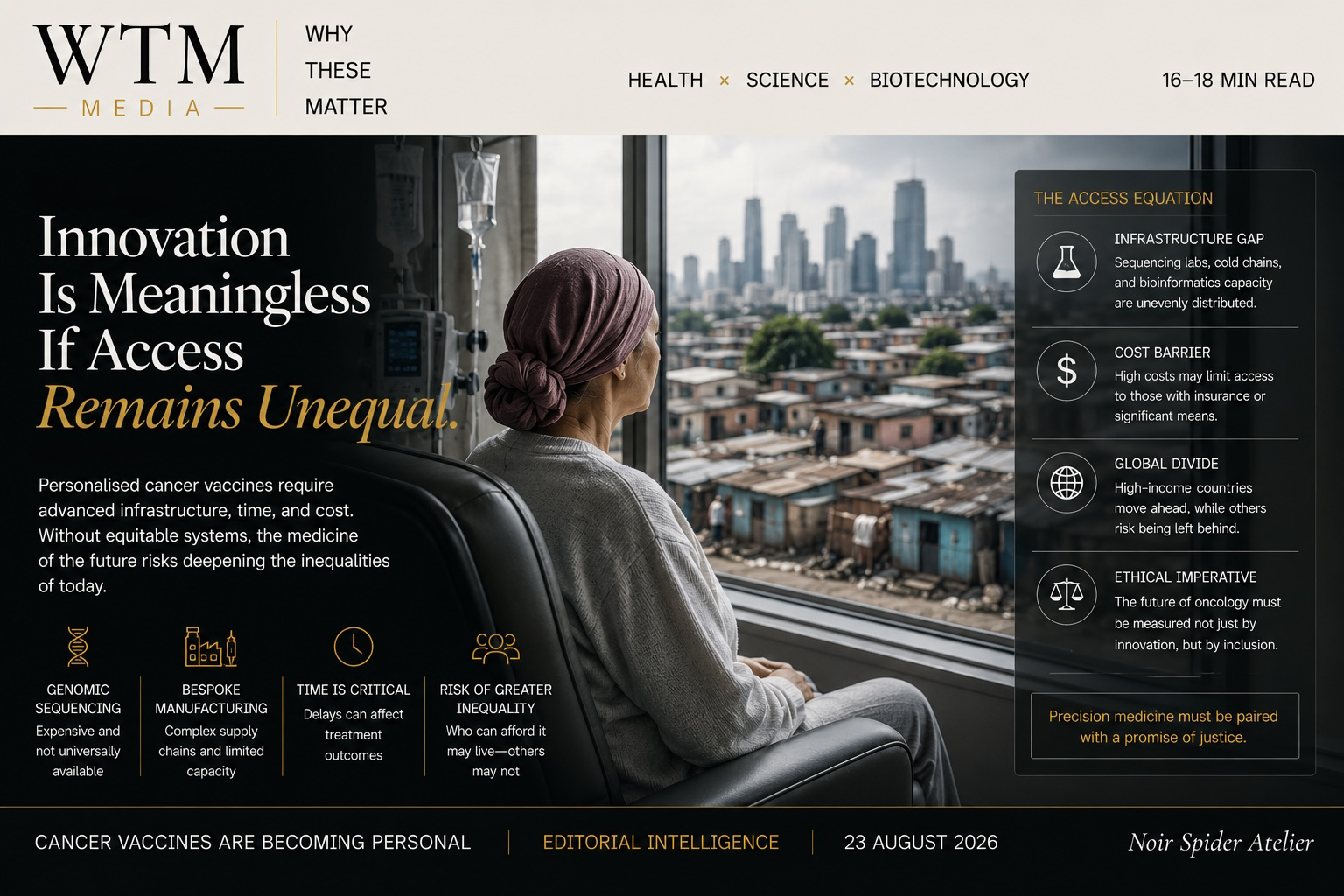
There is an uncomfortable pattern in medical innovation. Scientific possibility frequently arrives before social accessibility.
Personalised cancer vaccines intensify that problem because personalisation itself has a cost architecture. A treatment pathway may require tumour sequencing, sophisticated computational analysis, specialised manufacturing, coordinated logistics, oncology expertise and an accompanying immunotherapy. Each layer adds capability. Each layer can also become a barrier.
If such therapies ultimately receive regulatory approval, the central equity question will therefore extend beyond whether a country possesses the medicine. It will concern whether its healthcare system possesses the infrastructure required to personalise it.
That distinction matters globally. A vial can be shipped. A personalised treatment system requires laboratories, digital infrastructure, reliable specimen handling, manufacturing capacity, trained clinicians, financing and time-sensitive coordination. Advanced medicine increasingly risks becoming inseparable from advanced systems.
The economics are unresolved. Pricing for the investigational therapy has not been established. Reuters reports analyst projections ranging into multibillion-dollar annual markets if the approach succeeds commercially, but forecasts are not prices, and market enthusiasm should not be confused with patient access.
There is also a less obvious ethical issue: biological data becomes productive infrastructure. Designing an individualised therapy requires extracting information from a patient’s tumour and normal tissue. As precision medicine expands, questions surrounding genomic privacy, data stewardship, algorithmic interpretation and ownership of biological information become more consequential.
A medicine can be scientifically personalised while the system delivering it remains socially unequal.
That would produce a peculiar contradiction: oncology capable of distinguishing one patient’s tumour from another with extraordinary precision, while health systems remain unable to distinguish who can afford access from who cannot. Precision without access is incomplete progress.
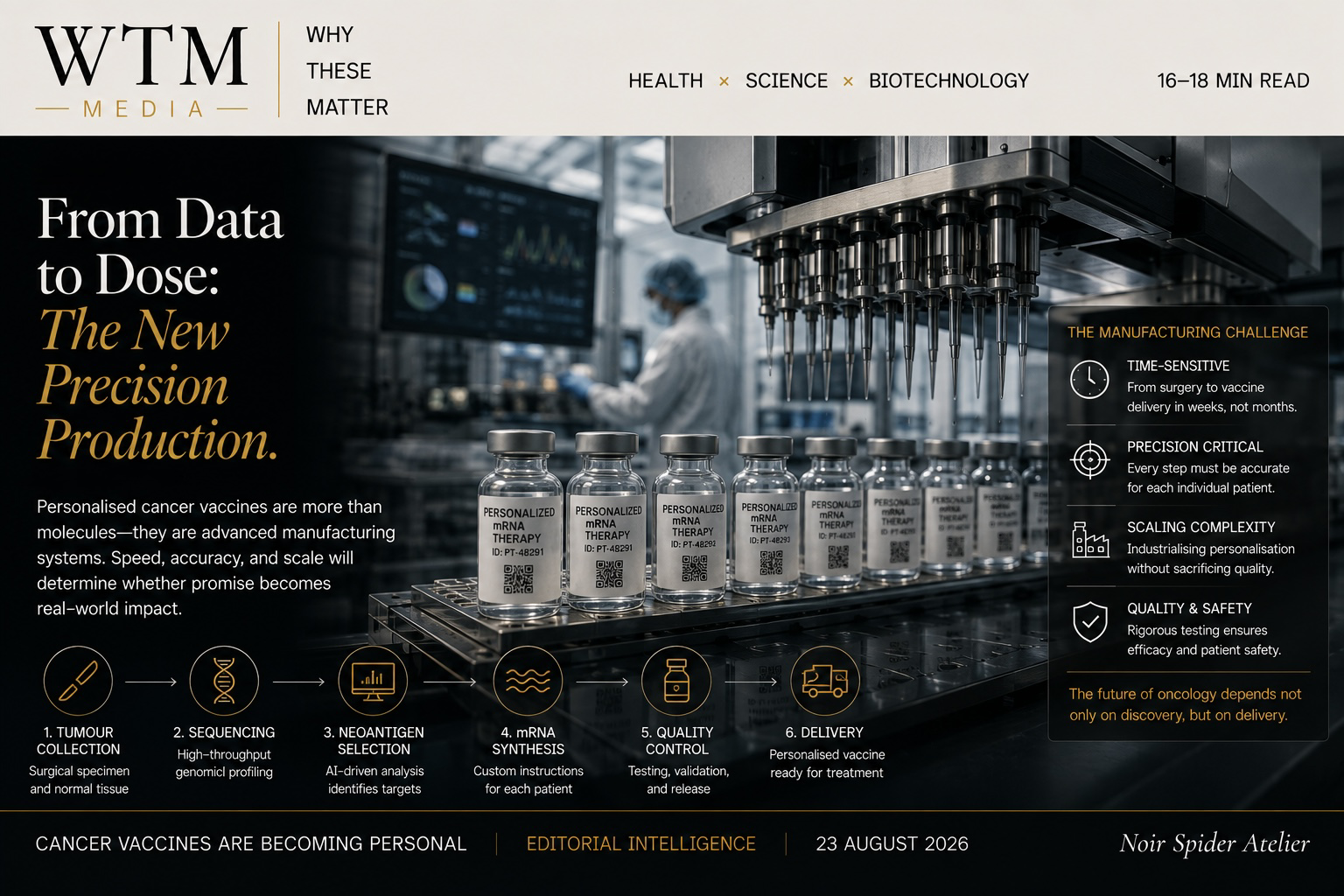
The biotechnology industry has spent decades searching for molecular targets. Personalised cancer vaccination introduces another layer: once the target has been discovered, medicine must manufacture an intervention quickly enough for the individual standing behind the biological data.
This brings biotechnology closer to advanced manufacturing than the metaphor initially suggests. There is an input: tumour material. There is measurement: sequencing. There is computational design: neoantigen selection. There is production: mRNA manufacturing. There is quality assurance. There is distribution. And finally there is deployment into a living biological system whose response cannot be guaranteed. The system resembles a digital-to-physical production loop.
That architecture may eventually extend beyond cancer vaccines. Medicine is increasingly encountering therapeutic approaches in which computation, molecular characterisation and flexible manufacturing interact: cell therapies, gene therapies, RNA medicines and other precision treatments. The pharmaceutical factory may therefore evolve from producing enormous quantities of identical medicines towards operating platforms capable of producing controlled biological variation.
For business, that could reorder competitive advantage. Intellectual property will still matter, but so will manufacturing speed, sequencing networks, computational capability, clinical integration and logistics. A company capable of discovering a therapy but unable to deliver thousands of personalised versions reliably has solved only part of the problem.
For regulators, the same architecture creates unusual demands. How do you ensure consistency when intentional variation is built into the product? Which elements of the platform remain constant and which are patient-specific? How should manufacturing changes be validated? Personalisation does not eliminate the need for standardisation.
It makes standardisation more sophisticated. That is the hidden institutional story beneath the melanoma result. The medicine is personalised. The system producing it must be extraordinarily standardised.
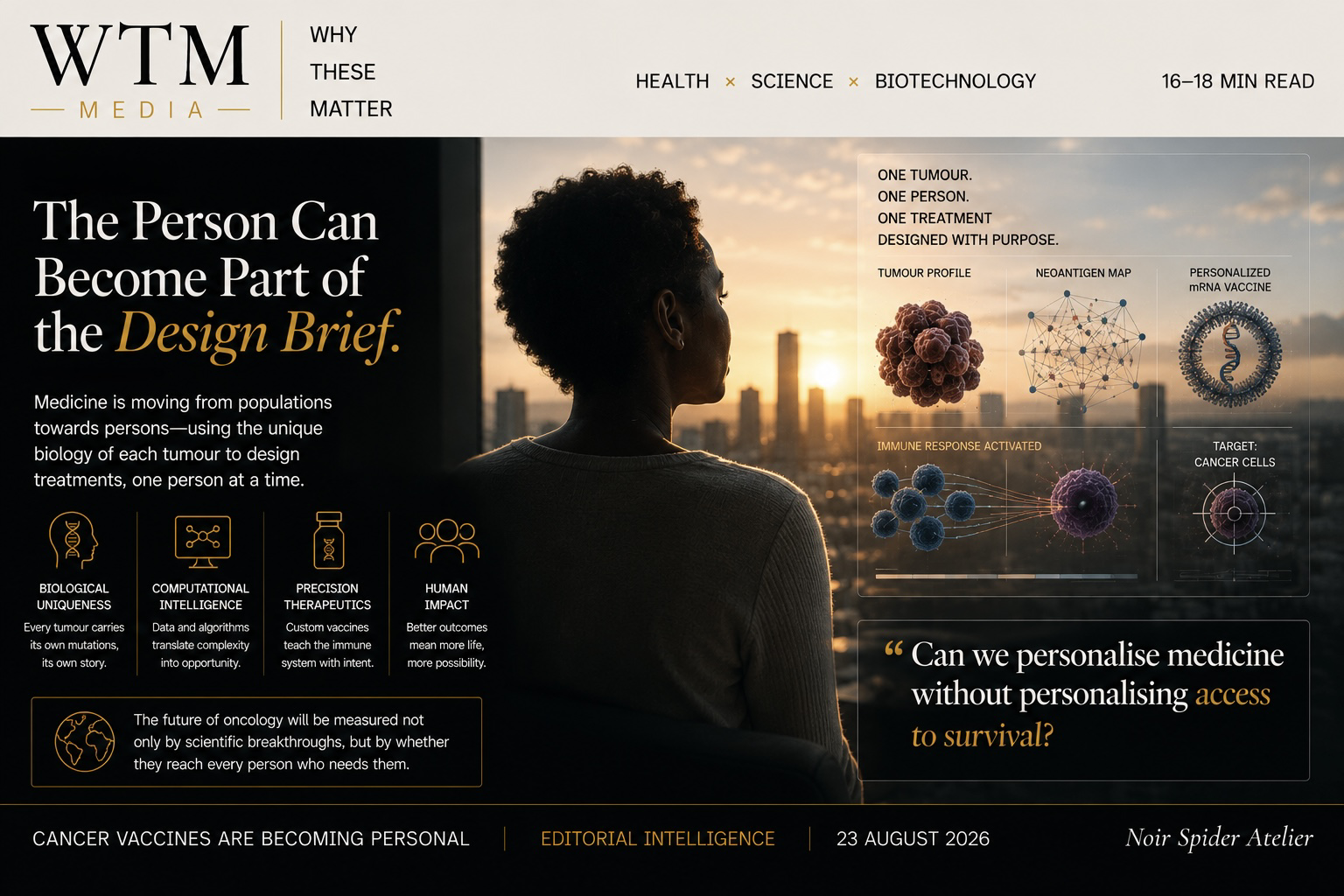
Modern medicine owes much of its success to categorisation. Diagnose the disease. Establish the stage. Identify the treatment protocol. Compare outcomes across populations. Standardisation transformed medicine from intuition into evidence. But averages have limits.
Two people carrying the same diagnostic label can possess biologically different diseases. Genomic medicine has increasingly exposed those differences, and oncology has been among the fields most transformed by them. Biomarker-directed drugs already divide cancers into increasingly specific molecular groups.
Individualised neoantigen therapy pushes the logic further. The relevant unit can become one tumour in one person at one moment in time. That does not mean mass medicine disappears. Vaccination, public health, surgery, radiotherapy, chemotherapy and broadly applicable medicines remain indispensable. Nor does it mean every cancer will eventually receive a bespoke vaccine. Biology rarely respects technological narratives that neatly. What changes is the frontier.
Medicine is gaining the capacity to treat biological difference not merely as statistical noise but as actionable information. Computational systems can interpret molecular variation. Programmable platforms can convert selected information into therapeutic instructions. Manufacturing systems can increasingly produce interventions whose specification originates partly from the patient receiving them.
The implications extend beyond cancer. For most of industrial history, personalisation meant choosing among products already manufactured. In this emerging model, the person can become part of the design brief.
That raises extraordinary possibilities and equally serious obligations. Personalised medicine must still prove clinical benefit. It must be manufacturable. It must survive regulatory scrutiny. It must protect genomic information. It must become affordable enough that biological precision does not harden economic inequality.
The melanoma result does not settle those questions, It makes them urgent. Because if individualised cancer vaccination succeeds across multiple tumour types, medicine will have crossed an important conceptual threshold. The disease will no longer be the only thing determining the treatment. The biology of the person carrying it will help determine the medicine itself. And that leaves healthcare with a question far larger than whether personalised cancer vaccines work: Can we personalise medicine without personalising access to survival?
Editorial Evidence Note: Intismeran autogene remains investigational as of 23 August 2026. The pivotal Phase III result discussed here was announced by Moderna and Merck on 19 August; complete numerical Phase III efficacy data had not yet been publicly presented at the time of writing. The 49% and 59% risk-reduction figures cited above come from the separate Phase IIb five-year follow-up and must not be attributed to Phase III.
Visual Intelligence: Noir Spider Atelier™ — A Division of WTM Media
Editorial Direction: Kelly Dowd, MBA, MA
Copyright: © 2026 WTM Media. All rights reserved.

Why These Matter - WTM MEDIA is an independent editorial platform exploring the forces shaping our world—through people, culture, commerce, design, systems, and governance. Connecting the dots between today’s headlines and tomorrow’s realities.