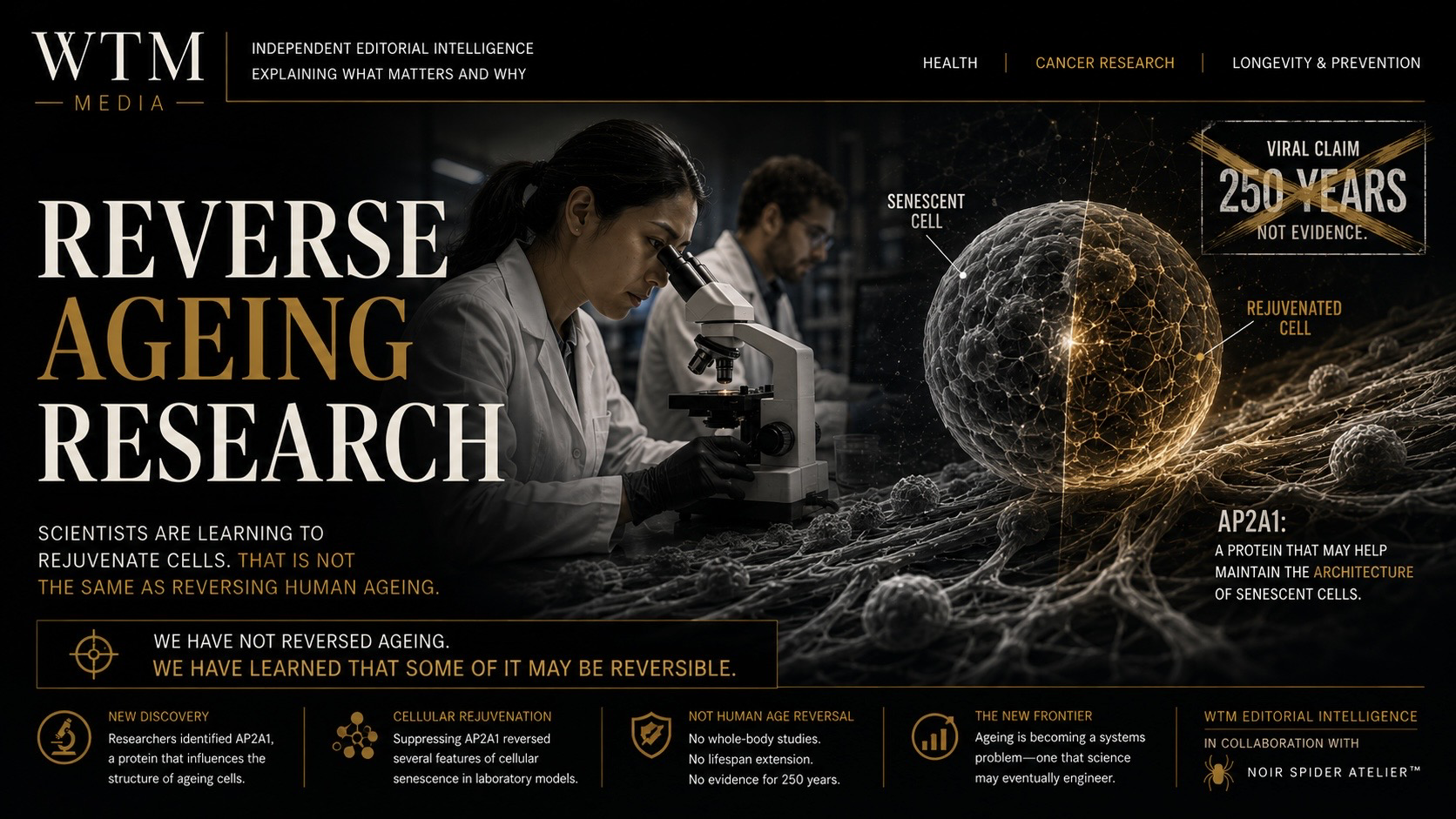
The internet has already written the spectacular version of this story: Japanese scientists have reversed ageing, discovered an anti-ageing drug, and opened the possibility that humans could live for 250 years. The actual science is both narrower and more interesting. Researchers at the University of Osaka identified a protein called AP2A1 that appears to help maintain some of the enlarged structural characteristics of senescent cells. When researchers suppressed AP2A1 expression in ageing human fibroblasts, several characteristics associated with cellular senescence were reversed: cells became smaller, recognised senescence markers decreased, and proliferative and migratory activity increased. When AP2A1 was overexpressed in younger cells, senescence-associated characteristics advanced. The peer-reviewed study was published in Cellular Signalling in January 2025. That is a legitimate scientific finding. It is not evidence that human ageing has been reversed, nor that humans could live for 250 years. The study was conducted principally in cultured human fibroblast and epithelial cell models. It did not demonstrate age reversal in a human being, establish lifespan extension, or test a treatment capable of producing radical human longevity. Yet dismissing the research because social media exaggerated it would make the opposite mistake. The consequential finding is that cellular senescence may be more mechanically configurable than previously understood. Ageing cells do not simply accumulate molecular damage; their physical architecture may actively help maintain the senescent state. That changes the question. Perhaps ageing is not merely something cells endure. At least some characteristics of cellular ageing may be states that biological systems actively maintain — and therefore states that science may eventually learn to modify.
Ageing is usually imagined chronologically. Time passes, damage accumulates, biological systems deteriorate, and eventually function declines. At the cellular level, however, ageing is not merely a clock. Cells undergo structural, molecular, metabolic, and functional changes, some of which become remarkably persistent.
One important phenomenon is cellular senescence. Senescent cells have permanently or persistently withdrawn from normal proliferation while remaining metabolically active. Their accumulation across tissues is associated with ageing and numerous age-related diseases. They also tend to become substantially larger than younger cells.
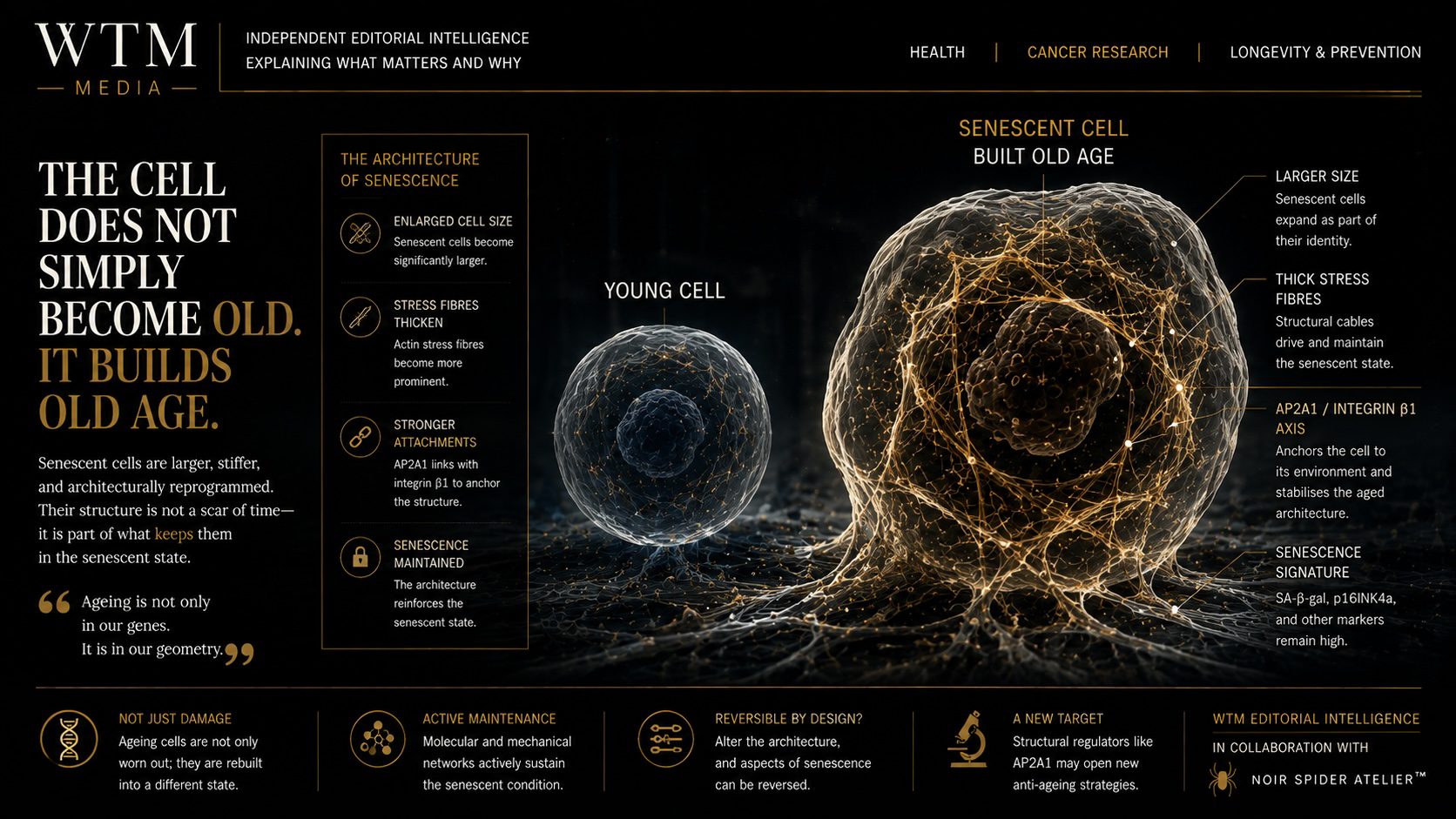
That enlargement interested the Osaka researchers. Senescent cells develop thicker actin stress fibres — structural assemblies within the cellular cytoskeleton. Rather than treating this enlarged architecture as merely cosmetic evidence of ageing, the researchers asked whether the physical structure itself might help sustain the senescent state.
Their investigation focused on AP2A1 — adaptor protein complex 2, alpha 1 subunit. They found AP2A1 was upregulated along enlarged stress fibres in senescent cells. AP2A1 was also associated with integrin β1, which contributes to attachment between cells and the surrounding extracellular matrix. Together, these interactions appear to help reinforce the enlarged architecture characteristic of senescence.
Then came the consequential experiment. Researchers suppressed AP2A1 expression in older fibroblasts. Several senescence-associated phenotypes reversed, including changes in cell size and recognised ageing markers, while proliferative and migratory capabilities increased. Conversely, increasing AP2A1 expression in young cells promoted senescence-associated characteristics.
That suggests something conceptually powerful. The ageing cell is not simply a deteriorating machine carrying accumulated history. Its current physical architecture participates in maintaining its condition. Alter the architecture, and aspects of cellular behaviour can change. Age, at least at the cellular level, may partly be an engineered state.
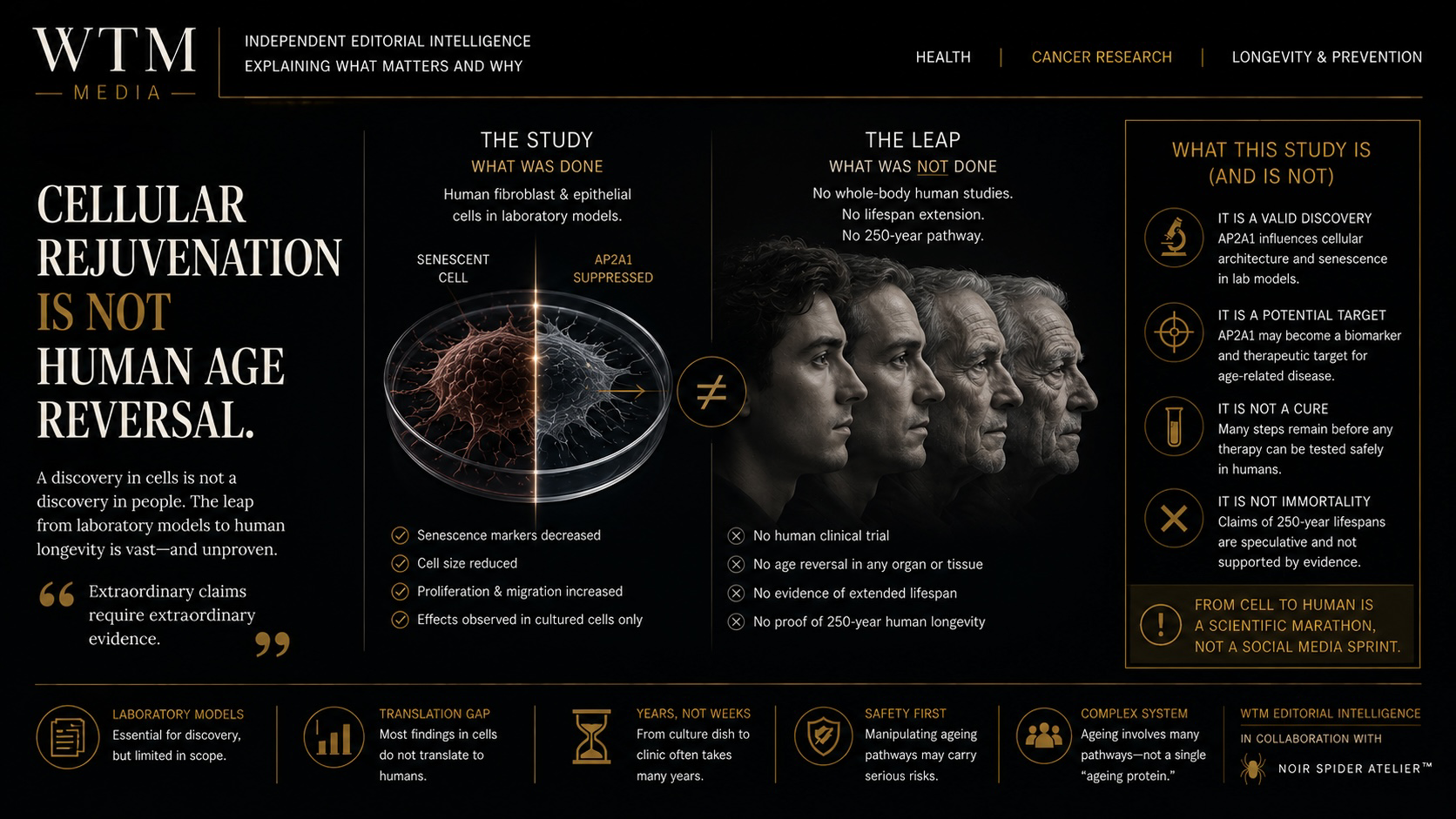
This is where scientific precision becomes essential. The Osaka researchers used human fibroblast and epithelial cell models. Their experiments included replicative senescence and senescence induced through ultraviolet exposure and drug treatment. Across these models, increased AP2A1 expression was associated with senescence, while suppressing it in fibroblasts produced characteristics described by the researchers as cellular rejuvenation.
“Rejuvenation”, however, carries radically different meanings depending upon scale. A cell exhibiting younger molecular and structural characteristics is not equivalent to an organ becoming biologically young. An organ behaving younger is not equivalent to an entire organism reversing ageing. And reversing some biological markers of ageing is not equivalent to extending maximum human lifespan.
These distinctions disappear quickly on social media because uncertainty competes poorly with immortality.
The viral claim that Japanese researchers have discovered a pathway towards 250-year human lifespans is not supported by the Osaka study. The peer-reviewed paper makes no demonstration that humans can live for 250 years. It does not report a human longevity trial, whole-organism age reversal, or clinical treatment producing extraordinary lifespan extension. The university itself describes the work far more carefully: AP2A1 may become a biomarker of cellular senescence and potentially a therapeutic target for age-related disease or future anti-ageing technologies.
Nor should AP2A1 be interpreted as “the ageing protein”. Ageing is a profoundly distributed biological phenomenon involving genomic instability, epigenetic change, mitochondrial dysfunction, altered nutrient sensing, cellular senescence, inflammation, stem-cell exhaustion, proteostasis, intercellular communication, and other interacting mechanisms. One pathway may influence part of that system without controlling the system itself.
The correct headline is therefore less cinematic but considerably more consequential:
Scientists have demonstrated that manipulating a structural regulator can reverse several senescence-associated characteristics in cultured human cells. That is not immortality, It is evidence that some components of cellular ageing may be modifiable.
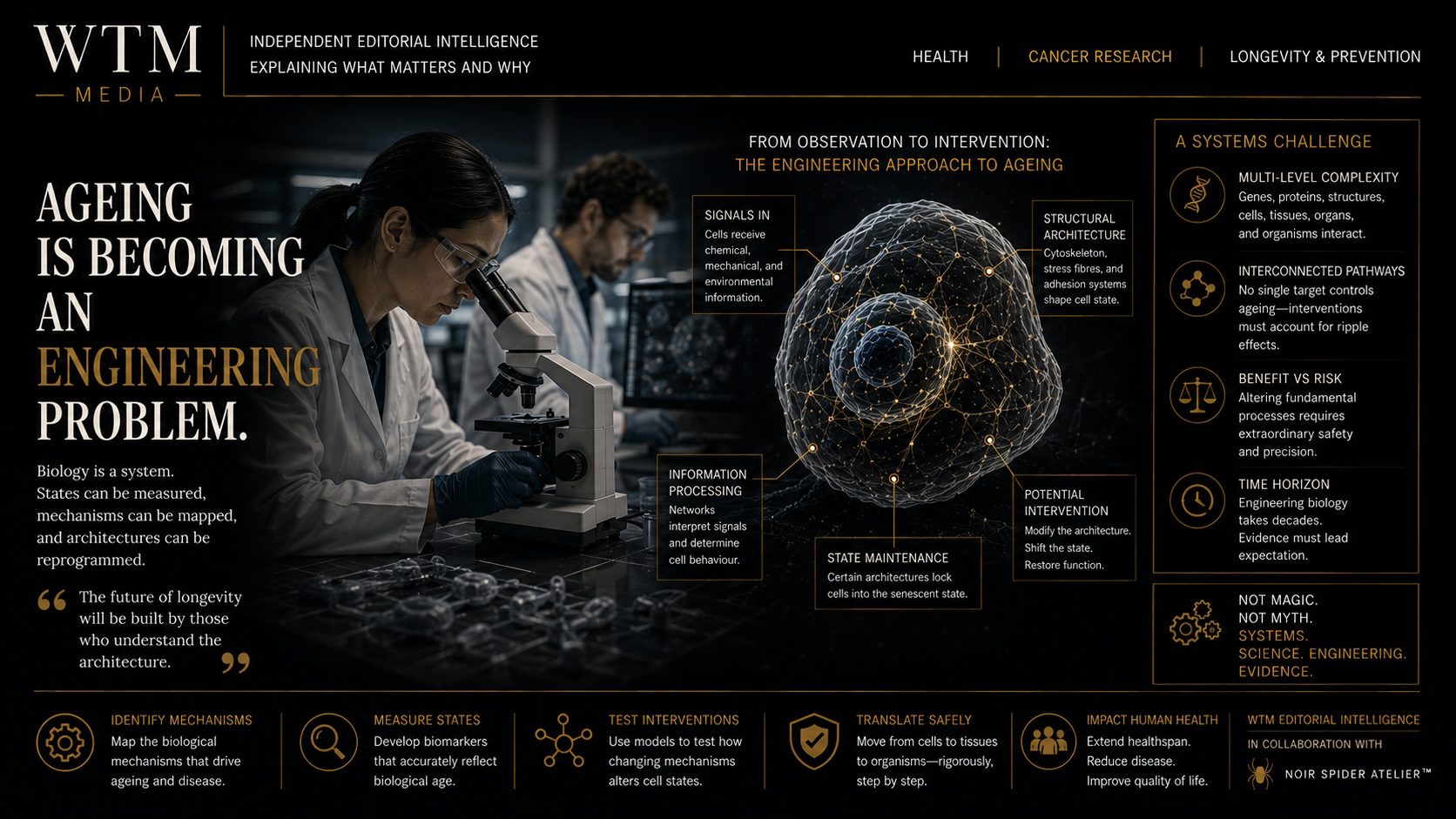
For most of human history, ageing belonged primarily to philosophy, religion, and fate. Modern medicine changed the arithmetic without fundamentally changing the process. Vaccines prevented premature deaths. Antibiotics defeated infections. Surgery repaired damaged bodies. Cardiovascular medicine extended survival. Public sanitation transformed population health.
Longevity science is beginning to ask a different question: rather than treating individual diseases sequentially as the body ages, can researchers intervene in biological mechanisms that make numerous age-related diseases more likely simultaneously?
Cellular senescence is one such target. Senescent cells can influence surrounding tissue through inflammatory signalling and other biological effects. Researchers are therefore investigating senolytics, which seek selectively to remove certain senescent cells, and senomorphic strategies, which seek to modify their harmful behaviour without necessarily destroying them.
The AP2A1 research introduces another possibility: structural rejuvenation. Instead of simply eliminating senescent cells, perhaps researchers could alter mechanisms helping to maintain the senescent state. The University of Osaka researchers explicitly suggest AP2A1 may have potential as both a biomarker and future therapeutic target, although substantial research remains before clinical application.
This represents an important conceptual evolution. Biology increasingly looks less like a collection of isolated organs and more like a dynamic information-and-material system. Cells receive signals, interpret mechanical environments, remodel structures, communicate with neighbouring cells, respond to stress, and change states. Medicine is consequently moving from repairing biological components towards learning how to influence biological states.
That shift makes ageing increasingly resemble an engineering problem — although not one with a single control panel. Researchers must determine which mechanisms cause ageing, which merely accompany it, which interventions restore function, which introduce new risks, and whether benefits observed in cells translate into tissues, organisms, and eventually humans.
The future of longevity will therefore not be won by whoever produces the most dramatic lifespan prediction. It will be built by whoever understands the architecture.
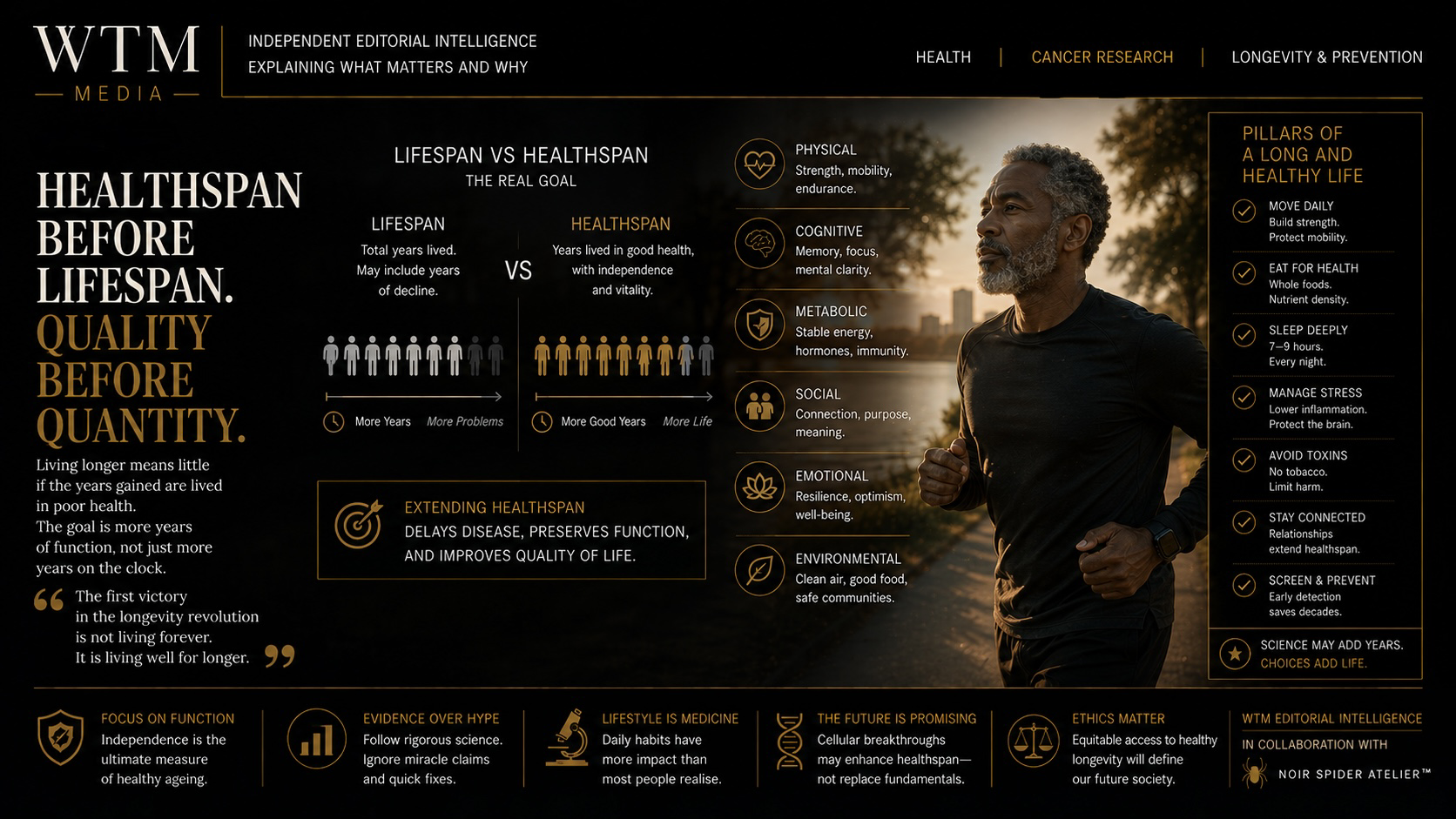
The practical implication of longevity science is not that readers should begin planning their 175th birthdays. The first meaningful objective is considerably less theatrical: increasing the number of years people remain cognitively capable, physically independent, metabolically healthy, socially connected, and free from debilitating disease.
That distinction is lifespan versus healthspan. Lifespan measures survival. Healthspan concerns the portion of life spent in comparatively good health. Extending lifespan substantially without extending healthspan could simply produce longer periods of frailty, chronic disease, dependence, and medical intervention. The more consequential ambition is therefore not merely adding years to life, but preserving function across those years.
Second, become suspicious whenever laboratory research is translated immediately into a consumer intervention. A protein becoming a potential therapeutic target does not mean supplements, diets, injections, or commercially branded “longevity protocols” can safely manipulate the same mechanism. The distance between cellular discovery and clinically validated medicine is often measured in years — sometimes decades.
Third, distinguish biological-age measurements from biological-age control. Biomarkers may reveal correlations with ageing, but measuring something does not automatically mean medicine knows how to modify it safely. A dashboard can describe an aircraft without teaching you how to redesign its engine.
Fourth, recognise that the strongest longevity interventions available today remain almost embarrassingly ordinary compared with the futuristic marketing surrounding the industry: avoiding tobacco, maintaining physical activity, managing cardiovascular and metabolic risk, receiving appropriate preventive care, sleeping adequately, maintaining nutritious dietary patterns, and sustaining meaningful social relationships. Molecular breakthroughs may eventually augment those fundamentals; they have not abolished them.
Fifth, follow the field without surrendering scepticism. AP2A1, cellular reprogramming, senolytics, regenerative medicine, epigenetic interventions, immune rejuvenation, and related research deserve serious attention precisely because ageing is one of medicine’s most consequential frontiers. But serious attention requires refusing the mythology surrounding it.
The useful question is therefore not, “When will I live to 250?”
It is, “Which mechanisms of biological ageing are becoming controllable, and what evidence demonstrates that control safely improves human health?”
That question will age rather well.
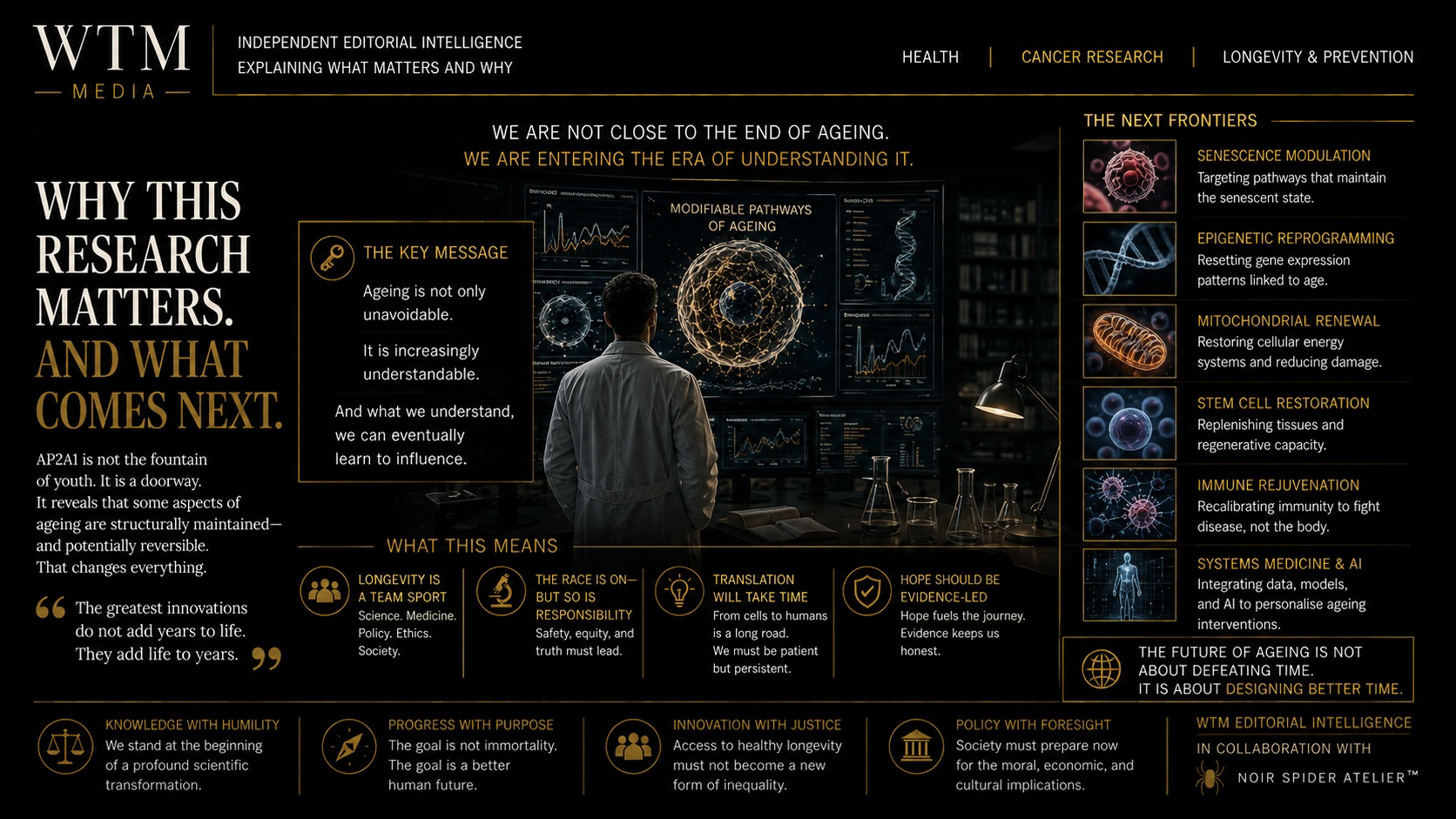
Human civilisation has spent centuries treating ageing as an irreversible background condition. Medicine intervenes against its consequences — cancer, cardiovascular disease, neurodegeneration, metabolic dysfunction, frailty — but ageing itself has historically remained outside the therapeutic frame.
That boundary is becoming less absolute.
The Osaka research matters because it adds evidence to an emerging proposition: at least some biological characteristics associated with ageing are not simply passive records of elapsed time. They are maintained through active molecular, structural, and mechanical processes. If those processes can be identified, they may eventually become targets for intervention.
The implications could extend far beyond cosmetics or lifespan. An intervention capable of delaying cellular senescence safely might eventually influence multiple diseases whose prevalence rises sharply with age. That remains a research proposition rather than an established therapy, but it explains why governments, universities, pharmaceutical companies, biotechnology firms, and investors increasingly treat longevity as a serious scientific and economic domain.
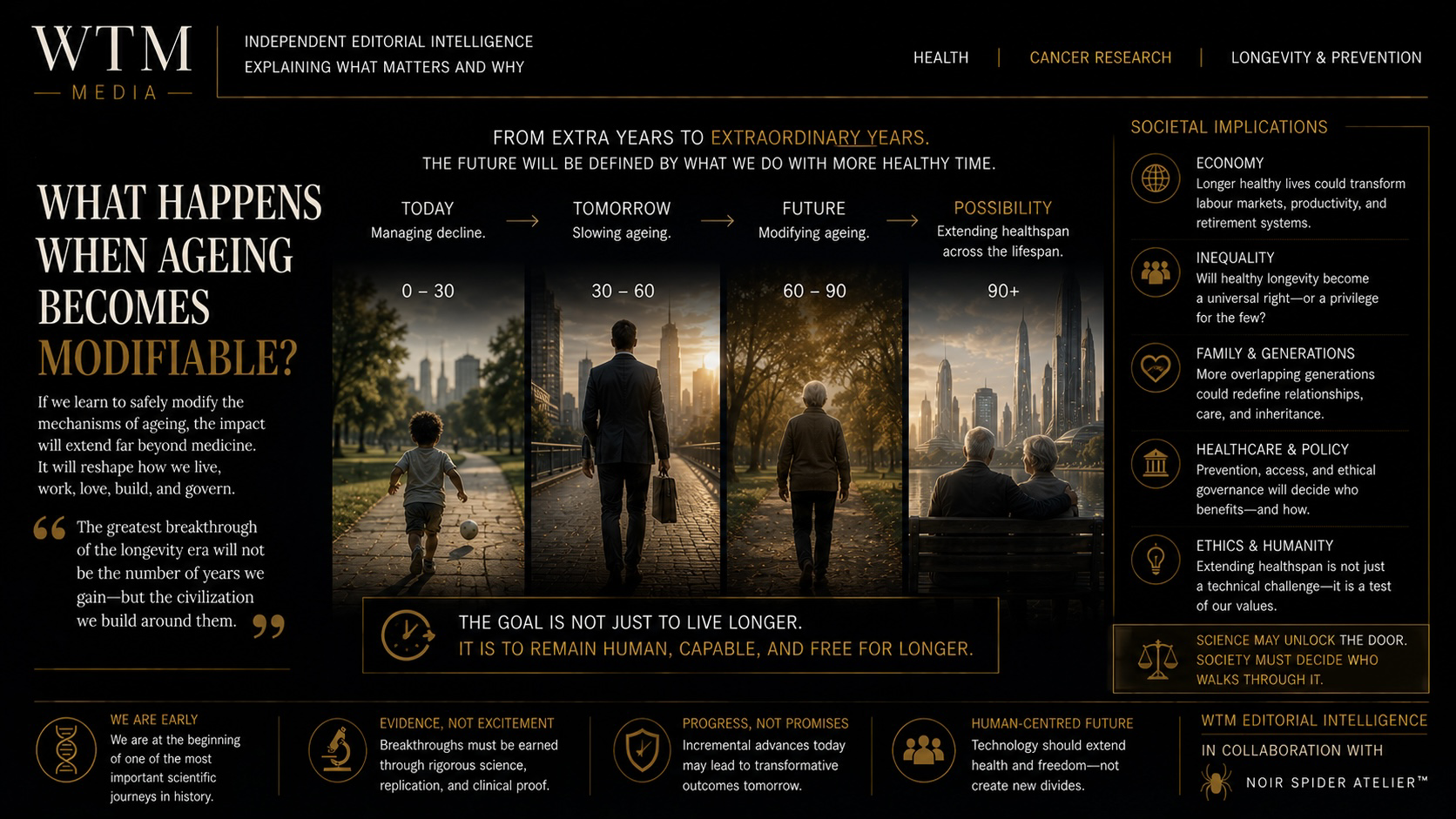
There will also be uncomfortable societal questions. If meaningful rejuvenation technologies eventually emerge, who receives them? Will they be preventive medicine, luxury medicine, or public infrastructure? Would retirement systems remain viable? Would working lives expand? Would generational wealth concentrate further? Would access to healthy longevity become another mechanism through which economic inequality becomes biological inequality?
This is where longevity ceases to be merely a medical story. Extending healthy human function would affect labour markets, housing, pensions, insurance, family structures, education, inheritance, population growth, healthcare spending, and the relationship between generations. A genuine intervention in biological ageing would not simply change medicine. It would change the operating assumptions of civilisation. But civilisation is not there yet.
Scientists have not demonstrated that humans can live for 250 years. They have not reversed whole-body human ageing. What researchers in Osaka have demonstrated is smaller, more defensible, and perhaps ultimately more useful: alter one mechanism helping senescent cells maintain their state, and some characteristics associated with cellular ageing can move in the opposite direction.
The breakthrough is not that humanity has defeated ageing.
It is that ageing is increasingly becoming something science can interrogate as a system — and some parts of that system appear capable of being changed.
For primary-source navigation: University of Osaka research announcement and peer-reviewed study indexed by PubMed.
Visual Intelligence: Noir Spider Atelier™ — A Division of WTM Media
Editorial Direction: Kelly Dowd, MBA, MA
Copyright: © 2026 WTM Media. All rights reserved.

Why These Matter - WTM MEDIA is an independent editorial platform exploring the forces shaping our world—through people, culture, commerce, design, systems, and governance. Connecting the dots between today’s headlines and tomorrow’s realities.