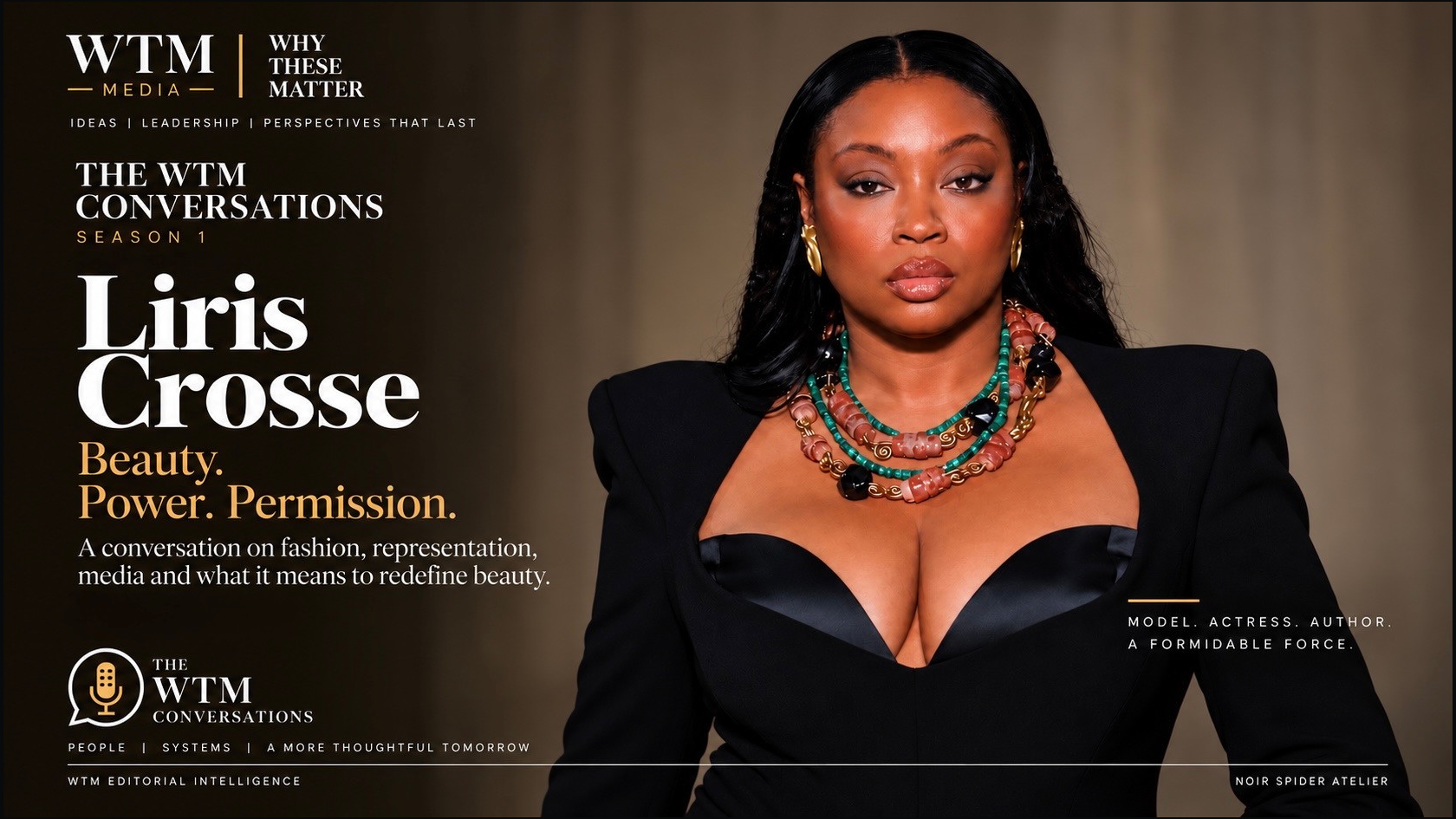

Rihanna's role in Fenty Beauty offers a starting point for understanding ownership, but celebrity shorthand hides the work and contractual detail behind a business. A useful lesson separates customer value, economic rights, control and the ability to turn a stake into cash.
The useful business lesson is not a celebrity wealth ranking. It is how attention, an underserved customer and a stake in a business can interact, and why the terms of ownership matter as much as the headline.

Rihanna's business story becomes more useful when the starting point moves from a wealth headline to a customer at a beauty counter. Can that person find a product that works for their skin tone? Do they feel expected and understood? These questions connect representation to a practical product decision rather than treating inclusion solely as an image in an advertising campaign.
LVMH's own account identifies Rihanna as Fenty Beauty's founder and records 40 foundation shades at launch. It describes a focus on skin tones that had been difficult to match. These are specific elements of the brand's proposition. The company page is a primary source for that account, not independent proof that every customer or market was equally well served. LVMH brand profile.
A wider range can matter because it changes who can use a product. Yet the commercial question extends beyond range on a launch slide. Customers need the appropriate products to be available, understandable and affordable enough for their circumstances. Representation is more meaningful when the promise survives the ordinary experience of finding, buying and using the item.
This offers a practical question for a smaller business: who is repeatedly adapting themselves to a product that was not designed with them in mind? The answer may concern sizing, language, accessibility, opening hours or a service process. Listening carefully can reveal a useful improvement, but the unmet need still has to be tested rather than declared from a distance.
A celebrity's reach can draw attention to that improvement. It does not make the improvement unnecessary. Separate awareness from the reasons someone buys again: usefulness, quality, availability and experience. This is an analytical distinction, not a claim about which factor caused any particular Fenty sale. The evidence needed to establish that would go beyond a brand profile.
For an aspiring founder, the first action is therefore modest. Speak to prospective customers about a concrete difficulty and observe the workarounds they use. Develop the smallest credible way to test whether solving it matters. A recognisable face may attract an audience; a useful proposition gives that audience something more durable to evaluate.

A fee pays for an agreed contribution. An ownership stake gives a person an interest in a business under the terms attached to that stake. Those terms may affect distributions, proceeds from a sale and participation in decisions. Saying that someone owns part of a company is the beginning of understanding their position, not a complete description of it.
Historical reporting illustrates why dates and attribution matter. On 21 October 2025, Reuters reported, citing unnamed sources, that LVMH was exploring a sale of its 50 per cent Fenty Beauty stake and that Rihanna held the other half. An explored sale was not a completed transaction. That report does not establish today's ownership terms or a current sale price. Reuters report.
In any business, a percentage can conceal important differences. Voting rights, board representation, vetoes, share classes and agreements between owners may affect control. Economic participation and operational authority need to be examined separately. These are general features to investigate; the public sources cited here do not reveal Rihanna's private agreements or establish who can decide every question inside Fenty Beauty.
The same distinction applies to a small creative enterprise. A designer might own a minority stake, license a design or receive a revenue share without owning the company. Each arrangement answers a different question about future payments and control. Loose language about being a partner can create expectations that the actual contract does not support.
Before accepting an ownership-based offer, identify what you receive, when you receive it and what conditions apply. Ask about dilution, restrictions on selling, decision rights and what happens if the relationship ends. Qualified legal and financial advice is appropriate when the commitment matters. Enthusiasm for the project does not remove the need to understand the agreement.
Ownership can create the opportunity to share in value that develops after the original work. It can also expose the holder to loss, uncertainty and a long wait for any payment. A fair discussion holds both possibilities together. The lesson is to understand and negotiate the rights attached to a contribution, rather than assume that any share certificate is automatically better than cash.

A valuation asks what a business or stake may be worth under particular assumptions. Cash is money available to use. Profit is the amount remaining after the relevant costs over a period. These concepts interact, but they are not interchangeable. A company can receive an impressive valuation while its owners have limited immediately available cash from that investment.
Private-company values can depend on an investment round, an offer, comparable businesses or an analyst's assumptions. The circumstances matter. A buyer's price for one class of shares may not describe the rights or value of every other stake. A published estimate is therefore best read with its date, method and limits attached, rather than as a precise balance confirmed by the owner.
Consider a fictional founder who owns 20 per cent of a business described as worth $5 million in equity. Simple multiplication gives a headline stake value of $1 million. That arithmetic does not establish that the founder can withdraw or sell for $1 million. Restrictions, differing share rights, transaction costs and taxes can affect what is ultimately received.
It also matters whether a quoted figure refers to the value of the whole operating business or the value attributable to its owners. Debt and other claims can change the relationship between those figures. A reader need not become a valuation specialist to ask the essential question: what exactly is being valued, and under what conditions could this person realise it?
The US Securities and Exchange Commission warns that private placements can be highly illiquid, involve limited disclosure and carry substantial risk. That guidance concerns private securities generally, not the merits of Fenty Beauty or an invitation to invest in it. It explains why an ownership story should not be translated into an assumption of easy access or guaranteed returns. SEC investor bulletin.
Celebrity net-worth rankings add another layer of estimation because they try to combine assets, interests and liabilities that may not be fully public. This article does not attempt a current calculation for Rihanna. The business insight survives without one: an interest in an enterprise can become valuable, while its reported value remains different from cash, certainty and control.

A consumer sees the finished product and the name on it. Behind that encounter are decisions about formulation, manufacturing, testing, packaging, stock, distribution and service. A founder's contribution can be important without making those systems disappear. Understanding the machinery helps explain why a promising idea and an audience still require an organisation capable of delivery.
Partners can contribute capabilities that would be expensive or slow to build alone. They may bring production knowledge, access to retailers, working capital or experienced staff. In exchange, they can receive economic rights or influence over decisions. A partnership should therefore be assessed as an exchange of specific capabilities and obligations rather than a simple endorsement of one person's vision.
The question for a smaller founder is where collaboration improves the product and where it creates dependency. If one distributor reaches all your customers, what happens when its terms change? If a partner controls production, how are quality problems resolved? These are planning questions that apply across businesses. They are not allegations about the arrangements behind any named brand.
Separate the different businesses associated with a public figure. A shared name does not establish a single legal entity, identical ownership or the same financial position. Fenty Beauty should not be treated as interchangeable with every other venture bearing the Fenty name. Any claim about another company's investors, performance or current leadership requires its own evidence.
The work of employees and suppliers also belongs in the picture. A business's value depends partly on their ability to sustain the promised experience. An ownership story becomes incomplete when it describes only the person at the centre of the campaign. Ask how quality, conditions and accountability operate across the chain, while avoiding unsupported conclusions about a company you have not investigated.
For a new venture, draw the delivery process from the customer's first enquiry to support after purchase. Mark who controls each step and where failure would be costly. This map can reveal the partnership you need and the agreement that deserves most attention. It turns admiration for a visible founder into a practical examination of how an enterprise works.

Most readers cannot begin with a global audience, established fame or access to a large corporate partner. Those differences are central, not inconvenient details to omit from an inspirational story. A useful lesson should scale down to the reader's resources. It should not imply that ordinary financial insecurity can be solved by behaving like a celebrity founder.
For a freelancer, the question may be whether an agreement gives away more rights than the fee justifies. For a small business, it may concern the customer relationship, the brand or the product design. For an employee offered equity, it may be how the award works alongside salary and other needs. Each case requires different information and may require professional advice.
Begin by listing the assets and rights relevant to your own work. What do you create, what do you own, what can you license and what have you already agreed to transfer? Do not assume ownership merely because you produced something; employment terms, contracts and local law can matter. Review actual documents before building a business plan around a right you may not hold.
Next, examine the economics without celebrity scale. Who pays, for what, how often and at what cost to deliver? Include the time needed for service, administration and correction. Revenue that looks attractive before those costs may leave little surplus. An ownership interest becomes more meaningful when the underlying business can serve customers sustainably, rather than only attract attention.
Consider concentration as well as upside. If your income, savings and future prospects all depend on one venture, a setback can affect several parts of your life together. The appropriate balance depends on personal circumstances, commitments and tolerance for loss. Ownership is a financial exposure as well as an expression of identity, and it should be assessed accordingly.
Choose one practical next step: clarify a contract, test an unmet customer need or map the rights attached to an offer. Avoid buying an expensive course or investment simply because a celebrity story makes the word ownership sound irresistible. The transferable lesson is patient understanding of value and rights, not a promise that a particular structure will make you wealthy.

Celebrity business stories can teach useful economics when they remain specific. They can also turn complicated arrangements into a reassuring myth: build a personal brand, own something and become extraordinarily rich. That shorthand obscures starting advantages, collaborators, contractual terms and uncertainty. Readers deserve an account that leaves room for both achievement and the conditions that help make it possible.
Rihanna's association with Fenty Beauty directs attention to a meaningful product question: whose needs are recognised at the design stage? The documented launch range provides a concrete starting point. Its broader lesson is to examine whether inclusion changes what customers can actually obtain, while continuing to test the claim against availability, experience and cost.
Ownership adds a second question: who participates in the value created? That question matters to founders, employees and creative workers far beyond beauty. It invites attention to rights that can otherwise remain invisible. A person may contribute a great deal while retaining little control or future participation, but the correct remedy depends on the actual relationship and agreement.
At the same time, ownership should not become a moral ranking of people. Salaried work, service work and care have value whether or not they produce an equity stake. Some people need reliable income more urgently than uncertain future upside. Sound financial judgement recognises that trade-off instead of treating a stable wage as evidence of insufficient ambition.
Before sharing the next celebrity wealth claim, ask whether the figure is current, how it was estimated and what it establishes. Before accepting a business opportunity, ask which rights, obligations and risks you would actually acquire. These habits bring the discussion back from spectacle to evidence and make it more useful to the person reading.
The strongest lesson from a famous founder is rarely to copy their life. It is to understand one mechanism well enough to make a better decision in your own. Find a real need, recognise the work required to serve it and know the terms on which you participate. That is a more durable starting point than a number in a rich list.
Download WTM Visual Intelligence (PDF)
Visual provenance: AI-generated conceptual illustrations, prepared for WTM Visual Intelligence by Noir Spider Atelier. Fictional people and scenes are illustrative, not documentary evidence. Recognisable public figures, where shown, are editorial caricatures. Research and drafting were AI-assisted; this edition remains an unpublished editorial-review draft.
Why These Matter - WTM MEDIA is an independent editorial platform exploring the forces shaping our world—through people, culture, commerce, design, systems, and governance. Connecting the dots between today’s headlines and tomorrow’s realities.

article-support-3
Noir Spider Atelier

article-support-2
Noir Spider Atelier

article-support-1
Noir Spider Atelier

press-partnership
Noir Spider Atelier
press-reader-desk
Noir Spider Atelier

resource-access
Noir Spider Atelier
membership-example
Noir Spider Atelier

membership-tools
Noir Spider Atelier

membership-reader
Noir Spider Atelier
membership-public
Noir Spider Atelier
pathway-design
Noir Spider Atelier
pathway-institutions
Noir Spider Atelier
pathway-technology
Noir Spider Atelier