For centuries, civilisation has measured wealth by accumulation. Net worth rankings, stock portfolios, market capitalisation and billionaire lists dominate headlines because they are easy to quantify. Yet the largest economic question begins only after wealth has already been created: what should happen next? Modern philanthropy has entered a remarkable period of experimentation. Figures such as MacKenzie Scott, Warren Buffett and Bill Gates have redirected enormous fortunes toward education, healthcare, scientific research and community organisations. Their approaches differ, but together they raise a deeper systems question that extends beyond individual generosity: is wealth ultimately designed to be owned, or to circulate? The answer reaches far beyond billionaires. It influences governments, families, entrepreneurs, investors and every individual who hopes to leave the world marginally better than they found it. Giving is not simply an emotional act. It is a form of capital allocation capable of shaping institutions, incentives, innovation and future generations. Understanding how generosity works may therefore become one of the most valuable forms of economic intelligence.

Human history has always pursued abundance. Early societies accumulated food because survival depended upon it. Industrial economies accumulated factories because productivity demanded them. Modern capitalism accumulates financial assets because capital compounds. Wealth begins as protection against uncertainty. It creates options, security and freedom from immediate need. Yet once those needs are met, the purpose of additional wealth becomes increasingly difficult to define.
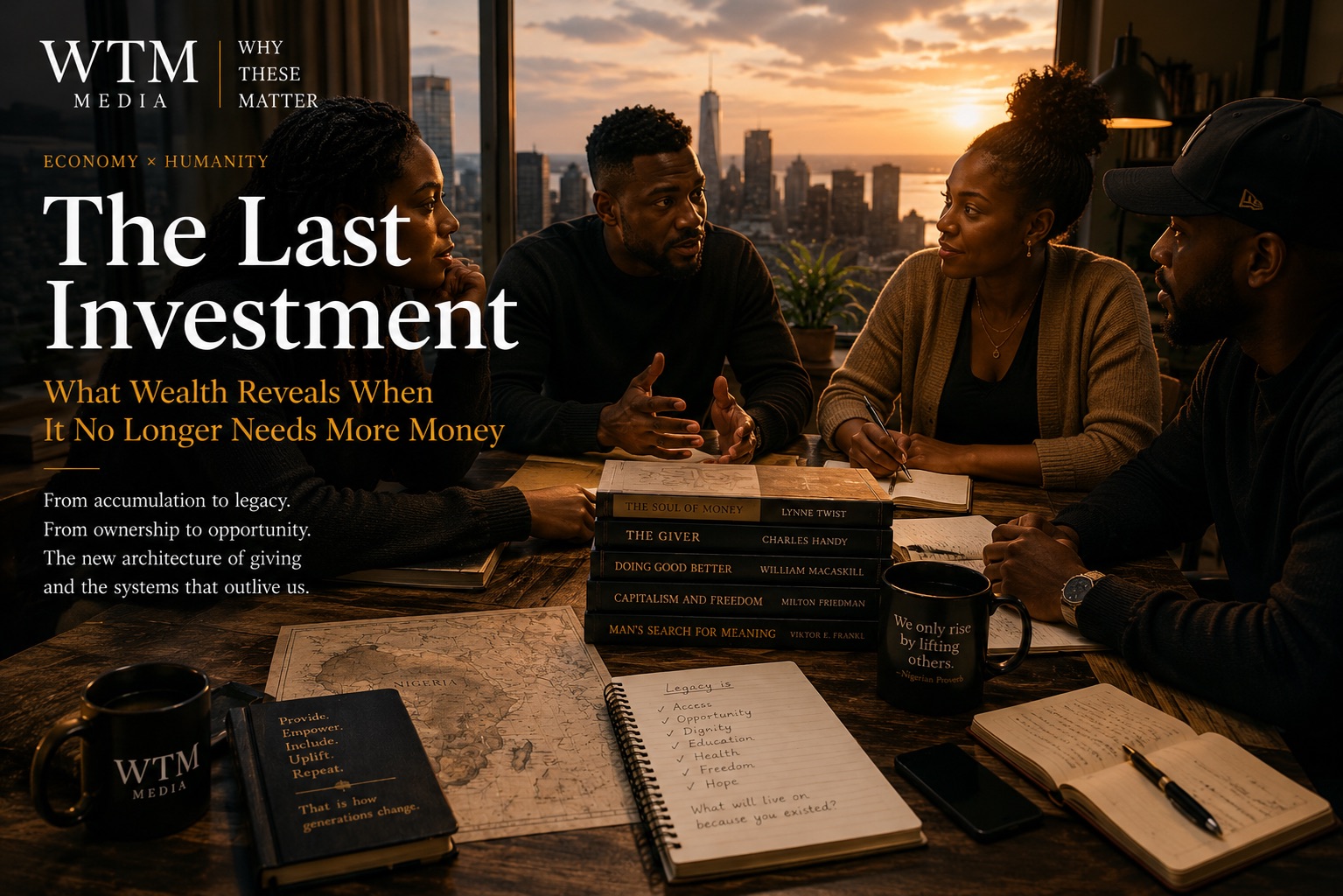
Psychologists have long observed that financial wellbeing improves life satisfaction most dramatically when it removes hardship. Beyond that threshold, each additional dollar generally produces diminishing emotional returns. Behavioural economists describe this as declining marginal utility. Money continues to matter, but its psychological impact changes. The pursuit gradually shifts from necessity toward identity, status, influence and legacy.
This transition creates a fascinating paradox. The wealthiest individuals often possess more resources than they could reasonably consume within several lifetimes. At that point, accumulation ceases to solve practical problems and begins posing philosophical ones. Ownership itself becomes a question. If one cannot personally spend a fortune, what responsibility accompanies it?
Throughout history, societies have answered differently. Ancient civilisations funded temples, libraries and aqueducts. Industrial magnates established universities, museums and foundations. Modern entrepreneurs increasingly invest in scientific research, climate innovation and global health. Wealth repeatedly evolves from private capital into public infrastructure when its owners begin thinking beyond themselves.
This evolution is neither automatic nor guaranteed. Some fortunes disappear through poor governance, family conflict or reckless consumption. Others become instruments of vanity, preserving names rather than improving lives. The distinction rarely lies in the amount of wealth itself, but in the architecture through which it is deployed.
The real question therefore is not whether people become wealthy. It is whether wealth eventually graduates from possession to purpose. That moment may represent capitalism’s highest level of maturity.

Generosity is often described as kindness, yet neuroscience suggests something more profound is occurring. Acts of voluntary giving can activate reward pathways associated with pleasure, social connection and meaning. Research on prosocial spending has also found that using financial resources to benefit others is associated with higher wellbeing across many cultures, although effects vary by context and are strongest when giving is freely chosen rather than compelled.
Evolutionary biology offers another explanation. Human beings survived not because individuals were strongest in isolation, but because communities shared resources during uncertainty. Cooperation became an adaptive advantage. Generosity therefore carries deep evolutionary roots that extend far beyond moral teaching.
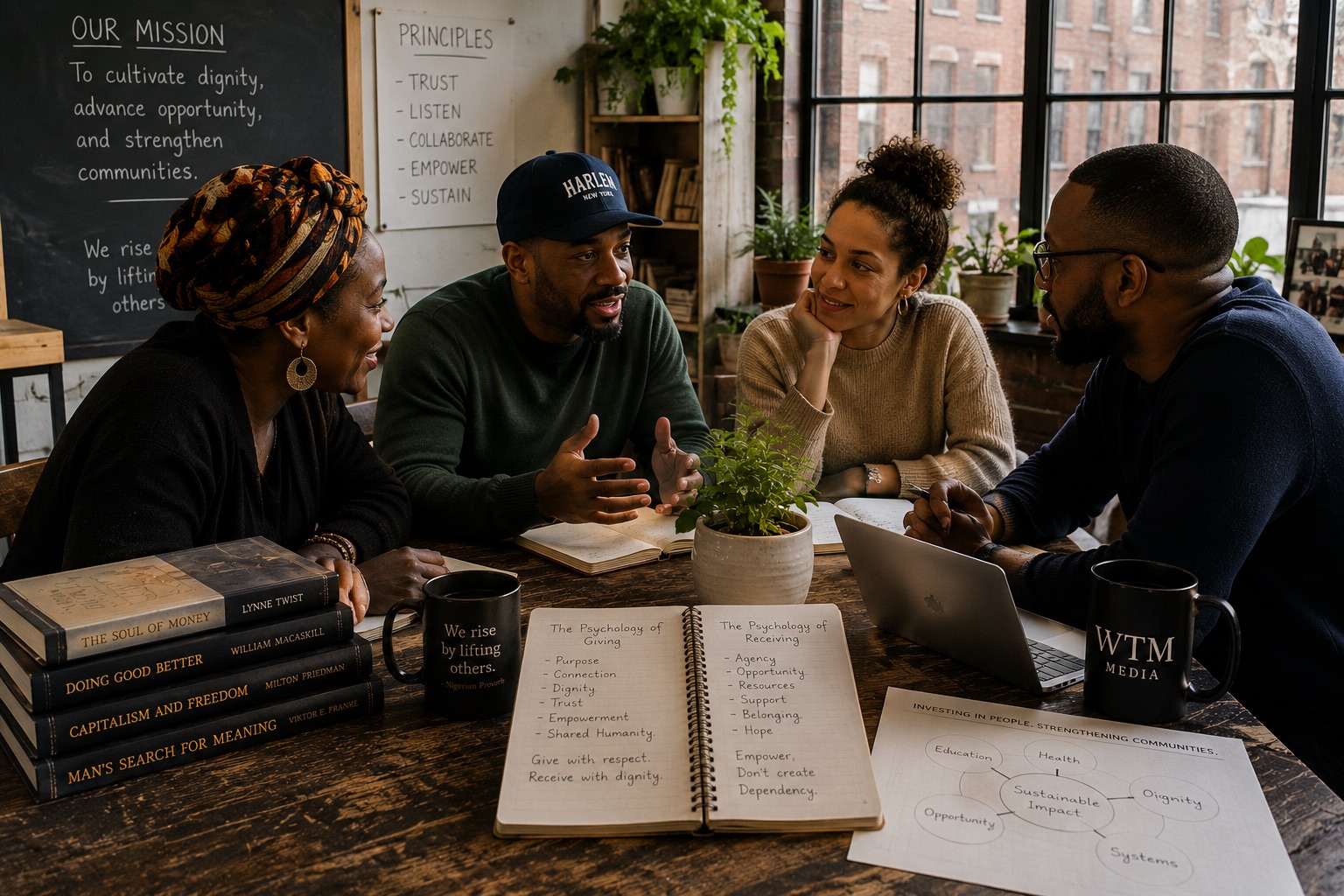
Yet giving is not universally beneficial. Poorly designed philanthropy can unintentionally create dependency, distort local priorities or reward ineffective institutions. Economic assistance that removes incentives for initiative may weaken rather than strengthen communities. The objective is therefore not generosity alone, but generosity that expands capability.
Receiving presents its own psychological complexity. Assistance offered with dignity can restore opportunity. Assistance delivered with control may create obligation, shame or diminished agency. The healthiest forms of philanthropy increase independence rather than permanent reliance.
This distinction explains why trust-based philanthropy has gained attention in recent years. Rather than prescribing detailed conditions, some donors provide unrestricted funding, allowing experienced local organisations to determine how resources should be allocated. The underlying assumption is simple: those closest to a problem often understand its solutions better than distant benefactors.
Ultimately, philanthropy resembles architecture more than charity. Every grant, scholarship, laboratory, school or community programme either strengthens or weakens the systems it touches. The question is never simply whether money was given. It is whether possibility expanded.
Modern philanthropy illustrates several competing philosophies of wealth. Some donors establish enduring foundations that distribute resources across generations. Others, including MacKenzie Scott, have accelerated the pace of giving through large unrestricted grants, arguing through practice that pressing challenges require action now rather than perpetual accumulation. Warren Buffett has similarly committed the vast majority of his fortune to philanthropy, while Bill Gates has helped make large-scale philanthropic capital central to global health and scientific research.
Scott is one of the most significant large-scale philanthropists of the modern era not because her giving can be ranked across all history, but because her method challenges a powerful assumption: that donors should retain maximum control after giving. Her model treats unrestricted capital as trust, not merely transfer. That makes her philanthropy useful evidence in a larger story about how wealth behaves when it no longer needs to prove itself through accumulation.
Each model reflects a different understanding of time. One prioritises permanence. Another prioritises urgency. A third focuses on catalytic investment that encourages broader participation. None offers a universal solution, but each forces society to reconsider the relationship between private success and public benefit.
The broader lesson extends well beyond billionaires. Every family allocates capital. Every entrepreneur decides whether to invest in people or appearances. Every institution determines whether today’s surplus funds tomorrow’s resilience. Legacy is simply capital viewed through the lens of future generations.
Markets excel at pricing companies, but they struggle to value trust, wisdom and opportunity. Yet these intangible assets often determine whether economies flourish over decades. Strong institutions emerge because previous generations invested in outcomes they would never personally experience.
This principle is visible in universities established centuries ago, hospitals funded by benefactors long forgotten, scientific discoveries supported by philanthropic research and scholarships that altered the trajectory of entire families. Wealth achieves its highest economic productivity when it creates opportunities beyond the lifetime of its creator.
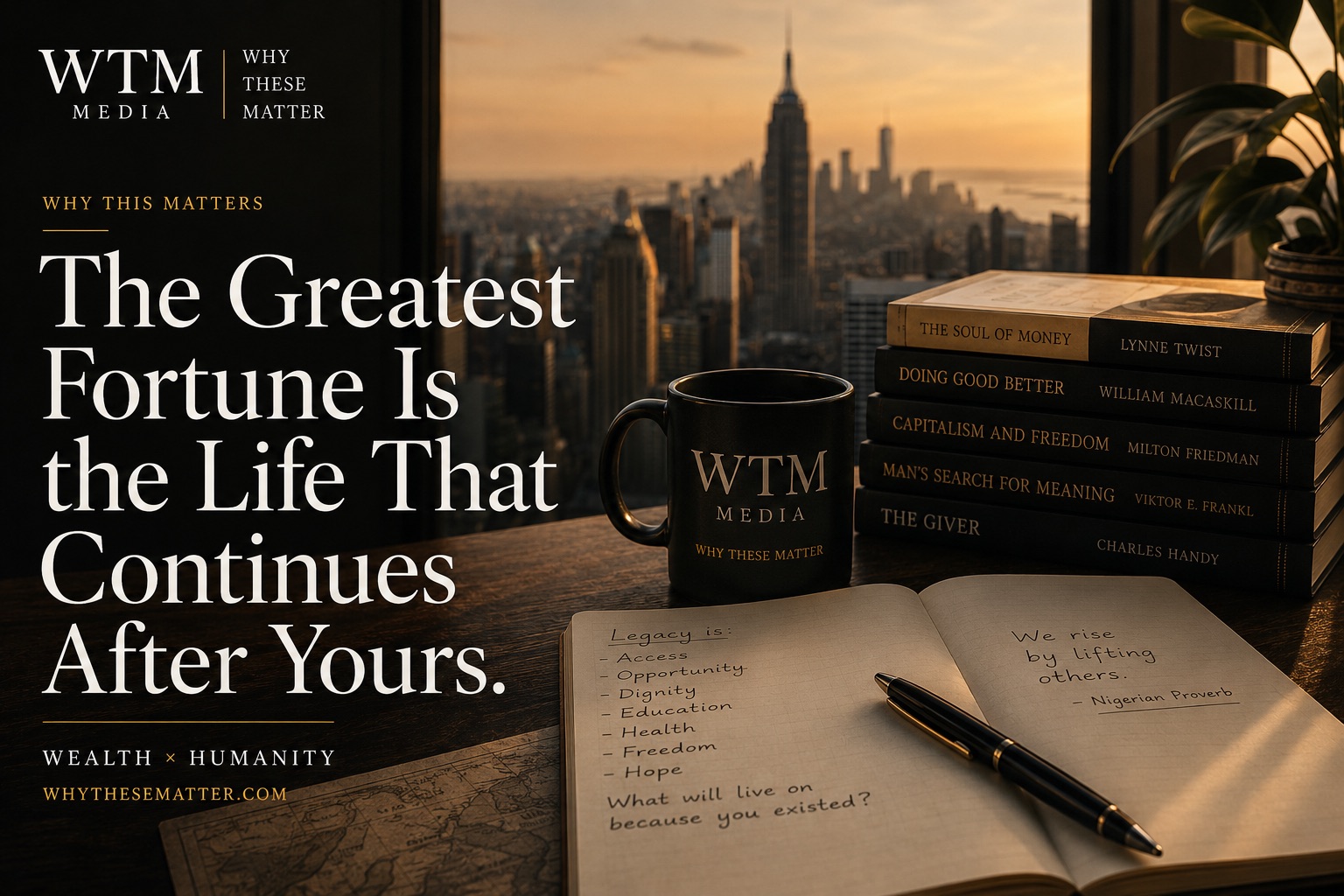
Perhaps that is why the greatest fortunes eventually cease asking, “How much do I own?” They begin asking, “What will continue because I existed?”
Imagine an apple seed.
An eight-year-old sees a tiny object that fits inside the palm of a hand. A philosopher sees time compressed into possibility. An economist sees future harvests. An engineer sees systems. A teacher sees curiosity. A parent sees hope.
The seed does not become valuable because of what it is today. It becomes valuable because of what it may become when placed in the right environment.
Money behaves in much the same way.
One person can consume an apple. One person can plant an orchard.
That is the difference between wealth and legacy.
An old British philosopher might remind us that civilisation advances when each generation leaves the next a slightly better map than the one it inherited. Back home in Nigeria, there is a wisdom that says, “The child who plants an iroko tree may never sit beneath its full shade, but someone will.” That simple truth captures what intelligent giving is really about. It is not charity for applause. It is investment in futures we may never personally witness.
WTM therefore views philanthropy not as sentiment, but as systems design. Every scholarship, laboratory, library, business, mentor, foundation and scientific breakthrough began because someone chose to invest beyond themselves. Wealth reaches its highest expression not when it changes one balance sheet, but when it quietly changes the probability of millions of lives. That may be the final dividend of capitalism—and perhaps its most enduring act of design.

Why These Matter - WTM MEDIA is an independent editorial platform exploring the forces shaping our world—through people, culture, commerce, design, systems, and governance. Connecting the dots between today’s headlines and tomorrow’s realities.