For centuries, medicine focused on helping people survive disease. Today, a different ambition is emerging: helping people remain healthier for longer. Advances in regenerative medicine, AI-assisted diagnostics, longevity pharmaceuticals, precision health, and early disease detection suggest that healthcare is shifting from treating illness to extending healthy lifespan. Yet the greatest disruption may not occur inside hospitals. It may unfold across economies, governments, workplaces, housing, education, pensions, and financial systems that were all designed for populations expected to live far shorter lives. The longevity economy is no longer a speculative future. It is beginning to reshape how societies invest, work, retire, build, and govern.
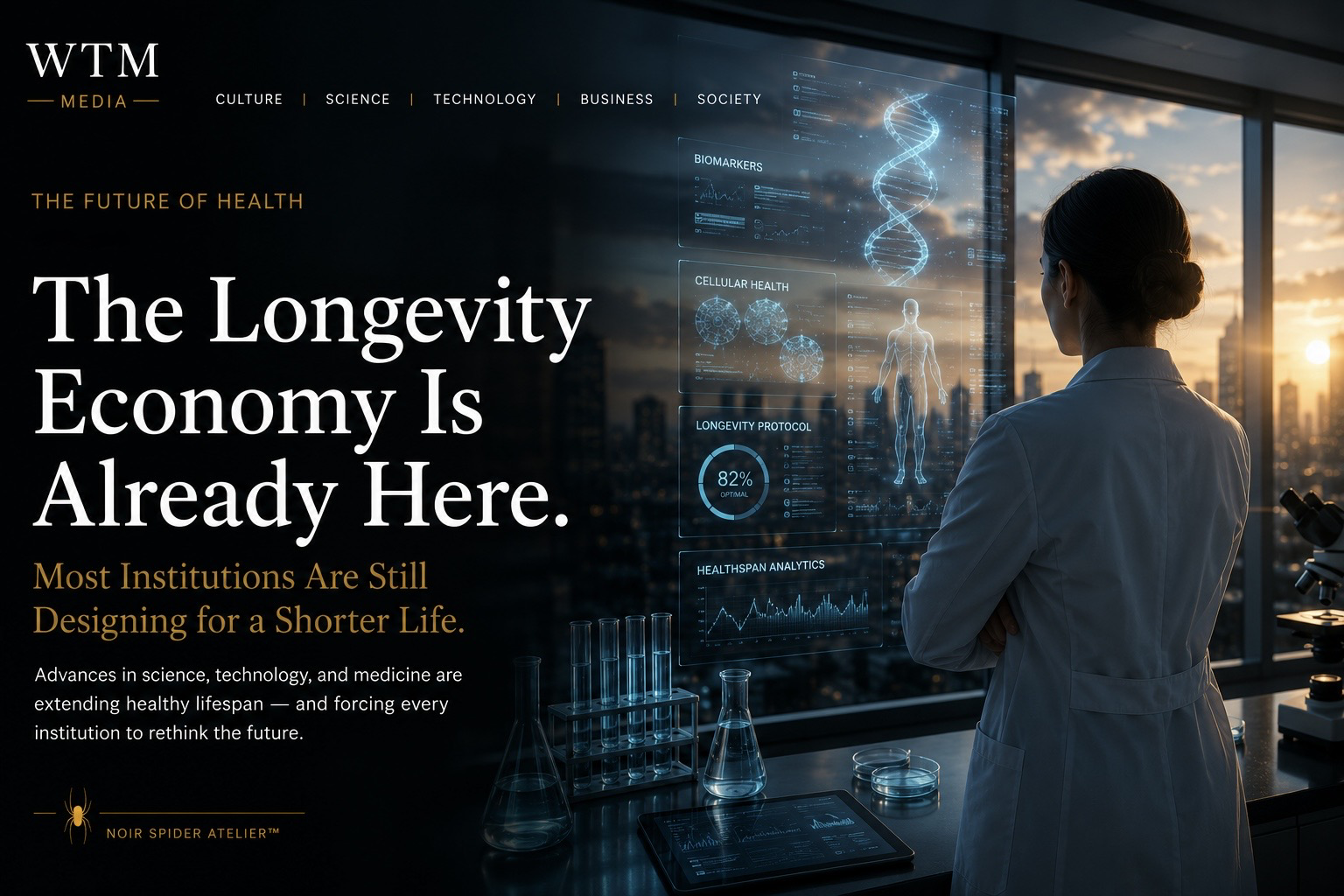
For most of recorded history, healthcare has been reactive. Symptoms appeared, physicians diagnosed disease, and treatment followed. Success was measured by survival. Public-health systems evolved around this philosophy, responding to illness rather than anticipating it. The institutions surrounding medicine—including hospitals, insurance models, pharmaceutical companies, and medical education—were designed to intervene after biological decline had already begun.

That assumption is beginning to shift. Advances in genomics, biomarker analysis, artificial intelligence, regenerative biology, and continuous health monitoring increasingly aim to detect disease years before symptoms emerge. Rather than waiting for organs to fail, researchers are exploring ways to preserve function before irreversible damage occurs. Prevention is evolving from a public-health slogan into a sophisticated technological discipline.
The rapid growth of regenerative medicine illustrates this transition. Stem-cell therapies, tissue engineering, gene-editing technologies, and laboratory-grown tissues are expanding possibilities that once belonged almost exclusively to science fiction. While many applications remain experimental, the direction of travel is unmistakable: repair, regeneration, and preservation are becoming central ambitions of biomedical science.
At the same time, pharmaceutical innovation is moving beyond disease-specific treatments. Researchers are investigating compounds that target the biological processes associated with ageing itself, including cellular senescence, chronic inflammation, mitochondrial dysfunction, and declining regenerative capacity. Whether these interventions ultimately prove transformative or incremental, they signal a broader shift in scientific thinking. Ageing is increasingly being studied as a biological process rather than an unavoidable fate.
Artificial intelligence further accelerates this transformation. Machine-learning systems can analyse imaging, pathology, genomics, and electronic health records at scales impossible for individual clinicians. Used responsibly, these tools have the potential to identify subtle risk patterns earlier, improve diagnostic accuracy, and personalise treatment strategies. AI does not replace physicians; it expands their ability to detect complexity that might otherwise remain invisible.
Taken together, these developments suggest that medicine’s future may be defined less by extending life at its end than by preserving health throughout it. The implications extend well beyond hospitals. They reach into every institution built upon assumptions about how long—and how well—people live.

The first-order effects of longer, healthier lives will be felt in clinics and research laboratories. The second-order effects, however, will be far more profound. Every major institution in modern society—from education and employment to finance, housing, transportation, insurance, and government—has been designed around assumptions established during the twentieth century. Those assumptions were based on comparatively shorter life expectancy, earlier retirement, and distinct stages of education, work, and ageing. If healthy lifespan extends materially over coming decades, those institutional blueprints will require substantial redesign.
Retirement provides one of the clearest examples. Pension systems across much of the world already face demographic pressure as populations age and birth rates decline. If people routinely remain healthy and productive into their seventies, eighties, or beyond, the traditional model of education followed by a forty-year career and then decades of retirement becomes increasingly difficult to sustain economically. Future careers may instead become multi-stage, with individuals periodically retraining, changing industries, or taking sabbaticals throughout their working lives rather than following a single linear trajectory.
Healthcare financing will also evolve. Historically, insurers have been incentivised to manage the cost of treating illness. As predictive diagnostics improve and preventive interventions become more effective, economic incentives may gradually shift towards maintaining health before expensive disease develops. Such a transition will require careful regulation and evidence-based implementation, but it could alter how governments, insurers, employers, and individuals define the value of healthcare itself.
Cities may also change. An older population that remains physically active will require neighbourhoods designed for accessibility without sacrificing independence. Walkable communities, mixed-use developments, public transportation, adaptive housing, and intelligent infrastructure become increasingly valuable not simply for older adults, but for citizens across every age group. Longevity is therefore not merely a medical question; it is also an architectural, planning, and design challenge.
Financial institutions will confront similar adjustments. Wealth accumulation, inheritance planning, investment horizons, and retirement products have traditionally assumed relatively fixed life stages. Longer healthy lives extend the period over which capital compounds, careers generate income, and families make intergenerational decisions. Asset managers, banks, insurers, and policymakers will need frameworks that accommodate greater uncertainty about when individuals retire, transfer wealth, or require long-term care.
Perhaps most importantly, education itself becomes lifelong rather than front-loaded. If careers extend across six or seven decades instead of four, learning cannot remain concentrated in early adulthood. Universities, professional organisations, employers, and governments will increasingly need continuous educational ecosystems that enable people to acquire new skills throughout life. The longevity economy therefore represents not only a healthcare transformation, but a redesign of institutional architecture itself.
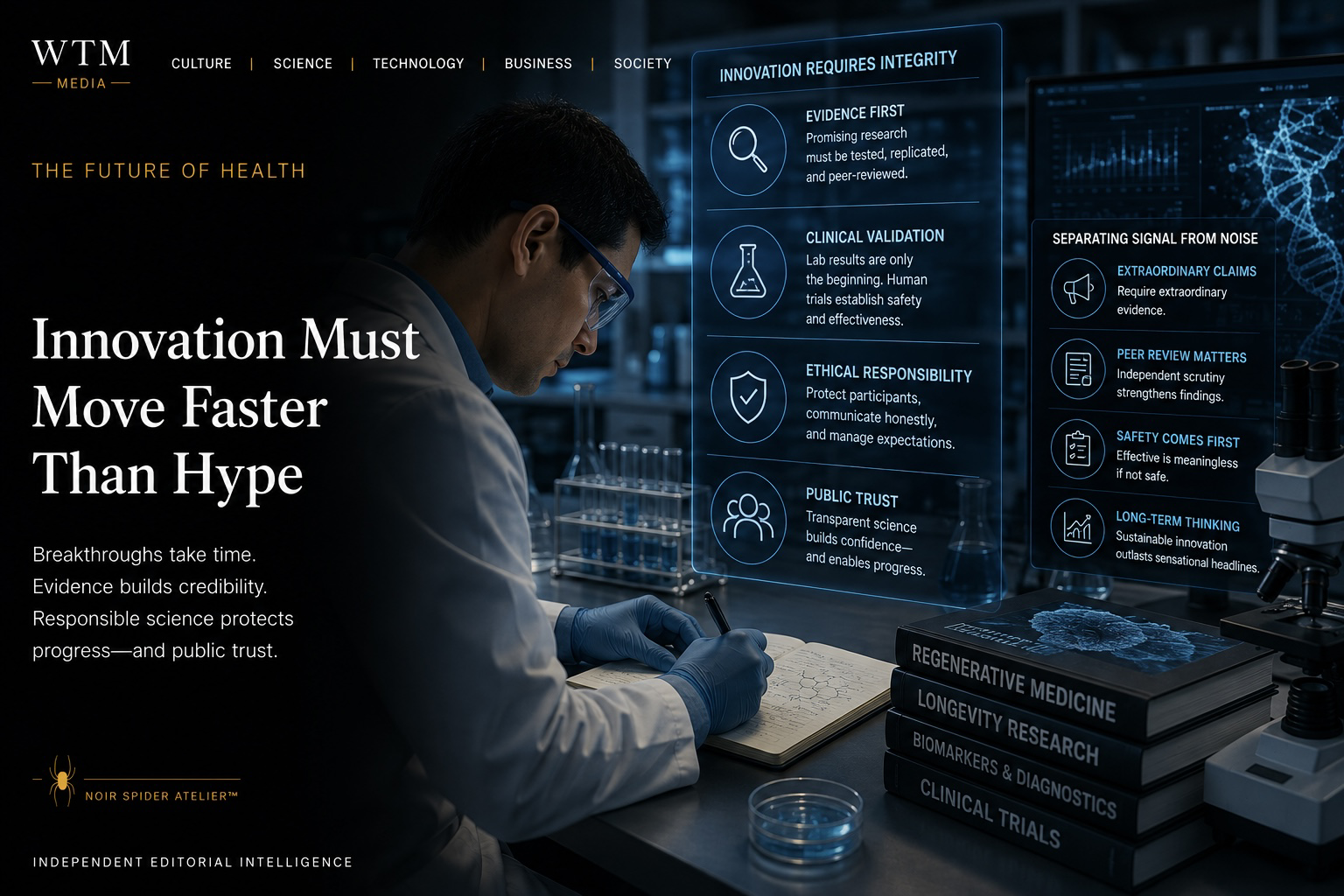
Few areas of scientific research attract as much public attention—or commercial enthusiasm—as longevity. Headlines promising dramatically extended lifespans or even biological immortality routinely circulate across social media. Such claims generate excitement, investment, and curiosity, but they also risk distorting public understanding of how scientific progress actually occurs. WTM’s responsibility is not to amplify optimism uncritically, nor to dismiss innovation reflexively, but to separate evidence from aspiration.
Scientific progress is incremental. Laboratory discoveries often require years, and sometimes decades, of validation before becoming safe, effective medical treatments. Findings observed in cell cultures or animal models frequently do not translate directly into humans. Likewise, early-stage clinical trials are designed primarily to evaluate safety, not necessarily long-term effectiveness. Responsible reporting therefore requires distinguishing between experimental research, clinical evidence, and commercially available therapies.
This distinction matters because the commercial longevity industry is expanding rapidly. Alongside legitimate scientific advances, consumers increasingly encounter supplements, diagnostics, wellness programmes, and interventions marketed using language that exceeds available evidence. Some products may ultimately prove beneficial. Others may not. The burden falls upon regulators, clinicians, researchers, journalists, and informed citizens to evaluate claims according to robust evidence rather than persuasive marketing.
Artificial intelligence introduces both opportunities and responsibilities within this landscape. AI systems can accelerate drug discovery, identify novel biological relationships, improve clinical-trial design, and assist physicians in interpreting increasingly complex datasets. Yet AI-generated hypotheses remain hypotheses until validated through rigorous scientific methods. Technology can enhance discovery, but it cannot replace scientific verification.
Public trust depends upon this distinction. Scientific credibility is built slowly through reproducibility, transparency, peer review, and independent evaluation. Overstated promises may attract short-term attention, but they can undermine confidence if expectations consistently outpace evidence. Institutions seeking long-term legitimacy must therefore communicate uncertainty honestly, acknowledging both progress achieved and questions that remain unanswered.
The longevity economy will almost certainly produce remarkable innovations over coming decades. Yet its success will depend not only upon scientific breakthroughs, but upon disciplined governance, ethical regulation, transparent communication, and public confidence. Durable progress rarely emerges from spectacle. It emerges from institutions capable of balancing ambition with evidence.

Whether or not someone intends to live to one hundred, the underlying principles shaping the longevity economy have immediate practical relevance. Individuals need not wait for revolutionary therapies to benefit from broader shifts in healthcare. Many of the technologies already entering clinical practice—including improved screening, personalised risk assessment, digital monitoring, and precision diagnostics—can support earlier intervention and more informed decision-making today.
Readers should also recognise that careers are likely to become longer and more dynamic. Investing in continuous learning, adaptable skills, digital literacy, and interdisciplinary thinking may become increasingly valuable as professional lives evolve over several decades rather than following a single fixed path. Lifelong employability may become as important as traditional career advancement.
Financial planning similarly benefits from longer-term thinking. Extended healthy lifespan influences retirement strategies, healthcare costs, insurance decisions, housing preferences, caregiving responsibilities, and wealth preservation. While no one can predict future medical advances with certainty, planning for greater flexibility rather than rigid assumptions is increasingly prudent.
Consumers should approach longevity products with informed scepticism. Not every breakthrough reported online represents an immediately available therapy, nor does every commercial offering reflect robust scientific evidence. Asking whether findings have undergone peer review, regulatory assessment, or independent replication remains one of the most effective ways to distinguish credible innovation from speculative marketing.
There is also a civic dimension. Citizens influence how governments prioritise research funding, public health, preventive medicine, ageing policy, and healthcare infrastructure. Understanding the systemic implications of longevity enables individuals to participate more thoughtfully in public discussions that will increasingly shape national policy over coming decades.
Ultimately, the longevity economy invites readers to think differently about time itself. Rather than viewing ageing solely as decline, society may increasingly regard healthy longevity as an opportunity to redesign education, careers, families, communities, and institutions around sustained human capability. That perspective extends well beyond medicine; it represents a broader shift in how civilisation organises itself.

History demonstrates that societies rarely recognise structural transitions while they are unfolding. The Industrial Revolution was initially understood as a collection of mechanical inventions before its deeper consequences transformed cities, labour, education, politics, and global trade. Likewise, the digital revolution began with computers before reshaping nearly every institution. The longevity economy may represent another such transition, one whose most significant effects emerge not within laboratories alone, but across society itself.
This transformation is fundamentally interdisciplinary. Biology intersects with artificial intelligence. Healthcare intersects with finance. Architecture intersects with ageing. Urban planning intersects with accessibility. Public policy intersects with demography. No single discipline possesses sufficient perspective to understand the whole system. Systems thinking therefore becomes essential for interpreting how these developments interact rather than examining each innovation in isolation.
The question is no longer whether people will live longer in some parts of the world; demographic data already demonstrate increasing life expectancy across many populations, even as trends vary by country and socioeconomic conditions. The more important question concerns the quality of those additional years. Extending lifespan without extending health would place greater strain upon individuals and institutions alike. Extending healthy lifespan, by contrast, has the potential to reshape productivity, wellbeing, and economic resilience.
Institutions that anticipate these shifts will likely prove more resilient than those that continue designing around outdated assumptions. Governments, employers, universities, insurers, investors, architects, and healthcare providers all face strategic choices today that will determine how effectively they respond to changing demographic realities over coming decades. Adaptation, rather than prediction, will become a defining institutional capability.
For WTM Media, this story is not about chasing futuristic headlines. It is about recognising the deeper architecture of change. Beneath every scientific breakthrough lies a broader institutional question: how should societies redesign themselves when the assumptions upon which they were built begin to change? That question extends far beyond longevity. It defines nearly every major transformation of the twenty-first century.
The longevity economy is therefore not simply another healthcare trend. It is an emerging framework through which medicine, technology, economics, governance, design, and human potential increasingly converge. Understanding that convergence today may prove more valuable than attempting to predict every individual breakthrough tomorrow. That is why this story matters.
Visual Intelligence: Noir Spider Atelier™ — A Division of WTM Media
Editorial Direction: Kelly Dowd, MBA, MA
Copyright: © 2026 WTM Media. All rights reserved.

Why These Matter - WTM MEDIA is an independent editorial platform exploring the forces shaping our world—through people, culture, commerce, design, systems, and governance. Connecting the dots between today’s headlines and tomorrow’s realities.