
Modern civilisation is obsessed with optimisation. Businesses optimise supply chains. Governments optimise budgets. Algorithms optimise engagement. Individuals optimise productivity. The assumption underlying these efforts is simple: the most efficient system is the best system. Nature disagrees. Across billions of years of evolution, ecosystems rarely optimise for maximum efficiency. Instead, they optimise for resilience, adaptability, redundancy, and regeneration. Forests maintain surplus capacity. Rivers overflow their banks. Species occupy overlapping ecological roles. Nature repeatedly sacrifices efficiency to preserve survivability. This distinction may explain why many human systems appear increasingly productive yet increasingly fragile. Climate instability, supply chain disruptions, biodiversity loss, institutional distrust, and social fragmentation reveal the limitations of efficiency as a governing philosophy. Regenerative emergence offers an alternative framework. It suggests that the most successful systems are not those that maximise output, but those that continuously generate the conditions necessary for renewal. The future of sustainability, business, governance, and civilisation itself may depend upon understanding this difference.
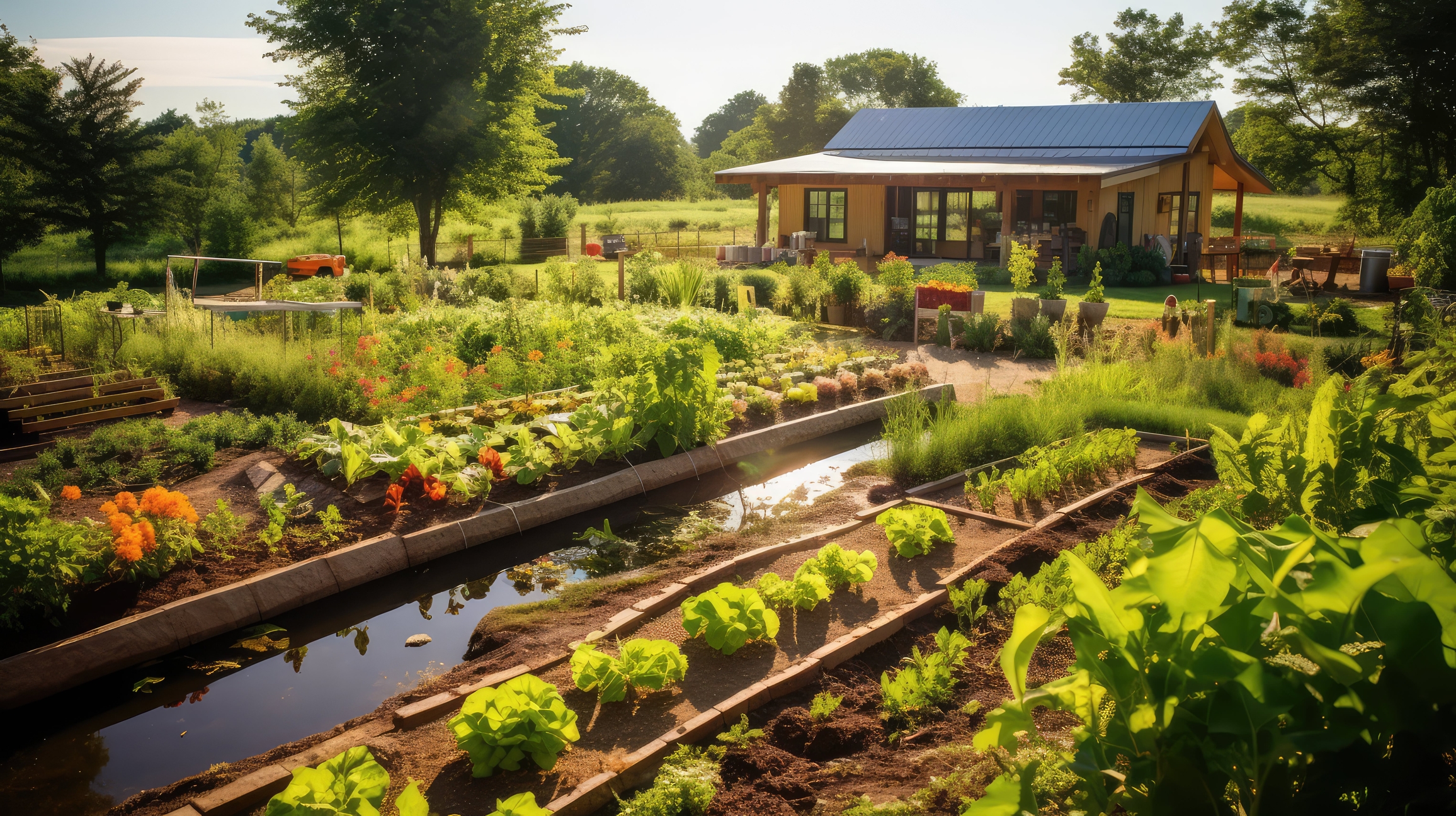

Human civilisation inherited much of its organisational logic from the Industrial Revolution. Factories rewarded standardisation. Bureaucracies rewarded predictability. Economic theory rewarded productivity gains. Over time, efficiency evolved from a useful principle into a cultural obsession. Organisations became increasingly focused on eliminating redundancy, reducing waste, streamlining operations, and maximising output. The assumption seemed rational. Why maintain excess capacity when every available resource can be utilised immediately?
Nature operates according to a different philosophy. Forests do not maximise production at every moment. They maintain layers of redundancy. Multiple species often perform similar ecological functions. Diverse root systems overlap. Seed banks remain dormant for years or even decades awaiting favourable conditions. Ecosystems preserve options rather than eliminating them. What appears inefficient from an industrial perspective often proves essential during disruption.
The distinction became visible during the COVID-19 pandemic. Global supply chains had been engineered for efficiency through just-in-time logistics. Warehouses were minimised. Inventory buffers were reduced. Production networks stretched across continents. Under stable conditions, the system appeared remarkably productive. When disruption arrived, fragility became visible. Shortages emerged. Transportation bottlenecks multiplied. Entire industries discovered that efficiency and resilience are not interchangeable.
Ecological systems rarely make this mistake. Wetlands absorb floods because they maintain excess capacity. Forests survive disease outbreaks because biodiversity creates alternative pathways for recovery. Coral reef ecosystems endure environmental fluctuations because numerous species contribute to ecosystem stability. Nature repeatedly sacrifices short-term optimisation to preserve long-term adaptability.
The business world increasingly recognises this principle. Leading organisations now discuss resilience, optionality, antifragility, and adaptive capacity alongside traditional efficiency metrics. Strategic reserves, diversified suppliers, decentralised operations, and flexible workforce models often appear less efficient on spreadsheets while proving dramatically more resilient under stress. The future may reward organisations that understand the difference.
The lesson extends beyond economics. Human health itself operates through redundancy. The immune system maintains multiple defence mechanisms. The brain contains overlapping neural pathways. Biological systems rarely depend upon single points of failure. Nature’s objective is not perfection. It is continuity. Survival depends less on optimisation than on the capacity to recover.

One of the most misunderstood concepts in modern science is emergence. Humans tend to assume that intelligence originates from central control. Governments govern. Executives manage. Algorithms direct. Nature frequently produces sophisticated outcomes without any central authority whatsoever. Complex behaviour emerges through relationships between components rather than instructions from above.
An ant colony illustrates this principle elegantly. Individual ants possess limited cognitive capacity. Yet collectively they construct nests, allocate labour, discover resources, defend territories, and adapt to changing conditions. No single ant understands the entire system. Intelligence emerges through interaction. The colony becomes smarter than its individual members.
The same pattern appears throughout nature. Bird flocks navigate complex environments without central leadership. Mycorrhizal fungal networks distribute nutrients across forests. Immune systems identify threats without a governing executive. Ecosystems regulate themselves through feedback loops operating across countless relationships simultaneously. Nature repeatedly demonstrates that intelligence can emerge from connectivity rather than hierarchy.
Human civilisation increasingly encounters similar dynamics. Financial markets process vast amounts of information without central planners controlling every transaction. The internet evolved through distributed networks rather than singular design authorities. Open-source software communities often outperform highly centralised development structures. Artificial intelligence itself relies upon emergent properties arising from interactions within neural networks.
This insight carries profound implications for sustainability. Many environmental challenges resist linear solutions because they emerge from complex systems. Climate change involves energy systems, economic incentives, consumer behaviour, ecological feedback loops, technological innovation, and geopolitical interests simultaneously. Attempting to optimise individual variables often produces unintended consequences elsewhere within the system.
Regenerative emergence offers a different approach. Instead of controlling outcomes directly, it focuses on cultivating conditions that enable healthy outcomes to emerge naturally. Healthy soil generates ecosystems. Strong communities generate resilience. Effective education generates innovation. The emphasis shifts from management toward stewardship.
The most transformative systems of the future may therefore resemble ecosystems more than machines. They will prioritise relationships over components, adaptability over control, and emergence over prediction. Intelligence increasingly appears not as a property of individual entities, but as a characteristic of well-designed relationships.

Modern economies are primarily extractive. Resources are removed, processed, consumed, and discarded. Success is measured through growth, production, and accumulation. While this model generated extraordinary material progress, it often fails to account for the systems that make growth possible in the first place. Extraction without regeneration inevitably creates decline.
Nature follows a different model. Forests generate fertility while consuming resources. Wetlands improve water quality while processing nutrients. Coral reefs create habitats while supporting biodiversity. Ecosystems do not simply use resources; they continuously regenerate the conditions necessary for future productivity. Growth and renewal operate simultaneously.
This principle extends beyond environmental systems. Relationships require regeneration. Institutions require regeneration. Economies require regeneration. Democracies require regeneration. Whenever a system consumes more than it replenishes, decline becomes inevitable. The timeline varies, but the outcome remains remarkably consistent. Unsustainable systems eventually reveal their costs.
Artificial intelligence provides a contemporary example. AI systems are trained using vast quantities of human knowledge, creativity, data, and intellectual labour. Yet current economic models often focus primarily on extraction of value rather than regeneration of the human systems generating that value. Long-term sustainability may require mechanisms ensuring that technological advancement strengthens rather than weakens the social foundations upon which it depends.
The HANDS Framework—Humanity, Adaptation, Nature, Design, and Sustainability—reflects this regenerative logic. Humanity provides purpose. Adaptation provides responsiveness. Nature provides wisdom. Design provides intentionality. Sustainability provides continuity. Each element reinforces the others. Remove one and the system weakens. Strengthen relationships between them and resilience emerges naturally.
Civilisation now confronts a defining choice. It can continue pursuing increasingly efficient systems that maximise short-term output while amplifying long-term fragility. Or it can adopt regenerative models prioritising resilience, adaptability, and renewal. The future may belong not to those who produce the most, but to those who regenerate the conditions making production possible.

Humanity often imagines progress as a straight line moving endlessly forward. Nature tells a different story. Progress is cyclical. Growth without renewal eventually collapses. Extraction without regeneration eventually fails. Every enduring system—from forests to economies, from communities to civilisations—survives because it replenishes what it consumes.
This insight may become one of the defining strategic advantages of the twenty-first century. Organisations that regenerate talent will outperform those that burn it out. Economies that regenerate ecosystems will outperform those that deplete them. Technologies that regenerate human capability will outperform those that merely automate it.
Regenerative emergence is therefore not simply an environmental concept. It is a blueprint for resilience, innovation, prosperity, and long-term survival. Nature's greatest lesson is not that life endures. It is that life continually creates the conditions for more life. The future belongs to systems that do the same.

Why These Matter - WTM MEDIA is an independent editorial platform exploring the forces shaping our world—through people, culture, commerce, design, systems, and governance. Connecting the dots between today’s headlines and tomorrow’s realities.