
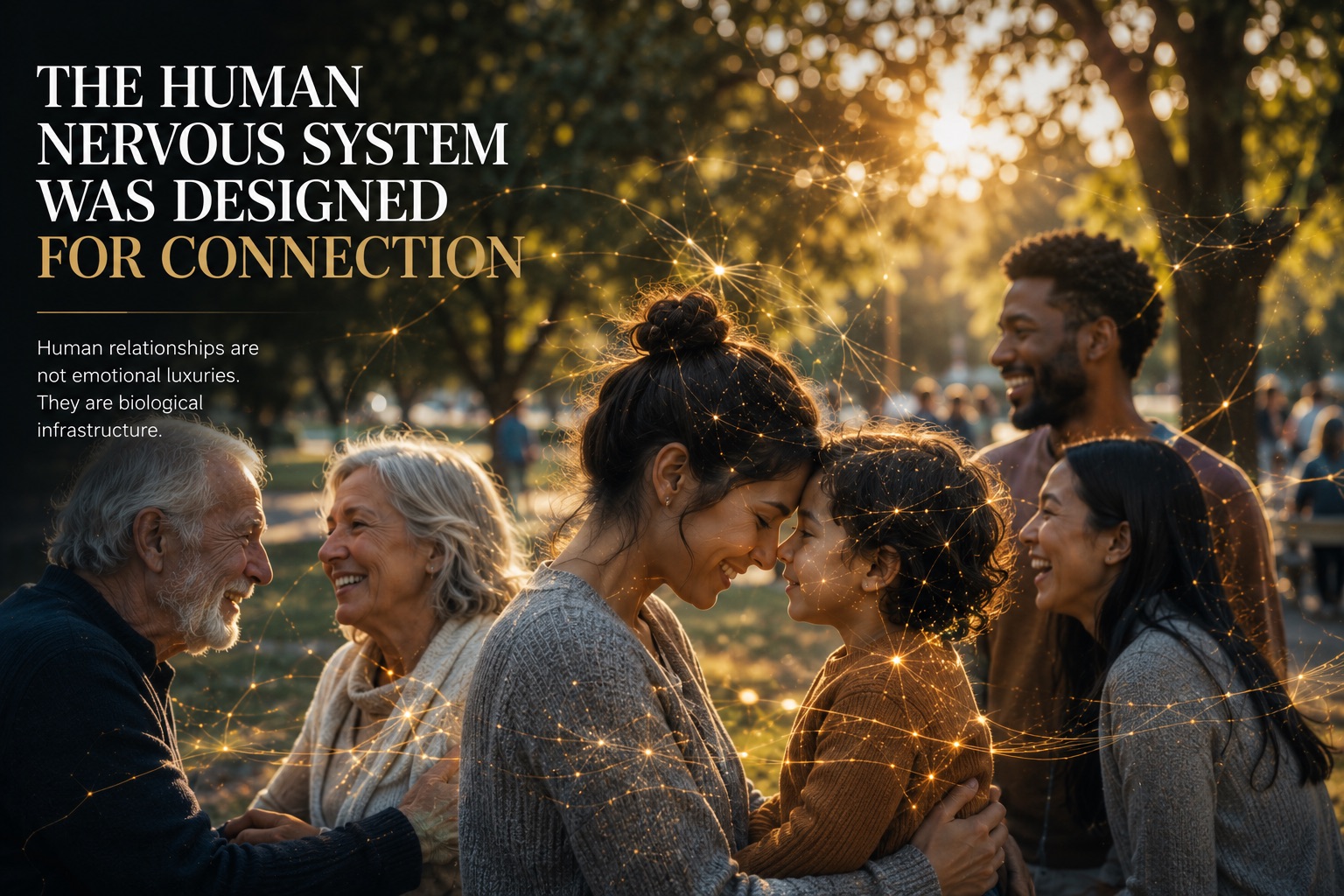
Human intimacy is often discussed through the language of romance, emotion, culture, or spirituality. Modern neuroscience reveals something deeper. Human connection is not merely a psychological experience. It is a biological event. Trust alters brain chemistry. Affection influences hormone regulation. Long-term bonding affects cardiovascular function, immune resilience, stress responses, and even longevity. Increasing evidence from neuroscience, endocrinology, psychoneuroimmunology, and behavioural medicine suggests that close human relationships do not simply affect wellbeing—they actively reorganise physiological systems. The body continuously interprets safety, belonging, attachment, and social connection as biological signals. In many respects, humans are designed not merely to survive individually but to regulate one another collectively. As loneliness, social fragmentation, and digital isolation become defining features of modern civilisation, understanding the biology of intimacy may prove increasingly important. The future of health may depend as much upon relationships as medicine.
For much of modern medicine, health was treated primarily as an individual phenomenon. Disease occurred within bodies. Treatment targeted biological mechanisms. Social relationships were often viewed as secondary influences rather than central determinants. Over the past several decades, research across neuroscience and behavioural medicine has steadily challenged this assumption. Human beings appear biologically designed for connection in ways far deeper than previously understood.
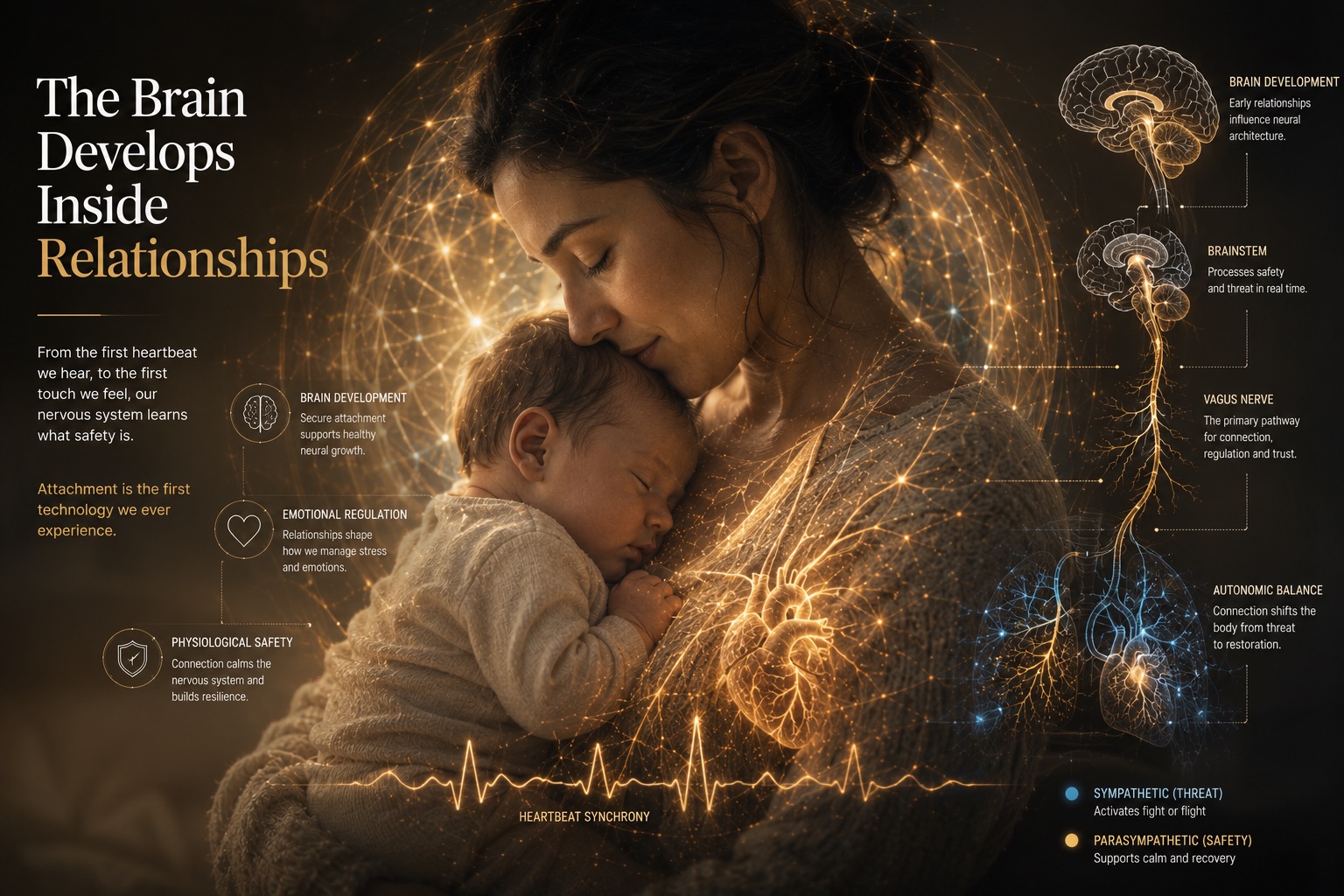
One of the most influential frameworks emerging from this research is attachment theory. Originally developed by John Bowlby and later expanded through decades of empirical study, attachment research demonstrated that secure relationships influence emotional regulation throughout life. More recent neuroscience reveals that attachment is not merely psychological. It affects neural development, stress responses, and physiological resilience. The human brain develops within relationships and continues responding to them throughout adulthood.
The autonomic nervous system plays a critical role in this process. The sympathetic nervous system prepares the body for threat, activating fight-or-flight responses. The parasympathetic nervous system promotes restoration, recovery, and regulation. Researchers such as Stephen Porges have explored how social connection influences these systems through what is commonly known as Polyvagal Theory. While aspects of the theory remain debated, broader evidence strongly supports the idea that perceived safety and social trust influence physiological regulation.
This biological sensitivity to connection reflects evolutionary realities. Humans evolved as highly social organisms. Isolated individuals faced greater risks from predators, environmental threats, and resource scarcity. Consequently, the brain became exceptionally attuned to social signals. Facial expressions, vocal tones, eye contact, touch, and interpersonal behaviour all influence neurological processing. The nervous system continuously evaluates whether environments feel safe or threatening.
Loneliness demonstrates the consequences of this architecture. Research consistently associates chronic social isolation with increased risks of cardiovascular disease, depression, cognitive decline, sleep disruption, and premature mortality. Some studies have suggested that persistent loneliness may carry health risks comparable to well-established behavioural factors such as smoking or physical inactivity. The body appears to interpret prolonged social disconnection as a biological stressor.
This insight transforms how intimacy should be understood. Human connection is not merely an emotional luxury. It functions as a regulatory system. Healthy relationships help stabilise physiological processes, reduce chronic stress, and support resilience. The nervous system does not simply exist within individuals. It operates within networks of human relationships.
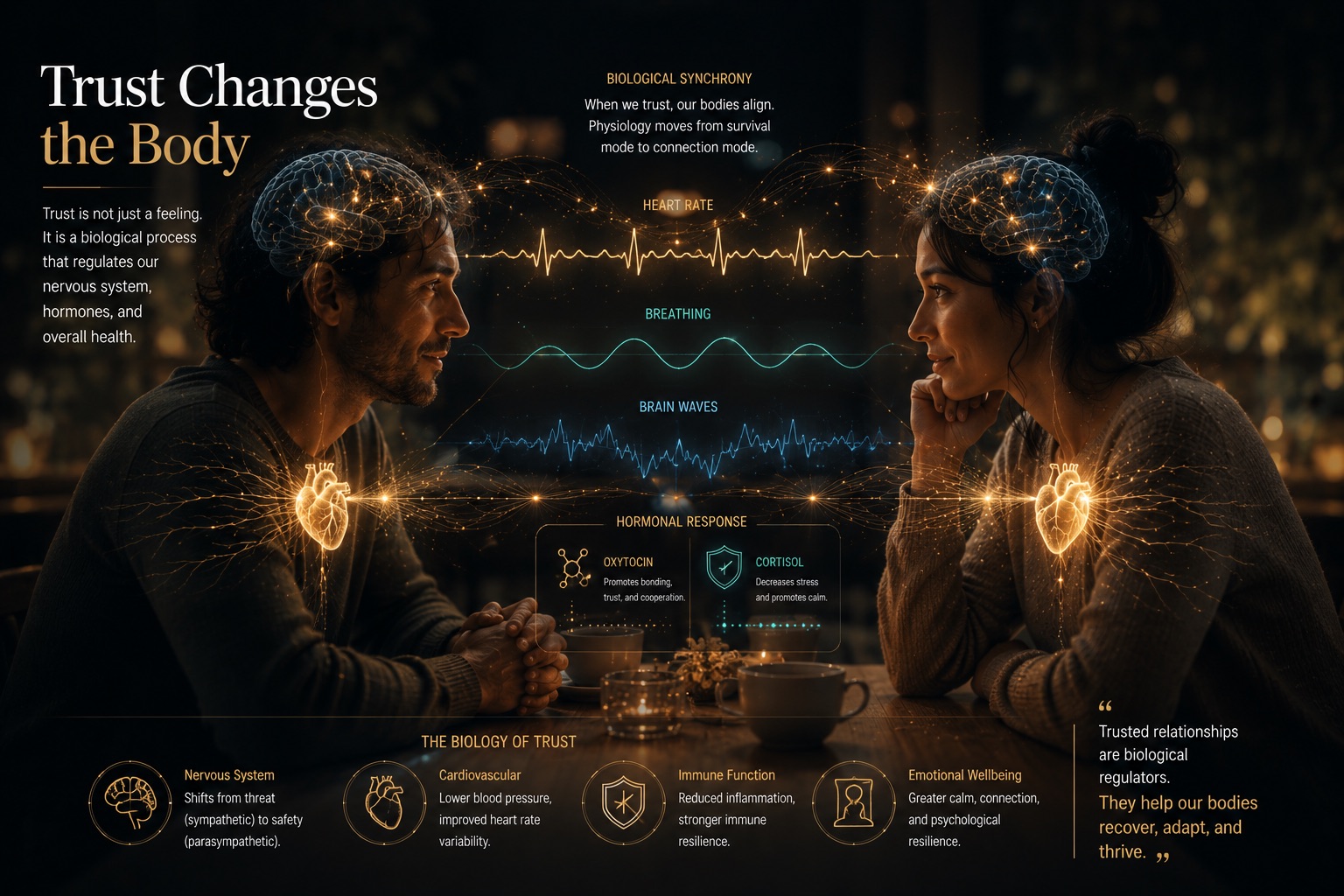
Few experiences alter human physiology as profoundly as trust. While trust is often described as a moral or social concept, neuroscience increasingly reveals it as a biological process influencing multiple systems simultaneously. When individuals experience safety, affection, and secure attachment, measurable changes occur throughout the body.
One of the most studied mechanisms involves oxytocin, often referred to as the “bonding hormone.” Produced primarily in the hypothalamus and released into both the bloodstream and brain, oxytocin plays important roles in social bonding, maternal behaviour, trust formation, and emotional connection. Research demonstrates that positive social interactions can influence oxytocin activity, supporting cooperation and relational attachment. However, scientists increasingly caution against simplistic interpretations. Oxytocin does not create universal kindness. Rather, it appears to strengthen social salience and relational bonding within specific contexts.
Trust also influences cortisol regulation. Cortisol serves essential functions during acute stress, helping the body mobilise resources and respond to challenges. Chronic elevation, however, contributes to inflammation, cardiovascular strain, metabolic dysfunction, and impaired immune responses. Numerous studies demonstrate that supportive relationships can reduce perceived stress and moderate cortisol activation. In practical terms, trusted relationships help regulate biological responses to adversity.
Cardiovascular health reveals similar patterns. Research examining long-term relationships frequently finds associations between social support and improved cardiovascular outcomes. Married individuals and those reporting strong social networks often exhibit lower rates of certain cardiovascular risks compared with chronically isolated populations, though outcomes vary significantly depending upon relationship quality. Not all relationships are beneficial. The body responds to safety, not proximity alone.
Emerging research in psychoneuroimmunology further strengthens the case. The immune system appears highly responsive to social conditions. Chronic loneliness and relational stress have been associated with inflammatory responses, altered immune functioning, and slower recovery processes. Conversely, supportive social environments appear to contribute to improved immune resilience. Human biology repeatedly demonstrates that connection influences health through multiple interconnected pathways.
Perhaps most remarkably, studies involving close relationships have identified forms of physiological synchronisation. Heart rate patterns, breathing rhythms, hormonal responses, and neural activity can exhibit measurable alignment among bonded individuals under certain conditions. While these findings should not be romanticised, they suggest that human bodies continuously influence one another in subtle ways. Intimacy is not merely psychological closeness. It involves biological coordination.
Trust therefore functions as a form of biological technology. It regulates stress, supports recovery, strengthens resilience, and enables cooperation. Civilisations often invest heavily in external technologies while underestimating the physiological significance of human relationships. The evidence increasingly suggests this may be a strategic mistake.
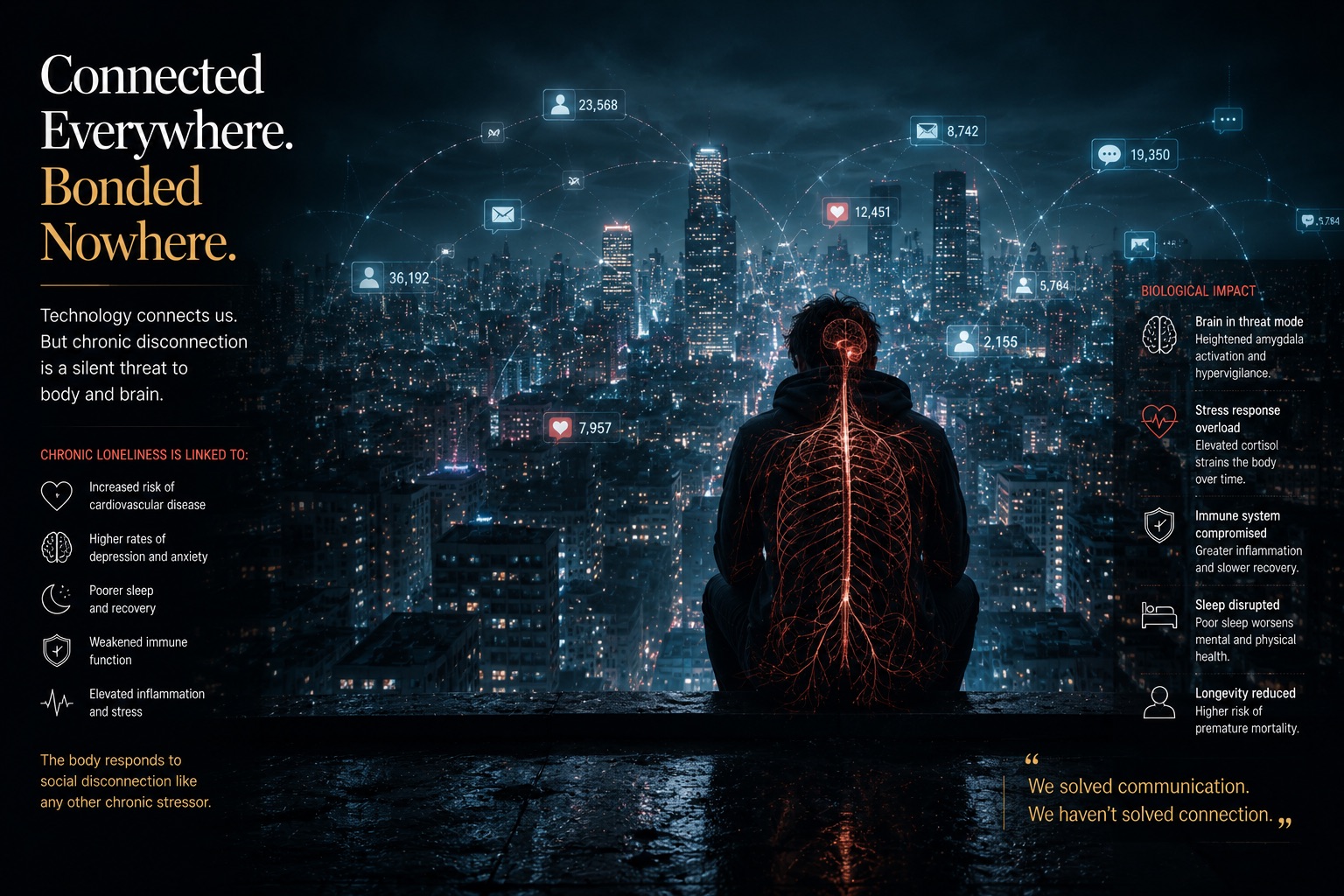
Modern civilisation has achieved unprecedented connectivity while simultaneously producing extraordinary levels of isolation. Billions of people can communicate instantly across continents. Yet loneliness, anxiety, depression, and social fragmentation continue to rise across many societies. This paradox represents one of the most important public health challenges of the twenty-first century.
Technological advancement altered the architecture of human interaction. Digital communication increased convenience but often reduced physical proximity. Remote work expanded flexibility while limiting spontaneous social contact. Urbanisation concentrated populations while frequently weakening traditional community structures. Social media connected individuals globally while sometimes amplifying comparison, polarisation, and emotional exhaustion. The result is a civilisation more connected than ever and often less bonded than before.
The consequences extend beyond emotional wellbeing. Chronic loneliness is increasingly recognised as a physiological risk factor. Researchers have documented associations between persistent isolation and increased inflammation, elevated cardiovascular risk, impaired sleep quality, reduced immune function, and cognitive decline. The body responds to social deprivation in ways strikingly similar to other chronic stressors.
This reality creates a challenge for healthcare systems traditionally organised around disease treatment rather than relationship cultivation. Prescriptions can lower blood pressure. Surgical interventions can repair damage. Pharmaceuticals can regulate symptoms. Yet many of the most significant health determinants operate through social systems. Human beings require connection in ways medicine alone cannot provide.
The implications extend into economics and public policy. Social fragmentation influences productivity, healthcare costs, workforce participation, educational outcomes, and civic engagement. Strong communities often generate benefits that extend far beyond emotional support. They contribute to resilience during crises, improve collective wellbeing, and strengthen institutional trust. Relationships produce measurable societal value.
Strategic imagination suggests that future health systems may increasingly integrate social wellbeing into healthcare design. Community infrastructure, social prescribing, intergenerational programmes, relationship education, and human-centred urban design may become recognised not merely as social initiatives but as health interventions. The boundary between public health and social architecture is likely far thinner than many institutions currently acknowledge.
The future of medicine may therefore require a broader definition of care. Human beings are biological organisms, but they are also relational organisms. The body continuously interprets the quality of human connection as information. In many respects, intimacy itself functions as a form of preventative medicine.
The most advanced technologies in history cannot fully compensate for the biological architecture shaped by millions of years of evolution. Human beings remain profoundly social organisms whose nervous systems, immune systems, cardiovascular systems, and hormonal systems respond continuously to the quality of their relationships.
The evidence increasingly suggests that intimacy is not merely emotional. It is neurological. Hormonal. Cardiovascular. Immunological. Human connection changes the body because the body evolved expecting connection to exist.
This insight carries profound implications for healthcare, education, leadership, urban planning, workplace design, and public policy. Societies that treat relationships as optional may inadvertently undermine the biological foundations upon which wellbeing depends. Societies that understand connection as infrastructure may discover new pathways toward resilience.
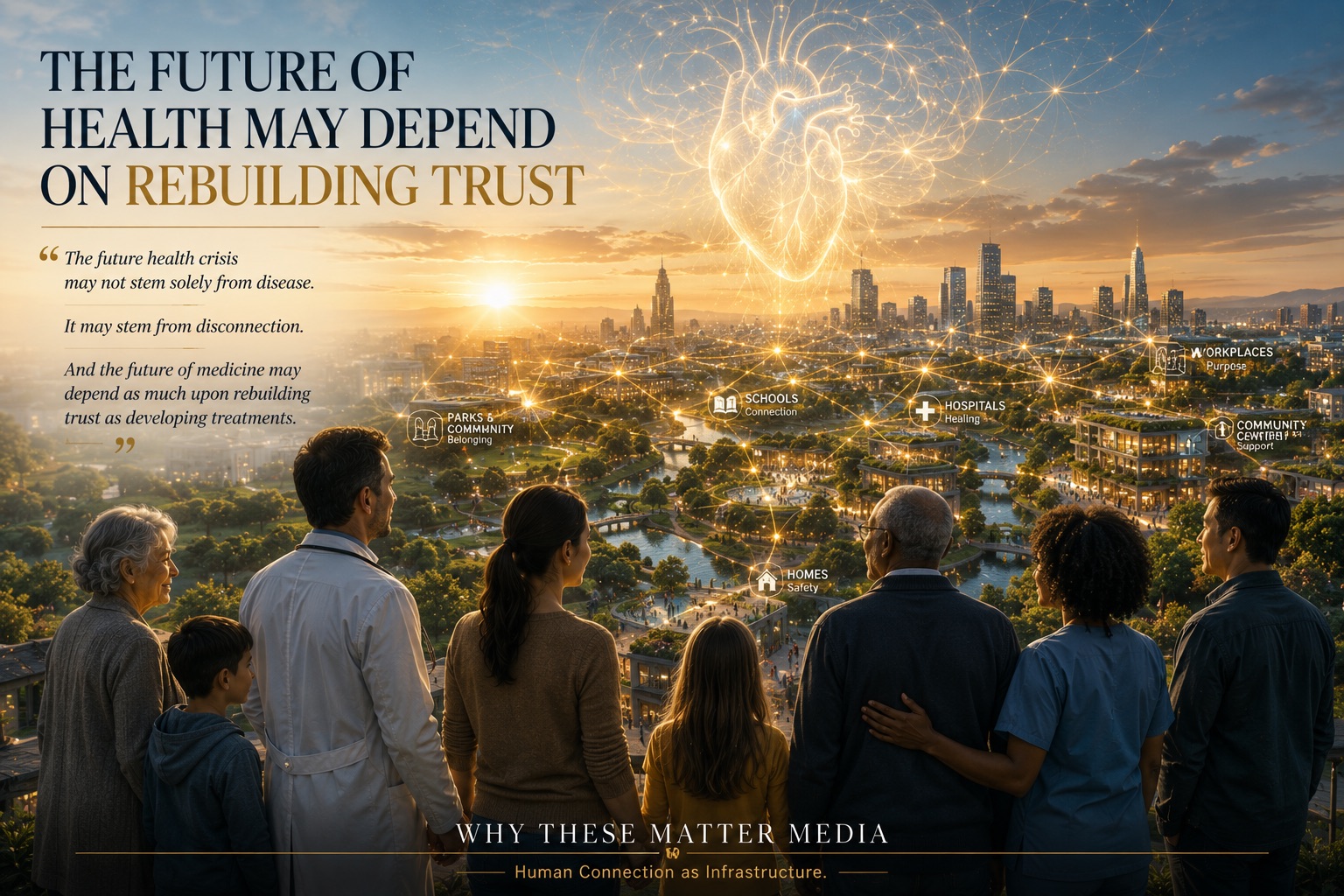
The future health crisis may not stem solely from disease. It may stem from disconnection. And the future of medicine may depend as much upon rebuilding trust as developing treatments. The body has always understood this. Science is only now catching up.
Why These Matter - WTM MEDIA is an independent editorial platform exploring the forces shaping our world—through people, culture, commerce, design, systems, and governance. Connecting the dots between today’s headlines and tomorrow’s realities.

article-support-3
Noir Spider Atelier

article-support-2
Noir Spider Atelier

article-support-1
Noir Spider Atelier

press-partnership
Noir Spider Atelier
press-reader-desk
Noir Spider Atelier

resource-access
Noir Spider Atelier
membership-example
Noir Spider Atelier

membership-tools
Noir Spider Atelier

membership-reader
Noir Spider Atelier
membership-public
Noir Spider Atelier
pathway-design
Noir Spider Atelier
pathway-institutions
Noir Spider Atelier
pathway-technology
Noir Spider Atelier