WTM Visual Intelligence · Conceptual imagery
Follow enterprise, markets, ownership and leadership through the systems that create value and distribute influence.

The FIFA World Cup presents itself as a sporting tournament. In reality, it is one of the largest systems experiments humanity conducts. The 2026 FIFA World Cup—hosted across Canada, Mexico, and the United States—will involve billions of viewers, millions of visitors, unprecedented infrastructure coordination, vast commercial investment, and intense geopolitical scrutiny. Football may attract the audience, but the tournament reveals something much larger: how modern civilisation functions under global attention.

Debates about minimum wage are framed as questions of fairness or inflation, yet the deeper shift is structural: labour is being repriced relative to capital, automation, and platform economics. Wage increases are not signals of empowerment; they are adjustments within a system that is simultaneously reducing dependence on human labour. What appears as progress is often recalibration. The system is not elevating workers—it is redefining their necessity.

Rising retirement balances alongside record hardship withdrawals are not contradictory—they are diagnostic. The modern retirement system rewards accumulation while ignoring volatility, inequality, and lived cash-flow reality. It converts long-term security into short-term exposure, shifting risk from institutions to individuals while maintaining the language of stability. What appears as growth is often conditional, fragile, and reversible. The system has not broken; it is functioning as designed—just not for the people it claims to serve.

Sheila Johnson is often introduced as the first Black female billionaire in America. What receives far less attention is how her wealth emerged not from inherited power or institutional protection, but from reinvention after exclusion. After co-founding BET with Robert Johnson, she was effectively pushed out of the very empire she helped build. Rather than collapse under displacement, she rebuilt herself through hospitality, sports ownership, real estate, film production, and strategic investments. Her story reveals how resilience, ownership, and diversification operate as survival mechanisms within systems historically structured against minority capital accumulation.

FluorSpar sits at the base of critical supply chains powering semiconductors, electric vehicles, and nuclear energy. China controls over 60% of global production, while the highest-purity deposits are concentrated in geopolitically constrained regions such as Iran. This concentration creates structural vulnerabilities across advanced industries. As nations attempt to rebalance supply, the challenge is no longer access alone, but the misalignment between resource control and industrial dependency — a gap that is increasingly shaping global power.

Silence has become the rarest condition in modern civilisation, not because it has disappeared, but because it has been designed out of the environments in which people live, work, and think. Cities optimise for movement, platforms optimise for engagement, and systems optimise for constant input, creating a world where noise is not incidental but structural. Within this architecture, stillness is misread as inactivity and silence is mistaken for absence, when in fact it represents the highest form of cognitive and emotional alignment. Silence is not a void; it is a deliberate state in which perception sharpens, intention clarifies, and understanding consolidates. This editorial reframes silence as a designed intelligence—an intentional counter-architecture to a world engineered for distraction—revealing that what is often avoided is, in reality, the condition through which clarity, presence, and coherent decision-making become possible.


The metaverse has been prematurely labelled a failure following tens of billions in losses, yet this conclusion reflects a misreading of innovation cycles rather than a flaw in the underlying concept. The disconnect lies in timing—between technological capability, consumer behaviour, and economic infrastructure. Capital moved ahead of readiness, pricing in a future that had not yet materially formed. As a result, what collapsed was not the vision, but the expectation of immediate viability. This pattern is not new; it reflects a recurring structural dynamic in which markets overestimate short-term transformation while underestimating long-term inevitability. This editorial examines how capital allocation, hype cycles, and behavioural inertia converged to distort the metaverse narrative, and why the concept remains not only intact, but structurally inevitable—waiting for alignment rather than reinvention.

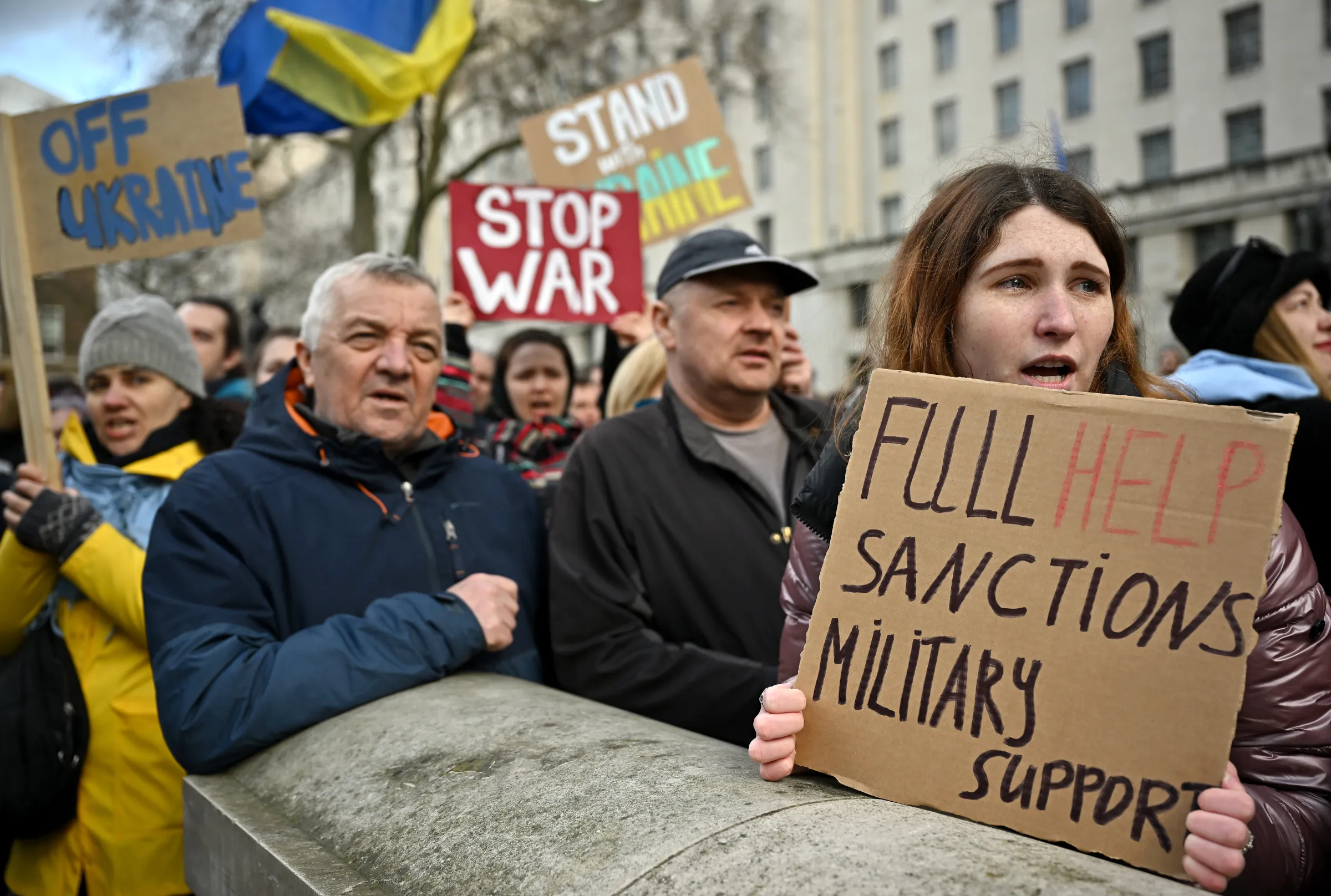
Sanctions were designed as instruments of control, intended to constrain behaviour by restricting access to markets, capital, and trade. In practice, however, they have evolved into catalysts for systemic adaptation. From Iran’s shadow oil networks to Russia’s rerouted exports, modern sanctions have not halted economic activity—they have reconfigured it into parallel systems operating with reduced transparency and increased complexity. Enforcement gaps, logistical innovation, and financial engineering have allowed trade to persist beyond traditional oversight, creating a fragmented global economy where visibility diminishes as resilience increases. What was once a tool of pressure is now a mechanism of redirection, reshaping global flows rather than stopping them. This editorial examines how sanctions are no longer containing systems—but decentralising them.

War is often framed as destruction, yet its most consistent function is redistribution—of capital, influence, and economic advantage. Within global energy markets, conflict does not eliminate value; it redirects it, often concentrating gains among producers, intermediaries, and opportunistic markets while dispersing cost across the broader global economy. Russia’s sustained oil revenues amid sanctions and geopolitical tension reveal a structural reality that is rarely confronted directly: instability is not merely a disruption to markets—it is, for some actors, a source of profit. As commodity prices adjust, sanctions leak through adaptive trade networks, and demand remains inelastic, the system reveals its underlying logic. This editorial examines how global energy dependence, pricing elasticity, and enforcement limitations combine to create financial winners during periods of conflict, exposing a system that continues to reward volatility more reliably than stability.