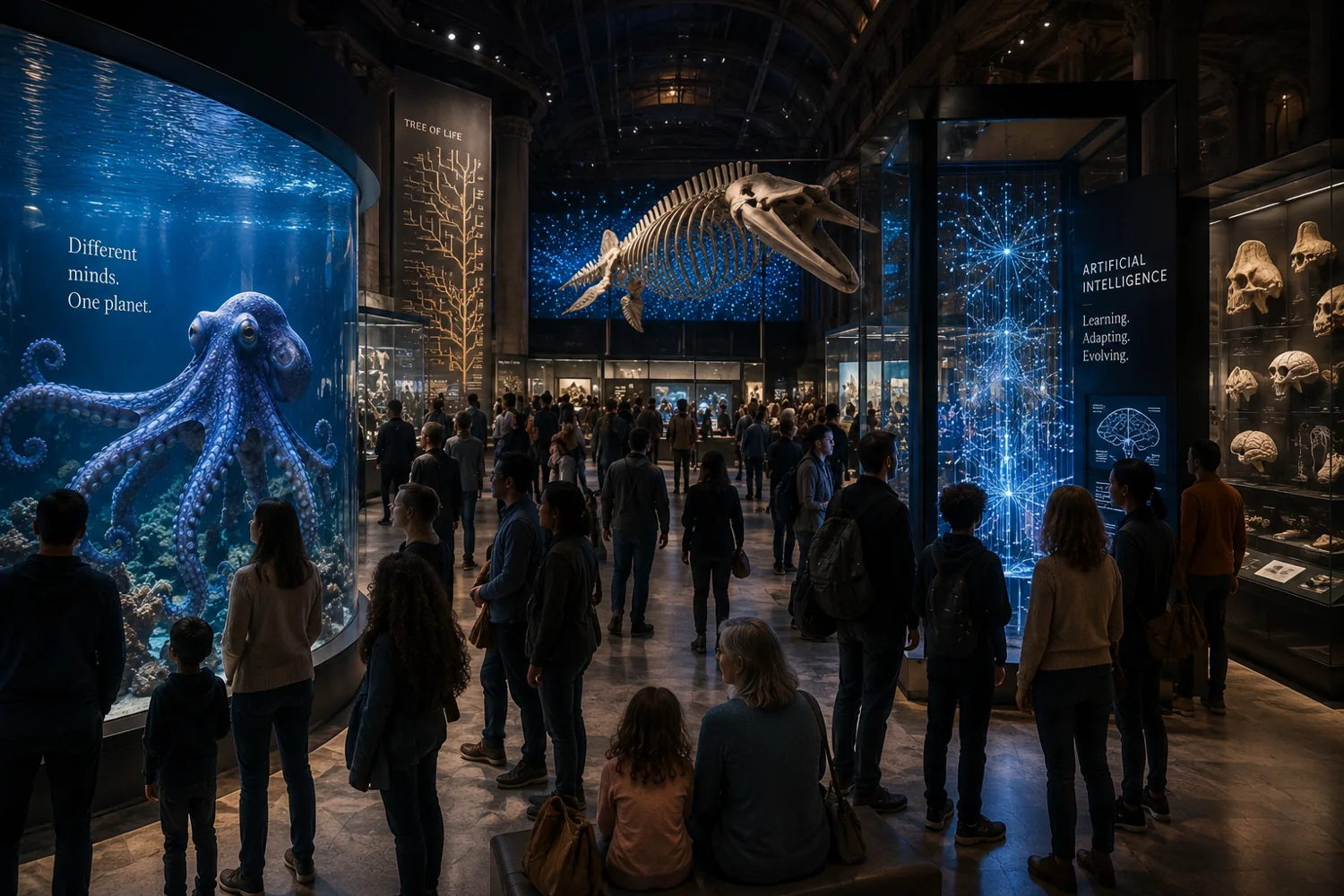
Conceptual visitors gathered in a natural history museum.

WTM Visual Intelligence · Conceptual imagery

Culture

Read culture through identity, creativity, media and the institutions that shape how people live together.

Dolly Parton, Philanthropy and the Difference Between Generosity, Identity and Performance

Dolly Parton, Philanthropy and the Difference Between Generosity, Identity and Performance

Dolly Parton died on 25 August 2026 at 80, leaving behind the obvious architecture of celebrity: songs, films, costumes, awards, businesses and an image recognisable across generations. Her official organisation described a seven-decade career and a legacy of philanthropy, compassion and resilience. But the more consequential inheritance may be found somewhere less glamorous. By June 2026, Dolly Parton’s Imagination Library was sending more than 3.5 million books a month to children across five countries and had distributed more than 325 million since the programme began in 1995. It started not as an abstract exercise in benevolence but from something personal: her father could not read or write. That distinction matters. We often describe goodness as though it requires the gradual disappearance of the self. Give more. Need less. Accommodate everyone. Remain available. Forgive endlessly. Never appear selfish. Under this model, goodness becomes a performance of personal depletion. But sustainable generosity requires almost the opposite. A person must possess enough self-knowledge to understand what they can give, enough boundaries to preserve the capacity from which giving occurs and enough judgement to distinguish helping someone from becoming responsible for their life. Parton offers a useful case study because her philanthropy did not require the destruction of her ambition, commercial instincts, aesthetic identity or ownership. She became extraordinarily successful and constructed mechanisms through which portions of that success could create value elsewhere. The mature architecture of goodness may therefore be: SELF → CAPACITY → RESPONSIBILITY → GENEROSITY → BOUNDARY → LEGACY. The question is not how much of yourself you can give away. It is whether what remains after you give is strong enough to keep generating value.

Who Are Your Three?

Who Are Your Three?

We have never possessed more ways to know people. We collect followers, contacts, colleagues, neighbours, group chats, professional networks and digital communities until connectivity itself begins to resemble security. Yet when life becomes consequential — illness, grief, unemployment, opportunity, conflict, reinvention, ageing, ambition — the enormous network often contracts remarkably quickly. The important question stops being how many people we know and becomes: who actually shows up?. Charlie’s Angels offers an unexpectedly useful doorway into that question. Its three protagonists are not powerful because they become alike. They remain distinctive personalities with different temperaments, capabilities and ways of seeing, yet learn to operate as a coordinated unit. That fictional architecture points towards something real in social science: adding a third person changes the structure of human interaction. Network research has long studied triadic relationships and the tendency of social networks to form triangles, while the Convoy Model of Social Relations describes how people move through life surrounded by changing layers of meaningful relationships that provide different forms of support. None of this proves that every human being requires exactly three people. Three is not a scientific prescription. It is a systems-thinking device. The more useful proposition is that resilient lives require more than reach. They require reciprocal relationships capable of performing different functions: someone who steadies us, someone who challenges us and someone who expands what we can see or become. WTM calls this the Personal Resilience Triad — not a psychological diagnosis or universal law, but a framework for interrogating the architecture of our closest relationships. And it contains a reciprocal obligation. The question is not merely Who are your three? It is also: Whose three are you?