WTM Visual Intelligence · Conceptual imagery
Meet the people whose ideas, choices and collaboration illuminate the forces changing society.

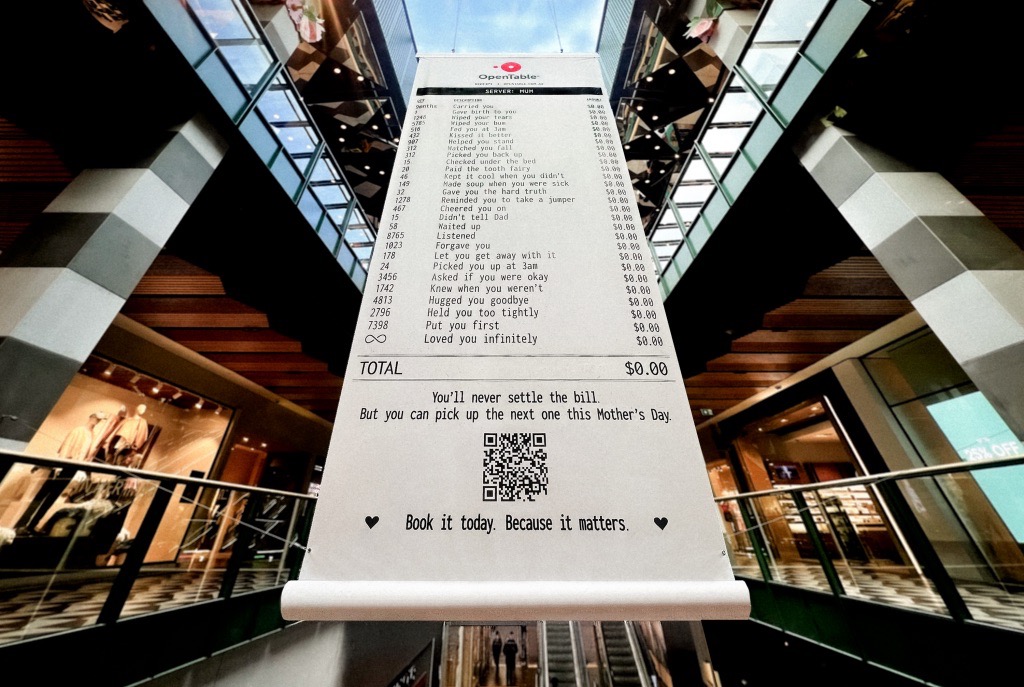
A Mother’s Day campaign by OpenTable recently circulated online featuring a mock restaurant receipt listing thousands of invisible maternal acts — “carried you,” “wiped your tears,” “waited up,” “loved you infinitely” — all priced at $0.00. The advertisement was emotionally devastating because it exposed a truth modern economies systematically ignore: the most civilisation-sustaining labour in human history has largely remained unpaid, feminised, invisible, and emotionally expected. The campaign was not simply clever marketing. It revealed how contemporary capitalism increasingly monetises emotional recognition precisely because society has failed to structurally value care itself.

2025/26 is the 45th anniversary of the hit series "Hart to Hart.” Still working as an actress on stage as Anna in “The King and I,” and Norma Desmond in “Sunset Boulevard,” as well as “On Golden Pond,” Stefanie considers her greatest achievement the founding of the William Holden Wildlife Foundation, now approaching its 45th anniversary. Stefanie Powers was recently inducted into the prestigious list of "Agents Of Change" and honoured for her efforts with the William Holden Wildlife Foundation, at the United Nations for Inspiring Others: Sharing her wisdom and experiences to motivate and empower others to pursue their dreams and make a larger-scale impact on society through the William Holden Wildlife Foundation, Leaving a Legacy: Documentation of her journey and contributions as a lasting resource that ignites a passion for positive change. Reaching Wide Audience: Her delivering her message to a global audience.

A defining American story of breakthrough, survival, and representation arrives at the precise moment it is most needed. Her debut as the first African American Rockette, notably on a national stage during the Super Bowl XXII Halftime Show, did more than diversify a chorus line—it disrupted a system. It forced one of the most visible cultural institutions in America to reconcile its aesthetic ideals with its social realities. Jones did not simply join the Rockettes. She altered the architecture of who was allowed to belong.

58 Years Inside the System. One Story That Reframes Power, Trust, and the Future of News. From the birth of 24-hour news at CNN to decades on the front lines of Los Angeles broadcasting, Eisner did not merely report the story—he stood inside it, shaping how millions understood crisis, celebrity, justice, and truth.

Bestselling Author Nelson Aspen Completes his Acclaimed “Dancing Between The Raindrops” Trilogy with Final Installment, Happily Ever After? A star-studded, semi-autobiographical saga spanning Hollywood, Broadway, and the enduring search for reinvention and love.

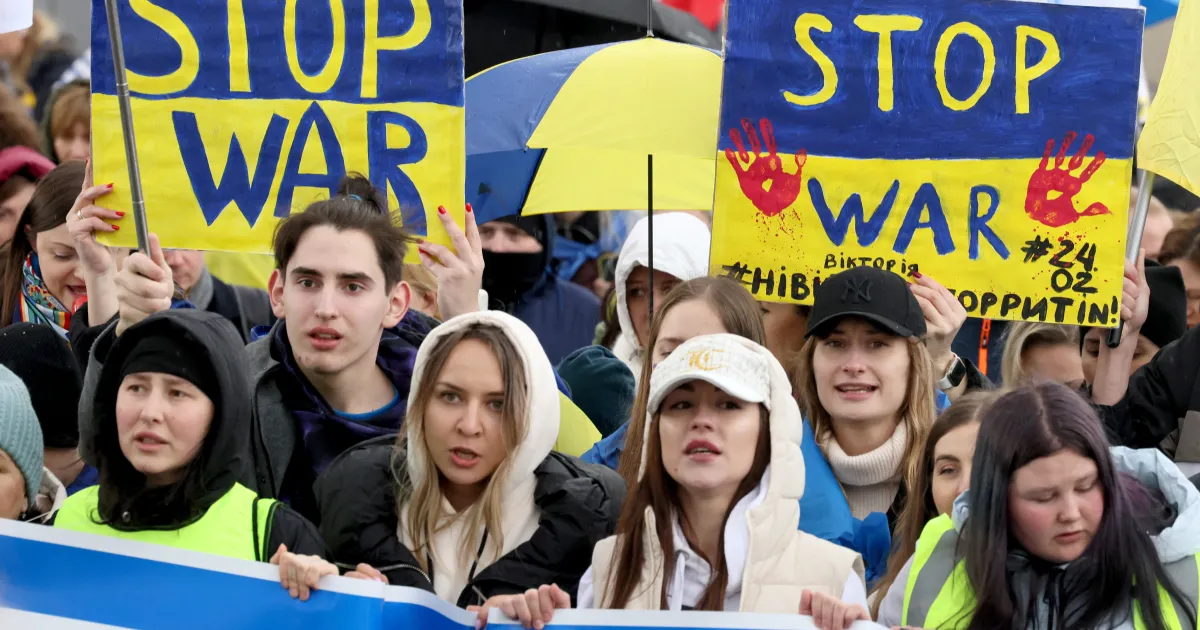
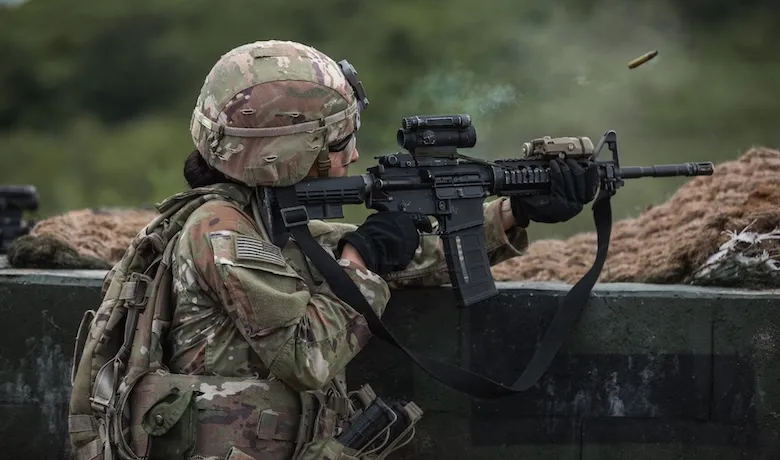
The prospect of global war is often analysed through military capability and geopolitical alignment, yet its most immediate and enduring consequences are human. Markets may react, reprice, and eventually attempt recovery, but people absorb the collapse in real time. The growing risk of a large-scale global conflict exposes a deeper fragility within the modern economic system: prosperity is not resilient—it is contingent on peace. As supply chains fracture, energy systems are weaponised, and financial infrastructure becomes a target, the assumption that markets can withstand systemic shock begins to unravel. This editorial reframes the threat of global war not as a distant geopolitical scenario, but as a human crisis embedded within economic collapse—where survival, dignity, and stability are no longer guaranteed, and where the cost of failure is measured not in indices, but in lives.

Media is often perceived as a reflection of culture, yet in practice it functions as a product of ownership, capital, and controlled distribution systems that determine which narratives achieve visibility and which remain unseen. From platforms such as BET+ to conglomerates like Paramount Global, storytelling is shaped not only by creative intent but by economic incentives, platform algorithms, and strategic priorities that filter what audiences encounter at scale. This structure does not overtly dictate content, but it quietly establishes the boundaries within which narratives are produced, funded, and amplified. As a result, culture is not simply expressed through media—it is curated, prioritised, and, at times, constrained by the systems that govern it. This editorial reframes media consumption as participation within a designed ecosystem, where understanding ownership is essential to understanding the stories people believe, the perspectives they adopt, and the reality they perceive.


In the modern information environment, narratives are no longer passively reported; they are actively engineered, optimised, and distributed at scale. Social platforms, algorithmic incentives, and the speed of digital communication have created systems where misinformation is not an exception but an emergent property of design. Content that provokes, simplifies, or distorts is rewarded with reach, while verified reporting competes at a structural disadvantage. As geopolitical narratives circulate globally within seconds, perception itself becomes a contested domain—shaping decisions, behaviours, and belief systems before facts can stabilise. This editorial reframes misinformation not as failure, but as function: a byproduct of an attention economy where influence is measured in engagement, and where people are no longer just audiences, but endpoints of strategic narrative deployment.

War is widely understood as destruction, yet its most enduring function is redistribution—not of territory alone, but of value, power, and consequence. In energy markets, conflict does not erase economic activity; it reroutes it, often concentrating financial gains among a narrow set of actors while dispersing cost across populations. Russia’s sustained oil revenues amid sanctions and geopolitical tension expose a deeper structural truth: instability is not merely tolerated by the system—it is frequently rewarded within it. As commodity pricing adjusts, sanctions leak, and global demand persists, the financial architecture of conflict reveals itself with clarity. This editorial reframes war not as an isolated event, but as an economic mechanism—one in which markets adapt, profits persist, and people, far removed from decision-making centres, absorb the immediate and enduring consequences.