WTM Visual Intelligence · Conceptual imagery
Meet the people whose ideas, choices and collaboration illuminate the forces changing society.

Edafe Okporo joins Kelly Dowd to explore home, visibility and trust. A practical WTM framework examines what belonging requires after an invitation: safety, voice and continuity.

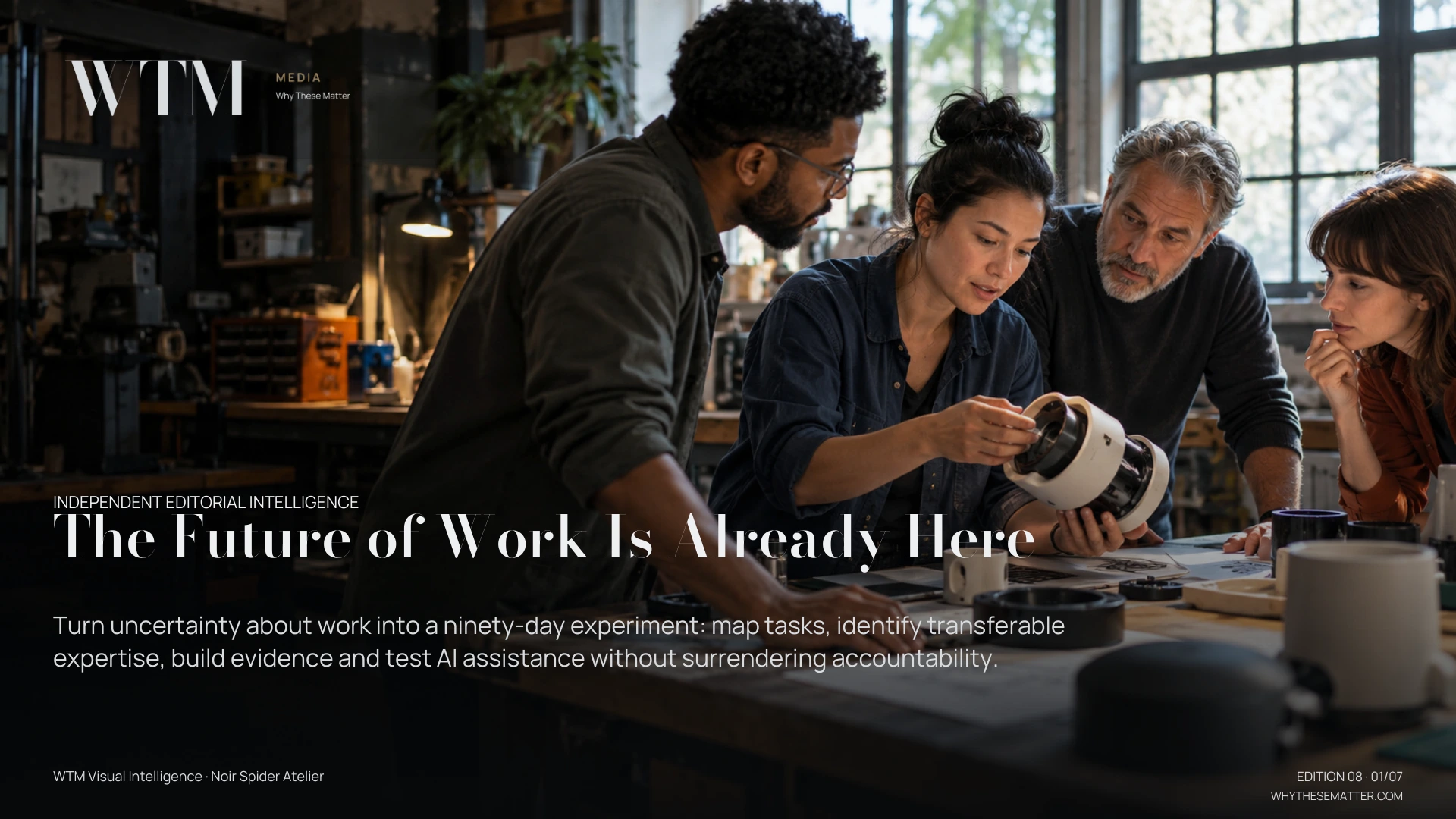
Turn uncertainty about work into a ninety-day experiment: map tasks, identify transferable expertise, build evidence and test AI assistance without surrendering accountability.

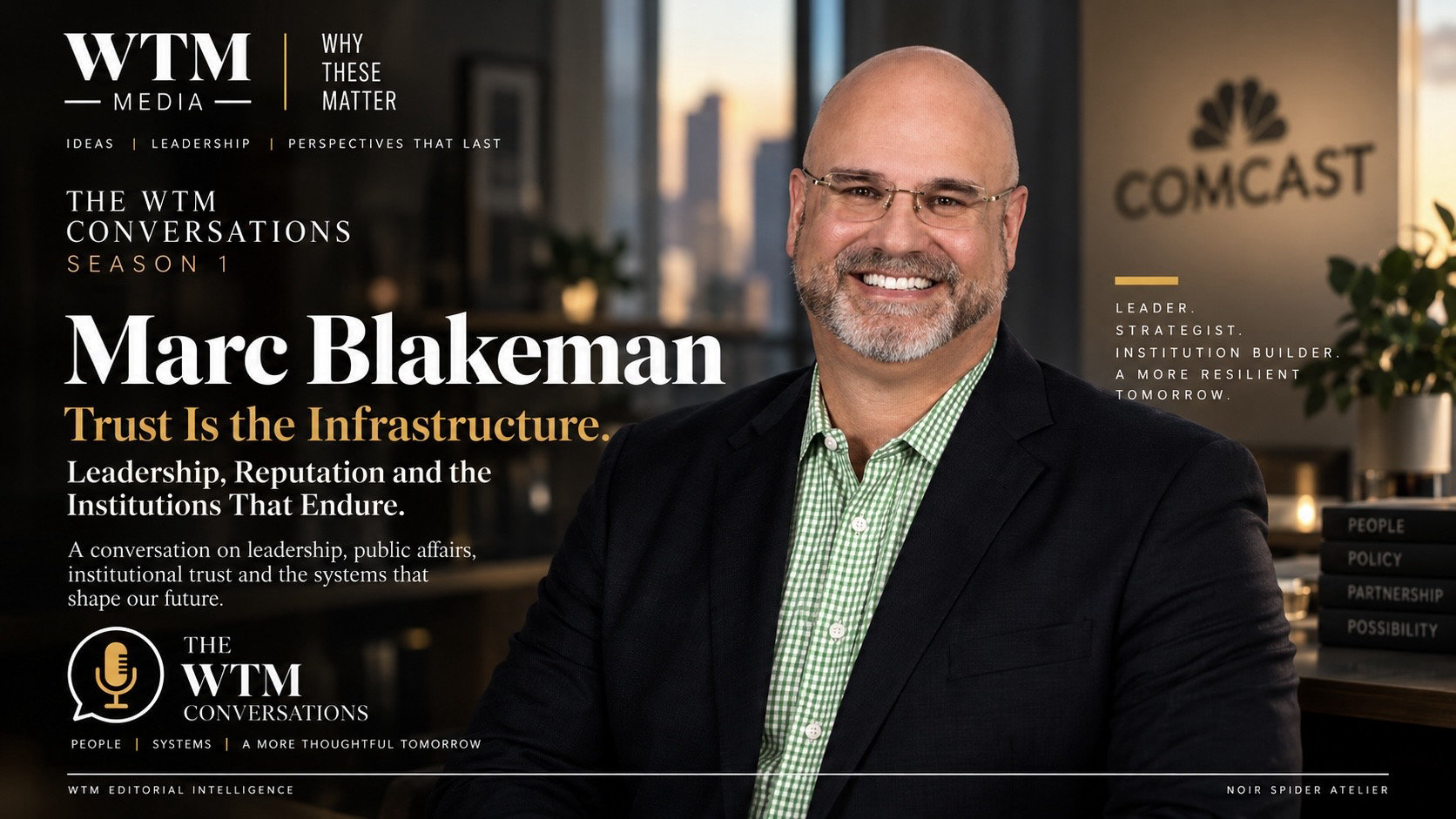
Trust is frequently treated as a sentiment: desirable, fragile and difficult to measure. Marc Blakeman Senior Vice President at Comcast, sees something more operational. Across decades in government affairs, public policy and institutional leadership — including his current role as Senior Vice President of Government and Community Affairs at Comcast — he has learnt that trust determines whether people will follow a leader, believe an institution, tolerate a mistake or remain in relationship when circumstances become difficult. In this WTM Conversation, Marc Blakeman and Kelly Dowd, MBA, MA, Editor-In-Chief, WTM Media | Why These Matter, and Host, The WTM Conversations, examine leadership beyond charisma, institutional credibility beyond communications strategy, reputation before crisis, the changing architecture of public communication and what artificial intelligence may make more — rather than less — valuable about human judgement. The central intelligence is deceptively simple: communication cannot manufacture institutional character. It can only make character visible. In an age capable of producing more information, faster, the institutions that endure may be those that understand that trust is not messaging. It is accumulated evidence.


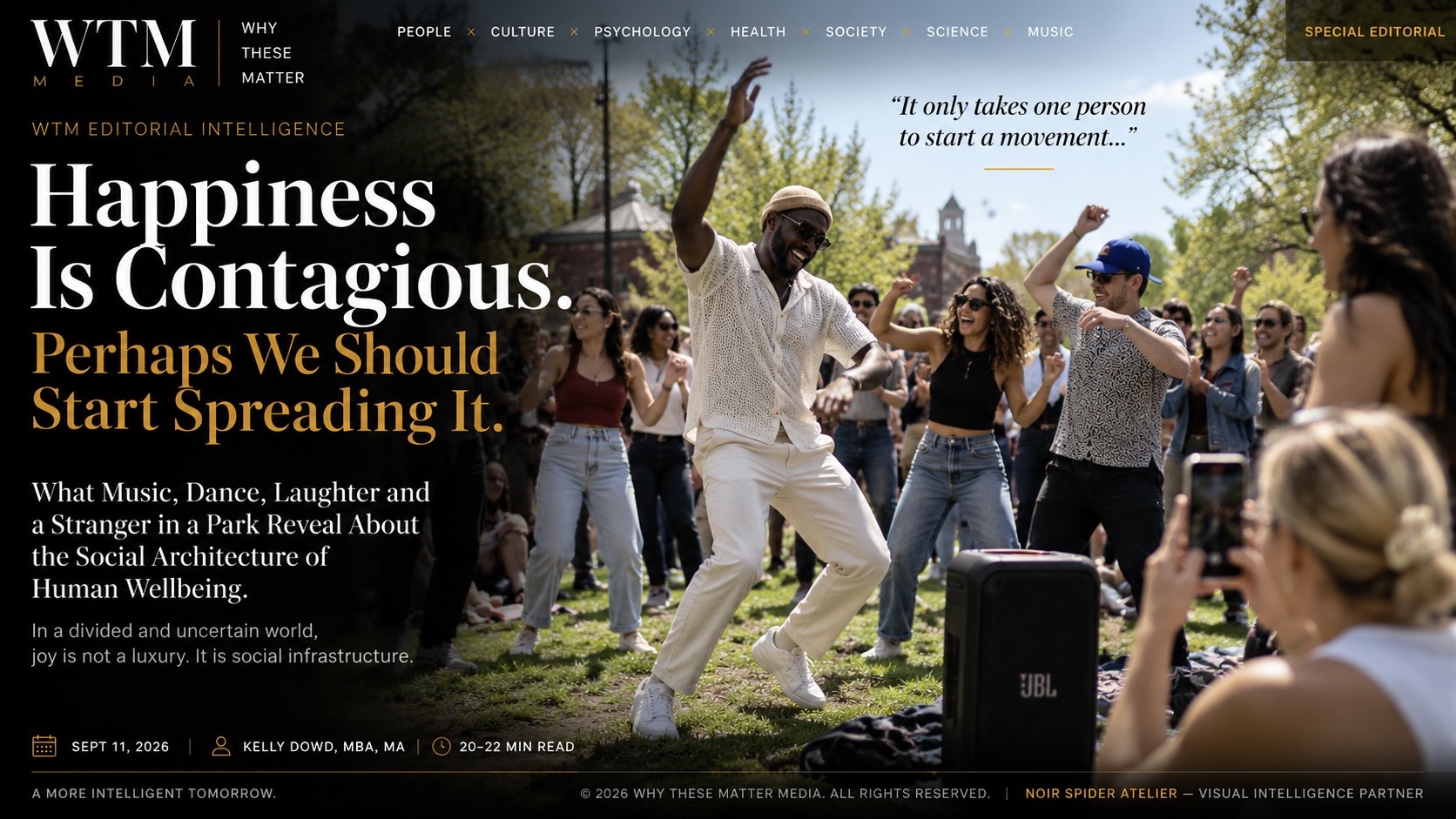
I was ill when a stranger started dancing. Not beside me. Not for me. I was nowhere near him. He was on my phone, somewhere in a park, carrying on with the sort of public exuberance I might ordinarily have regarded with suspicion. A speaker was playing loudly. One man began to dance. Then another person joined him. Then another. Within minutes, what had been an ordinary afternoon in a public park appeared to become something closer to an accidental festival. I smiled. That would be an unremarkable detail except that, for much of the previous twenty-four hours, smiling had been fairly low on my body’s agenda. A blocked nostril had arrived seemingly from nowhere. Fatigue followed. Then came the migraine, the pounding kind that makes seven hours in bed feel less like sleep than an extended negotiation with your own skull. Eventually, I told my darling that something was wrong. He asked whether I had taken my Qulipta. I had not. It was in my handbag. I retrieved it, took it as prescribed, and after some hours the migraine subsided. The medicine treated the migraine. The dancing did something else. And understanding that difference may tell us something important about happiness.

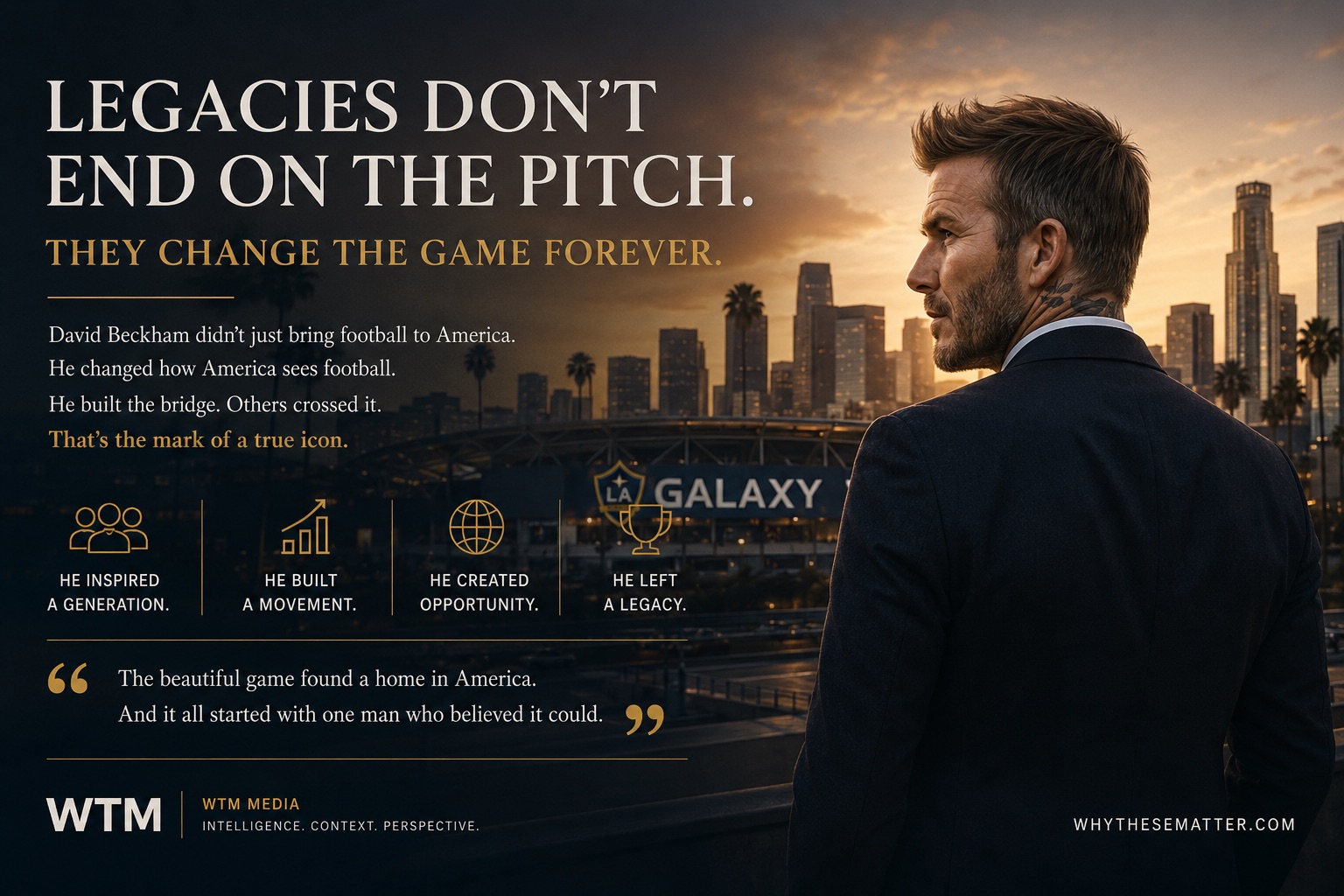
Most people believe David Beckham changed football in America because he was a great footballer. They are only partially correct. His greatest contribution had little to do with goals, trophies, or free kicks. Beckham helped redesign how America perceived the world’s most popular sport. His arrival accelerated investment, attracted international attention, reshaped Major League Soccer’s commercial strategy, encouraged youth participation, and demonstrated that culture can cross borders when trust arrives before the product. This is not simply the story of one athlete. It is a lesson in leadership, branding, economics, psychology, and institutional strategy. Every business seeking to enter a new market can learn from what Beckham accomplished without ever intending to become a case study in global systems thinking.

Teachers help turn recognition into capability. WTM examines what research reveals about expectations, learning and opportunity, why their value exceeds income alone, and how institutions can support human development with resources, fair access and practical accountability.

We spend our lives chasing money, status, influence, and security while quietly spending the one resource that creates them all. Attention is not merely what we notice. It is what we become.

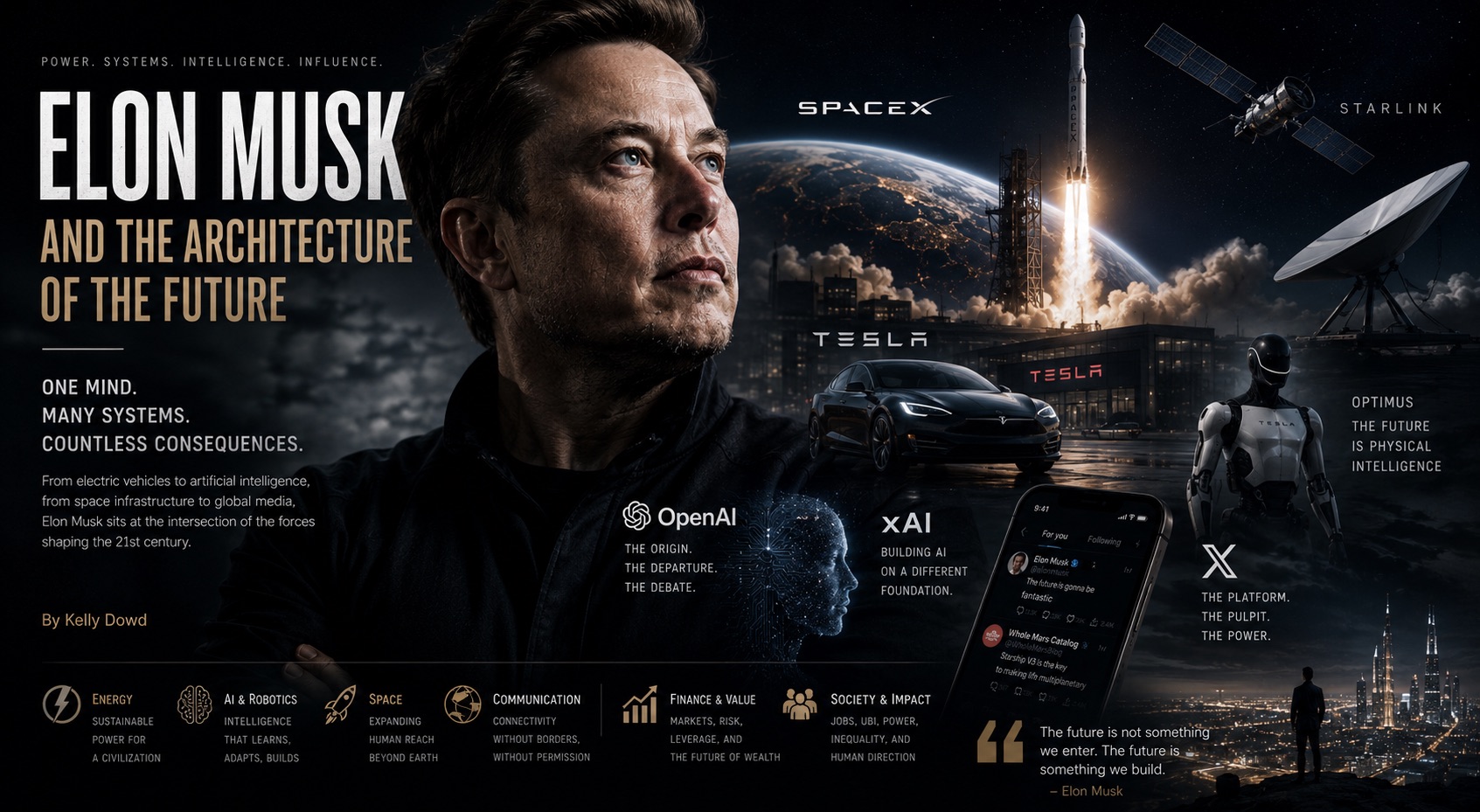
Most discussions about Elon Musk focus on personality. Admirers describe a visionary. Critics describe a provocateur. Both perspectives miss the larger story. Musk matters not because of who he is, but because of the systems he sits inside simultaneously. Electric vehicles. Space infrastructure. Artificial intelligence. Digital media. Financial engineering. Robotics. Energy systems. Demographic change. Human enhancement. Free speech. Information warfare. The future of work. The future of government. The future of civilisation itself. Few individuals in modern history have occupied so many strategic intersections at once. Understanding Musk therefore requires moving beyond celebrity and ideology. He is best understood as a living case study in how power is evolving in the twenty-first century. The real question is not whether one likes Elon Musk. The real question is why a single individual has become so relevant to so many systems that will shape humanity’s future.

One hundred years after the birth of Marilyn Monroe, Hollywood is once again confronting a question larger than celebrity itself: why do certain individuals remain culturally alive long after death while others vanish despite greater contemporary visibility? At a centennial celebration hosted by The Hollywood Museum, a collection of personal artefacts, rare photographs, and historical memorabilia was assembled not merely to commemorate a film star, but to preserve one of the most enduring symbols of twentieth-century identity. The exhibition reveals a deeper system at work—how institutions curate collective memory, how icons become economic assets, and how culture itself functions as a form of infrastructure that shapes human aspiration across generations.